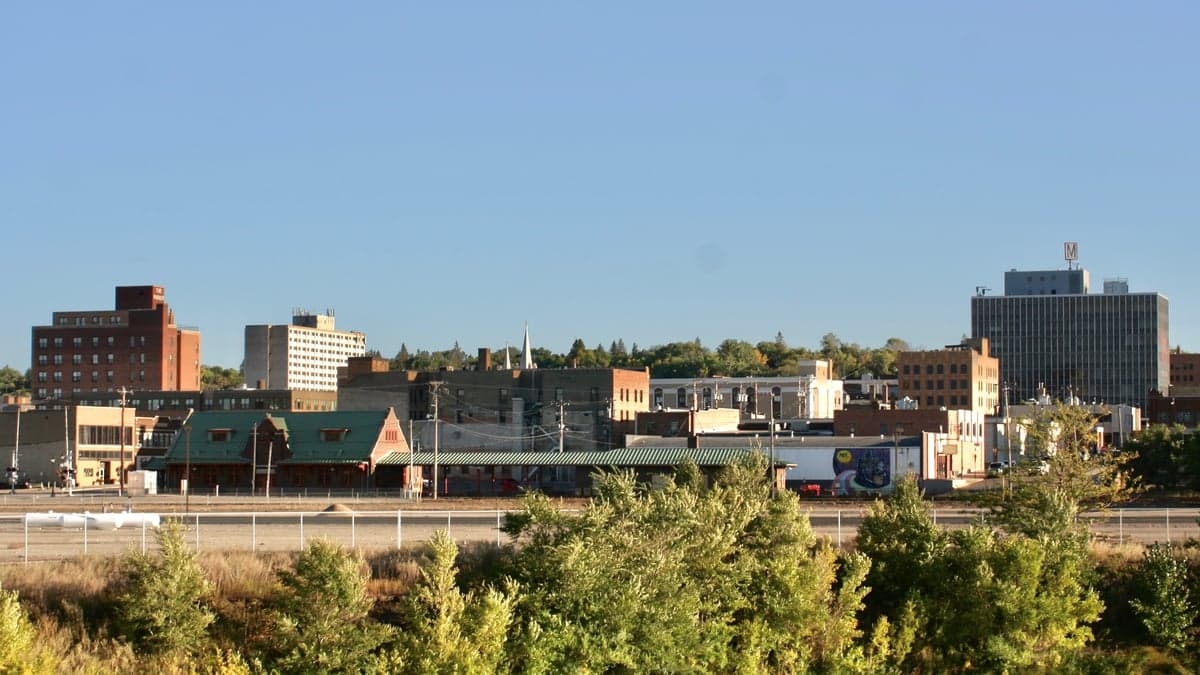
Photo: Wikipedia
Strategic Assessment of Minot, ND
Workable tactical position. Some exposure to population density or targets, but generally defensible in a crisis.
What does the Strategic Assessment tell us?
Our Strategic Assessment grades tactical survivability of an area. Major population centers, military targets, fallout zones, natural disasters, and border exposure all drive risk — lower exposure means a more defensible position in a crisis.
This is heavily inspired by Joel Skousen's Strategic Relocation book. Highly recommended you checkout the book ($)What does this tell us?
Our Strategic Assessment grades tactical survivability of an area. Major population centers, military targets, fallout zones, natural disasters, and border exposure all drive risk — lower exposure means a more defensible position in a crisis.
This is heavily inspired by Joel Skousen's Strategic Relocation book. Highly recommended you checkout the book ($)Strategic Pillars

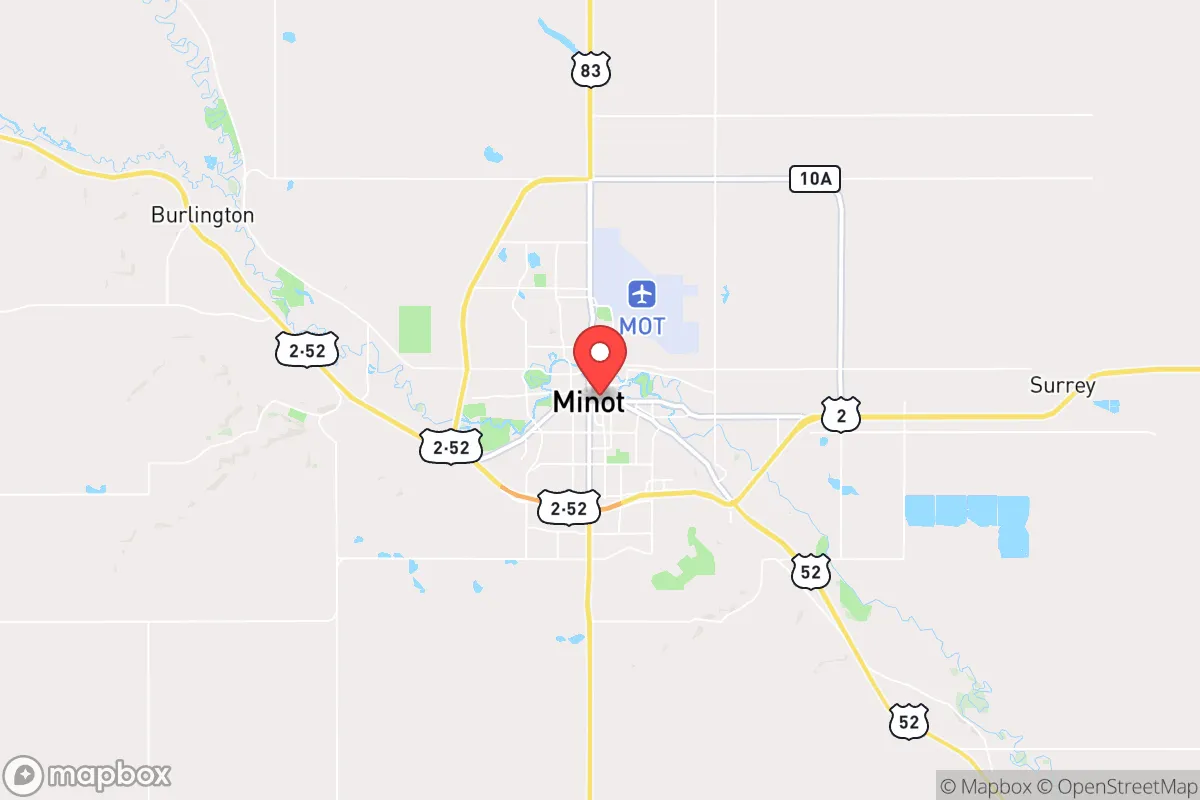
Key Distances
Regional Safe Places
Below is our recommended "safe zones" in North Dakota and the surrounding area based on our strategic heuristics. For most people, it's unrealistic to live in a “safe zone” full-time due to work, family or other personal reasons. They tend to be more rural. However, many of these areas are perfect for second homes and retreat properties that double as a vacation home or even a short-term rental.
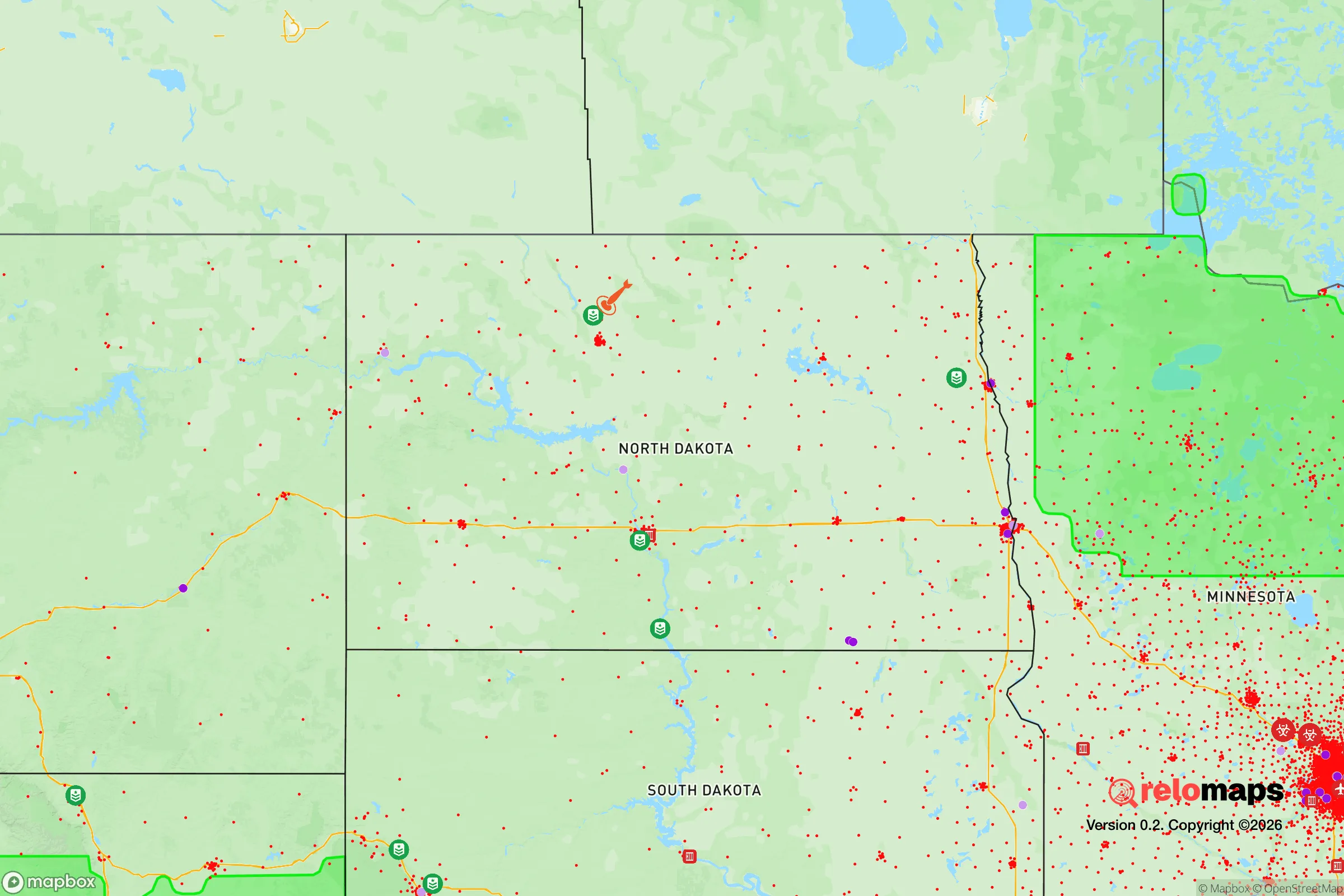
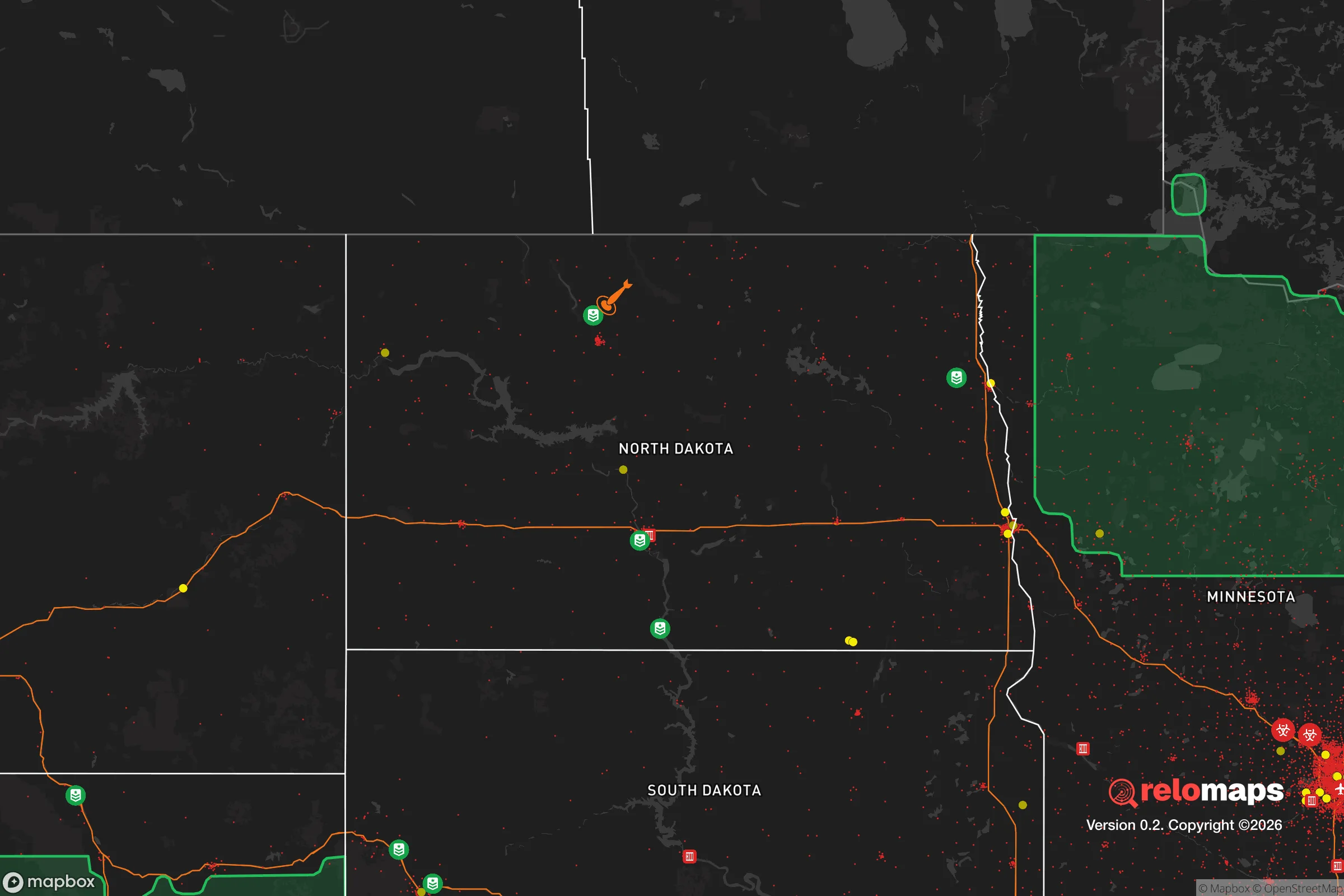


Important Note: For informational purposes only. This does not mean nothing bad ever happens in the green zones. Please use common sense. This is based on public data and modeled with AI. We tried to take a conservative approach but mistakes happen. We update this regularly as new information becomes available.
Solar Generator Recommendations
Backup power matters more here than in safer locations. We've picked three solar generators across budgets and capacity tiers — start with the budget unit if you only need a few essentials, or step up if you want to run a fridge and HVAC for days at a time.

Jackery Portable Power Station Explorer 300
Budget OptionPower on the Go: Weighing only 11 lbs, it's convenient to set up and store with book-sized foldable solar panels

BLUETTI Portable Power Station AC180
Designed for both indoor and outdoor scenarios, AC180 is highly capable as it has a robost capacity and continuous output power.

EF ECOFLOW DELTA Pro Ultra Power Station
Upgraded PickEcoFlow DELTA Pro Ultra is a whole-home energy system designed to grow with your family. Integrated with the Smart Home Panel 2, it scales to meet your evolving energy needs — keeping your home powered, intelligent, and secure through every stage of life.
We earn a commission, at no additional cost to you.
Strategic Assessment Analysis
Minot, North Dakota, offers a compelling strategic position for those prioritizing resilience and self-sufficiency, largely due to its remote location in the northern Great Plains and its dual-role as a regional economic hub and a military stronghold. The city sits roughly 100 miles from the Canadian border and is surrounded by vast stretches of agricultural land, sparse population, and a harsh but predictable climate that naturally filters out less committed residents. For a conservative-leaning relocator concerned with societal fragility, Minot’s combination of geographic isolation, a working-class ethos, and the presence of Minot Air Force Base (home to nuclear-capable B-52s and missile operations) provides a unique blend of security and practical readiness that few other midsized American cities can match.
Geographic position and natural advantages for long-term security
Minot’s location in north-central North Dakota places it far from the major population corridors of the East and West Coasts, the Great Lakes megalopolis, and the I-35 corridor. This distance is a deliberate advantage: in the event of widespread civil unrest, supply chain disruptions, or a coordinated attack on critical infrastructure, Minot would be unlikely to see the cascading chaos that would engulf cities like Minneapolis, Chicago, or Seattle. The surrounding landscape is flat, open prairie with low tree cover, which limits ambush points and makes the area inherently defensible for those who understand the terrain. The Souris River runs through the city, providing a freshwater source, and the region sits atop the Dakota Aquifer, offering groundwater access for well-drilling—a critical factor for long-term water independence. Winters are brutal, with average January highs around 18°F and frequent blizzards, but this climate acts as a natural barrier: unprepared or transient populations rarely stay, and the local culture is built around self-reliance, heavy equipment ownership, and community mutual aid. The city’s elevation (roughly 1,600 feet) and distance from seismic zones also mean it is largely immune to earthquakes, tsunamis, and hurricane storm surge, leaving winter storms and occasional tornadoes as the primary natural threats.
Risks, exposures, and proximity to fallout-relevant landmarks
While Minot’s isolation is a strength, it is not without significant exposure. The most obvious risk is the city’s proximity to Minot Air Force Base, which houses the 5th Bomb Wing and the 91st Missile Wing, operating B-52H Stratofortresses and intercontinental ballistic missiles (ICBMs) in underground silos scattered across the region. In a full-scale nuclear exchange, Minot would be a high-priority target—likely a first-strike or counterforce target—meaning the city itself could face a direct hit or severe fallout from nearby silo strikes. The base is roughly 15 miles north of downtown, and the missile fields extend across northwestern North Dakota, so any relocator must accept that this area is a potential ground zero. Additionally, the city’s reliance on a single major highway (U.S. Route 83) and a single rail line (BNSF) for resupply creates a chokepoint vulnerability: a bridge failure, derailment, or coordinated roadblock could isolate the city for weeks. The Souris River floodplain also poses a recurring hazard—major floods in 2011 and 2022 caused extensive damage and evacuations—so any property selection must account for flood zone mapping and drainage. For those with a prepper mindset, the base’s presence is a double-edged sword: it guarantees a strong law enforcement and military presence during peacetime, but in a crisis, it could draw unwanted attention or become a contested asset.
Practical resilience for a relocator: food, water, energy, and defensibility
For a single individual or family looking to establish a resilient homestead, Minot offers several concrete advantages. The surrounding agricultural economy means local food production is robust: the region is a major producer of wheat, barley, canola, and sunflowers, and there are numerous small-scale ranches raising cattle and bison. Farmers’ markets and local meat lockers are common, and the city’s grocery stores (including a large Cash Wise and a natural foods co-op) stock bulk staples year-round. Water security is achievable through private well drilling—depths of 100–300 feet typically yield good-quality water from the Dakota Aquifer—but note that the area’s high mineral content (hard water) may require treatment. Energy resilience is strong: North Dakota is the third-largest oil-producing state in the U.S., and Minot sits near the Bakken shale formation, meaning heating oil and propane are locally sourced and relatively affordable. The city’s electrical grid is served by Basin Electric Power Cooperative, a member-owned utility with a mix of coal, natural gas, and wind generation, but off-grid solar is viable given the region’s 200+ sunny days per year (though winter output is low). Defensibility is aided by the city’s layout: Minot is compact (population around 48,000), with a clear downtown core and residential neighborhoods that are easy to patrol or barricade if needed. The surrounding rural areas offer ample land for a remote homestead, with acreage prices still reasonable compared to the coasts (raw land can be found for $1,000–$3,000 per acre). However, the nearest major trauma center is Trinity Hospital in Minot itself—a Level II facility—so any serious medical emergency requires staying within city limits or having a robust first-aid and evacuation plan.
The overall strategic picture for a conservative relocator
Minot presents a high-risk, high-reward strategic option for those serious about long-term preparedness. Its isolation, harsh climate, and military target status make it unsuitable for casual preppers or those seeking a low-stress retreat—but for a disciplined individual or family willing to invest in underground shelter, water storage, and community ties, it offers a rare combination of food security, energy independence, and a like-minded population that values self-reliance and firearms ownership (North Dakota has some of the most permissive gun laws in the nation, including constitutional carry and no state-level magazine restrictions). The city’s conservative political leanings (Ward County voted +36 R in 2024) mean local governance is generally aligned with limited government and Second Amendment rights, and the culture is one of neighborly assistance without the intrusive oversight found in more progressive areas. The bottom line: Minot is not a safe haven—it is a hardened outpost. If you can handle the cold, the isolation, and the existential risk of living near a nuclear base, it provides a foundation for genuine resilience that few other locations in the Lower 48 can match. For those who view the current national trajectory with deep concern, this is a place where you can dig in, stock up, and stand your ground—provided you accept the trade-offs.

* Values derived from national, state, county, city and local statistics and may differ in a specific area. Last updated: 2026-04-19T05:54:22.000Z
Narrative content on this page is AI-generated and may contain mistakes. Verify any details that matter before acting on them.
ReloMaps may earn a commission from affiliate links at no extra cost to you.

