 Popular
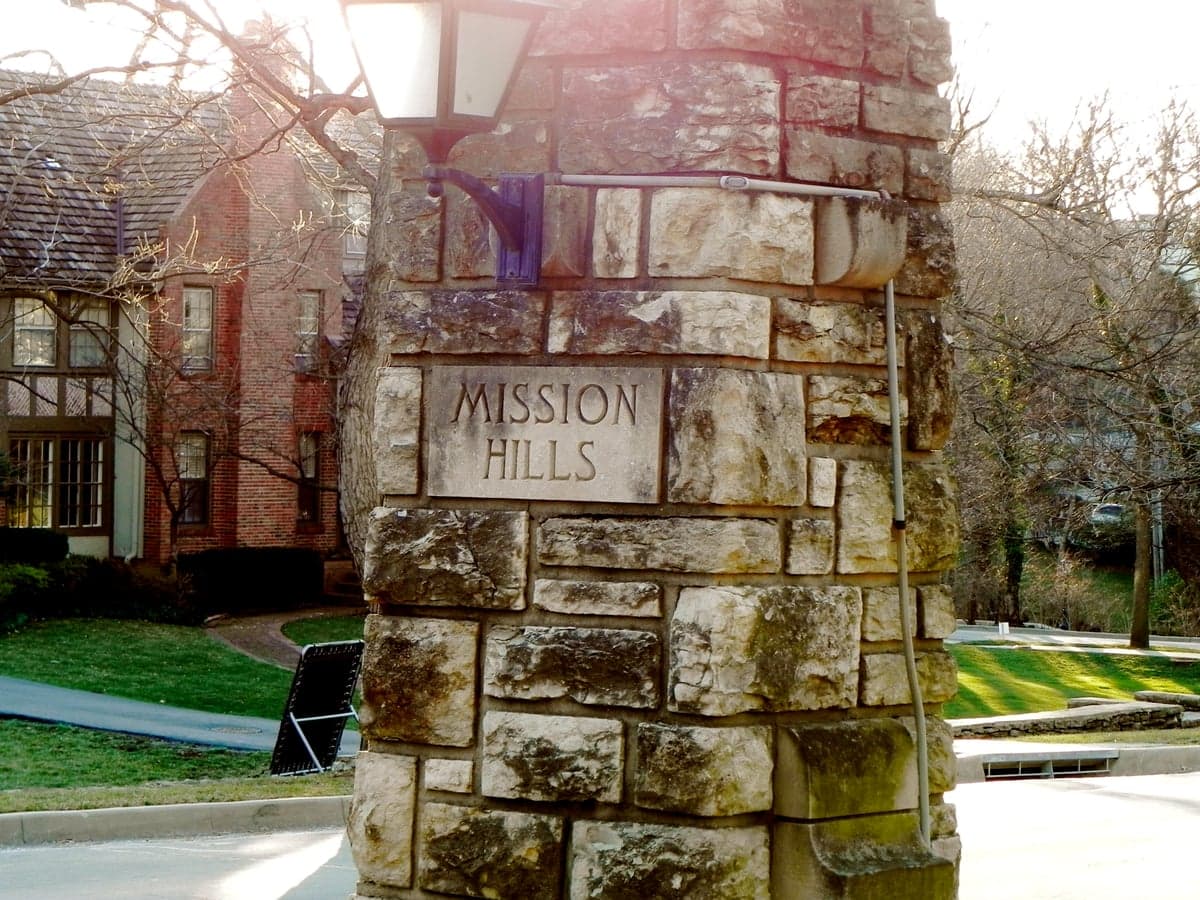
Photo: Wikipedia
Personal Sovereignty in Mission Hills, KS
Viable for self-reliance. Generally workable, though some barriers may limit total independence.
What does Personal Sovereignty tell us?
Personal Sovereignty measures your capacity for self-reliance and independence with minimal government friction. Higher scores mean fewer barriers between you and the way you want to live... but it assumes you have the space you need and good neighbors.
What does this tell us?
Personal Sovereignty measures your capacity for self-reliance and independence with minimal government friction. Higher scores mean fewer barriers between you and the way you want to live... but it assumes you have the space you need and good neighbors.
State Policy
Energy independence: Self-sufficient (80% of energy produced in-state)
Personal Liberty
Homesteading

Personal Liberty Analysis
Mission Hills, Kansas, offers a unique paradox for the liberty-minded individual: a high-asset, low-crime enclave where personal sovereignty is largely a function of affluence and local governance, rather than a robust state-level culture of defiance against federal overreach. While the city itself operates with a light touch on daily life, residents must navigate the broader Johnson County and Kansas state apparatus, which presents a mixed bag for those prioritizing maximum autonomy. For the strategic relocator—whether a single professional or a parent—the core trade-off is clear: you gain significant personal security and property rights, but you operate within a state that, while not tyrannical, has not aggressively carved out the kind of legal redoubts seen in places like Texas or Idaho.
Tax burden and regulatory posture in Johnson County
Kansas has a reputation for fiscal conservatism, but the reality is nuanced. The state income tax is a flat rate of 5.7% as of 2025, which is moderate but not negligible for high earners. Property taxes in Mission Hills are notably high—around 1.5% to 1.8% of assessed value annually—driven by the premium real estate market and Johnson County's excellent public services. This is a significant recurring cost for a prepper or survivalist who would rather allocate those funds to land, supplies, or infrastructure. On the regulatory side, Kansas is generally business-friendly, with no state-level occupational licensing for many trades, and Johnson County has a reputation for efficient permitting. However, the state does not have a strong "right to farm" or property rights statute that would shield a homeowner from HOA or local zoning restrictions. Mission Hills itself is a planned community with strict covenants; you cannot simply erect a workshop, install a backup generator in plain sight, or keep livestock without explicit approval. The regulatory posture is one of managed order, not rugged individualism—you are free to do as you please, so long as it fits within the aesthetic and safety norms of a wealthy suburb.
Self-defense and gun law specifics in Kansas
Kansas is a constitutional carry state, meaning no permit is required to carry a concealed firearm for anyone legally allowed to possess one. This is a strong positive for personal sovereignty. Mission Hills is within Johnson County, which has a sheriff's office that is generally supportive of Second Amendment rights. There are no county-level magazine capacity bans, no "red flag" laws (as of 2026), and no state-level firearm registration. Stand-your-ground laws are on the books, providing legal protection for defensive use of force in public. However, there are practical constraints: Mission Hills is a dense, affluent suburb with a very low violent crime rate (roughly 0.5 incidents per 1,000 residents annually), meaning the need for armed self-defense is statistically minimal. The local police response time is under five minutes. For the survivalist, the legal framework is permissive, but the environment does not force you to develop the skills or mindset that a more dangerous area would. The real concern is not local government overreach but the potential for federal-level restrictions—Kansas has not passed a Second Amendment Sanctuary ordinance that would actively resist federal gun control, leaving residents reliant on state preemption laws that could be overturned by a future legislature.
Self-reliance and homesteading viability: lot sizes, zoning, off-grid feasibility
This is where Mission Hills falls short for the serious prepper. The average lot size in Mission Hills is around 0.5 to 1.5 acres, which is generous for a suburb but insufficient for meaningful homesteading. Zoning is strictly residential, with no allowances for agricultural use, livestock (chickens are generally prohibited), or commercial activity. Off-grid feasibility is virtually zero: the city requires connection to municipal water and sewer, and any solar panel installation must be approved by the architectural review board. You cannot legally drill a well, install a composting toilet, or disconnect from the grid without facing fines and legal action. For a family seeking self-reliance, this is a dealbreaker. The local government's posture is one of enforced dependency on centralized utilities and services. If your goal is to stockpile supplies, maintain a low profile, and have the ability to sustain yourself during a grid-down scenario, Mission Hills is not the place. You would be better served by rural areas in eastern Kansas, such as Franklin County or Anderson County, where lot sizes are larger and zoning is minimal. The trade-off for living in Mission Hills is that you are buying into a system that provides stability—but at the cost of your ability to opt out of that system.
Personal liberties: parental rights, medical autonomy, speech, and property
Kansas has a mixed record on personal liberties. Parental rights are relatively strong: the state has a "Parental Bill of Rights" law that affirms parents' authority over their children's education, medical decisions, and religious upbringing. School districts in Johnson County, including the Shawnee Mission School District, generally respect these rights, though they are not as aggressive as some conservative districts in Texas or Florida in pushing back against federal mandates. Medical autonomy is a gray area. Kansas did not expand Medicaid under the ACA, which limits government healthcare intrusion, but it also has not passed any broad medical freedom legislation protecting the right to refuse vaccines or treatments without penalty. During the COVID-19 era, the state did not impose a mask mandate, but local businesses and schools had wide latitude. For the liberty-minded individual, this means you are largely left alone, but you cannot rely on state law to shield you from local or federal overreach. Free speech is protected under the Kansas Constitution, and there are no state-level hate speech laws that would criminalize political or religious expression. Property rights are generally respected, but as noted, local zoning and HOA covenants can be restrictive. The key takeaway is that your personal sovereignty in Mission Hills is high in the private sphere—you can raise your children, speak your mind, and keep your property—but low in the public sphere, where you must comply with municipal codes and state tax policy.
In the broader context of the United States, Mission Hills offers a moderate-to-high level of personal sovereignty for those who can afford the premium. It is not a haven for the survivalist or the off-grid homesteader, but it is a sanctuary for the professional who values low crime, good schools, and a permissive gun culture. Compared to a place like Austin, Texas, you have less regulatory freedom but more social stability. Compared to rural Idaho, you have less land and autonomy but better infrastructure and access to markets. For the conservative-leaning individual or family concerned about government overreach, Mission Hills is a defensible choice if your strategy is to build wealth and influence within the system rather than to escape it. The real vulnerability is that your sovereignty is contingent on the continued goodwill of local government and the stability of the broader economy—if either falters, your ability to adapt is limited by the very infrastructure you rely on. If you are looking for a place to dig in and ride out the storm, look further west. If you are looking for a place to thrive while the storm is still distant, Mission Hills works.

* Values derived from national, state, county, city and local statistics and may differ in a specific area. Last updated: 2026-04-27T14:13:47.000Z
Narrative content on this page is AI-generated and may contain mistakes. Verify any details that matter before acting on them.
ReloMaps may earn a commission from affiliate links at no extra cost to you.

