 Popular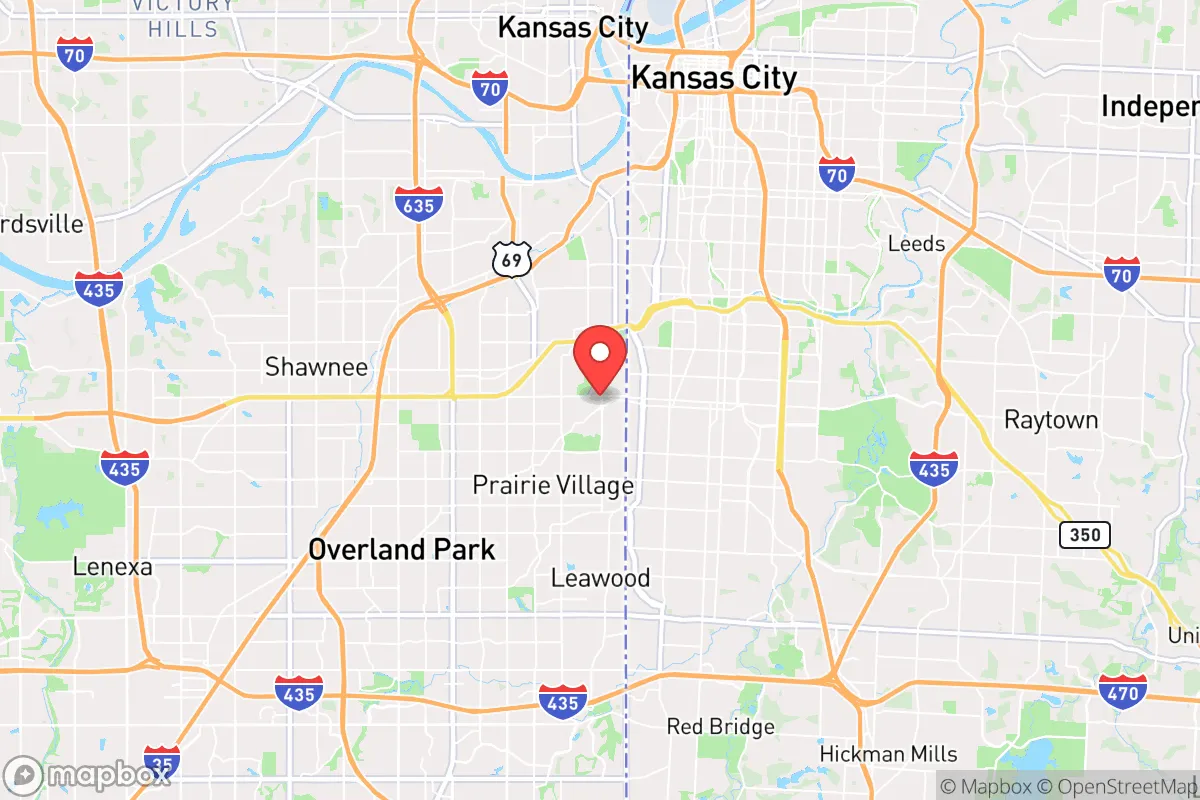
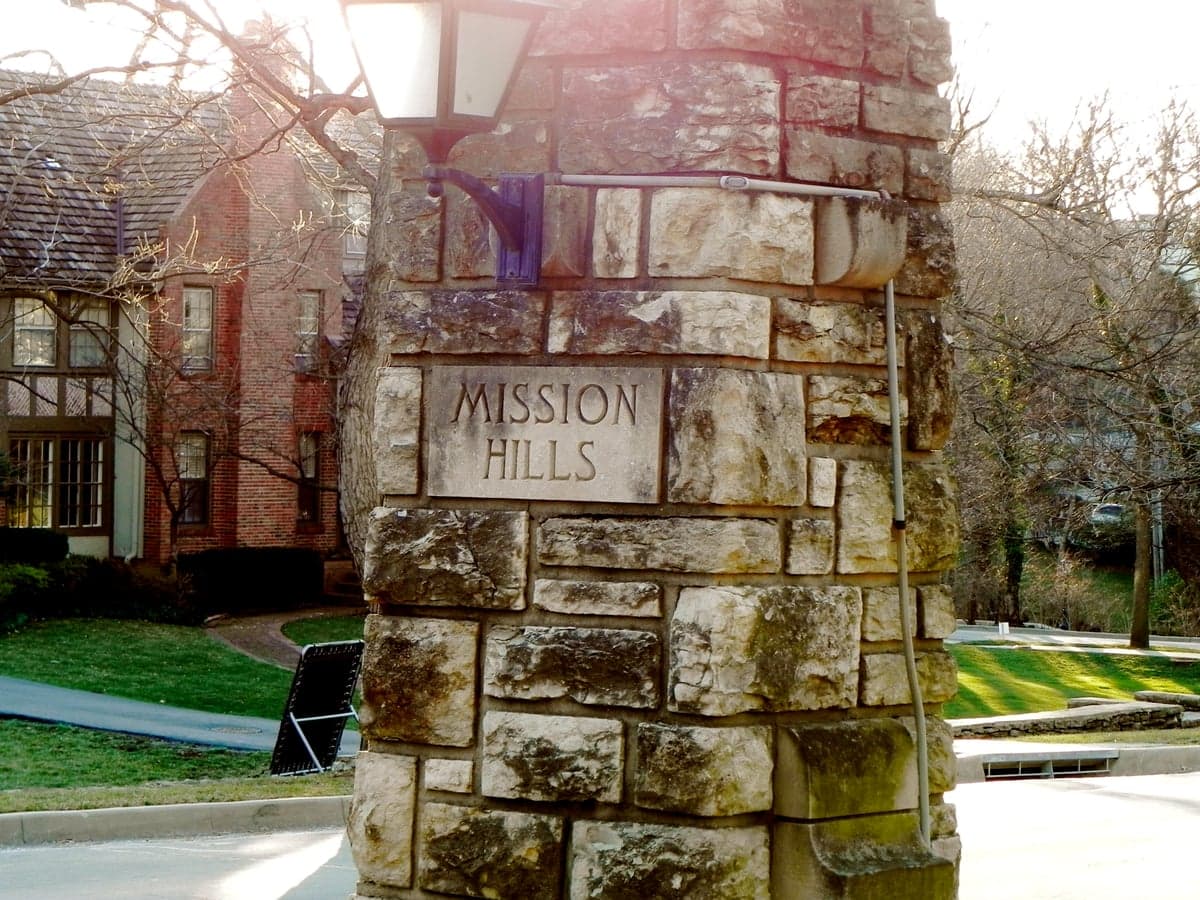
Photo: Wikipedia
Strategic Assessment of Mission Hills, KS
Multiple tactical vulnerabilities. Population density, target proximity, or disaster risk are likely compounding. A retreat property and exit planning is required.
What does the Strategic Assessment tell us?
Our Strategic Assessment grades tactical survivability of an area. Major population centers, military targets, fallout zones, natural disasters, and border exposure all drive risk — lower exposure means a more defensible position in a crisis.
This is heavily inspired by Joel Skousen's Strategic Relocation book. Highly recommended you checkout the book ($)What does this tell us?
Our Strategic Assessment grades tactical survivability of an area. Major population centers, military targets, fallout zones, natural disasters, and border exposure all drive risk — lower exposure means a more defensible position in a crisis.
This is heavily inspired by Joel Skousen's Strategic Relocation book. Highly recommended you checkout the book ($)Strategic Pillars

Key Distances
Regional Safe Places
Below is our recommended "safe zones" in Kansas and the surrounding area based on our strategic heuristics. For most people, it's unrealistic to live in a “safe zone” full-time due to work, family or other personal reasons. They tend to be more rural. However, many of these areas are perfect for second homes and retreat properties that double as a vacation home or even a short-term rental.
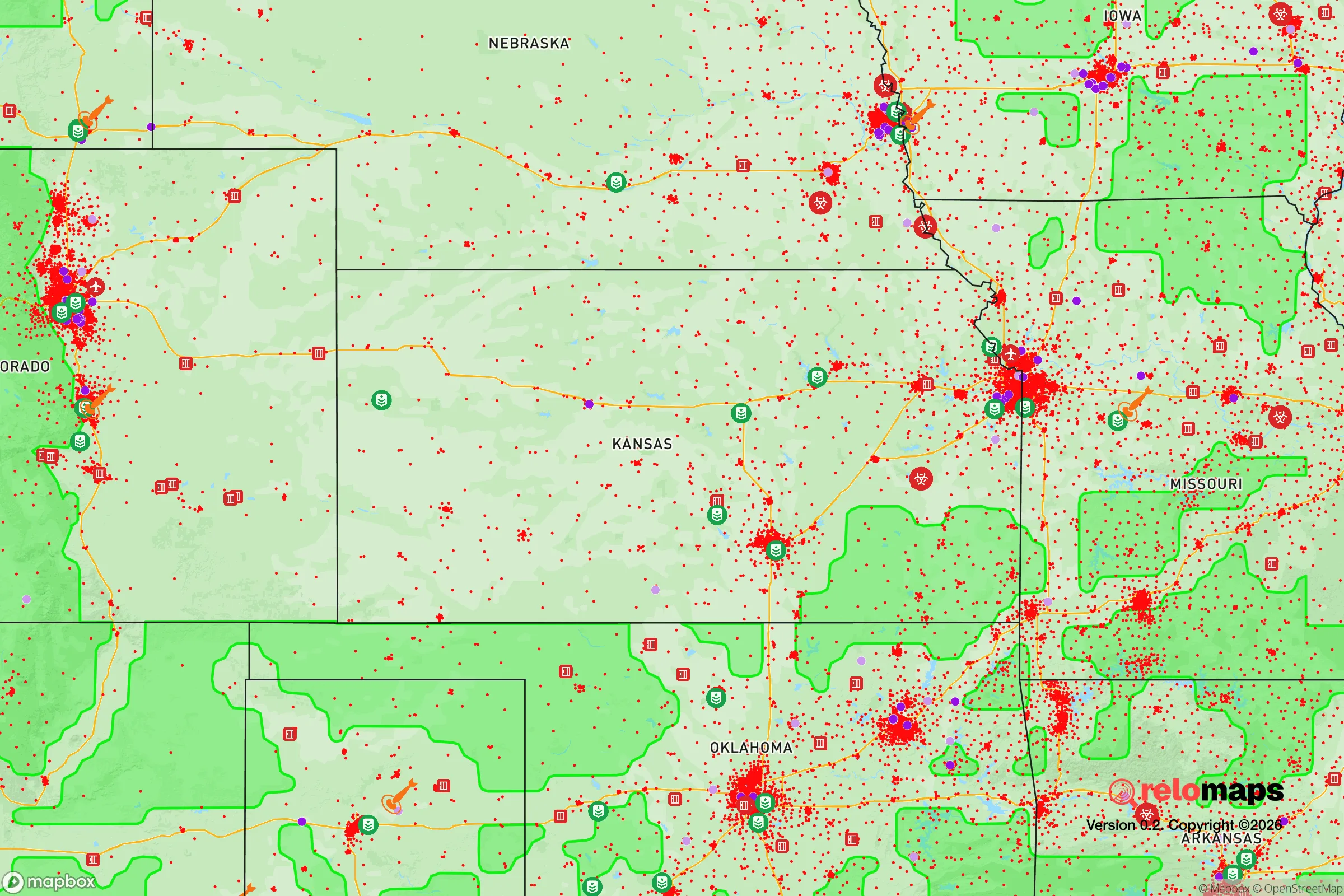
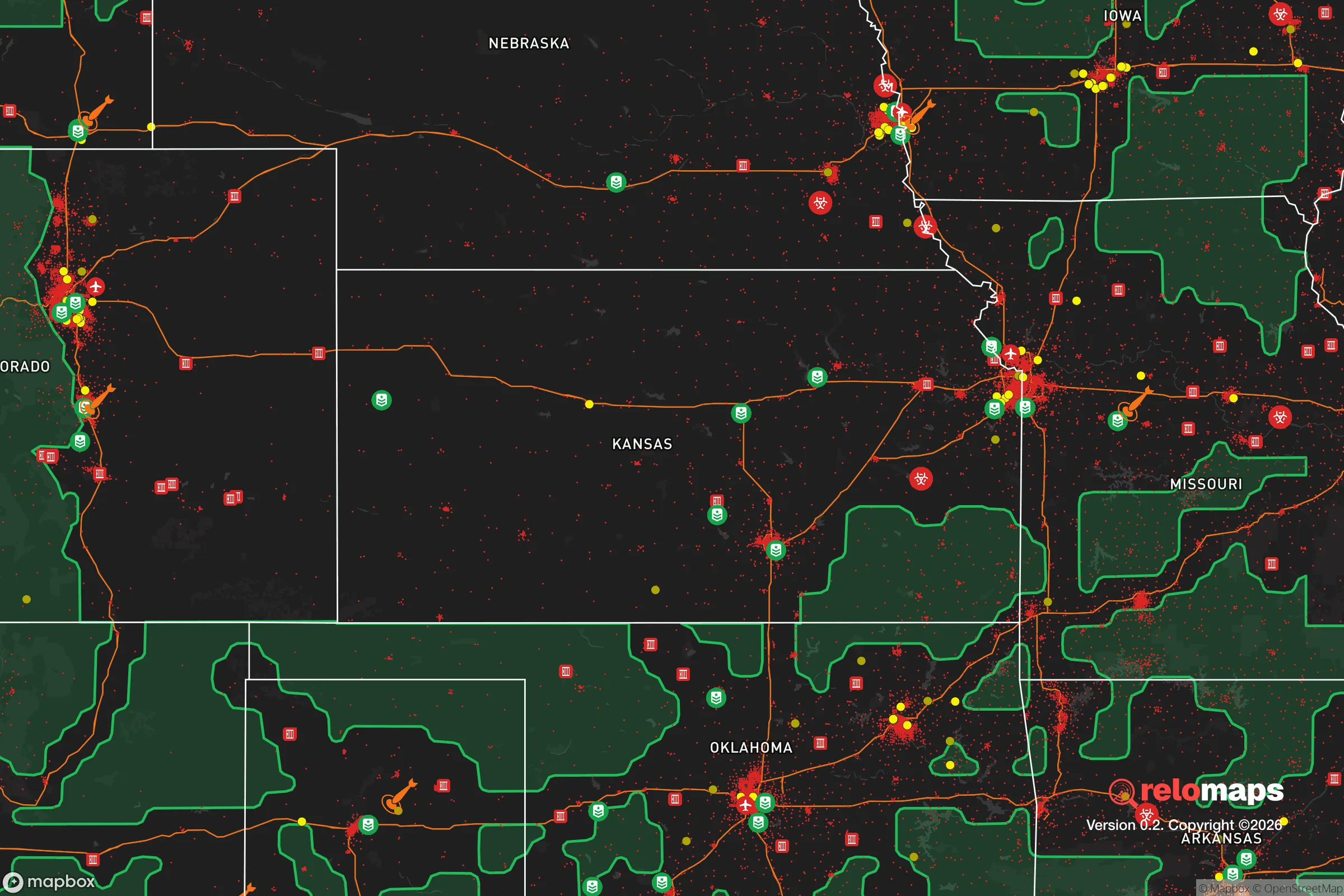


Important Note: For informational purposes only. This does not mean nothing bad ever happens in the green zones. Please use common sense. This is based on public data and modeled with AI. We tried to take a conservative approach but mistakes happen. We update this regularly as new information becomes available.
Solar Generator Recommendations
Backup power matters more here than in safer locations. We've picked three solar generators across budgets and capacity tiers — start with the budget unit if you only need a few essentials, or step up if you want to run a fridge and HVAC for days at a time.

Jackery Portable Power Station Explorer 300
Budget OptionPower on the Go: Weighing only 11 lbs, it's convenient to set up and store with book-sized foldable solar panels

BLUETTI Portable Power Station AC180
Designed for both indoor and outdoor scenarios, AC180 is highly capable as it has a robost capacity and continuous output power.

EF ECOFLOW DELTA Pro Ultra Power Station
Upgraded PickEcoFlow DELTA Pro Ultra is a whole-home energy system designed to grow with your family. Integrated with the Smart Home Panel 2, it scales to meet your evolving energy needs — keeping your home powered, intelligent, and secure through every stage of life.
We earn a commission, at no additional cost to you.
Strategic Assessment Analysis
Mission Hills, Kansas, presents a complex strategic picture for the conservative prepper or survivalist. On the surface, it’s a wealthy, well-manicured enclave with high property values and excellent city services, but a hard-nosed assessment reveals that its resilience is almost entirely dependent on the stability of the broader Kansas City metro area. The town’s location offers a few genuine natural advantages—namely, its position on the bluffs overlooking the Missouri River and its distance from the immediate floodplains—but these are offset by the fundamental vulnerability of being a high-value, densely populated suburb within a major urban corridor. For a relocator prioritizing long-term survivability and self-sufficiency, Mission Hills is a location that demands a very clear-eyed understanding of its risks and a heavy investment in personal preparedness to offset its inherent exposure.
Geographic position and natural advantages for long-term survival
Mission Hills sits on the eastern edge of Johnson County, perched on the high ground of the Kansas River bluffs. This elevation provides a genuine natural advantage: the area is largely immune to the riverine flooding that periodically plagues low-lying parts of the metro, such as the West Bottoms or areas near the Missouri River. The underlying geology is stable, with deep clay and limestone soils that offer good drainage and a solid foundation for any underground infrastructure or bunker-style construction. The local climate is classic Midwestern—four distinct seasons with a reliable growing season from April to October—which means a determined household could supplement food supplies with a substantial garden, though the heavy clay soil requires amendment. The area’s tree canopy is dense, offering some natural cover and a source of firewood, but it also creates a significant wildfire fuel load during dry summers. Water availability is the strongest natural card here: the Kansas River and the Missouri River are both within a few miles, and the region’s aquifer is generally reliable for well water, though most homes in Mission Hills are on municipal supply. For a prepper, the key takeaway is that the land itself is not hostile—it’s fertile, well-drained, and has water access—but it is also not remote. You are surrounded by 2.2 million other people in the metro, and that proximity is the single greatest vulnerability.
Risks, exposures, and proximity to fallout-relevant landmarks
This is where the analysis gets serious. Mission Hills is a prime target by association, not by direct military value. The area is within a 10-mile radius of several high-value civilian and military infrastructure nodes: the Bolling Air Force Base / Whiteman AFB complex is roughly 60 miles east, but the real concern is the concentration of critical infrastructure in the Kansas City metro itself. The Kansas City International Airport (MCI) is a major cargo and passenger hub, and the BNSF Railway yards in the Argentine area of Kansas City, Kansas, are a national chokepoint for rail freight. In a major conflict or a cascading grid failure, these are primary targets for disruption. More immediately, the Wolf Creek Generating Station (a nuclear power plant) is about 90 miles southwest, and while that’s outside the immediate fallout zone for a direct hit, a catastrophic failure there could contaminate the prevailing wind patterns that sweep across eastern Kansas. The Sunflower Army Ammunition Plant in De Soto, about 20 miles west, is a former munitions facility that still contains unexploded ordnance and hazardous materials—a secondary risk if civil order collapses. For the survivalist, the biggest day-to-day risk is not a nuclear strike but civil unrest. Mission Hills is a wealthy, high-visibility target for looting and mob violence if the metro area experiences a breakdown in law enforcement. The town’s police department is well-funded and professional, but in a city-wide crisis, they will be overwhelmed. The interstate system (I-35, I-435, I-70) is a double-edged sword: it provides your escape route, but it also funnels threat vectors directly into your neighborhood. A mass casualty event at the Arrowhead Stadium / Kauffman Stadium complex (15 miles east) or a major chemical spill on I-35 could choke off your primary evacuation routes within minutes.
Practical resilience for a relocator: food, water, energy, and defensibility
For a single individual or family moving here with a prepper mindset, the practical resilience picture is mixed. Food security is poor unless you plan ahead. The local grocery stores—the Price Chopper on 75th Street, the Whole Foods in nearby Leawood—are excellent in normal times but will be stripped bare within hours of a crisis. You need a minimum of a 90-day supply of non-perishable food, and you need to store it in a basement or a dedicated safe room. The good news is that many Mission Hills homes have basements, which is a critical asset for both storage and shelter. Water security is the bigger challenge. The municipal water supply comes from the Kansas River, treated at the Johnson County Water District plants. In a grid-down scenario, those pumps stop. You need a plan for at least 30 gallons per person for drinking and sanitation, plus a means to purify river water if you have to bug out to the bluffs. A Berkey filter or a Sawyer Squeeze is non-negotiable. Energy independence is achievable but expensive. The area gets good sun, so a rooftop solar array with battery backup (like a Tesla Powerwall or a Generac system) can keep your fridge, lights, and communications running indefinitely. Natural gas is widely available, but the grid is fragile—the 2021 winter storm (Uri) showed that. A whole-house generator running on propane or natural gas is a wise investment. Defensibility is the weak point. Mission Hills is a classic suburban layout: winding streets, large lots, but no natural chokepoints. Your home is visible from the street, and the neighbors are close. A hardened safe room in the basement, reinforced doors, and a layered security plan (motion lights, cameras, a good fence) are essential. The town’s low crime rate in normal times creates a false sense of security. In a collapse, your neighbors will be your biggest asset or your biggest liability—start building a mutual aid network now. The Johnson County Sheriff’s Office is professional, but response times will be measured in hours, not minutes, during a widespread event.
The overall strategic picture for Mission Hills is one of high potential reward paired with high risk. It is not a bug-out location; it is a bug-in location for those who can afford the infrastructure to ride out a short-to-medium-term crisis. The area’s economic stability, excellent schools, and low baseline crime make it a comfortable place to live in peacetime. But for the conservative prepper who is serious about surviving a major societal disruption—whether from economic collapse, civil unrest, or a mass casualty event—the proximity to the Kansas City metro is a liability that cannot be fully mitigated. Your best bet is to treat Mission Hills as a base of operations, not a fortress. Invest in a secondary property in a more remote area (e.g., the Flint Hills or the Ozarks) as a true retreat, and use Mission Hills for its economic opportunities and community connections. If you are determined to stay, your survival plan must be built around self-sufficiency, neighborhood mutual aid, and a robust physical security posture. The town will not save you; your preparation will.

* Values derived from national, state, county, city and local statistics and may differ in a specific area. Last updated: 2026-04-27T14:13:47.000Z
Narrative content on this page is AI-generated and may contain mistakes. Verify any details that matter before acting on them.
ReloMaps may earn a commission from affiliate links at no extra cost to you.

