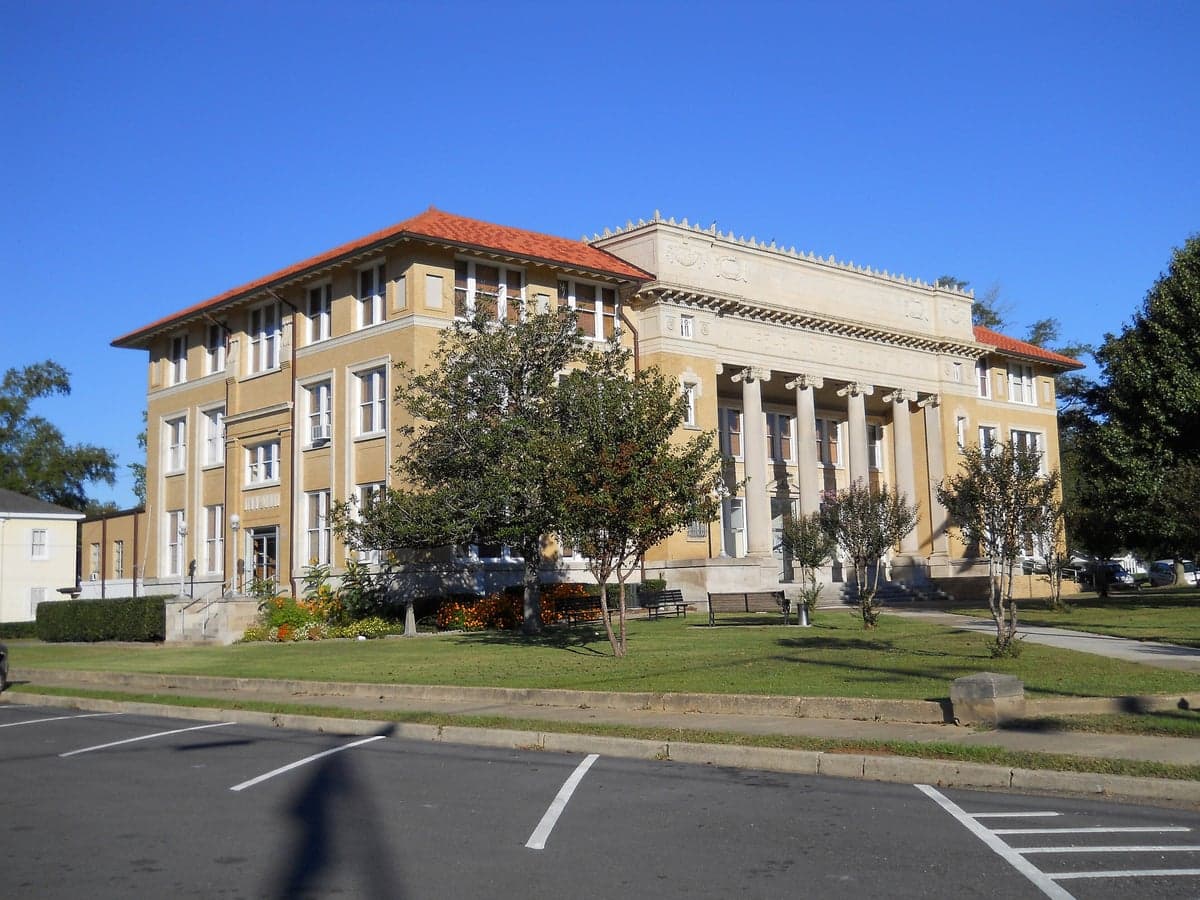
Photo: Wikipedia
Demographics of Pearl River County
Affluence Level in Pearl River County
A below-average socioeconomic profile. Incomes, home values, and educational attainment trail the U.S., with higher poverty and unemployment.
People of Pearl River County
Pearl River County, Mississippi, is home to 56,781 residents who are predominantly white (79.2%) and native-born, with a foreign-born population of just 0.7%. The county’s character is shaped by its rural, timber-and-agriculture heritage, a strong conservative and religious identity, and a population density that remains low outside the small cities of Picayune and Poplarville. Distinctive markers include a deep-rooted sense of place, a population that is older and less college-educated (16.0%) than the national average, and a demographic profile that has changed slowly compared to the fast-growing Gulf Coast metros nearby.
Settlement & growth (pre-1960)
The area now known as Pearl River County was originally inhabited by the Choctaw people, who lived in scattered villages along the Pearl River and its tributaries. European contact began with French explorers and traders in the late 17th century, but significant settlement did not occur until after the United States acquired the region in the 1810 Treaty of Fort Jackson and subsequent land cessions. The Choctaw were forcibly removed in the 1830s under the Indian Removal Act, opening the land to American settlers.
The first major wave of American settlers arrived in the 1830s and 1840s, primarily Scots-Irish and English yeoman farmers moving south and west from the Carolinas, Georgia, and Tennessee. They were drawn by cheap, fertile land along the Pearl River and its tributaries, and by the promise of subsistence farming and small-scale cotton cultivation. These early settlers established the first permanent communities, including Poplarville (founded 1830s, named for the poplar trees along the river) and Picayune (originally a railroad stop called "Hobo" before being renamed in 1883). The county was officially formed in 1890 from parts of Hancock and Marion counties, with Poplarville as the county seat.
Timber became the dominant economic force after the Civil War, drawing a second wave of settlers in the late 19th and early 20th centuries. The vast longleaf pine forests attracted lumber companies and workers from across the South, including many African American families who moved to the area for jobs in logging and sawmills. By 1900, the county’s population had grown to roughly 10,000, with Picayune emerging as the commercial and industrial hub due to its railroad connections. The lumber boom peaked around 1910, and as the forests were depleted, the economy shifted to pulpwood and paper production, with the founding of the St. Joe Paper Company mill in 1938 near Picayune.
The Great Depression and World War II slowed growth, but the post-war period saw a modest influx of returning veterans and their families, many of whom found work in the expanding paper mill and in small-scale agriculture. By 1960, the county’s population had reached about 22,000, still overwhelmingly white and native-born, with a small but established Black community concentrated in Picayune and rural areas like Carriere and McNeill. No significant immigrant groups settled in Pearl River County during this period; the population remained almost entirely of British Isles and African American descent.
Modern era (post-1965)
The 1965 Hart-Cellar Act, which dramatically increased immigration from Asia and Latin America, had almost no effect on Pearl River County. The foreign-born population today is just 0.7%, far below the national average of 13.7%. The county has not experienced the large-scale immigration that reshaped many other parts of the South. Instead, the post-1965 demographic story is one of slow, steady domestic migration and suburbanization from the Gulf Coast.
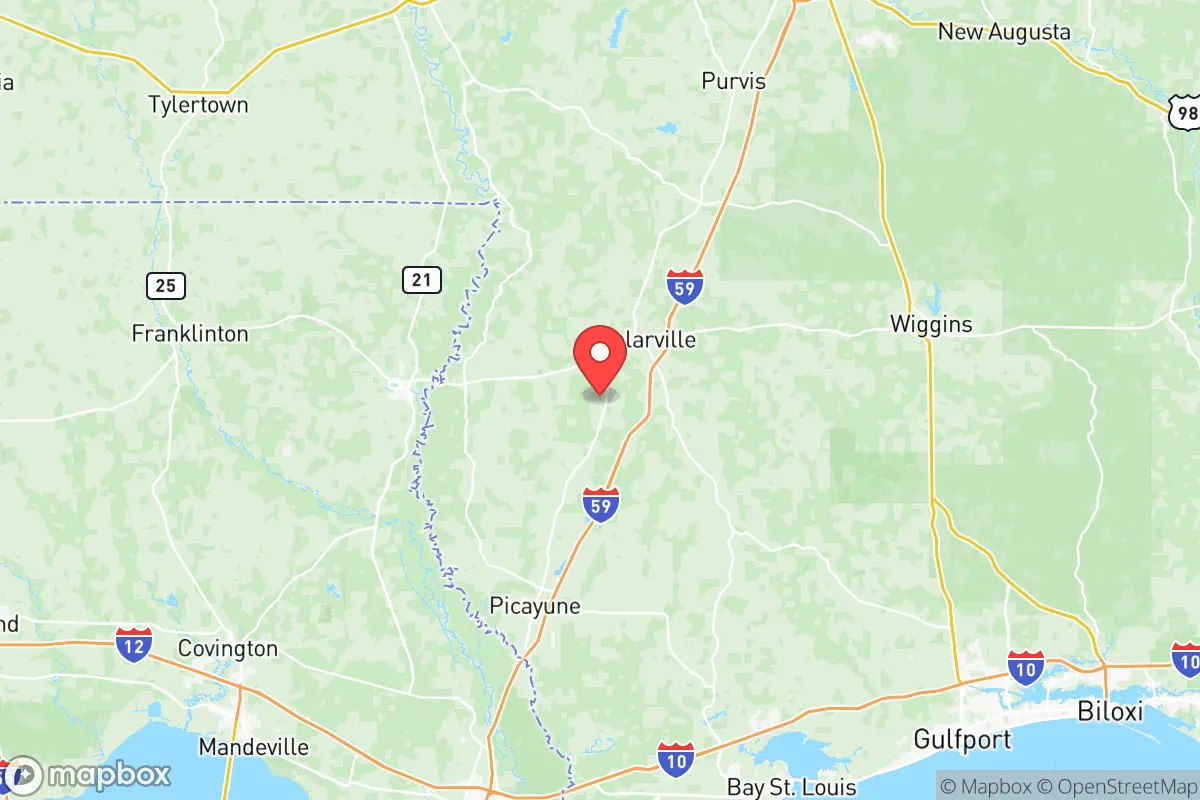
The most significant change has been the growth of Picayune as a bedroom community for workers commuting to the Mississippi Gulf Coast, particularly to Biloxi and Gulfport, about 30 miles south. The expansion of Interstate 59 in the 1970s and 1980s made this commute feasible, and Picayune grew from about 10,000 residents in 1970 to over 11,000 by 2020. This in-migration has been largely white and native-born, drawn by lower housing costs and a slower pace of life compared to the coast. The Hispanic population, now 4.1%, has grown modestly, primarily through Mexican and Central American families working in construction, poultry processing, and agriculture, with small clusters in Picayune and Poplarville.
The Black population, at 12.3%, has remained relatively stable as a share of the total, though many younger Black residents have moved to larger cities like Hattiesburg or New Orleans for education and employment. The East/Southeast Asian population is negligible at 0.3%, and the Indian subcontinent population is 0.1%, reflecting no significant enclave formation. Suburbanization has been limited; the county remains largely rural, with no incorporated places over 12,000 people. The population has grown slowly, from 48,621 in 2000 to 56,781 in 2024, a rate of about 0.5% per year, driven almost entirely by natural increase and domestic in-migration from other parts of Mississippi and Louisiana.
The future
Pearl River County’s population is likely to continue its slow, steady growth, but it will remain one of the most demographically homogeneous counties in the Gulf South. The foreign-born share is projected to remain below 2% for the foreseeable future, as the county lacks the job base, housing stock, or cultural infrastructure to attract significant immigration. The Hispanic population may grow slowly, reaching perhaps 6-7% by 2040, but will likely assimilate into the broader white population rather than forming distinct enclaves. The Black population is expected to remain stable or decline slightly as out-migration continues.
The county is not homogenizing or tribalizing into distinct enclaves; rather, it is slowly becoming more diverse in a very gradual, assimilative way. In-migration from the Gulf Coast and from other parts of the South is reinforcing the county’s existing cultural identity rather than transforming it. The population is aging, with a median age of about 40, and the low college attainment rate (16.0%) suggests limited economic diversification. The next 10-20 years will likely see continued slow growth, with Picayune absorbing most new residents, while Poplarville remains a small college town (home to Pearl River Community College) and rural areas like Carriere, McNeill, and Steep Hollow continue to lose population.
For someone moving in now, Pearl River County offers a stable, culturally conservative, and affordable environment with strong community ties, but with limited economic opportunity and demographic change. It is a place where the past weighs heavily on the present, and where the future will look much like the present—slow, steady, and deeply rooted in the traditions of its Scots-Irish and African American founders.

* Values derived from national, state, county, city and local statistics and may differ in a specific area. Last updated: 2026-05-11T22:32:41.000Z
Narrative content on this page is AI-generated and may contain mistakes. Verify any details that matter before acting on them.
ReloMaps may earn a commission from affiliate links at no extra cost to you.

