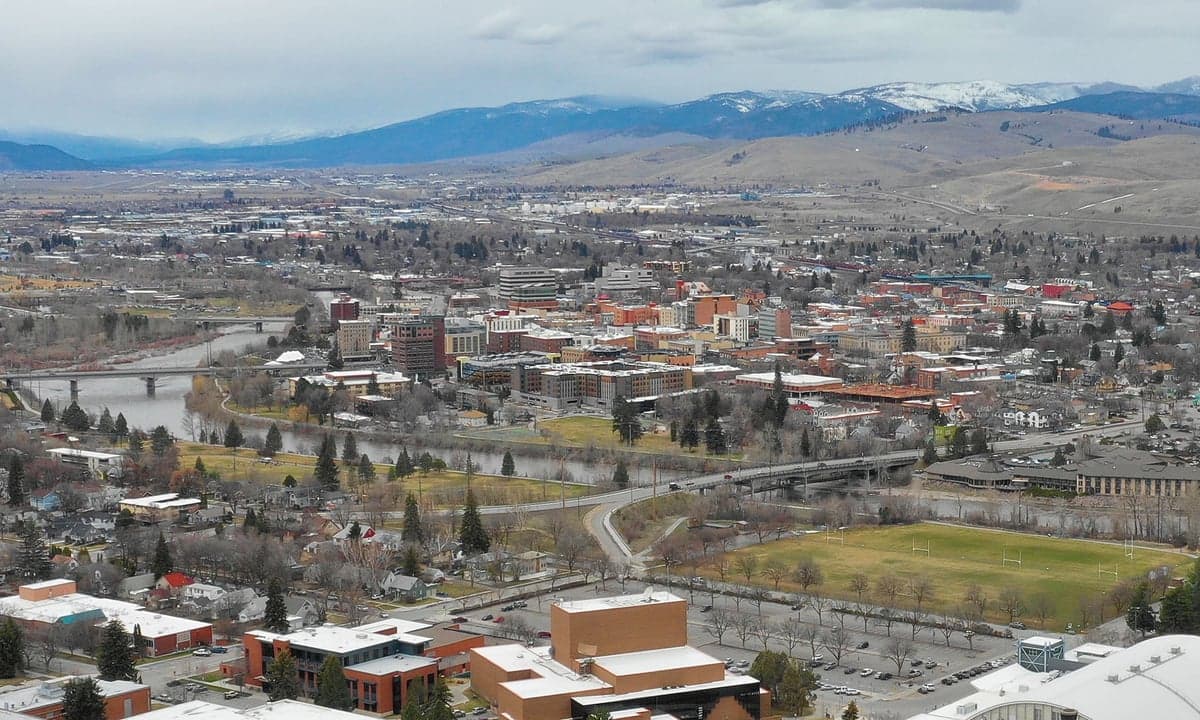
Photo: Wikipedia
Political ClimatePolitical Climate in Missoula, MT
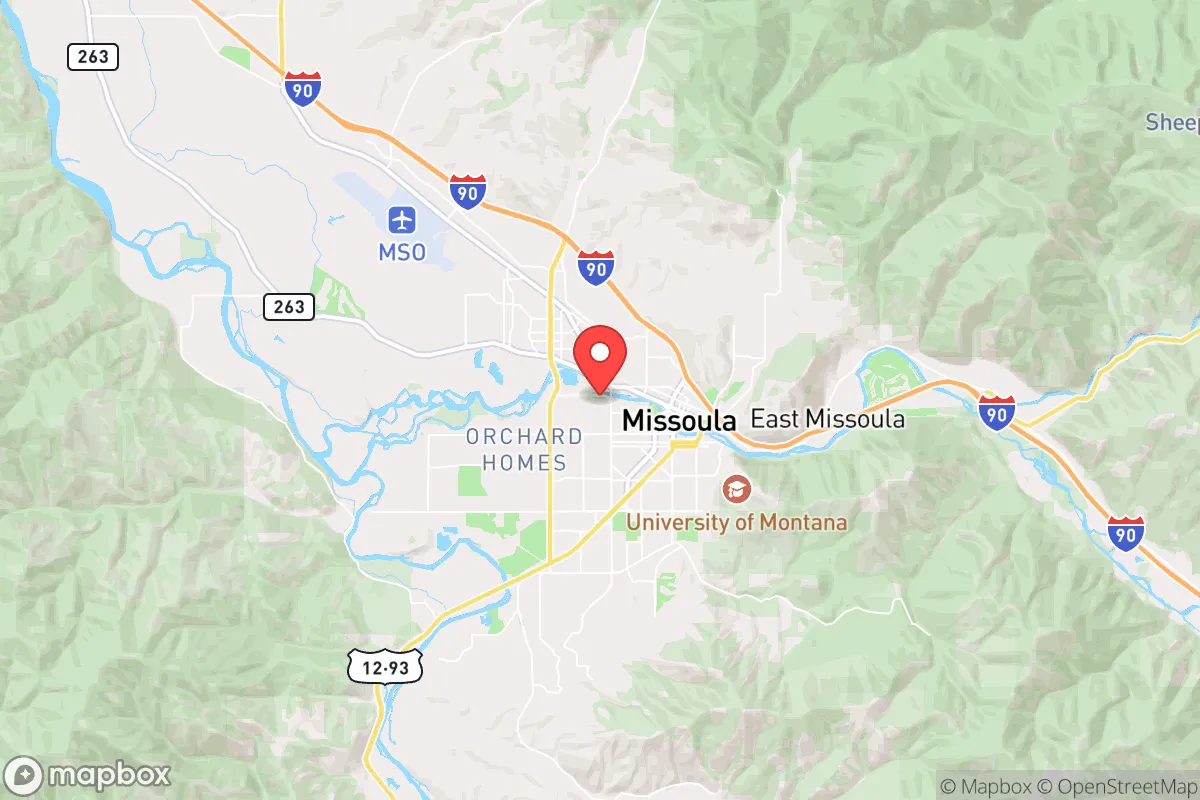
District shown is the primary district for this city’s centroid. Cities may span multiple districts.
Local Political AnalysisPolitical Analysis of Missoula, MT
Missoula’s political climate has shifted noticeably over the past decade, and if you’ve lived here as long as I have, you’ve felt it. The area leans left of the rest of Montana—the Cook PVI is R+5, meaning the county is about five points more Republican than the national average, but that number hides a lot. Missoula itself votes reliably blue in local and state races, while the surrounding rural areas pull hard red. The real story is the trajectory: what was once a live-and-let-live mountain town is now a testing ground for progressive policies that many of us see as creeping government overreach into personal freedoms and rights.
How it compares
Drive 45 minutes east to Helena, and you’ll find a more balanced mix of conservatives and moderates—still a state capital, but with a quieter, more pragmatic vibe. Head south to Hamilton or west to the Bitterroot Valley, and you’re in deep-red territory where property rights and gun freedoms are taken seriously. Missoula stands out as the progressive island in western Montana, and the contrast is stark. In the 2024 election, Missoula County went for the Democratic candidate by a solid margin, while neighboring Ravalli County voted Republican by nearly 40 points. That split isn’t just political—it’s cultural. You see it in the way people talk about land use, school boards, and even how the city handles public health mandates. The city council here has pushed zoning changes and housing regulations that feel like they’re designed to control, not enable, and that’s a red flag for anyone who values local autonomy.
What this means for residents
For folks who’ve been here a while, the biggest concern is how fast the political shift is affecting daily life. Property taxes have climbed as the city expands its budget for social programs and climate initiatives—things that sound good on paper but hit your wallet hard. The city’s approach to homelessness and public camping has swung toward enforcement-heavy policies, but with a progressive twist that leaves many of us wondering if we’re solving problems or just moving them. On the flip side, if you’re a small-business owner or a contractor, you’ve probably noticed more red tape: stricter building codes, energy efficiency mandates, and a permitting process that feels like it’s designed to slow you down. The local school district has also become a battleground over curriculum and parental rights, with some families choosing to homeschool or move to the outskirts where they feel less micromanaged.
One thing that hasn’t changed is the outdoor culture—hunting, fishing, and skiing are still the common ground here. But the political divide is real, and it’s showing up in conversations at the grocery store and in local elections. If you’re considering a move to Missoula, know that you’re not just picking a town with great views—you’re picking a place where the fight over personal freedoms and government overreach is happening in real time. The long-term trend is concerning: more regulation, higher costs, and a growing sense that the city’s leadership is out of step with the values that built this community. Keep an eye on the 2026 midterms—that’ll tell you whether this trajectory holds or if folks here start pushing back.

State Political ClimatePolitical Climate in Montana
State Political AnalysisPolitical Environment in the State
Montana has long been a reliably Republican state in presidential elections, voting for the GOP candidate in every cycle since 1968 except for Bill Clinton’s 1992 win, but the state’s political character is far more complex than a simple red label. Over the last 10-20 years, the dominant coalition has shifted from a mix of libertarian-leaning ranchers and conservative union members to a more culturally conservative, populist Republican base, driven by rapid in-migration from states like California, Washington, and Colorado. The 2024 election saw Donald Trump carry Montana by roughly 20 points, but the state’s U.S. Senate race was a nail-biter, with Republican Tim Sheehy narrowly defeating incumbent Jon Tester, signaling that while the state leans right, its political identity is being reshaped by new arrivals and generational change.
Urban vs. rural divide
The political map of Montana is a textbook case of the urban-rural split. The state’s largest city, Billings, is a conservative stronghold in Yellowstone County, which voted +24 for Trump in 2024ched. Missoula, home to the University of Montana, is the state’s most liberal city, with Missoula County going +18 for Biden in 2020 and +12 for Harris in 2024, driven by a growing population of young professionals, academics, and out-of-state transplants. Bozeman and Gallatin County are the most politically volatile area—once reliably red, the county flipped to Biden in 2020 by a narrow margin, then swung back to Trump in 2024 by about 3 points, reflecting the tension between longtime conservative ranchers and an influx of tech workers and outdoor enthusiasts. Helena, the state capital, leans slightly left due to state government workers, while Great Falls and Butte remain working-class conservative, though Butte’s union history gives it a populist, anti-establishment streak. The rural counties—like McCone, Garfield, and Petroleum—routinely vote 80-90% Republican, creating a stark contrast with the urban islands.
Policy environment
Montana’s policy environment is broadly conservative, but with notable libertarian and populist wrinkles. The state has no sales tax, a major draw for conservatives, though property taxes are relatively high and have been a flashpoint in recent legislative sessions. The regulatory posture is business-friendly, with no state-level minimum wage above the federal $7.25 (though many cities have local ordinances), and a right-to-work law passed in 2021. Education policy is a battleground: the 2023 session saw the passage of HB 303, a school choice bill that expanded charter schools and education savings accounts, but it was vetoed by Governor Greg Gianforte, a Republican, under pressure from rural school districts. Healthcare is a mixed bag—Montana expanded Medicaid under the Affordable Care Act in 2015, and a 2023 bill to impose work requirements on recipients failed, but the state has some of the most restrictive abortion laws in the West, with a near-total ban after 20 weeks and a 2024 law requiring parental consent for minors. Election laws have tightened: SB 169 (2021) requires voter ID with a photo, and HB 176 (2023) ended same-day voter registration, a move that drew criticism from voting rights groups but was framed as election integrity by Republicans.
Trajectory & freedom
Montana is becoming more free in some areas and less in others, depending on your definition. On gun rights, the state is a national leader: HB 102 (2021) eliminated the requirement for a permit to carry a concealed firearm, and SB 42 (2023) prohibited local governments from enforcing federal gun laws, a direct challenge to federal overreach. On parental rights, HB 361 (2023) requires schools to notify parents of any curriculum involving sexual content, and SB 99 (2023) bans transgender athletes from female sports. Medical autonomy took a hit with the 2024 passage of HB 544, which restricts telehealth prescriptions for abortion pills, but the state has no vaccine mandates and a 2023 law prohibits employers from requiring COVID-19 vaccines. Property rights are a growing concern—the influx of out-of-state buyers has driven up land prices, and a 2023 bill to limit foreign ownership of agricultural land passed, but local zoning battles in Bozeman and Missoula have some conservatives worried about government overreach into development. The biggest freedom concern for many is taxation: while there’s no income tax on Social Security benefits, the state’s progressive income tax (top rate 6.75%) and rising property assessments have sparked talk of a flat tax, though no bill has passed.
Civil unrest & political movements
Montana has seen relatively little civil unrest compared to coastal states, but political movements are active and visible. The Yellowstone County Republican Party is a powerhouse, while the Montana Freedom Caucus, a hardline conservative group in the state legislature, has pushed for stricter immigration enforcement and election audits. In 2020, armed protests against COVID-19 restrictions occurred at the state capitol in Helena, with groups like Montanans for Liberty organizing. Immigration politics are less heated than in border states, but a 2024 bill to allow local law enforcement to enforce federal immigration law passed, and there’s been a rise in rhetoric about “sanctuary cities” in Missoula and Bozeman, though neither has formally adopted such policies. Election integrity remains a hot topic: a 2022 audit of the 2020 election in Flathead County found no widespread fraud, but the Montana Secretary of State has pushed for stricter voter roll maintenance. The most visible flashpoint for a new resident would be the culture war in school boards, particularly in Bozeman and Kalispell, where debates over library books and curriculum have drawn large, passionate crowds.
Projection
Over the next 5-10 years, Montana is likely to become more polarized as in-migration continues. The state is growing at about 1.5% annually, with most new residents settling in the western cities—Bozeman, Missoula, and Kalispell—which are trending leftward. This will likely make the state’s U.S. House seat (currently held by Republican Ryan Zinke) more competitive, and could flip the state legislature’s Republican supermajority to a simple majority by 2030. However, the rural counties are not shrinking as fast as in other states, and the GOP’s base in eastern Montana remains solid. The biggest wildcard is the state’s economy: if the tech and outdoor recreation boom continues, the influx of liberal-leaning professionals could shift the political center of gravity, but if a recession hits, the populist, anti-government sentiment that dominates rural areas could strengthen. For a conservative moving in now, expect to see more ballot initiatives on tax reform, school choice, and property rights, and a growing divide between the “old Montana” of ranching and mining and the “new Montana” of remote work and tourism.
For a new resident, the bottom line is that Montana offers a high degree of personal freedom compared to most states, especially on gun rights, parental control, and low regulation, but it’s not a libertarian paradise. Property taxes are rising, the state government is increasingly interventionist on social issues, and the political culture is becoming more contentious as newcomers arrive. If you’re looking for a place where your voice matters and government stays out of your life, Montana is still a strong bet, but keep an eye on the local elections in your county—that’s where the real battles over freedom will be fought.
* Values derived from national, state, county, city and local statistics and may differ in a specific area. Last updated: 2026-04-23T04:42:42.000Z
Narrative content on this page is AI-generated and may contain mistakes. Verify any details that matter before acting on them.
ReloMaps may earn a commission from affiliate links at no extra cost to you.

