
Photo: Wikipedia
Personal Sovereignty in Boone County
Strong independent fundamentals that actively favor personal liberty and low regulation.
What does Personal Sovereignty tell us?
Personal Sovereignty measures your capacity for self-reliance and independence with minimal government friction. Higher scores mean fewer barriers between you and the way you want to live... but it assumes you have the space you need and good neighbors.
What does this tell us?
Personal Sovereignty measures your capacity for self-reliance and independence with minimal government friction. Higher scores mean fewer barriers between you and the way you want to live... but it assumes you have the space you need and good neighbors.
State Policy
Energy independence: Importer (15% of energy produced in-state)
Personal Liberty
Homesteading

Personal Liberty Analysis
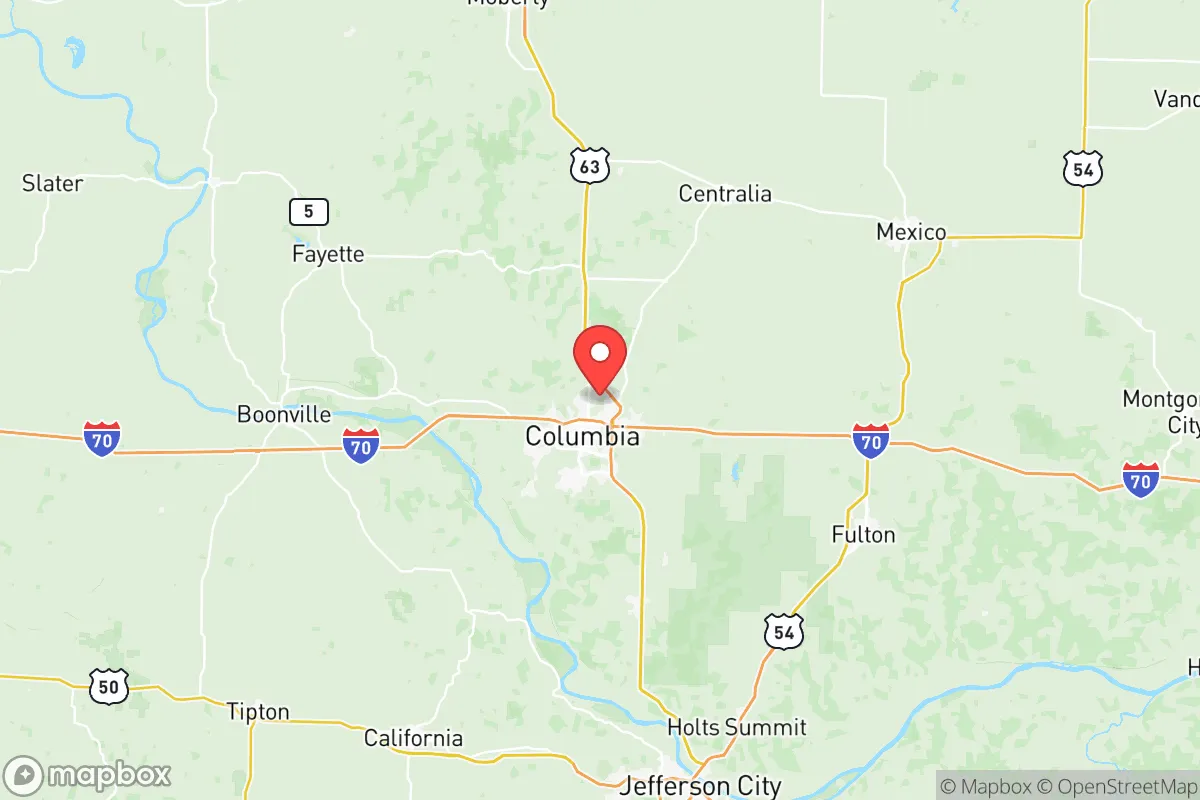
Boone County, Missouri, offers a notably high degree of personal sovereignty compared to many urban and coastal jurisdictions, but the autonomy you experience will vary significantly depending on whether you settle in the city of Columbia versus the unincorporated townships like Hallsville, Ashland, or Sturgeon. For the survivalist or prepper-minded individual, the county presents a mixed picture: the state-level legal framework is strongly protective of gun rights, property rights, and parental authority, but the local political climate in Columbia—home to the University of Missouri—introduces a layer of progressive regulatory pressure that can feel like government overreach. The key strategic decision is choosing a location within the county that aligns with your tolerance for municipal oversight versus your desire for maximum self-reliance.
Tax burden and regulatory posture in Boone County vs. surrounding areas
Missouri is a relatively low-tax state with no state income tax on Social Security benefits and a flat state income tax rate of 4.0% as of 2025, which is favorable for individuals seeking to keep more of their earnings. Boone County's total sales tax rate is 8.35%, which includes state, county, and city levies—slightly higher than rural counties like Audrain or Callaway to the east and north, but still below the national average. Property taxes are modest, with the county's effective rate hovering around 1.1% of assessed value, and Missouri's Hancock Amendment limits property tax increases without voter approval, a meaningful check on government overreach. The regulatory posture is bifurcated: unincorporated areas of Boone County (e.g., Hartsburg, Pierpont) have minimal zoning enforcement, allowing for greater freedom in land use, while the city of Columbia enforces a 200-foot stream buffer ordinance and stormwater management rules that can complicate building or clearing land. For the prepper, the tax burden is manageable, but the real concern is the creeping regulatory expansion in Columbia—such as the city's 2024 rental inspection program—which does not apply to rural properties in places like Rocheport or McBaine.
Self-defense rights and Missouri's gun law specifics in Boone County
Missouri is a constitutional carry state, meaning no permit is required to carry a concealed firearm for anyone 19 or older (18 with military service), and Boone County does not impose any local restrictions beyond state law. This is a critical advantage for personal sovereignty: you can defend yourself without needing government permission. The state also has a "Stand Your Ground" law (RSMo 563.031), which removes the duty to retreat in any place you are lawfully present, and Boone County's sheriff, Dwayne Carey, has publicly stated his office will not enforce any federal gun control measures that conflict with Missouri's Second Amendment Preservation Act. However, there is a practical nuance: Columbia's city council passed a resolution in 2023 opposing the state's permitless carry law, and while it has no legal force, it signals a cultural hostility that could affect interactions with local law enforcement in the city limits. For the survivalist, the safest bet is to live outside Columbia—in places like Centralia or Harrisburg—where sheriff's deputies are more aligned with rural gun culture and where you can shoot on your own property without noise complaints or zoning restrictions.
Self-reliance and homesteading viability: lot sizes, zoning, and off-grid feasibility
Boone County's unincorporated areas offer genuine homesteading potential, but the feasibility depends heavily on the specific township. In the northern part of the county, around Sturgeon and Harrisburg, you can find 5- to 20-acre parcels with no county subdivision regulations, allowing for livestock, gardening, and even small-scale aquaculture. The county's zoning code exempts agricultural operations from most permitting, so raising chickens, goats, or a few head of cattle is straightforward. Off-grid living is legally possible: Missouri has no state law prohibiting rainwater collection, and Boone County does not require a building permit for structures under 200 square feet (e.g., a shed or tiny cabin) in unincorporated areas. However, the county health department mandates a septic system permit for any dwelling with plumbing, and the well-drilling regulations require a minimum of 50 feet of casing—a cost of roughly $5,000 to $8,000. In contrast, Columbia's city limits enforce the International Residential Code, which mandates grid-tied electrical connections for new homes, effectively banning off-grid solar-only setups within city boundaries. For the prepper seeking true self-reliance, the southern part of the county near Ashland and the Missouri River bluffs offers the best combination of cheap land ($3,000–$6,000 per acre as of 2025), lax zoning, and proximity to the Katy Trail for alternative transportation.
Personal liberties: parental rights, medical autonomy, speech, and property
Missouri has strong statutory protections for parental rights, including the Parental Bill of Rights (RSMo 452.375), which affirms that parents have the fundamental right to direct their children's education, healthcare, and religious upbringing. Boone County's public schools—particularly in the Hallsville and Sturgeon districts—have resisted the kind of critical race theory and gender ideology curricula seen in larger districts, and homeschooling is common and lightly regulated (no notification required for non-public schools). Medical autonomy is a mixed bag: Missouri has no state-level vaccine mandate for adults, and the 2021 law prohibiting vaccine passports (RSMo 192.067) remains in effect, but Columbia's city government has pushed for mask mandates and vaccine requirements in the past, creating a tension between local and state authority. Free speech is broadly protected under the Missouri Constitution, and Boone County has not enacted any hate speech ordinances or public assembly restrictions beyond standard time-place-manner rules. Property rights are robust: Missouri's "right to farm" amendment (Article I, Section 35) protects agricultural practices from nuisance lawsuits, and Boone County's planning commission has rejected attempts to impose countywide minimum lot sizes, preserving the ability to subdivide land for family compounds. The primary threat to personal sovereignty in Boone County is the potential for Columbia's city council to expand its regulatory reach into the county through extraterritorial zoning, a tactic used by some Missouri cities to control development up to three miles beyond their borders.
Overall, Boone County ranks as a strong contender for personal sovereignty relative to other Midwestern counties, particularly when compared to the heavily regulated environments of Johnson County, Kansas, or St. Louis County. The state-level legal framework is firmly on the side of individual liberty—constitutional carry, low taxes, parental rights, and property protections—but the local political dynamic in Columbia introduces a persistent friction that requires strategic location selection. For the survivalist or conservative family, the optimal move is to settle in the unincorporated areas of northern or southern Boone County—places like Hallsville, Sturgeon, or Ashland—where you can enjoy the full benefits of Missouri's sovereignty laws without the encroaching hand of city government. The county's real estate market still offers affordable acreage, and the community culture in these rural pockets is self-reliant and wary of federal overreach, making Boone County a viable base for those seeking to live free from the growing constraints of the modern administrative state.

* Values derived from national, state, county, city and local statistics and may differ in a specific area. Last updated: 2026-06-01T04:47:28.000Z
Narrative content on this page is AI-generated and may contain mistakes. Verify any details that matter before acting on them.
ReloMaps may earn a commission from affiliate links at no extra cost to you.

