Photo: Wikipedia
Demographics of Broadwater County
Affluence Level in Broadwater County
A middle-class area roughly in line with national averages across income, home values, education, and employment.
People of Broadwater County
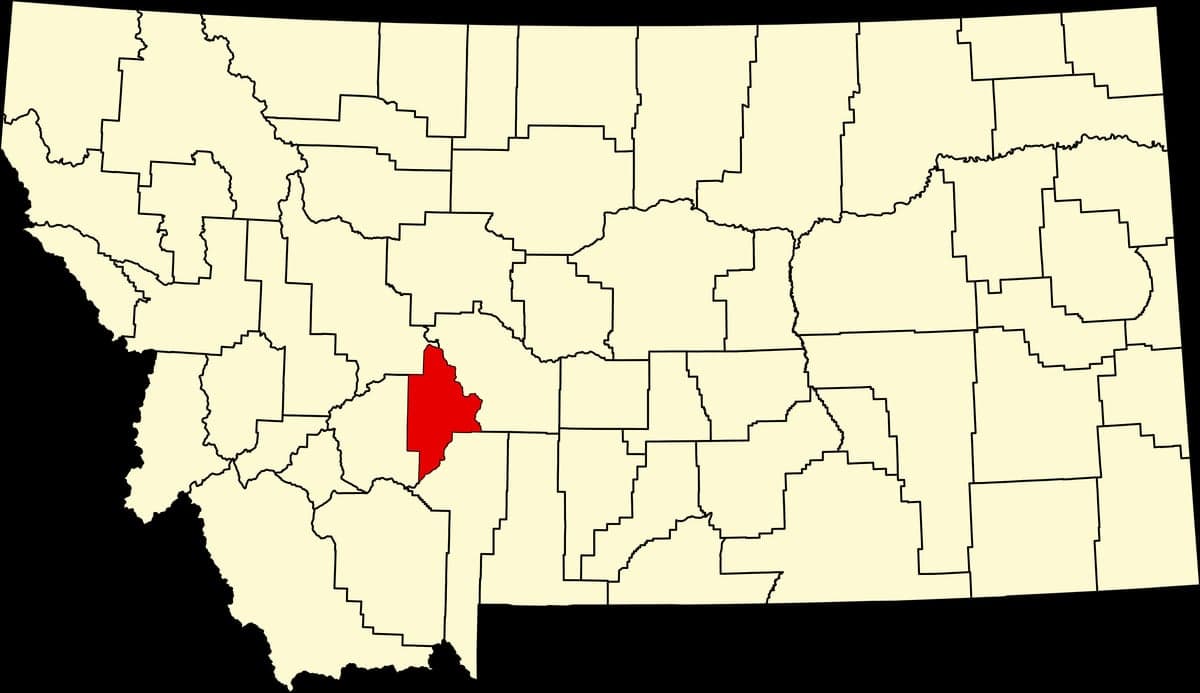
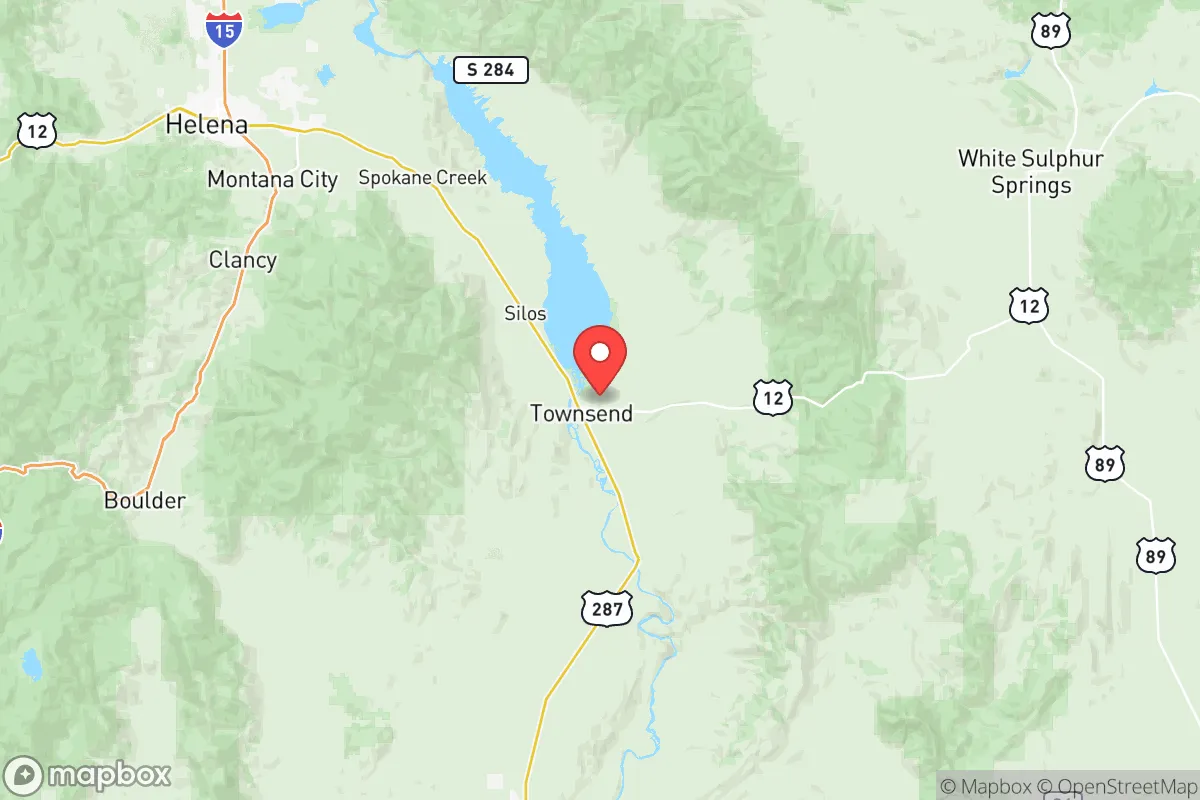
Broadwater County, Montana, is home to 7,310 residents, making it one of the state's more sparsely populated counties, with a character defined by its rural, agricultural roots and a strong sense of frontier independence. The population is overwhelmingly white (89.8%) and native-born, with a foreign-born share of just 0.7%, reflecting a community that has seen little international immigration for generations. Its identity is shaped by the Missouri River, the Big Belt and Elkhorn mountains, and the historic mining and ranching economy that still anchors daily life. For a conservative-leaning audience, Broadwater County represents a place where traditional values, self-reliance, and a slow pace of life remain the norm.
Settlement & growth (pre-1960)
Long before European settlers arrived, the area now known as Broadwater County was part of the ancestral homeland of the Salish, Kootenai, and Pend d'Oreille peoples, who used the Missouri River corridor for travel and seasonal hunting. The Blackfeet Confederacy also ranged into the region, particularly the eastern plains, and the area was a contested zone between tribes. The first non-Native Americans to pass through were Lewis and Clark in 1805, who traveled up the Missouri and noted the fertile valleys and abundant game. However, permanent settlement did not begin until the 1860s, when gold discoveries in nearby Helena and Confederate Gulch drew prospectors and fortune-seekers.
The county itself was created in 1864 from parts of Jefferson and Chouteau counties, and its early population was overwhelmingly American-born migrants from the Midwest and Northeast, along with a significant number of Cornish and Irish miners who came to work the gold and silver claims. The town of Radersburg (now a ghost town) boomed in the 1860s as a mining camp, while Toston grew as a steamboat landing and agricultural center. The arrival of the Northern Pacific Railroad in the 1880s transformed the county, linking Townsend (the county seat) to national markets and spurring a wave of homesteaders—primarily of German, Scandinavian, and British Isles descent—who took up dryland farming and cattle ranching. The Enlarged Homestead Act of 1909 brought another wave of settlers, many from the Dakotas and Minnesota, who established farms around Winston and Crow Creek.
By the 1920s, the county's population peaked at around 6,000, then declined as drought and the Great Depression drove many homesteaders off the land. The Missouri River irrigation projects of the 1930s and 1940s, including the Canyon Ferry Dam (completed 1954), stabilized the agricultural economy but did not reverse the population loss. The county remained overwhelmingly white, with a tiny handful of Chinese laborers who had worked on the railroad and a few African American families who came as cowboys or servants—none of whom formed lasting communities. By 1960, Broadwater County's population had fallen to about 3,500, and its character was firmly set: rural, white, and dependent on ranching and farming.
Modern era (post-1965)
The 1965 Hart-Cellar Act had virtually no effect on Broadwater County. Unlike urban Montana counties such as Yellowstone or Missoula, Broadwater saw no significant influx of immigrants from Asia, Latin America, or Africa. The foreign-born population today is 0.7%, and the county's Hispanic share (1.8%) and East/Southeast Asian share (0.4%) are negligible. The Indian subcontinent population is 0.0%. The county's demographic story since 1965 is one of domestic in-migration, not international.
The major shift came in the 1970s and 1980s, when a wave of retirees and second-home buyers from California, the Pacific Northwest, and the Front Range discovered the county's low land prices and scenic beauty. This "amenity migration" concentrated around Canyon Ferry Lake and the Missouri River corridor, where subdivisions like Lakeview Estates and Hellgate Gulch sprouted. These newcomers were predominantly white, middle-class, and politically conservative, blending easily with the existing population. A smaller but notable group of back-to-the-land homesteaders arrived in the 1970s, settling in the remote Elkhorn Mountains near Elkhorn (a historic ghost town that saw a small revival).
The 1990s and 2000s brought a steady trickle of Montana-born families from larger cities like Helena and Bozeman, seeking cheaper land and a quieter life. This domestic migration has been the primary driver of population growth, pushing the county from 3,500 in 1960 to 7,310 today. The racial composition has remained nearly static: the white share has declined only slightly (from 96% in 1990 to 89.8% today), with the small non-white population consisting mostly of mixed-race individuals and a handful of Hispanic ranch workers who commute from Helena. There are no ethnic enclaves in the county; the few non-white residents are scattered across Townsend, Toston, and the lake communities.
The future
Broadwater County's population is projected to grow slowly, reaching perhaps 8,500 by 2040, driven almost entirely by domestic in-migration from other Western states. The county is not homogenizing in the sense of becoming more diverse—it is likely to remain overwhelmingly white and native-born. Instead, it is tribalizing along lifestyle lines: long-time ranching families, lakefront retirees, and remote workers from Bozeman and Helena form distinct social groups that coexist but do not deeply integrate. The immigrant communities that are reshaping other parts of Montana (e.g., Hmong in Missoula, Latinos in Billings) are absent here, and there is no indication that will change.
The cultural identity of the county is being absorbed rather than transformed by newcomers. Most in-migrants are conservative-leaning, outdoor-oriented, and value the same low-tax, low-regulation environment that attracted the original homesteaders. The biggest demographic pressure point is aging: the median age is 47, well above the national average, and the county's school-age population is declining. If this trend continues, the county may see a gradual shift toward a retirement and recreation economy, with fewer young families and a thinner tax base for services.
For a conservative-leaning individual or family considering relocation, Broadwater County offers a stable, culturally homogeneous environment where change is slow and the dominant values are self-reliance, private property rights, and a connection to the land. The population is not growing rapidly, but it is not shrinking either, and the people who move here tend to stay. The county is becoming a quiet refuge for those seeking to escape the demographic and political turbulence of larger cities—a place where the population's history of frontier settlement still echoes in the present.

* Values derived from national, state, county, city and local statistics and may differ in a specific area. Last updated: 2026-05-12T12:56:47.000Z
Narrative content on this page is AI-generated and may contain mistakes. Verify any details that matter before acting on them.
ReloMaps may earn a commission from affiliate links at no extra cost to you.

