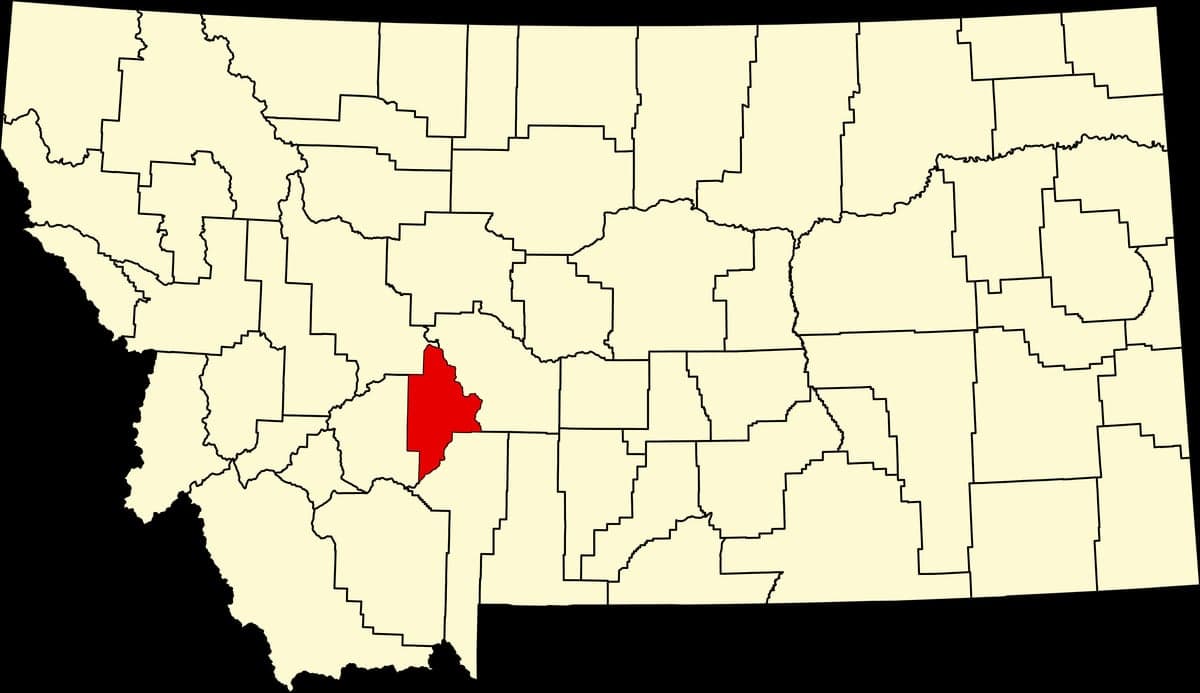
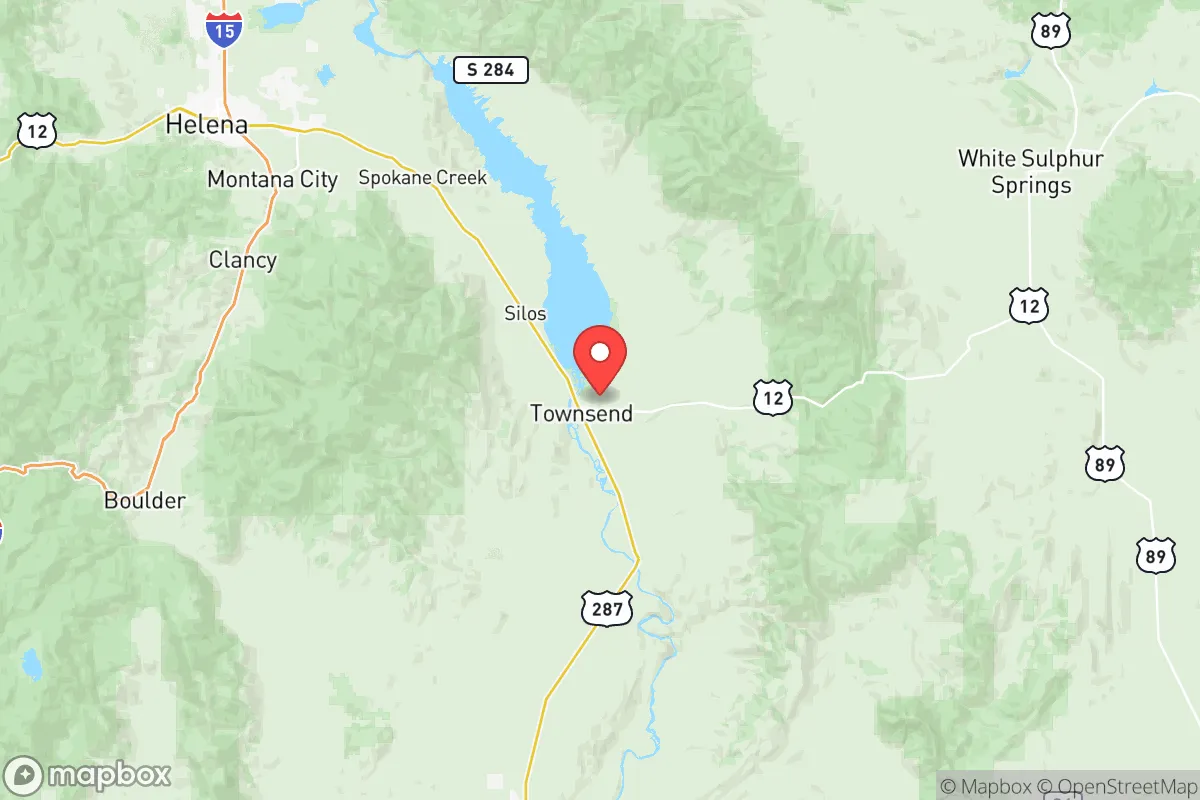
Photo: Wikipedia
Political ClimatePolitical Climate in Broadwater County
Showing district-level results — no local-only data available.
Local Political AnalysisPolitical Analysis of Broadwater County
Broadwater County, Montana, is about as solidly conservative as they come, with a Cook PVI of R+15 that puts it five points to the right of the state as a whole. That's not just a number on a map—it reflects a deep-rooted, live-and-let-live attitude that's been the backbone of this area for generations. You won't find much of the progressive drift that's creeping into places like Bozeman or Missoula; folks here still believe in personal responsibility, limited government, and the right to go about your business without someone in Helena telling you how to do it.
How it compares
Montana as a state leans R+10, which is already pretty red, but Broadwater County is a different animal entirely. The difference comes down to the local culture and economy—ranching, farming, and small-town life dominate here, not the tech or tourism booms that are reshaping other parts of the state. Take Townsend, the county seat: it's a classic rural conservative hub where you'll see more pickup trucks than Teslas, and the local chatter is about water rights and property taxes, not carbon offsets. Over in Radersburg, it's even more pronounced—a tiny unincorporated community where the old-school values of self-sufficiency and minimal government interference are the norm. There aren't really any blue-leaning towns in Broadwater County; the closest you get is maybe a handful of folks near the Canyon Ferry Lake area who lean a bit more libertarian than straight Republican, but even they vote red on the big issues. The swing precincts, if you can call them that, are the rural residential pockets around the lake where second-home owners from out of state sometimes bring a more moderate streak, but it's a drop in the bucket. The county's trajectory is holding steady—if anything, it's getting redder as people move here specifically to escape the overreach they see in places like California or even Missoula.
What this means for residents
For anyone living here, the political climate means a government that mostly stays out of your way. You're not going to see the kind of zoning restrictions or mask mandates that have become common in more progressive areas. Property rights are taken seriously, and there's a strong resistance to any state-level push for gun control or environmental regulations that could hurt the ranching and mining industries. The downside? Services can be thin—don't expect the kind of public transit or social programs you'd find in a big city—but that's a trade-off most locals are happy to make. The real concern for the future is whether the influx of new residents from out of state will start to shift the balance. If enough people move in who don't understand the local way of life—who want to bring their big-government ideas with them—you could see the county's character start to erode. So far, though, Broadwater County has held the line, and the community is pretty vigilant about keeping it that way.
Culturally, this is a place where the Fourth of July parade in Townsend is a bigger deal than any election, and where the local school board meetings are more about budgets than book bans. There's a practical, no-nonsense vibe that sets it apart from the rest of Montana—less of the "outdoor recreation" branding you see in Bozeman, and more of a working-landscape reality. Policy-wise, the county has been a stronghold for Second Amendment sanctuary resolutions and opposition to state-level land-use planning that could infringe on private property. It's not a flashy place, but for someone who values freedom from government overreach, it's about as good as it gets in the Lower 48.

State Political ClimatePolitical Climate in Montana
State Political AnalysisPolitical Environment in the State
Montana is a solidly Republican state with a Cook PVI of R+10, but don’t let that single number fool you into thinking it’s a monolith. The state’s political lean is driven by a deep rural-urban split, with the conservative strongholds of the eastern plains and western ranch counties consistently outweighing the increasingly progressive islands of Missoula and Bozeman. Over the last 20 years, Montana has shifted rightward on cultural and economic issues, but the in-migration wave—especially to the mountain towns—has introduced a new, more progressive strain that is starting to reshape local politics in ways that feel unsettling to long-time residents.
Urban vs. rural divide
The political map of Montana is a tale of two landscapes. The eastern two-thirds of the state—places like Miles City, Glendive, and Sidney—vote Republican by margins of 70% or more, driven by agriculture, energy extraction, and a fierce independence from government meddling. The western mountain valleys tell a different story. Missoula County is the state’s progressive anchor, voting Democratic by double digits in every recent presidential election, fueled by the University of Montana and a growing tech-adjacent creative class. Gallatin County, home to Bozeman, has flipped from reliably red to a true swing county—Bozeman itself is now solidly blue, while the surrounding ranchland still leans conservative. The real battleground is the suburban fringe of these growing metros: places like Belgrade (just west of Bozeman) and Lolo (south of Missoula) are where the fight for the state’s future is happening. Meanwhile, Great Falls and Billings remain reliably Republican, but even Billings’ Yellowstone County has seen its margins shrink as younger professionals move in.
Policy environment
Montana’s policy environment is a mixed bag for conservatives. On the plus side, there is no state sales tax, and the income tax is a flat 5.9%—simple and predictable. Property taxes are moderate but rising, especially in high-growth counties like Gallatin and Missoula. The state’s regulatory posture is generally light, particularly for agriculture and energy, but the permitting process for new housing and development has become a flashpoint. Education policy is a bright spot: Montana has a robust school choice landscape, including charter schools and a new Education Savings Account program passed in 2023 that lets parents use state funds for private or homeschool expenses. Healthcare is more complicated—the state expanded Medicaid under the Affordable Care Act, which many conservatives see as a federal overreach, but the program has been popular in rural areas where hospitals depend on the coverage. Election laws are generally sound: voter ID is required, same-day registration is allowed, and the state has resisted the worst of the mail-in ballot expansion seen elsewhere. However, a 2023 law requiring proof of citizenship to register was challenged in court, and the outcome is pending.
Trajectory & freedom
Montana is at a crossroads on personal freedom. The good news: gun rights are strong—constitutional carry has been law since 2021, and there is no state-level red flag law. The 2023 session saw passage of a parental rights bill that requires schools to notify parents before any instruction on sexual orientation or gender identity, and a medical freedom bill that prohibits vaccine mandates by private employers. Property rights are generally respected, but the influx of out-of-state buyers has driven up land prices, and some counties have experimented with short-term rental restrictions that feel like an infringement on what you can do with your own home. The concerning trend: Missoula and Bozeman have both passed local anti-discrimination ordinances that go beyond state law, effectively creating a patchwork of progressive policies in the most populous areas. The state legislature has pushed back with preemption bills, but the cultural battle is intensifying. On taxation, the 2023 session passed a modest property tax rebate, but the long-term trajectory is toward higher local levies as infrastructure demands grow.
Civil unrest & political movements
Montana is not a hotbed of street-level unrest, but the political temperature has risen noticeably. The most visible flashpoint is the Stand with Women movement, which has organized large rallies in Helena and Billings against transgender policies in schools and sports. On the left, the Montana Environmental Information Center and allied groups have staged protests against new oil and gas leases, particularly around the Bull Mountains near Roundup. Immigration politics are relatively quiet—Montana has a small foreign-born population—but the state has passed laws banning sanctuary cities, and local sheriffs in counties like Carbon County have been vocal about cooperating with ICE. Election integrity controversies have been minimal compared to other states, though a 2022 audit of the 2020 election in Lewis and Clark County (Helena) found no significant irregularities. The most visible organized movement is the Montana Freedom Caucus, a group of state legislators pushing for tighter fiscal policy and stronger preemption of local progressive ordinances. Their influence is growing, but they face pushback from more moderate Republicans in the state senate.
Projection
Over the next 5-10 years, Montana will likely become more politically contested, not less. The in-migration pattern is clear: Bozeman, Missoula, and Kalispell are drawing a younger, more educated, and more left-leaning population from California, Washington, and Colorado. These newcomers are not all progressive—many are fiscally conservative but socially liberal—but they are shifting the cultural center of gravity. The eastern plains will remain deeply red, but their population is stagnant or declining, meaning the state’s political future will be decided in the western valleys. Expect continued battles over land use, school curriculum, and local preemption. The state GOP will likely hold the legislature and governor’s office for the foreseeable future, but the margins will shrink. A new resident moving to, say, Helena or Whitefish should expect to see more progressive local ordinances, more housing density debates, and a growing cultural divide between the old Montana and the new. The state’s freedom index—currently high on guns and taxes but mixed on education and healthcare—will be tested by these demographic pressures.
Bottom line for a new resident: If you’re moving to Montana for the freedom and conservative values, choose your location carefully. The eastern towns and smaller ranch communities still feel like the Montana of 20 years ago. The mountain towns are changing fast, and the political climate there will feel more like Colorado or Oregon within a decade. Pay attention to local elections—school boards, county commissions, and city councils—because that’s where the real fight for Montana’s soul is happening. The state is still a net positive for personal liberty compared to most of the country, but it’s no longer a sure thing. Come for the space and the lifestyle, but be ready to engage in the political process to keep it that way.
* Values derived from national, state, county, city and local statistics and may differ in a specific area. Last updated: 2026-05-12T12:56:47.000Z
Narrative content on this page is AI-generated and may contain mistakes. Verify any details that matter before acting on them.
ReloMaps may earn a commission from affiliate links at no extra cost to you.

