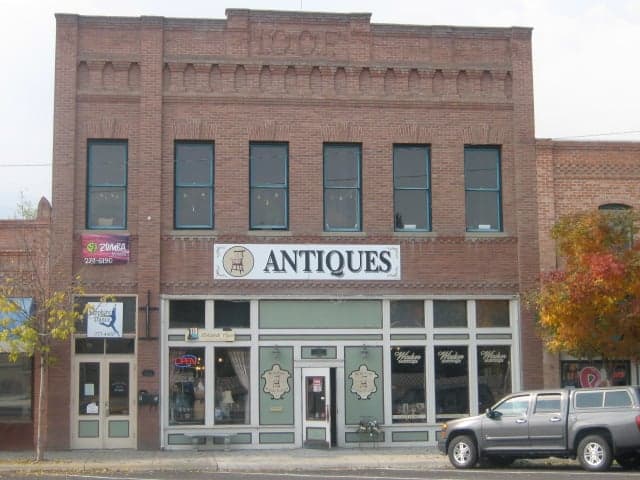
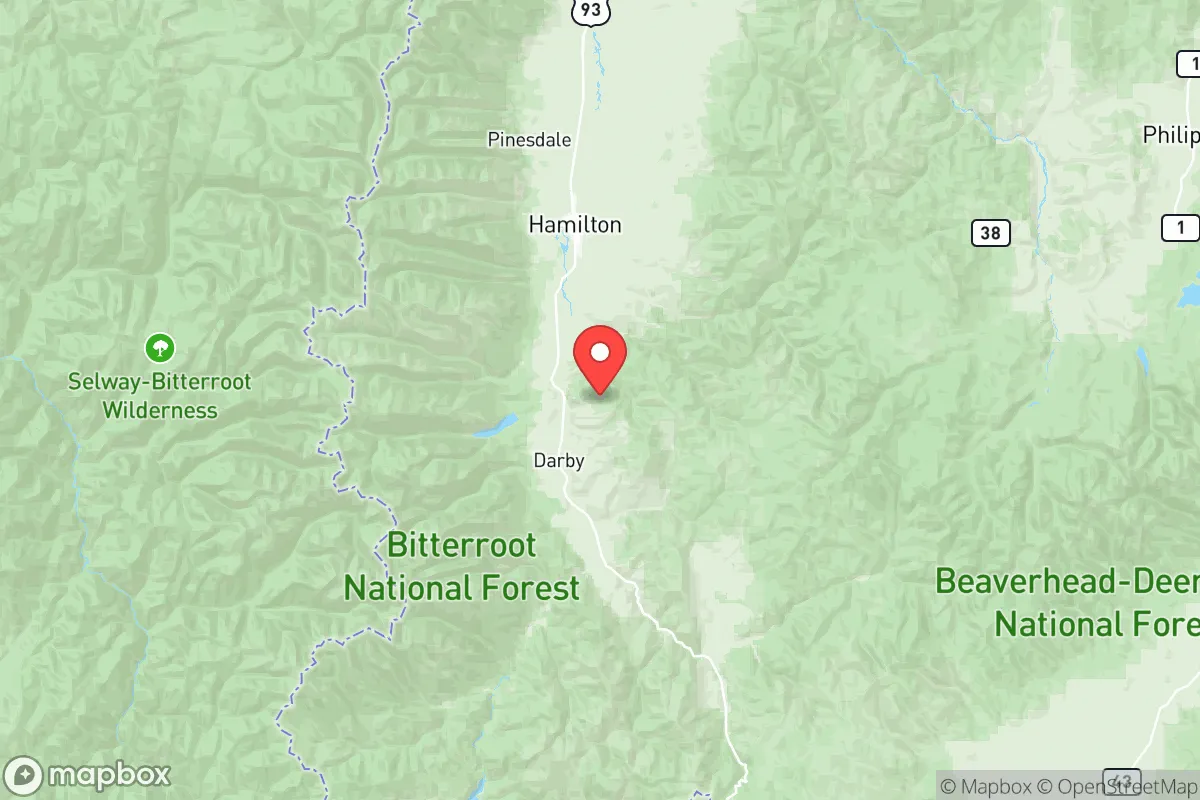
Photo: Wikipedia
Demographics of Ravalli County
Affluence Level in Ravalli County
A middle-class area roughly in line with national averages across income, home values, education, and employment.
People of Ravalli County
Ravalli County, Montana, is home to 45,807 residents, a population that remains overwhelmingly white (89.2%) and native-born, with only 0.9% foreign-born. The county’s character is defined by its rural, conservative-leaning identity, rooted in a history of homesteading, logging, and ranching, with a growing influx of out-of-state migrants seeking mountain scenery and a slower pace of life. The population is concentrated in the Bitterroot Valley, with the largest towns being Hamilton, Stevensville, and Corvallis, each retaining a distinct pioneer-era feel. This is a place where the past is still visible in the landscape and the people, but the future is being shaped by newcomers from California, Washington, and other western states.
Settlement & growth (pre-1960)
Before American settlement, the Bitterroot Valley was the ancestral homeland of the Bitterroot Salish (Salish people), who lived in the valley for thousands of years, hunting, fishing, and gathering camas roots. The Lewis and Clark Expedition passed through in 1805, and by the 1840s, Jesuit missionaries established St. Mary’s Mission near present-day Stevensville, the first permanent white settlement in Montana. The Salish were forcibly removed to the Flathead Reservation to the north by the 1870s, opening the valley to homesteaders.
The first major wave of American settlers arrived in the 1860s and 1870s, drawn by the promise of cheap land under the Homestead Act of 1862. These were primarily Scots-Irish and German farmers from the Midwest and Upper South, who established small farms and ranches along the Bitterroot River. The town of Hamilton was founded in 1890 as a railroad stop and quickly became the county seat, serving as a supply hub for the surrounding agricultural and timber economy. Corvallis, settled in the 1860s, grew as a farming community, while Darby, further south, became a center for logging and sawmills.
By the early 1900s, the U.S. Forest Service established the Bitterroot National Forest, bringing a wave of federal employees and seasonal workers. The timber industry boomed from the 1910s through the 1950s, with mills in Hamilton, Darby, and Victor employing hundreds of workers, many of them second-generation homesteaders. A small number of Italian and Scandinavian immigrants arrived to work in the mines and forests, but the county remained overwhelmingly native-born white. The Dust Bowl of the 1930s brought a few Okie families from Oklahoma and Texas, but the population grew slowly, reaching about 10,000 by 1950.
Modern era (post-1965)
The 1965 Hart-Cellar Act had minimal direct impact on Ravalli County, as the foreign-born population remains at just 0.9% today. Instead, the county’s modern demographic story is one of domestic migration, particularly from the 1990s onward. The decline of the timber industry in the 1980s and 1990s led to economic stagnation, but the rise of telecommuting and the appeal of the Bitterroot Valley’s natural beauty began attracting retirees, remote workers, and second-home buyers from California, Oregon, and Washington.
This in-migration accelerated after 2000, with the county’s population growing from 36,070 in 2000 to 45,807 by 2024. The newcomers are predominantly white, college-educated (29.8% of adults hold a bachelor’s degree or higher), and politically conservative, though often more moderate than long-time residents. They tend to settle in the northern part of the valley, closer to Missoula, in areas like Florence and Stevensville, where subdivisions have replaced farmland. The Hispanic population, at 4.0%, is the largest minority group, consisting largely of Mexican-American families who work in agriculture, construction, and service industries, concentrated in Hamilton and Darby.
East/Southeast Asian residents make up 0.5% of the population, a small but visible presence in Hamilton, where a few families run restaurants and shops. The Black population is 0.2%, and the Indian (subcontinent) population is negligible at 0.0%. There is no significant Arab population. The county remains one of the least ethnically diverse in Montana, with a racial composition that has changed little since 1960, aside from the modest growth of the Hispanic community.
The future
The population of Ravalli County is projected to continue growing slowly, driven by domestic in-migration from the West Coast and Mountain West. The county is not homogenizing in a racial sense — it is already overwhelmingly white — but it is experiencing a cultural shift as newcomers bring different expectations about land use, development, and services. The Hispanic community is likely to grow modestly, as agricultural and construction jobs attract workers, but it will remain a small share of the total population. The foreign-born population is unlikely to rise significantly, given the county’s remote location and lack of major employers.
The most significant demographic trend is the aging of the population, as retirees continue to move in and younger residents leave for jobs in Missoula or elsewhere. This is creating a bifurcated community: long-time ranching and logging families in the southern valley around Darby and Conner, and newer, wealthier residents in the northern valley near Florence and Stevensville. The cultural identity of the county is being absorbed by the newcomers, who are generally conservative but more focused on environmental preservation and outdoor recreation than on extractive industries.
For someone moving in now, Ravalli County offers a stable, safe, and scenic environment with a strong sense of community, but it is not a place of rapid demographic change or ethnic diversity. The population is likely to remain predominantly white, native-born, and politically conservative for the foreseeable future, with the main tension being between long-time residents and newer arrivals over growth and land use.

* Values derived from national, state, county, city and local statistics and may differ in a specific area. Last updated: 2026-05-28T02:06:04.000Z
Narrative content on this page is AI-generated and may contain mistakes. Verify any details that matter before acting on them.
ReloMaps may earn a commission from affiliate links at no extra cost to you.

