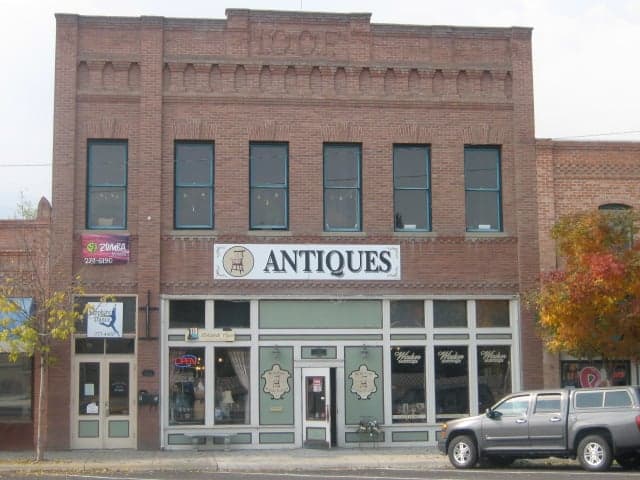
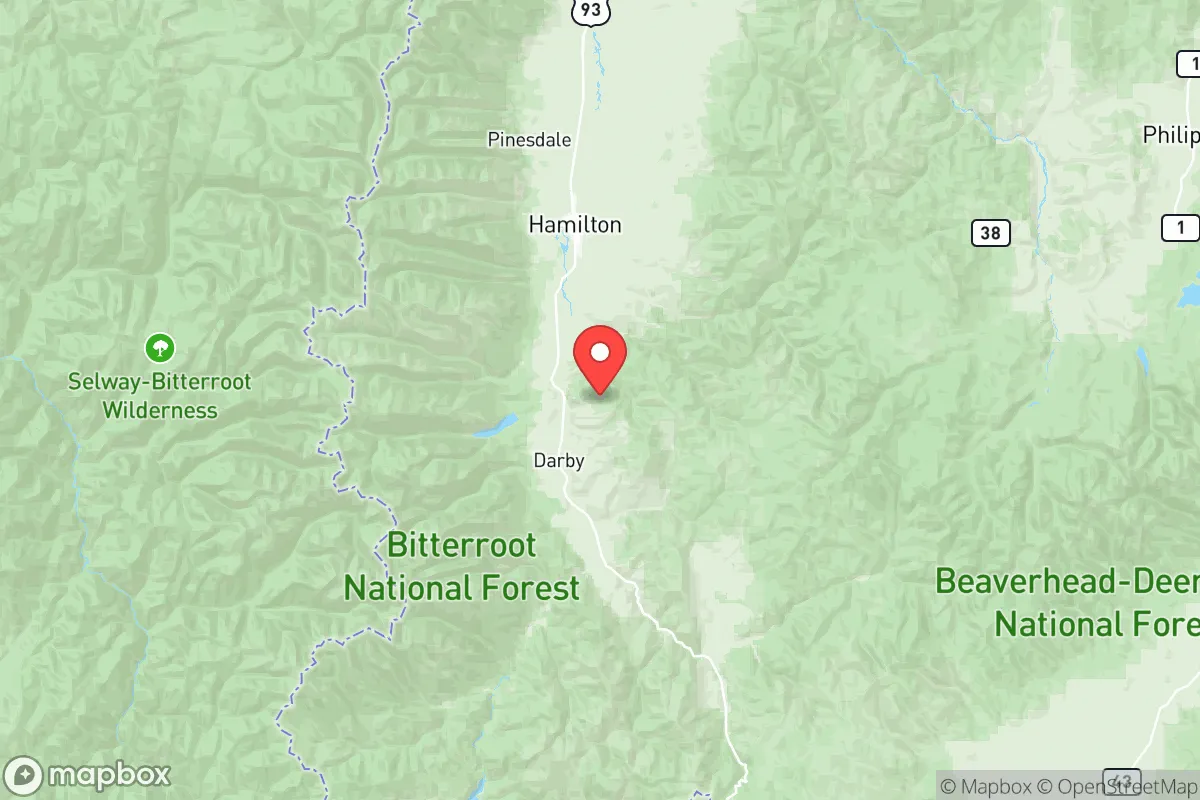
Photo: Wikipedia
Political ClimatePolitical Climate in Ravalli County
Showing district-level results — no local-only data available.
Local Political AnalysisPolitical Analysis of Ravalli County
Ravalli County has long been a solidly conservative stronghold in Montana, but the political winds are shifting in ways that longtime residents find concerning. The county’s Cook PVI of R+5 is notably less red than the state’s R+10, and that gap reflects a growing divide between the rural, traditional values of the Bitterroot Valley and the influx of newcomers, particularly around Hamilton and Stevensville. While the county still leans Republican, the margin has been shrinking in recent elections, and that’s a trend worth watching if you value limited government and personal freedoms.
How it compares
Compared to Montana as a whole, Ravalli County is actually more moderate—or at least less uniformly conservative. The state’s R+10 rating is driven by deep-red strongholds like eastern Montana and the Hi-Line, but Ravalli’s R+5 shows it’s more of a battleground within the western part of the state. The town of Hamilton, the county seat, is the epicenter of this shift: it’s where you’ll find a growing number of remote workers, retirees from California and the Pacific Northwest, and younger families who bring progressive leanings. Stevensville and Florence are still reliably red, with strong gun rights and anti-tax sentiment, but Victor and Corvallis have swing precincts that can tip an election. The real worry for conservatives is that these newcomers don’t just vote differently—they push for zoning changes, environmental restrictions, and school board policies that feel like government overreach. In contrast, the rest of Montana remains more insulated from these cultural shifts, especially in places like Billings or Glendive, where the old-school libertarian streak still runs deep.
What this means for residents
For those who moved here to escape heavy-handed government, the changes are unsettling. Property taxes have climbed as new development demands more services, and there’s been a push for stricter land-use regulations in the Bitterroot Valley—something that would have been unthinkable a decade ago. The county commission has held the line on most progressive initiatives, like mask mandates or diversity programs, but the school board in Hamilton has seen heated battles over curriculum and parental rights. If you value the freedom to build on your land without a permit, or to carry a firearm without a permission slip, Ravalli County is still better than most places—but it’s not the same as it was in the 1990s. The long-term trend is concerning: as more people move in from blue states, they bring blue-state ideas about what government should control.
Culturally, Ravalli County still feels like Montana—rodeos, hunting camps, and church potlucks dominate the calendar—but there’s a growing tension between the old guard and the new arrivals. The Bitterroot National Forest is a flashpoint: longtime residents see it as a working landscape for logging and grazing, while newcomers push for more wilderness designations that lock up access. Politically, the county’s representatives in Helena and Washington have stayed conservative, but local races are getting tighter. If you’re considering a move here, know that the political climate is still friendly to conservative values, but it’s not immune to the progressive creep that’s reshaping the West. Keep an eye on the next county commission election—that’s where the real fight over your freedoms will play out.

State Political ClimatePolitical Climate in Montana
State Political AnalysisPolitical Environment in the State
Montana has long been a reliably Republican state, carrying a Cook PVI of R+10, but the political climate here is far more nuanced than a simple red-state label suggests. Over the past 10-20 years, the state has shifted from a libertarian-leaning, live-and-let-live Western independence to a more polarized battleground, driven by an influx of out-of-state transplants and a growing urban-rural split. While the GOP holds a supermajority in the legislature and dominates statewide offices, the real story is the tension between the state’s traditional conservative values and the progressive drift of its fastest-growing cities.
Urban vs. rural divide
The political map of Montana is a textbook case of the urban-rural divide. The state’s two largest metros, Billings and Missoula, are political opposites. Billings, the largest city, leans Republican but is increasingly moderate, with its Yellowstone County voting +12 R in 2024 — a shift from +18 R a decade ago, as younger professionals and healthcare workers move in. Missoula, home to the University of Montana, is the state’s progressive stronghold, voting +15 D in 2024 and driving nearly all of the state’s left-leaning activism. Bozeman and Helena are the swing zones: Bozeman’s Gallatin County flipped from +4 R in 2016 to +2 D in 2024, fueled by tech and outdoor industry transplants, while Helena’s Lewis and Clark County remains a toss-up, hovering around +1 R. Meanwhile, the rural eastern plains — places like Miles City, Glendive, and Havre — vote +30 to +40 R, anchored by agriculture, energy, and a deep distrust of federal land management. The divide isn’t just about party; it’s about lifestyle. Rural Montanans see the urban influx as a threat to their way of life, while city dwellers push for growth and progressive policies.
Policy environment
Montana’s policy environment is a mixed bag for conservatives. On the plus side, the state has no sales tax, a flat income tax rate of 5.9% (reduced from 6.9% in 2021 via HB 303), and a regulatory posture that is generally business-friendly, especially in energy and agriculture. The 2023 legislature passed a major property tax relief package (SB 121) that capped annual increases for homeowners, a direct response to skyrocketing valuations driven by in-migration. Education policy is a flashpoint: the state has a robust school choice movement, with the 2023 passage of HB 393 creating education savings accounts for special needs students, but public school funding remains a perennial fight. Healthcare is a concern — Montana expanded Medicaid under the ACA in 2015, and while the program is popular in rural areas, it’s a source of tension among fiscal conservatives. Election laws are solid: the state requires voter ID, has no same-day registration, and in 2021 passed SB 169 to tighten absentee ballot rules. However, the 2024 session saw a failed attempt to ban ranked-choice voting, which is used in some local elections. The biggest red flag for conservatives is the growing influence of the state’s judiciary, which has blocked several parental rights bills and gun laws in recent years.
Trajectory & freedom
Montana’s trajectory on personal freedom is a tale of two trends. On one hand, the state has expanded gun rights significantly: in 2021, the legislature passed HB 102, eliminating the requirement for a permit to carry a concealed firearm, and in 2023, HB 372 prohibited state enforcement of federal gun laws that violate the Second Amendment. Parental rights saw a win with SB 99 in 2023, which requires schools to notify parents of any curriculum involving sexual content. On the other hand, the state has seen a concerning expansion of government overreach in the name of public health. During the pandemic, Governor Greg Gianforte (R) issued a state of emergency that lasted over two years, and the 2023 legislature failed to pass a bill limiting emergency powers. Medical autonomy is under threat: the 2023 session saw a ban on gender-affirming care for minors (SB 99), which conservatives view as protecting children, but also a failed attempt to ban vaccine mandates for private employers. Property rights are a growing concern — the state’s Land Board, controlled by the governor, has been aggressive in acquiring new public lands, which some see as a federal land grab. The bottom line: Montana is still freer than most states, but the trend is toward more government intervention, especially in health and land use.
Civil unrest & political movements
Montana has seen relatively little civil unrest compared to coastal states, but the political movements are real and visible. The most organized left-wing activism is in Missoula, where groups like the Montana Human Rights Network and the Missoula Community Rights group have pushed for sanctuary city policies and climate action. In 2020, Missoula saw protests over the death of George Floyd, but they were small and peaceful. On the right, the Montana Freedom Caucus, formed in 2023, has been a vocal force in the legislature, pushing for election integrity audits and opposing any form of vaccine mandates. The most visible flashpoint is the ongoing fight over public lands: the “Sagebrush Rebellion” is alive and well in eastern Montana, with groups like the Montana Land Alliance advocating for state control of federal lands. Immigration politics are muted — Montana has a very small foreign-born population (about 2%), but the 2023 legislature passed a bill (HB 200) requiring local law enforcement to cooperate with ICE. Election integrity controversies have been minimal, but the 2022 primary saw a high-profile challenge to the state’s mail-in ballot system, which was upheld by the courts. A new resident would notice the political divide most in the license plates: you’ll see “Don’t California My Montana” stickers on trucks in rural areas, and “Science is Real” bumper stickers in Bozeman.
Projection
Over the next 5-10 years, Montana is likely to become more politically competitive, but not necessarily more liberal. The in-migration wave — driven by remote workers from California, Washington, and Oregon — is concentrated in Bozeman, Missoula, and the Flathead Valley (Kalispell, Whitefish). These newcomers tend to be moderate to liberal on social issues but fiscally conservative, which could push the state toward a more centrist GOP or even a purple status. However, the rural eastern counties are growing slowly and are deeply entrenched in their conservative values, so the state’s overall R+10 lean is unlikely to flip. The real battle will be over the state’s cultural identity: expect fights over land use, school curriculum, and health mandates to intensify. The 2024 election saw a record number of out-of-state donors pouring money into Montana races, a trend that will only grow. For a conservative moving in now, the key takeaway is that the state’s freedom is under pressure, but it remains one of the best bets for those seeking low taxes, strong gun rights, and a community that still values independence. The challenge will be keeping it that way as the population grows and the political center of gravity shifts.
Bottom line for a new resident: If you’re moving to Montana for the freedom, you’ll find it in the rural counties and smaller towns like Hamilton or Lewistown, where the culture is still rooted in self-reliance. Avoid the Missoula and Bozeman bubbles if you want to escape progressive politics, but even there, the state’s constitutional protections and low taxes offer a buffer. The fight for Montana’s soul is just beginning, and your vote — and your voice — will matter more here than in almost any other state.
* Values derived from national, state, county, city and local statistics and may differ in a specific area. Last updated: 2026-05-28T02:06:04.000Z
Narrative content on this page is AI-generated and may contain mistakes. Verify any details that matter before acting on them.
ReloMaps may earn a commission from affiliate links at no extra cost to you.

