Photo: Wikipedia
Demographics of Moore, OK
Affluence Level in Moore, OK
A middle-class area roughly in line with national averages across income, home values, education, and employment.
People of Moore, OK
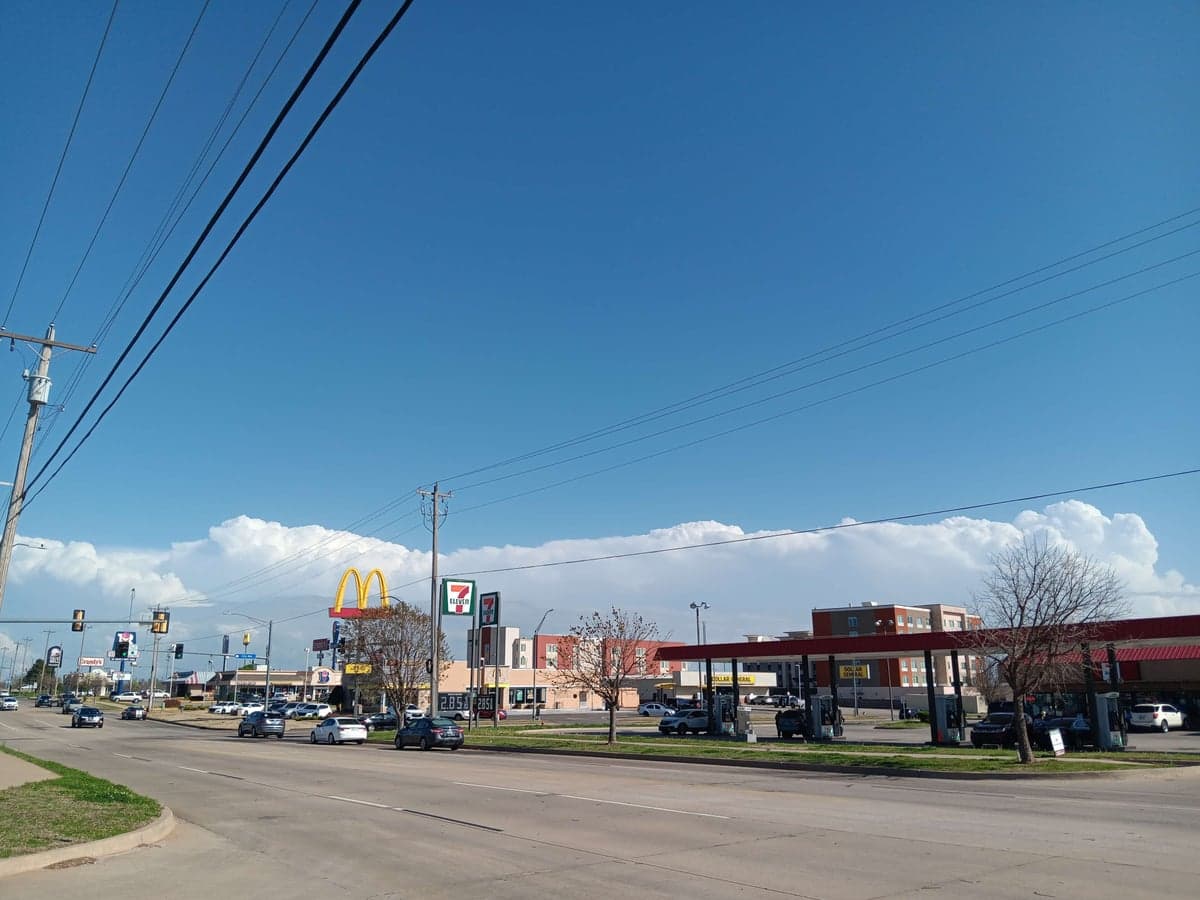
The people of Moore, Oklahoma today form a predominantly white, family-oriented suburban community of 63,045 residents, with a notably low foreign-born share of just 2.3% and a growing Hispanic population of 12.7%. The city is characterized by its strong blue-collar and middle-class identity, rooted in the aerospace and energy sectors, and a reputation for resilience following repeated tornado disasters. Distinctive markers include a high rate of homeownership, a younger-than-average median age, and a population that is less ethnically diverse than the national average but more diverse than much of rural Oklahoma.
How the city was settled and grew
Moore was not a pioneer-era settlement but a railroad town that emerged after the 1889 Land Run. The original population consisted almost entirely of white homesteaders from the Midwest and Upper South, drawn by the promise of free land under the Homestead Act. The town was formally platted in 1887 along the Atchison, Topeka and Santa Fe Railway line, and its early economy revolved around cotton farming and cattle shipping. The historic downtown Moore district, centered around Main Street and Broadway Avenue, was built by these early farming families, with many original wood-frame homes still standing. A second wave arrived during the 1930s Dust Bowl, when displaced farmers from the Oklahoma Panhandle and Texas Panhandle moved into the area, settling in the Southwest Moore neighborhoods near the railroad tracks, where smaller, more modest homes were built. Through the 1950s, Moore remained a small agricultural service town of fewer than 5,000 residents, with no significant non-white population.
Modern era (post-1965)
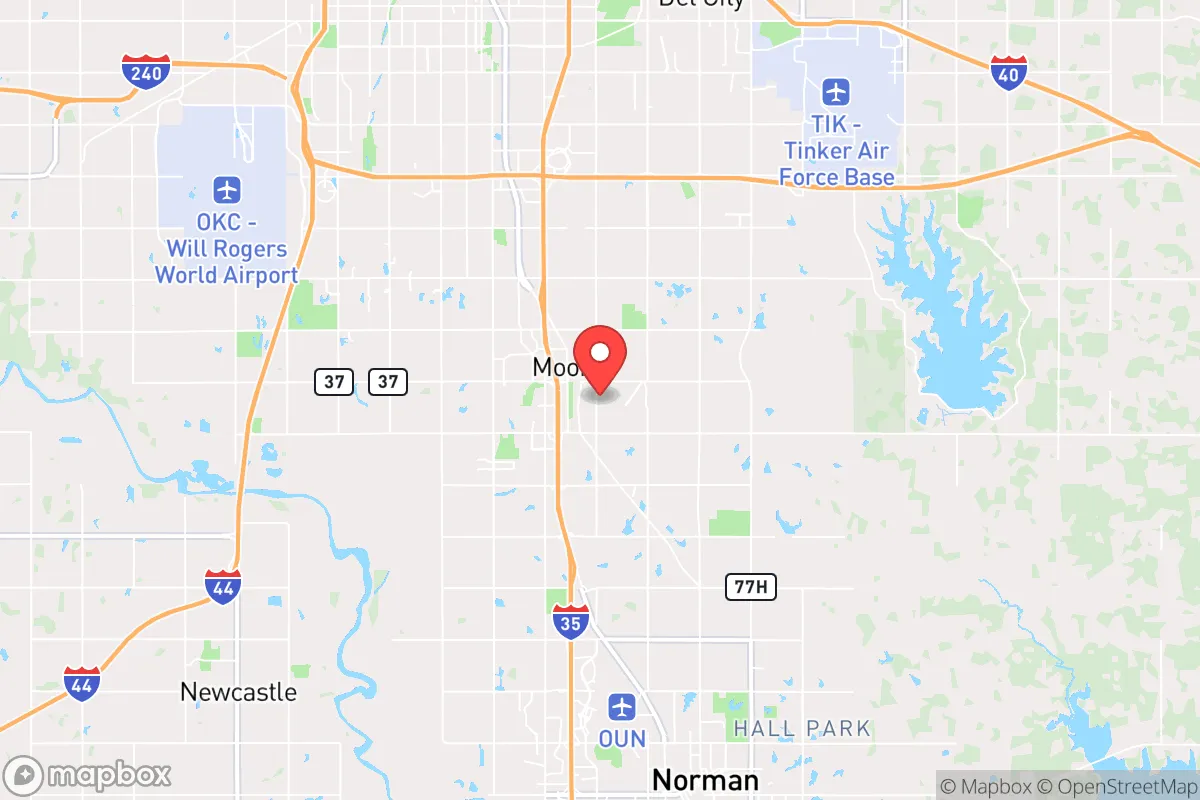
The post-1965 transformation of Moore was driven not by immigration but by domestic suburbanization and the expansion of Tinker Air Force Base, located just east of the city limits. The 1970s and 1980s saw explosive growth as white families from Oklahoma City and rural Oklahoma moved into new subdivisions. The Santa Fe Crossing neighborhood, developed in the 1980s, became the primary landing zone for middle-class families working at Tinker or in Oklahoma City's energy sector. The East Moore area, near the base, absorbed a smaller wave of military families, including a modest number of Black and Hispanic service members. The Hispanic population grew from negligible in 1990 to 12.7% today, driven largely by construction and service-industry jobs, with the highest concentrations in the North Moore neighborhoods around SW 4th Street and Telephone Road. The Asian population (East/Southeast Asian, 3.2%) is almost entirely tied to Tinker Air Force Base and the University of Oklahoma Health Sciences Center, with families concentrated in the West Moore subdivisions near I-44. The Indian-subcontinent population (0.1%) is negligible, consisting of a handful of professionals in the aerospace sector. The Black population (5.2%) remains stable, with no single dominant neighborhood but a visible presence in the Central Moore area near the high school. The foreign-born share of 2.3% is among the lowest for any city of this size in the United States, reflecting Moore's character as a destination for domestic, not international, migration.
The future
Moore's population is projected to continue growing at a moderate pace, reaching approximately 70,000 by 2035, driven by continued expansion of Tinker Air Force Base and the development of the Moore West corridor along I-44. The city is not tribalizing into distinct ethnic enclaves but is instead experiencing a slow homogenization, with the white share declining gradually from 66.1% as Hispanic and Asian populations grow. The Hispanic community is likely to increase to 15-18% over the next decade, primarily through domestic migration from Texas and California rather than international immigration. The East/Southeast Asian population is expected to plateau around 3-4%, as it remains tied to military and medical professional rotations. The Indian-subcontinent population will likely remain under 0.5%. The city's low college attainment rate (27.7%) and high homeownership rate suggest Moore will remain a solidly middle-class, family-oriented suburb with a conservative political character. For someone moving in now, Moore offers a stable, predominantly white, English-dominant community with strong schools and a low crime rate relative to Oklahoma City, but with limited ethnic diversity and a population that is more insular than cosmopolitan.
Moore is becoming a slightly more diverse but still overwhelmingly white and domestic-born suburb, where the primary demographic story is not immigration but the slow, organic growth of a blue-collar and military-affiliated population. For conservative-leaning families seeking a safe, affordable, and culturally familiar environment, Moore represents a stable choice with predictable future demographics.

* Values derived from national, state, county, city and local statistics and may differ in a specific area. Last updated: 2026-04-21T10:27:13.000Z
Narrative content on this page is AI-generated and may contain mistakes. Verify any details that matter before acting on them.
ReloMaps may earn a commission from affiliate links at no extra cost to you.

