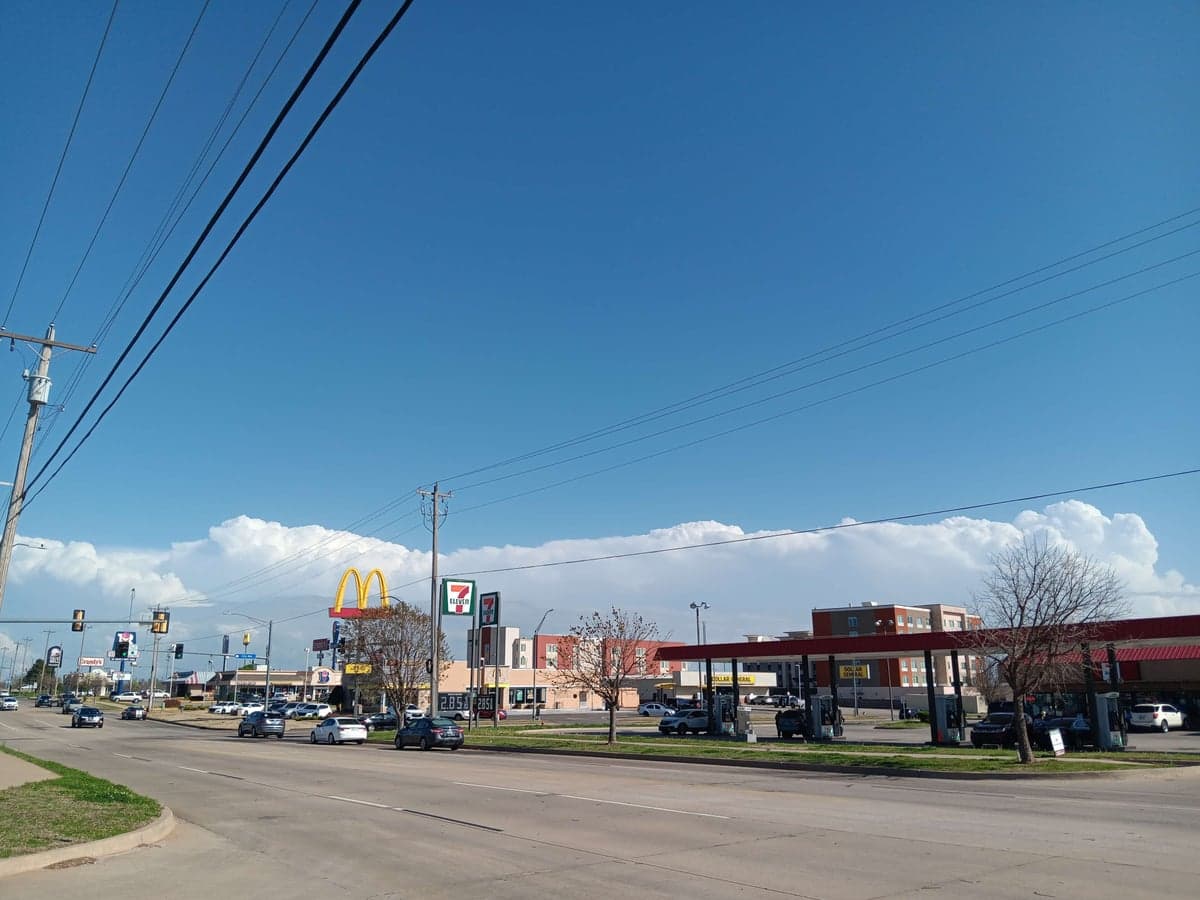
Photo: Wikipedia
Strategic Assessment of Moore, OK
Multiple tactical vulnerabilities. Population density, target proximity, or disaster risk are likely compounding. A retreat property and exit planning is required.
What does the Strategic Assessment tell us?
Our Strategic Assessment grades tactical survivability of an area. Major population centers, military targets, fallout zones, natural disasters, and border exposure all drive risk — lower exposure means a more defensible position in a crisis.
This is heavily inspired by Joel Skousen's Strategic Relocation book. Highly recommended you checkout the book ($)What does this tell us?
Our Strategic Assessment grades tactical survivability of an area. Major population centers, military targets, fallout zones, natural disasters, and border exposure all drive risk — lower exposure means a more defensible position in a crisis.
This is heavily inspired by Joel Skousen's Strategic Relocation book. Highly recommended you checkout the book ($)Strategic Pillars

Key Distances
Regional Safe Places
Below is our recommended "safe zones" in Oklahoma and the surrounding area based on our strategic heuristics. For most people, it's unrealistic to live in a “safe zone” full-time due to work, family or other personal reasons. They tend to be more rural. However, many of these areas are perfect for second homes and retreat properties that double as a vacation home or even a short-term rental.
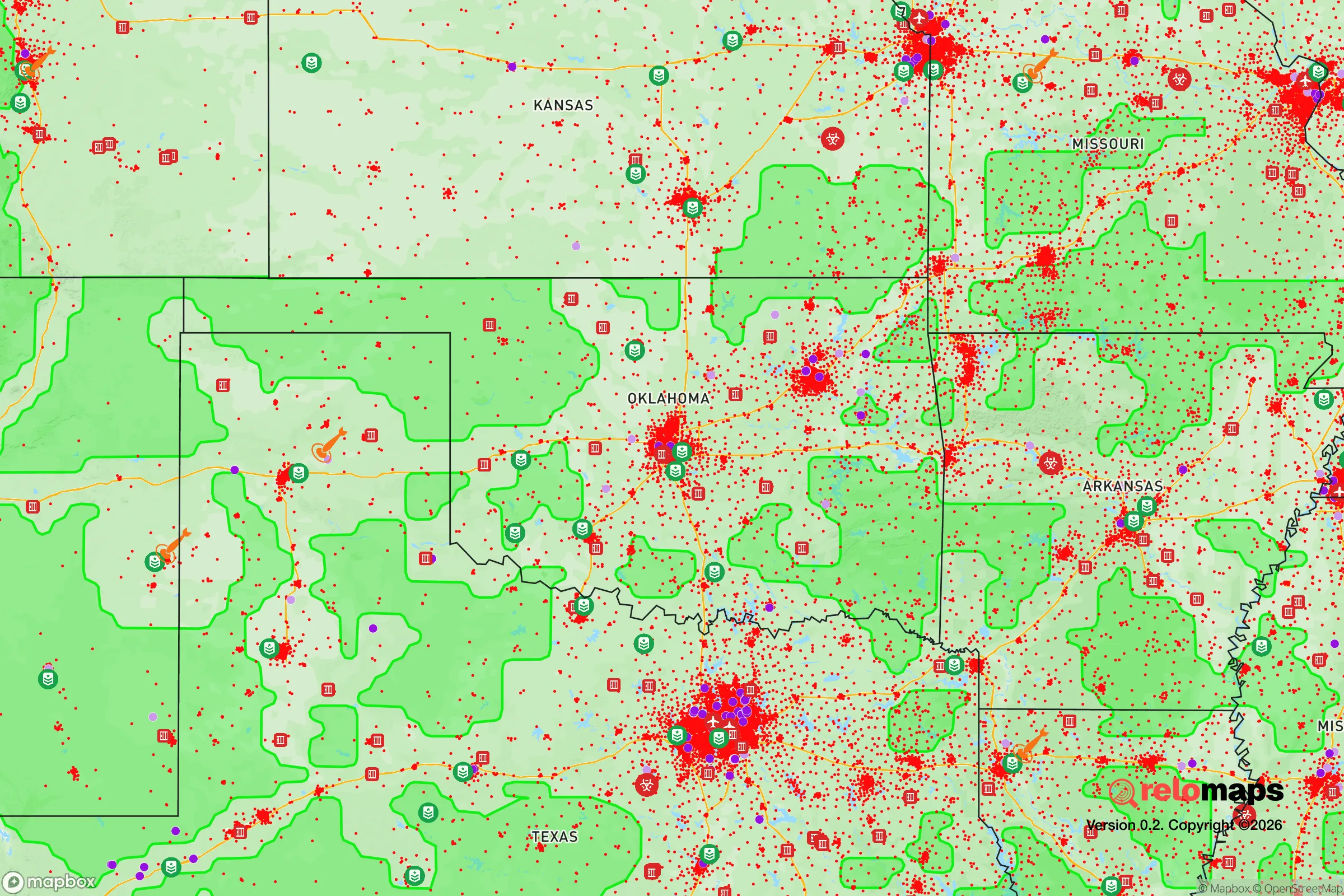
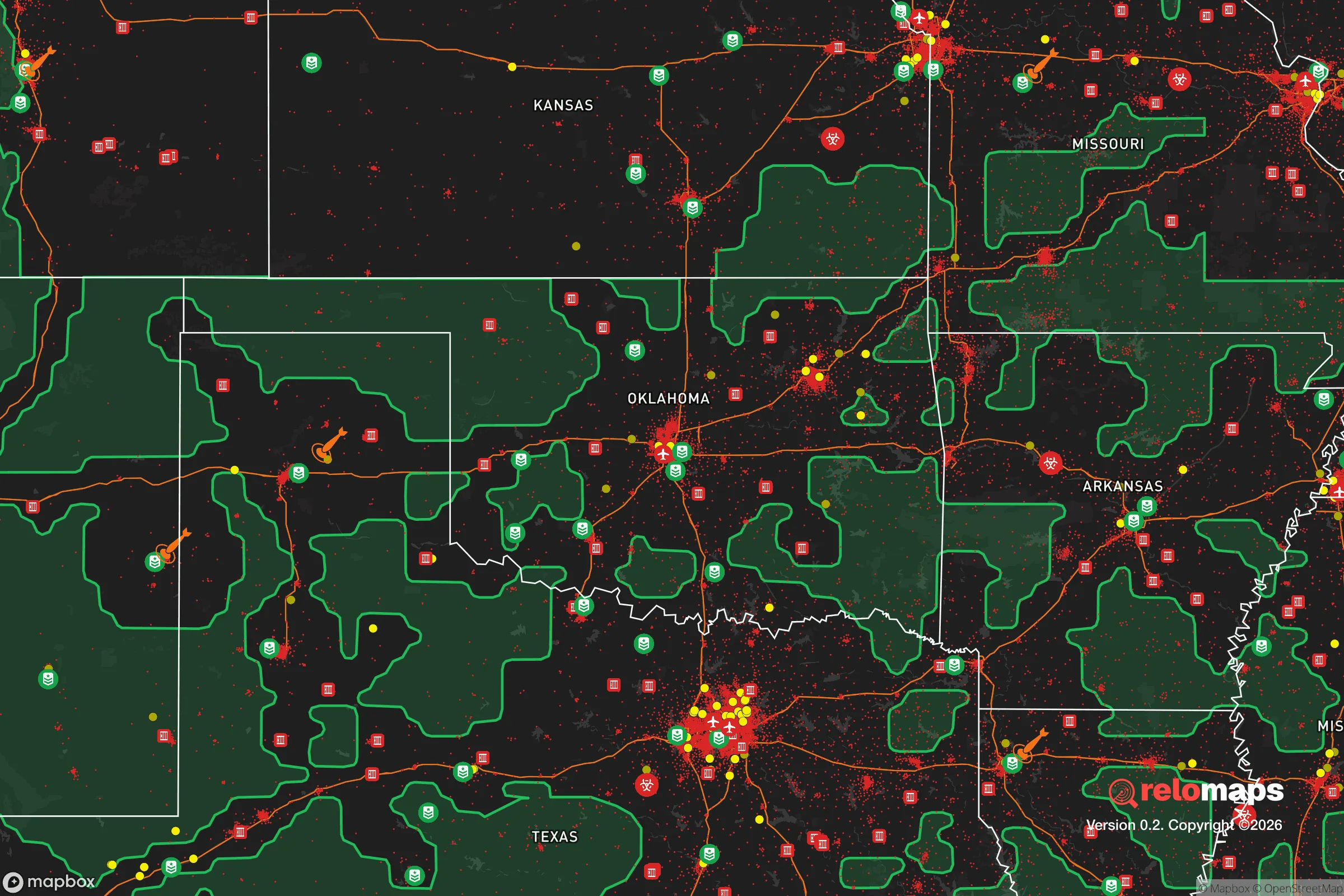


Important Note: For informational purposes only. This does not mean nothing bad ever happens in the green zones. Please use common sense. This is based on public data and modeled with AI. We tried to take a conservative approach but mistakes happen. We update this regularly as new information becomes available.
Solar Generator Recommendations
Backup power matters more here than in safer locations. We've picked three solar generators across budgets and capacity tiers — start with the budget unit if you only need a few essentials, or step up if you want to run a fridge and HVAC for days at a time.

Jackery Portable Power Station Explorer 300
Budget OptionPower on the Go: Weighing only 11 lbs, it's convenient to set up and store with book-sized foldable solar panels

BLUETTI Portable Power Station AC180
Designed for both indoor and outdoor scenarios, AC180 is highly capable as it has a robost capacity and continuous output power.

EF ECOFLOW DELTA Pro Ultra Power Station
Upgraded PickEcoFlow DELTA Pro Ultra is a whole-home energy system designed to grow with your family. Integrated with the Smart Home Panel 2, it scales to meet your evolving energy needs — keeping your home powered, intelligent, and secure through every stage of life.
We earn a commission, at no additional cost to you.
Strategic Assessment Analysis
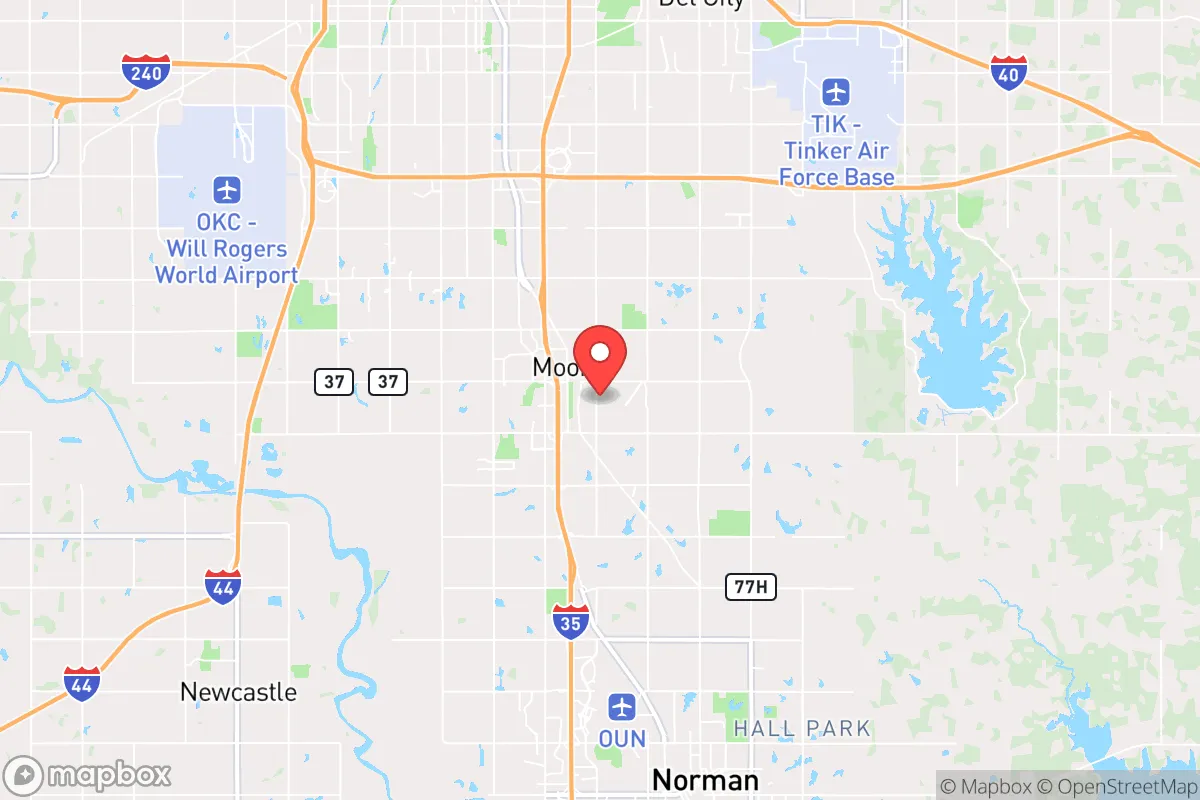
Moore, Oklahoma, sits in a geographic sweet spot that offers genuine strategic advantages for those prioritizing resilience and preparedness, but it also carries significant liabilities that demand clear-eyed assessment. Located just 10 miles south of Oklahoma City along the I-35 corridor, Moore provides proximity to urban infrastructure without being swallowed by it—a balance that matters when you’re thinking about supply chains, medical access, and escape routes. The city’s flat, open terrain and central position in the nation’s midsection mean it’s far from coastal threats like hurricanes or tsunami zones, and its inland location reduces exposure to the kind of cascading failures that hit port cities during a crisis. For a relocator with a prepper mindset, Moore’s real draw is its combination of affordable land, a strong local community ethos, and a climate that supports year-round gardening and livestock—if you’re willing to work around the weather.
Geographic position and natural advantages for long-term preparedness
Moore’s location in central Oklahoma places it squarely in Tornado Alley, which sounds like a liability—and it is—but the same geography offers underappreciated benefits. The region sits atop the Anadarko Basin, one of the most productive natural gas fields in the country, meaning energy independence is a realistic goal for those who can secure a well or solar setup. The Canadian River runs just north of the city, and the Garber-Wellington Aquifer provides groundwater that, with proper filtration, can sustain a household indefinitely. The land is flat and fertile, with a growing season that stretches from April to October—long enough for serious food production. Moore’s position along I-35 also gives you a straight shot south to the Red River and Texas, or north to Kansas, which is critical if you need to bug out toward less populated areas. The city’s elevation, around 1,200 feet, keeps it above floodplains for the most part, though flash flooding from storms remains a concern. For a prepper, the key takeaway is that Moore offers a defensible, resource-rich base with multiple exit corridors—provided you’ve hardened your property against the weather.
Risks, exposures, and proximity to fallout-relevant landmarks
The most obvious risk in Moore is tornadoes—the city has been hit by EF-5 storms in 1999, 2003, and 2013, with the latter killing 24 people and leveling entire neighborhoods. That’s not a theoretical concern; it’s a recurring pattern that demands a storm shelter or reinforced safe room as a non-negotiable part of any property purchase. Beyond weather, Moore’s proximity to Oklahoma City—a major population center with over 1.4 million in the metro—introduces risks that a survivalist must weigh carefully. In a scenario involving civil unrest, supply chain collapse, or a mass casualty event, the I-35 corridor could become a chokepoint, with panicked urbanites streaming south into Moore. Tinker Air Force Base, located just east of the city in Midwest City, is a strategic military installation that could become a target in a conflict or a focal point for federal response efforts—drawing unwanted attention. The nearby Will Rogers World Airport is another potential flashpoint. On the plus side, Moore is far from nuclear power plants (the closest is in Arkansas, over 200 miles away) and major chemical facilities, but the concentration of military and government assets in the Oklahoma City metro means fallout from a coordinated attack or EMP event could ripple outward. The smart play is to have a bug-out plan that heads south or west, away from the metro, and to stockpile supplies for at least 90 days—enough to ride out the initial chaos.
Practical resilience for a relocator: food, water, energy, and defensibility
Moore’s residential neighborhoods are mostly suburban sprawl—cul-de-sacs, strip malls, and HOA-governed subdivisions—which is a mixed bag for preparedness. On one hand, the grid is reliable, with OG&E providing electricity and the city managing its own water and sewer systems. On the other hand, HOAs can restrict chickens, rainwater collection, or visible solar panels, so you need to buy in unincorporated areas or older sections of town where restrictions are looser. The city’s water supply comes from Lake Thunderbird and the Garber-Wellington Aquifer, both of which are vulnerable to drought and contamination, so a well with a hand pump or a Berkey filter system is essential. Food production is feasible: the soil is sandy loam that drains well, and local ordinances allow backyard gardens in most zones, but you’ll need raised beds or a greenhouse to deal with the clay content. Energy resilience is strong if you invest in a whole-home generator or solar-plus-battery setup—natural gas is abundant and cheap, and propane delivery services are widespread. Defensibility is the weak point: Moore is flat, with few natural chokepoints, and the suburban layout means neighbors are close. That’s not ideal for a stand-alone retreat, but it does create a community that can organize neighborhood watches or mutual-aid networks. The city’s police and fire departments are well-funded and professional, but in a major crisis, they’ll be overwhelmed—so your security plan should rely on yourself and trusted neighbors, not on 911.
The overall strategic picture for Moore is one of calculated trade-offs. It offers affordable land, a central location with multiple escape routes, and access to energy and water resources that make long-term self-sufficiency achievable. The downsides—tornado risk, proximity to a major metro with its attendant vulnerabilities, and a suburban layout that limits defensibility—are real but manageable with proper planning. For a conservative-leaning relocator who values community, affordability, and the ability to grow food and generate power, Moore is a viable base of operations. It’s not a remote bunker in the mountains, but it’s also not a coastal city that will collapse under the weight of its own population when things go sideways. The key is to buy with resilience in mind: a property with a storm shelter, well water potential, and enough land to garden and store supplies. If you do that, Moore can serve as a solid anchor point for the next decade—provided you stay alert, stay stocked, and stay ready to move if the situation demands it.

* Values derived from national, state, county, city and local statistics and may differ in a specific area. Last updated: 2026-04-21T10:27:13.000Z
Narrative content on this page is AI-generated and may contain mistakes. Verify any details that matter before acting on them.
ReloMaps may earn a commission from affiliate links at no extra cost to you.

