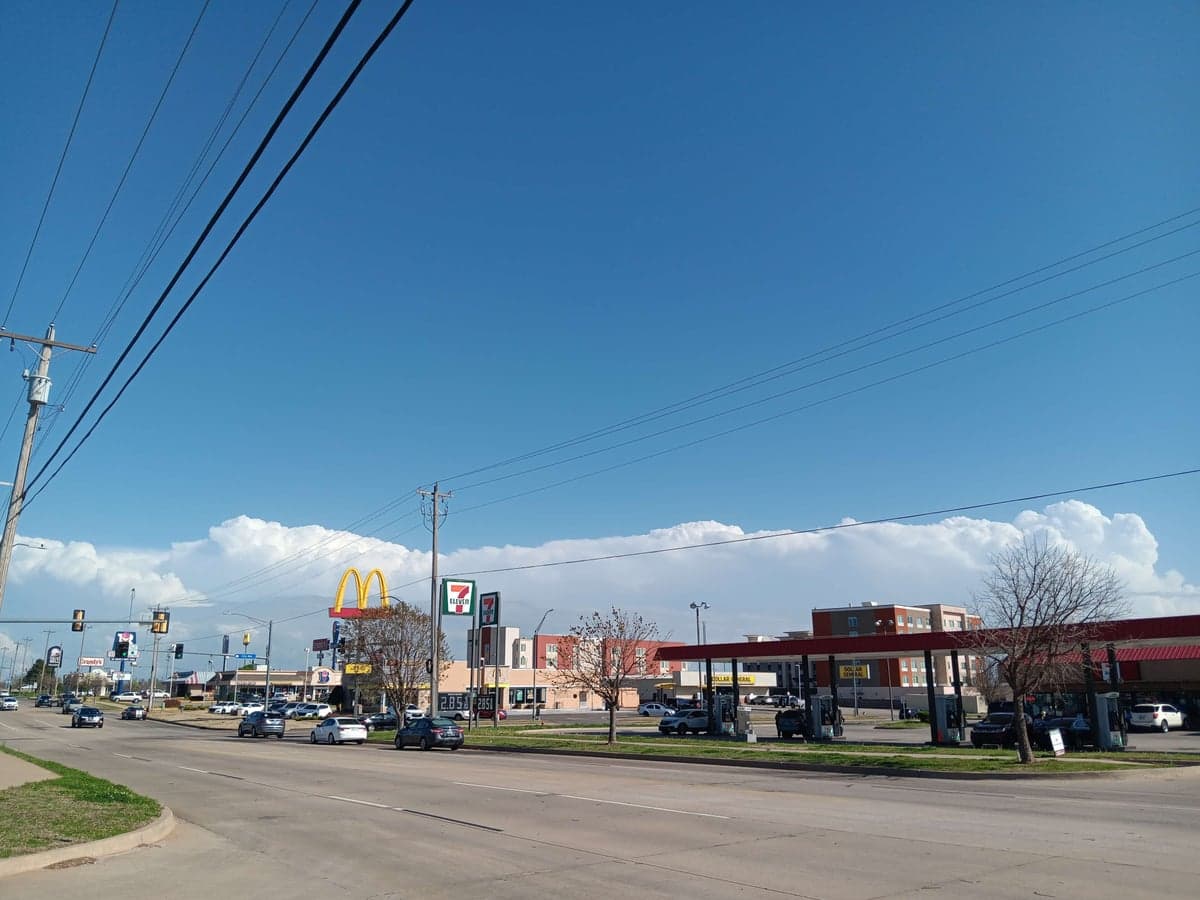
Photo: Wikipedia
Political ClimatePolitical Climate in Moore, OK
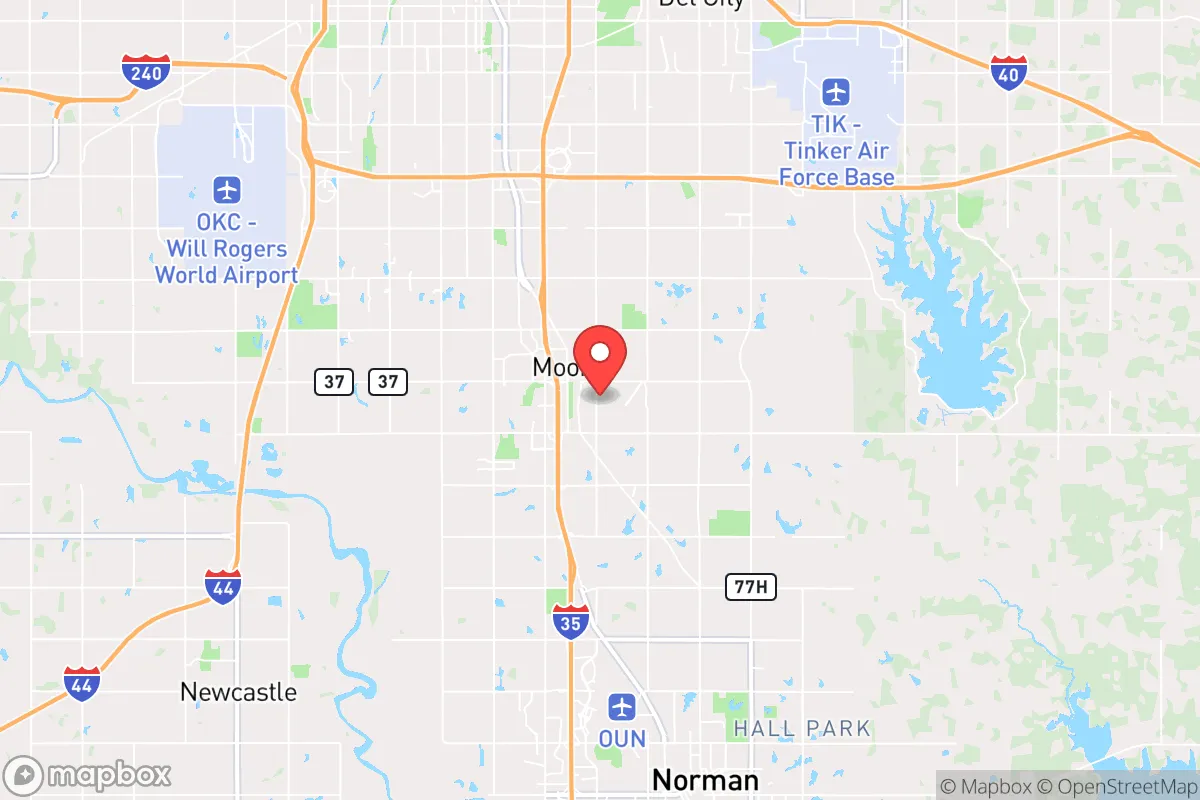
District shown is the primary district for this city’s centroid. Cities may span multiple districts.
Local Political AnalysisPolitical Analysis of Moore, OK
Moore, Oklahoma, is about as solidly conservative as it gets in the Sooner State, with a Cook PVI of R+17 that puts it deep in the red column. That’s not just a number on a map—it’s a reflection of a community that has consistently voted for limited government, strong Second Amendment protections, and a school system that prioritizes local control over federal mandates. You won’t find much hand-wringing over progressive social experiments here; folks in Moore tend to see government overreach as the real threat, not the neighbor who wants to live their life without a permission slip from the state capital. The trajectory has been steady for decades, though there’s a quiet unease as national trends push even some historically red suburbs toward more interventionist policies.
How it compares
Drive 15 minutes north to Oklahoma City proper, and you’ll start to see a different picture—especially in the urban core and near the university districts, where younger voters and transplants have nudged things a bit more purple. Moore, by contrast, feels like a bulwark against that shift. Compared to Norman, just to the south, the difference is even starker: Norman’s university influence brings a more progressive tilt on issues like zoning, public spending, and even local law enforcement priorities. Moore’s voters consistently reject that approach, favoring lower taxes, fewer regulations, and a sheriff’s office that isn’t afraid to enforce the law as written. If you’re looking for a place where your rights aren’t treated as negotiable, Moore still feels like the safer bet—for now.
What this means for residents
For the people who live here, the political climate translates into a daily life with fewer hoops to jump through. Property taxes stay relatively low, there’s no city income tax, and the local government tends to stay out of your business unless you’re causing trouble. That’s a big deal when you see neighboring cities start floating things like “equity” task forces or new business license fees that just pad the bureaucracy. The school board here still leans conservative, which means curriculum fights over critical race theory or gender ideology haven’t taken root the way they have in some districts closer to the metro. But there’s a growing concern that state-level pressure—especially from federal funding strings—could start chipping away at that local autonomy. Longtime residents remember when the biggest political fights were about tornado sirens and road bonds, not cultural battles imported from the coasts.
One cultural distinction that still holds strong in Moore is the emphasis on faith and family as the bedrock of the community. Churches are everywhere, and they’re not just Sunday-morning social clubs—they’re the networks that organize disaster relief, school supply drives, and neighborhood watch programs. That sense of mutual reliance means people are less likely to look to City Hall for solutions to every problem. The concern among locals is that as Moore grows—and it is growing, with new housing developments popping up along 19th Street—there’s a risk of importing the same top-down thinking that’s hollowed out other suburbs. For now, the political climate here still reflects the values of a place that wants to be left alone to live, work, and raise kids without a government checklist. But keeping it that way will require staying vigilant against the creeping idea that more control from above equals more safety or fairness.

State Political ClimatePolitical Climate in Oklahoma
State Political AnalysisPolitical Environment in the State
Oklahoma has been a reliably red state for decades, with Republicans holding every statewide office and supermajorities in both legislative chambers, but the political climate here is more layered than the simple "deep red" label suggests. The state voted for Donald Trump by 33 points in 2024, and the GOP has controlled the governorship since 2011, but the real story is a slow, steady shift toward cultural conservatism that’s been accelerating since the early 2000s. If you’re looking for a place where government overreach is still met with serious pushback, Oklahoma is a solid bet—but it’s not without its own internal tensions.
Urban vs. rural divide
The political map of Oklahoma is a classic urban-rural split, but with a twist. Oklahoma City and Tulsa are the two major metros, and they lean Republican overall, though both have blue pockets. Oklahoma City’s core—especially areas like the Plaza District and Midtown—votes Democratic, but the suburbs like Edmond, Yukon, and Mustang are deeply conservative. Tulsa County is similar: the city itself has a Democratic lean, but the surrounding suburbs like Broken Arrow and Jenks are solidly red. The real firepower for the GOP comes from the vast rural expanse: counties like Texas County in the Panhandle, Custer County in the west, and Le Flore County in the southeast routinely deliver 80%+ Republican margins. The divide isn’t just about population density—it’s about culture. Rural Oklahomans see the urban centers as increasingly out of touch with traditional values, and that resentment fuels a lot of the state’s legislative agenda.
Policy environment
Oklahoma’s policy environment is aggressively conservative, and it’s been shaped by a deliberate push to shrink government. The state has a flat income tax of 4.75% (down from 5% in 2022), and there’s a serious push to eliminate it entirely—Governor Kevin Stitt has called for a path to zero income tax by 2027. Property taxes are among the lowest in the nation, thanks to a constitutional cap of 1% of fair market value. On education, the state passed a universal school voucher program in 2024 (HB 1934), allowing any family to use state funds for private or homeschool expenses—a huge win for parental rights. Healthcare is more mixed: Oklahoma expanded Medicaid in 2021 via a ballot initiative, but the legislature has since imposed work requirements and premiums, which are currently tied up in court. Election integrity is a priority here—the state passed voter ID laws and banned ballot drop boxes in 2023 (SB 440), and it was one of the first to require citizenship proof for voter registration. For a conservative, the policy environment is largely favorable, but the Medicaid expansion shows that even red states can have populist moments that expand government.
Trajectory & freedom
Oklahoma is trending toward more personal freedom, especially in areas where the federal government has been overreaching. The state passed a near-total abortion ban in 2022 (SB 612) that prohibits the procedure from conception, with no exceptions for rape or incest—only to save the mother’s life. Gun rights are expansive: permitless carry has been law since 2019 (SB 1212), and the state has a strong preemption law that blocks local gun ordinances. On medical freedom, Oklahoma passed a law in 2023 (HB 1008) that prohibits employers from requiring COVID-19 vaccines as a condition of employment—a direct response to federal mandates. Parental rights got a boost with the 2022 "Parental Bill of Rights" (HB 1775), which requires schools to notify parents about curriculum changes and allows them to opt their kids out of lessons they find objectionable. The state also passed a law in 2024 (SB 615) banning gender transition procedures for minors. However, there are areas where freedom is being restricted: the state’s medical marijuana program, which was one of the most liberal in the country when voters approved it in 2018, has been tightened with stricter licensing and testing rules. Overall, the trajectory is toward more individual liberty on cultural and medical issues, but with a strong hand on regulation when it comes to commerce.
Civil unrest & political movements
Oklahoma hasn’t seen the kind of large-scale civil unrest you’d find in Portland or Seattle, but there have been flashpoints. The 2020 George Floyd protests in Oklahoma City and Tulsa were relatively small and mostly peaceful, though there were some property damage incidents in the Bricktown area. The more persistent political movements here are on the right: the Oklahoma Second Amendment Association is active, and there’s a strong "constitutional sheriff" movement in rural counties like Canadian and Grady, where sheriffs have publicly refused to enforce federal gun laws they see as unconstitutional. Immigration politics are a hot-button issue: the state passed a law in 2024 (HB 4156) that makes it a state crime to be in Oklahoma illegally, mirroring Texas’s SB 4, and it’s currently being challenged in court. There’s also a growing "Oklahoma First" movement that pushes for nullification of federal mandates, particularly on environmental regulations and gun control. Election integrity remains a live issue—after the 2020 election, the state launched a forensic audit of voting machines in 22 counties, though it found no widespread fraud. For a new resident, you won’t see daily protests, but you’ll hear plenty of talk about federal overreach at local coffee shops and church gatherings.
Projection
Over the next 5-10 years, Oklahoma is likely to become even more conservative, driven by two factors: in-migration from blue states and a growing Hispanic population that is trending Republican. The state’s low cost of living and business-friendly climate are attracting families from California, Illinois, and New York—places like Stillwater and Norman are seeing new subdivisions fill up with transplants who are fleeing high taxes and progressive policies. The Hispanic population, concentrated in the Panhandle (Guymon) and southwest (Lawton), is increasingly voting Republican, especially on cultural issues like abortion and religious freedom. The biggest wildcard is the state’s budget: if oil prices stay high, the push to eliminate the income tax will succeed, making Oklahoma even more attractive to conservatives. However, if the state’s education system continues to struggle (Oklahoma ranks near the bottom nationally in per-pupil spending), it could create a backlash that moderates the agenda. Expect more fights over school choice, more preemption of local ordinances, and a continued war on federal overreach. A decade from now, Oklahoma will likely be one of the most culturally and fiscally conservative states in the union, with a government that is smaller and more deferential to individual rights.
For a new resident, the bottom line is this: Oklahoma offers a political environment where your personal freedoms—especially on guns, education, and medical choices—are broadly protected, and the state is actively working to shrink government’s footprint. You won’t find the kind of urban chaos or government overreach that plagues coastal states, but you will encounter a place where local politics matter, and where your vote actually counts. If you’re looking to escape a state that’s sliding into progressive control, Oklahoma is a safe bet—just be prepared for hot summers and even hotter political debates at the county commission meetings.
* Values derived from national, state, county, city and local statistics and may differ in a specific area. Last updated: 2026-04-21T10:27:13.000Z
Narrative content on this page is AI-generated and may contain mistakes. Verify any details that matter before acting on them.
ReloMaps may earn a commission from affiliate links at no extra cost to you.

