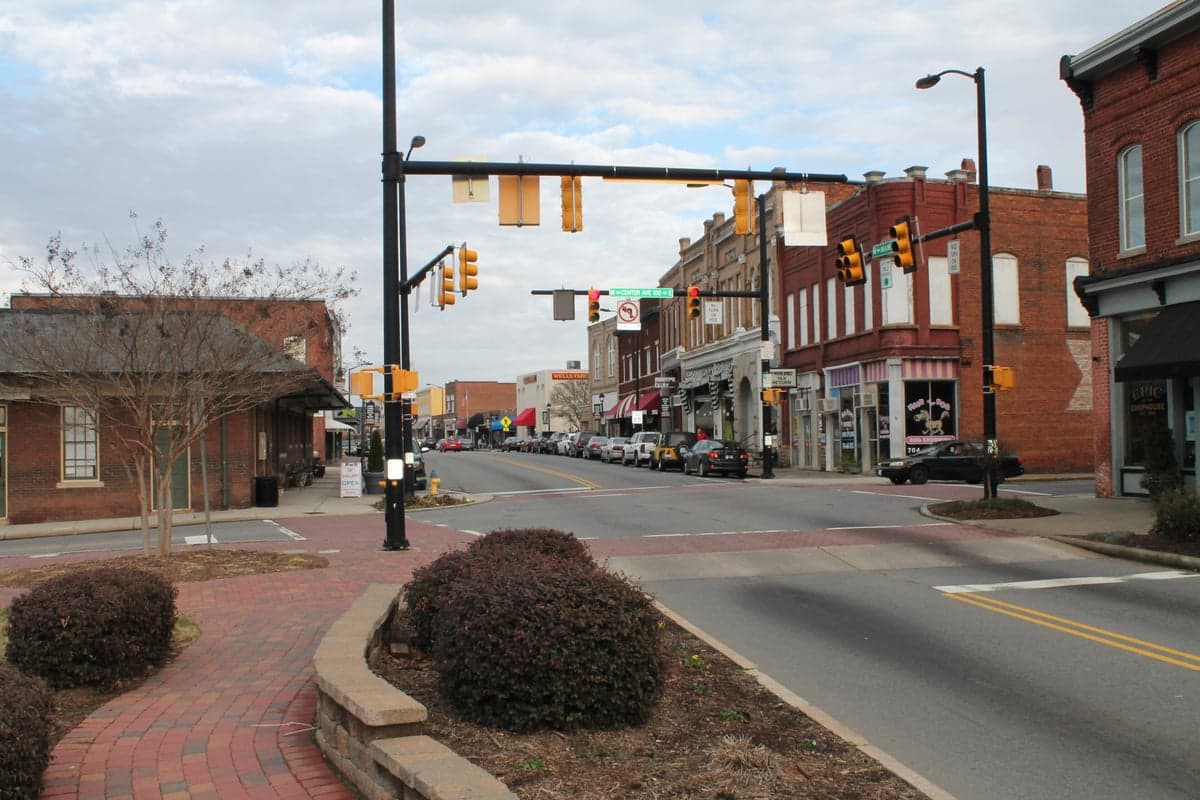
Photo: Wikipedia
Strategic Assessment of Mooresville, NC
Meaningful friction. Expect exposure to either population pressure, blast zones, or natural disaster risk. Consider buying a retreat property.
What does the Strategic Assessment tell us?
Our Strategic Assessment grades tactical survivability of an area. Major population centers, military targets, fallout zones, natural disasters, and border exposure all drive risk — lower exposure means a more defensible position in a crisis.
This is heavily inspired by Joel Skousen's Strategic Relocation book. Highly recommended you checkout the book ($)What does this tell us?
Our Strategic Assessment grades tactical survivability of an area. Major population centers, military targets, fallout zones, natural disasters, and border exposure all drive risk — lower exposure means a more defensible position in a crisis.
This is heavily inspired by Joel Skousen's Strategic Relocation book. Highly recommended you checkout the book ($)Strategic Pillars

Key Distances
Regional Safe Places
Below is our recommended "safe zones" in North Carolina and the surrounding area based on our strategic heuristics. For most people, it's unrealistic to live in a “safe zone” full-time due to work, family or other personal reasons. They tend to be more rural. However, many of these areas are perfect for second homes and retreat properties that double as a vacation home or even a short-term rental.

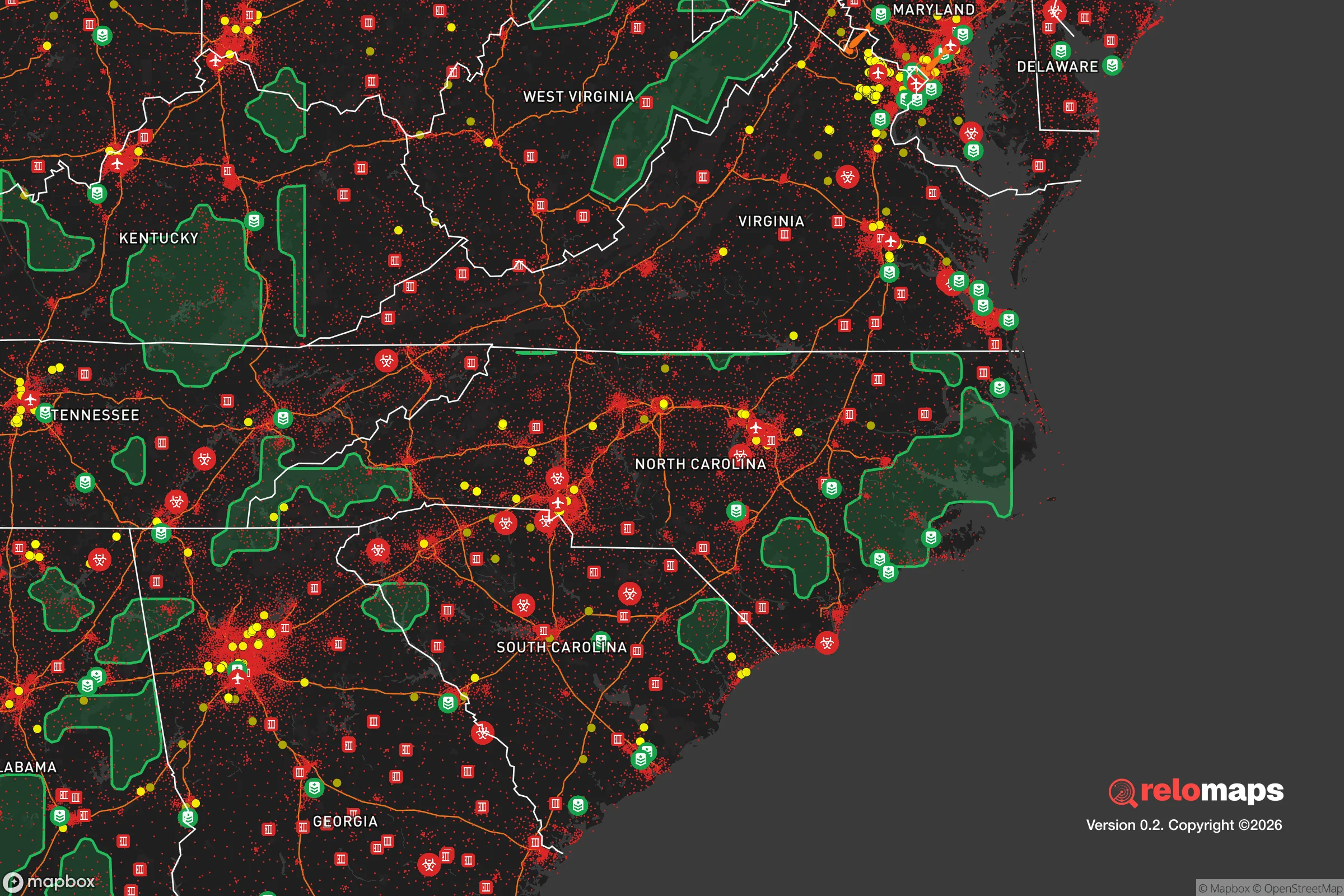


Important Note: For informational purposes only. This does not mean nothing bad ever happens in the green zones. Please use common sense. This is based on public data and modeled with AI. We tried to take a conservative approach but mistakes happen. We update this regularly as new information becomes available.
Solar Generator Recommendations
Backup power matters more here than in safer locations. We've picked three solar generators across budgets and capacity tiers — start with the budget unit if you only need a few essentials, or step up if you want to run a fridge and HVAC for days at a time.

Jackery Portable Power Station Explorer 300
Budget OptionPower on the Go: Weighing only 11 lbs, it's convenient to set up and store with book-sized foldable solar panels

BLUETTI Portable Power Station AC180
Designed for both indoor and outdoor scenarios, AC180 is highly capable as it has a robost capacity and continuous output power.

EF ECOFLOW DELTA Pro Ultra Power Station
Upgraded PickEcoFlow DELTA Pro Ultra is a whole-home energy system designed to grow with your family. Integrated with the Smart Home Panel 2, it scales to meet your evolving energy needs — keeping your home powered, intelligent, and secure through every stage of life.
We earn a commission, at no additional cost to you.
Strategic Assessment Analysis
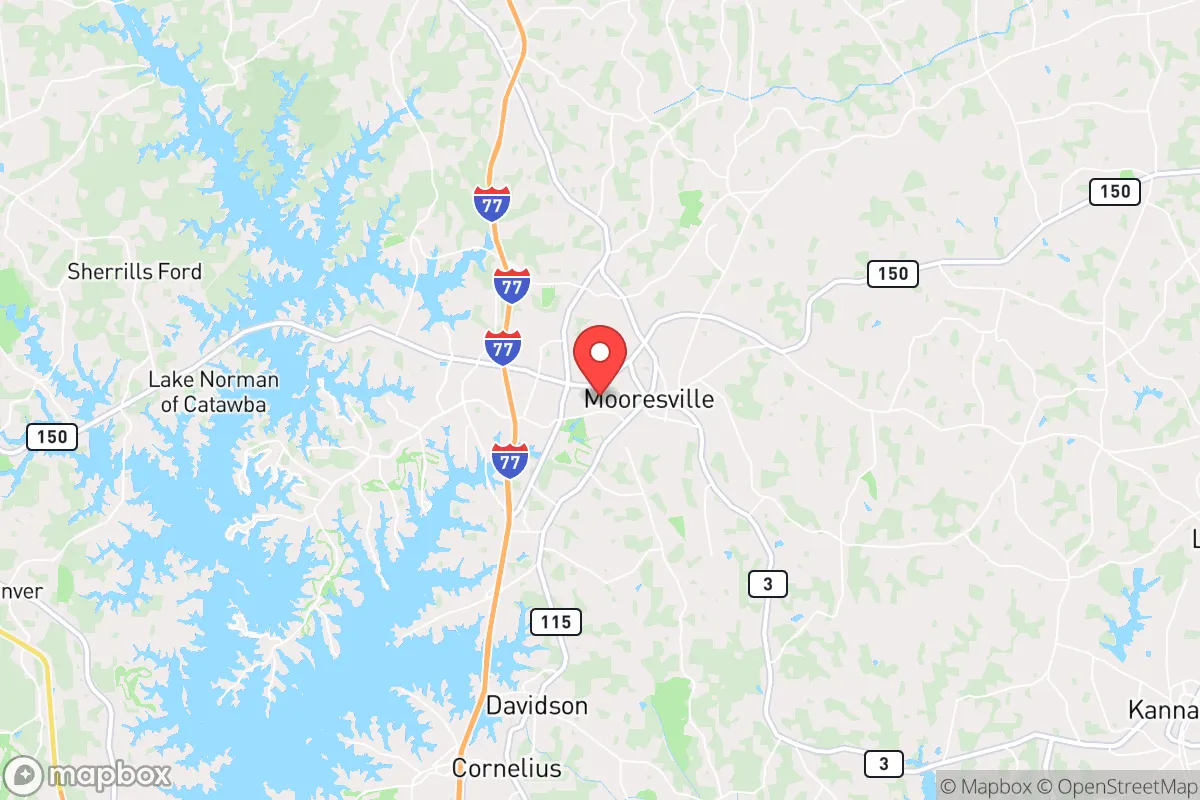
Mooresville, North Carolina, offers a compelling strategic position for those prioritizing resilience, sitting roughly 25 miles north of Charlotte in a corridor that balances access to infrastructure with a buffer from urban density. Its location along Interstate 77 and proximity to Lake Norman provide both logistical advantages and a critical water resource, making it a viable hub for relocation focused on preparedness. The area’s growth has been steady, driven by a mix of manufacturing, logistics, and energy sector jobs, which supports a self-sufficient local economy less dependent on Charlotte’s financial core. For a conservative-leaning relocator concerned with civic stability and disaster readiness, Mooresville presents a middle-ground option—close enough to tap regional resources, yet far enough to avoid the immediate fallout of a major urban crisis.
Geographic position and natural advantages for long-term security
Mooresville’s geography is its strongest asset for a prepper mindset. The town sits on the northern shore of Lake Norman, a 32,500-acre reservoir that provides a reliable freshwater source—critical for both daily use and emergency scenarios where municipal supplies might be compromised. The lake also moderates local climate, reducing extreme temperature swings, and offers a natural barrier to the south that complicates any approach from Charlotte. To the west, the Brushy Mountains and South Mountains create rugged terrain that could serve as a retreat zone if needed, while the Piedmont region’s rolling hills provide defensible positions without the isolation of deep wilderness. The area’s elevation, around 750 feet, keeps it above most flood risks, and the local soil is suitable for small-scale agriculture, a key consideration for long-term food security. Interstate 77 runs through Mooresville, but it’s a double-edged sword—useful for supply movement but also a potential chokepoint. The town’s rail access via the Norfolk Southern line adds a secondary logistics option, though it’s less critical for individual survival.
Risks, exposures, and proximity to fallout-relevant landmarks
The primary risk for Mooresville is its proximity to Charlotte, a major financial hub and potential target for civil unrest or infrastructure attacks. Charlotte’s population of over 900,000, combined with its banking sector and international airport, makes it a high-probability location for mass casualty events, whether from economic collapse, terrorism, or natural disasters. Mooresville sits within 30 miles of Charlotte Douglas International Airport, a fallout-relevant landmark that could become a staging area for federal response or a target itself. The I-77 corridor is a natural evacuation route, meaning any crisis in Charlotte could funnel displaced populations northward, overwhelming local resources. Additionally, the McGuire Nuclear Station, located about 15 miles southwest of Mooresville near Huntersville, presents a low-probability but high-consequence risk. While nuclear plants are well-regulated, a catastrophic failure or sabotage could render large areas uninhabitable. The Lake Norman dam is another vulnerability—a breach would flood downstream areas, though Mooresville’s elevated position offers some protection. On the positive side, the area lacks major military bases, chemical plants, or refineries that would be primary targets, reducing the chance of direct strikes. The risk profile is moderate: not a safe zone, but not a bullseye either.
Practical resilience for a relocator: food, water, energy, and defensibility
For a relocator focused on practical preparedness, Mooresville offers several advantages. Water security is the standout: Lake Norman provides a massive, renewable source, and many homes in the area have private wells or access to lakefront property. Boiling or filtering lake water is straightforward, and the lake’s fish population supports protein sourcing. Food resilience is decent but not exceptional. The surrounding Iredell County has active farmland, with local producers offering meat, dairy, and produce at farmers’ markets. For long-term self-sufficiency, the soil is workable for gardens, but the growing season (roughly April to October) requires planning. The area’s energy grid is tied to Duke Energy, which has a mixed reliability record during storms. Solar panels are a viable supplement, given the region’s average 210 sunny days per year, and many rural properties already use propane or wood for heating. Defensibility is where Mooresville shines for a prepper. The town’s layout—spread out with numerous cul-de-sacs, wooded lots, and lakefront properties—makes it hard to patrol or control. Rural areas to the north and west offer even more isolation, with dirt roads and dense forests that slow any organized movement. The local sheriff’s office is well-funded and has a reputation for being responsive, but in a collapse scenario, community-based defense would be key. The presence of a strong gun culture (North Carolina is a shall-issue state for concealed carry) means many residents are armed and trained, which can deter low-level threats. However, this also means any conflict could escalate quickly—know your neighbors before relying on them.
Overall, Mooresville presents a balanced strategic picture for the conservative relocator. It’s not a remote bunker location, but it offers a realistic blend of resources, defensibility, and buffer from urban chaos. The key trade-off is proximity to Charlotte: you gain economic and logistical access, but you also inherit its risks. For someone willing to invest in water filtration, solar backup, and a solid community network, Mooresville can serve as a long-term base that supports both daily life and crisis scenarios. The area’s growth trend suggests it will become more crowded over time, so early acquisition of property—especially with lake access or acreage—is advisable. If your priority is absolute isolation, look further west into the mountains. But if you want a place that can function as a resilient home base without cutting ties to modern infrastructure, Mooresville is a strong contender.

* Values derived from national, state, county, city and local statistics and may differ in a specific area. Last updated: 2026-04-21T17:04:35.000Z
Narrative content on this page is AI-generated and may contain mistakes. Verify any details that matter before acting on them.
ReloMaps may earn a commission from affiliate links at no extra cost to you.

