Photo: Wikipedia
Personal Sovereignty in Mount Airy, MD
Viable for self-reliance. Generally workable, though some barriers may limit total independence.
What does Personal Sovereignty tell us?
Personal Sovereignty measures your capacity for self-reliance and independence with minimal government friction. Higher scores mean fewer barriers between you and the way you want to live... but it assumes you have the space you need and good neighbors.
What does this tell us?
Personal Sovereignty measures your capacity for self-reliance and independence with minimal government friction. Higher scores mean fewer barriers between you and the way you want to live... but it assumes you have the space you need and good neighbors.
State Policy
Energy independence: Importer (8% of energy produced in-state)
Personal Liberty
Homesteading

Personal Liberty Analysis
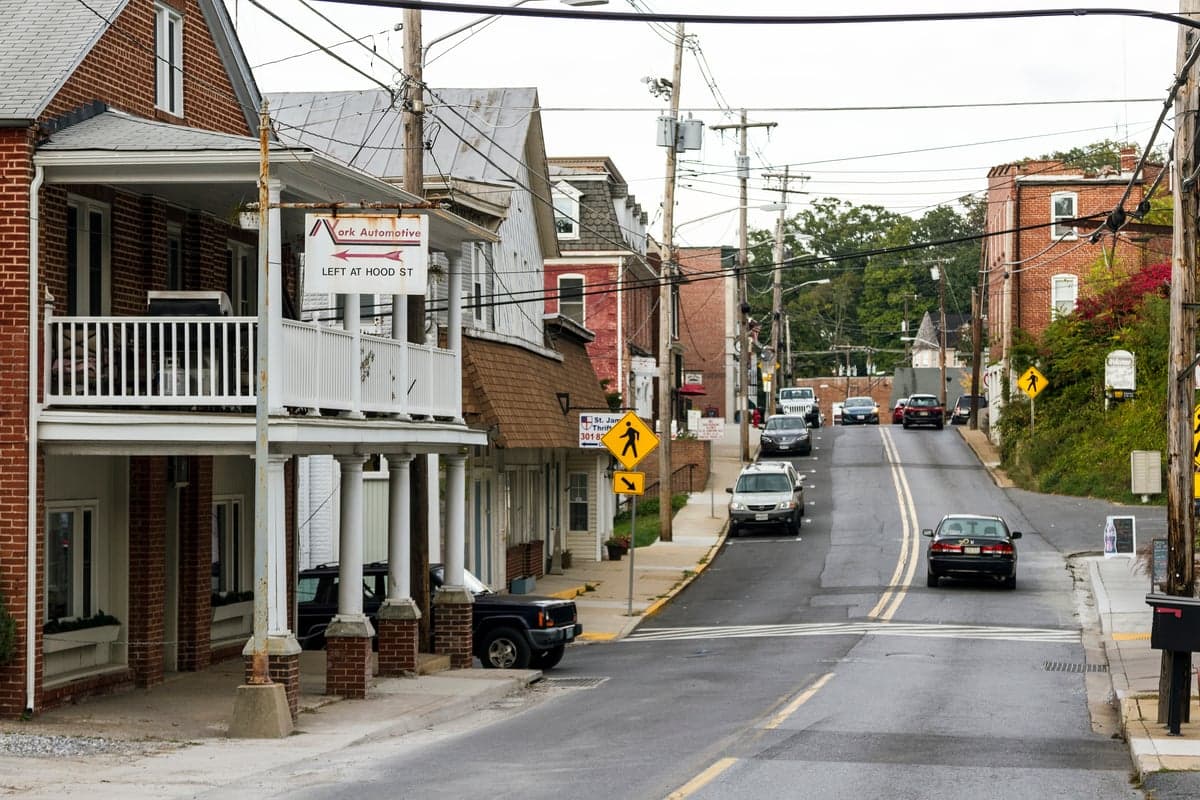
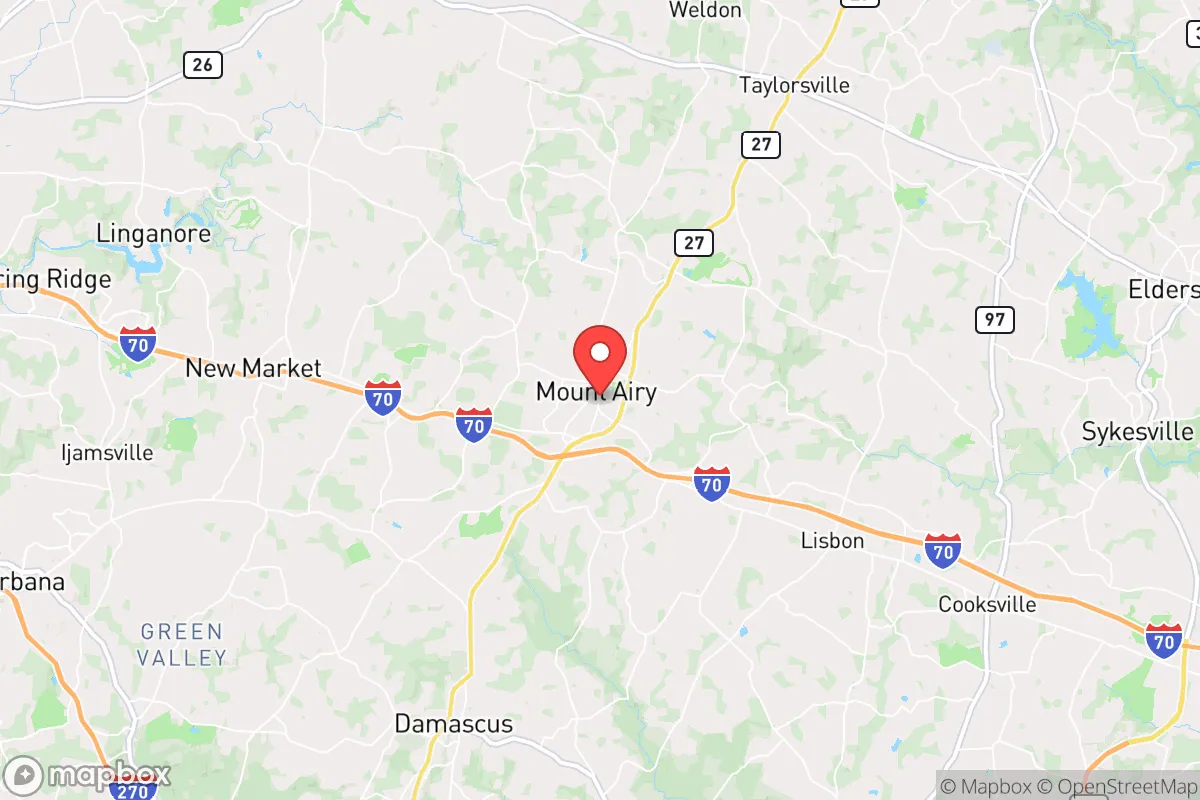
Mount Airy, Maryland, straddling the Carroll and Frederick county line, offers a notably stronger personal sovereignty environment than most of the state, but it is not a libertarian free zone. The town’s rural character and its position outside the direct orbit of Washington, D.C., provide a buffer against the most aggressive government overreach, yet residents must contend with Maryland’s increasingly restrictive state-level mandates. For a survivalist or prepper mindset, Mount Airy represents a calculated compromise: you get meaningful space and a community that largely minds its own business, but you must remain vigilant against the creeping expansion of state control into your firearms, medical choices, and property rights.
Tax burden and regulatory posture in Carroll and Frederick counties
Maryland ranks among the highest-taxed states in the nation, and Mount Airy residents feel that pressure directly. The state’s income tax brackets top out at 5.75%, and when combined with local county taxes—Carroll County adds 3.03% and Frederick County adds 3.20%—the effective rate for higher earners approaches 9%. Property taxes are more manageable here than in the D.C. suburbs, with Carroll County’s rate at roughly 1.01% of assessed value and Frederick County’s at 1.06%, but annual reassessments mean your bill can climb without warning. The regulatory posture is where the real friction lies for the self-reliant. Maryland’s strict environmental regulations, particularly the Critical Area Law and stormwater management requirements, can turn a simple shed or driveway project into a permitting nightmare. The state also mandates energy code compliance that adds cost to any new construction or major renovation. For a prepper, this means you cannot simply build a bunker or expand a workshop without navigating a bureaucracy that assumes you need permission to improve your own land. The lack of a statewide right-to-farm law as strong as those in Virginia or Pennsylvania also means that agricultural activities—raising livestock, keeping bees, or running a small market garden—can be challenged by new neighbors who moved to the country but object to country smells and sounds.
Self-defense and gun law specifics in a restrictive state
This is the sharpest edge of the sovereignty trade-off in Mount Airy. Maryland is a may-issue state for concealed carry, meaning the state police have discretion to deny permits even after the Bruen decision forced a shift to “shall-issue” in name. In practice, the application process remains burdensome: you must complete a 16-hour training course, submit fingerprints, provide references, and wait months for approval. The state also bans a long list of “assault weapons” by name, including the AR-15 platform, and limits magazine capacity to 10 rounds. Handgun purchases require a seven-day waiting period and a Handgun Qualification License that involves another background check and fingerprinting. For the survivalist, this is a serious constraint. You cannot legally own the most common defensive rifle in America, and your ability to carry a concealed firearm for everyday protection is subject to the whims of a state agency that has historically been hostile to the Second Amendment. On the positive side, Carroll and Frederick counties are generally more pro-2A than the state as a whole. Local sheriffs have publicly stated they will not enforce unconstitutional federal overreach, and private property rights regarding firearms on your own land are respected. However, you must be prepared to store any restricted items—like standard-capacity magazines purchased out of state—with extreme discretion, as Maryland’s laws carry felony penalties for possession.
Self-reliance and homesteading viability: lot sizes, zoning, and off-grid feasibility
Mount Airy’s zoning is a mixed bag for the serious homesteader. The town itself has relatively small lots, typically under an acre, and its municipal code restricts livestock to chickens only (hens, no roosters) and limits the number to six. For anything larger—goats, sheep, a milk cow, or a serious garden—you need to be in the county’s Agricultural or Rural Residential zones. Carroll County’s Agricultural zoning requires a minimum of 3 acres for livestock, while Frederick County allows up to two horses or cows on 2 acres but requires 5 acres for more intensive operations. Off-grid living is legally difficult. Maryland requires all new dwellings to be connected to the electrical grid, and while solar panels are permitted, you cannot simply disconnect from the utility. Rainwater collection is legal but regulated—you cannot use it for potable purposes without a permit and treatment system, and the state’s Water Appropriation and Use Permit can apply to large-scale cistern systems. Composting toilets are allowed in areas without public sewer, but the county health department must approve the system. For the prepper, the practical takeaway is this: you can achieve a high degree of self-sufficiency on 5-10 acres in the outlying areas, but you will have to work within a regulatory framework that assumes the government has a say in how you manage your own water, waste, and energy. The best parcels are in the Libertytown and Woodsboro areas east of Mount Airy, where zoning is looser and neighbors are more likely to be like-minded.
Personal liberties: parental rights, medical autonomy, speech, and property
Maryland’s record on parental rights is concerning. The state has a compulsory vaccination law for school attendance that allows only medical exemptions—no religious or philosophical exemptions are recognized. This means that if you choose not to vaccinate your children for any reason other than a documented medical contraindication, you must homeschool them. Homeschooling is legal and relatively straightforward, requiring only a notice of intent and a portfolio review annually, but the state retains the authority to demand curriculum details and can revoke your right to homeschool if it deems your instruction inadequate. Medical autonomy for adults is also under pressure. Maryland has a prescription drug monitoring program that tracks all controlled substance prescriptions, and the state’s health department has broad powers to mandate treatments during declared health emergencies. On speech and property, Mount Airy is more favorable. The town and both counties have not enacted the kind of noise, sign, or assembly restrictions seen in more urban jurisdictions. Your property rights are generally respected as long as you stay within the zoning code, and there is no county-level rental registration or landlord licensing scheme that would interfere with using your property as you see fit. The Fifth Amendment protections against eminent domain are as strong here as anywhere in Maryland, but the state’s Critical Area Commission can restrict development on any land within 1,000 feet of tidal waters—a factor to check if you are looking at properties near the Patuxent River or its tributaries.
Overall, Mount Airy offers a sovereignty profile that is significantly better than the D.C. suburbs or Baltimore City, but weaker than rural areas in Virginia, West Virginia, or Pennsylvania. The trade-off is access to a community that is politically mixed but leans conservative, with a strong network of like-minded individuals who value self-reliance. For the strategic relocator, the calculation is clear: you can carve out a defensible, self-sufficient lifestyle here if you are willing to navigate Maryland’s state-level overreach on guns, taxes, and medical mandates. The key is to buy enough land—at least 5 acres in the county, not the town—and to build relationships with local officials who understand the value of personal freedom. If the state continues its current trajectory, Mount Airy may become a redoubt worth holding, but it is not a place to let your guard down. The fight for sovereignty here is active, not won.

* Values derived from national, state, county, city and local statistics and may differ in a specific area. Last updated: 2026-04-22T03:04:36.000Z
Narrative content on this page is AI-generated and may contain mistakes. Verify any details that matter before acting on them.
ReloMaps may earn a commission from affiliate links at no extra cost to you.

