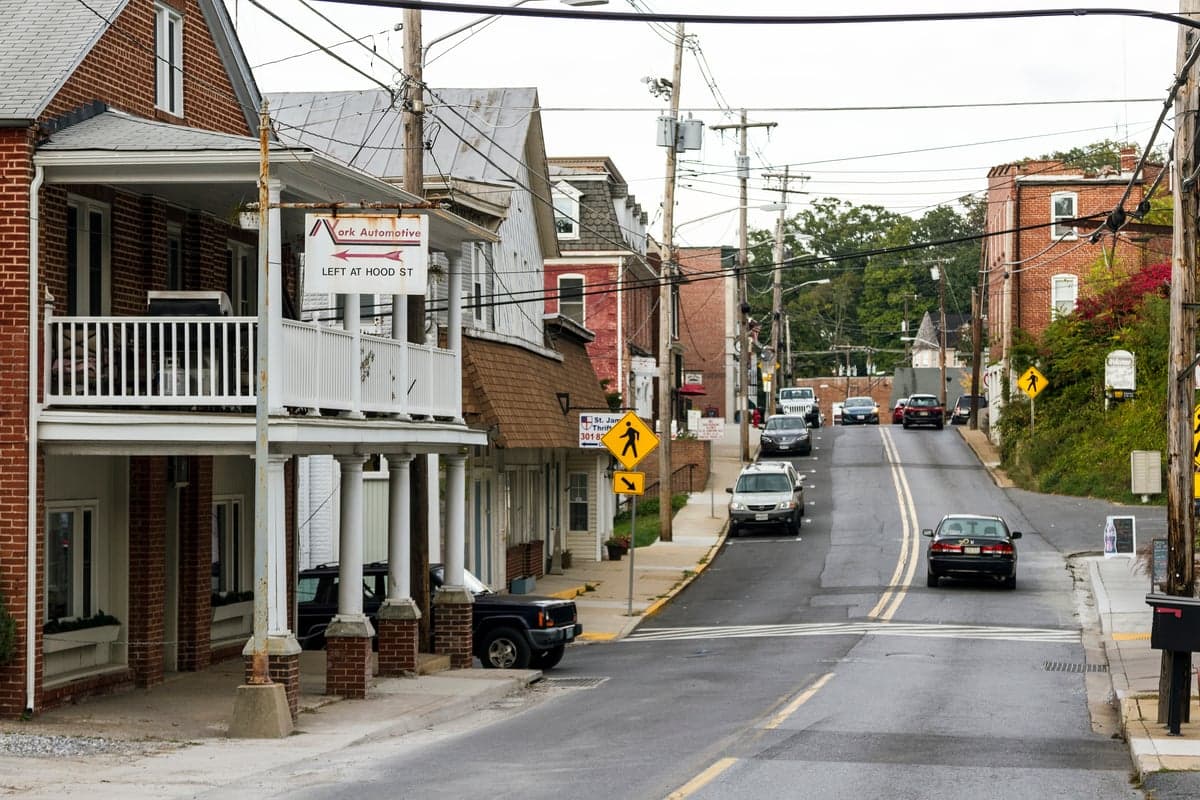
Photo: Wikipedia
Political ClimatePolitical Climate in Mount Airy, MD
District shown is the primary district for this city’s centroid. Cities may span multiple districts.
Local Political AnalysisPolitical Analysis of Mount Airy, MD
Mount Airy, Maryland, sits in a peculiar political pocket. Officially, it’s rated D+12 on the Cook Partisan Voting Index, meaning it leans Democratic by a dozen points compared to the national average. But if you’ve lived here a while, you know that number doesn’t tell the whole story. This town used to be a solidly conservative, rural crossroads where folks minded their own business and the government stayed out of the way. Over the last decade, though, the political winds have shifted hard. The influx of commuters from D.C. and Baltimore has turned local elections into a battleground, and the progressive agenda is creeping in faster than a lot of us are comfortable with. The trajectory is clear: Mount Airy is being pulled left, and it’s happening at the expense of the personal freedoms and local control that made this place worth living in.
How it compares
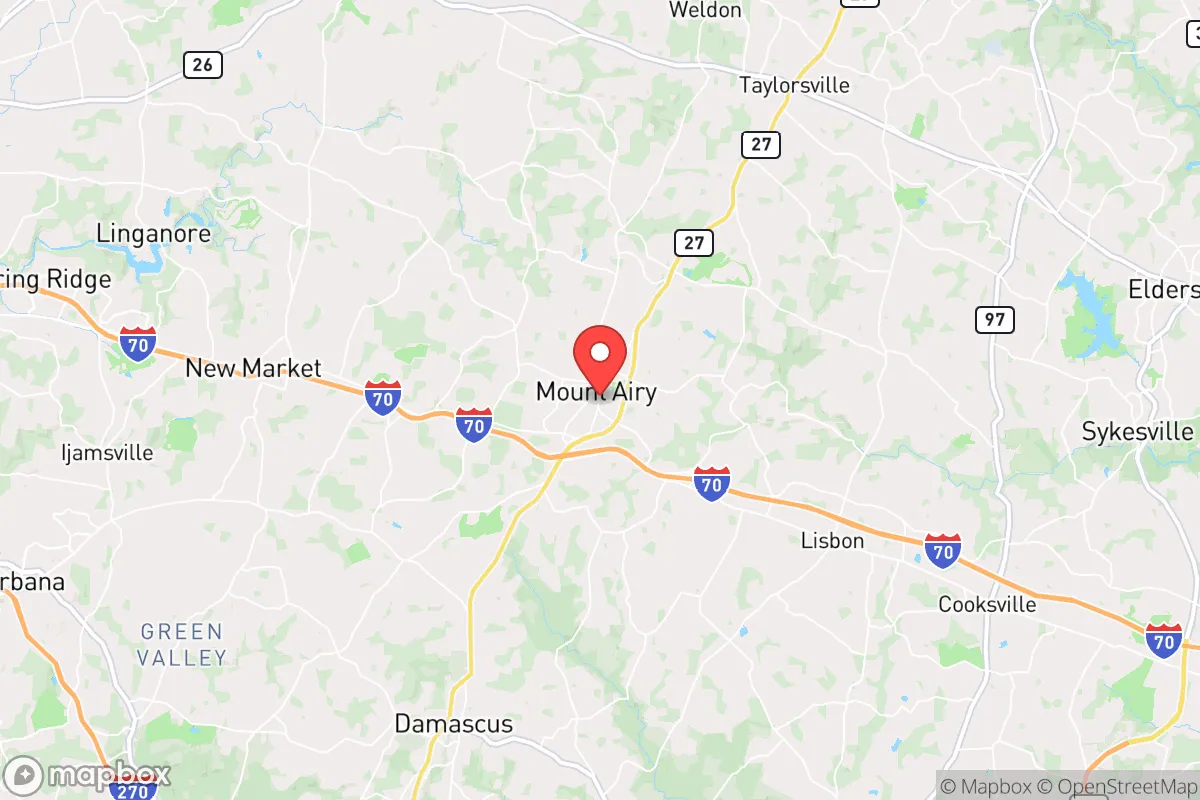
To understand Mount Airy’s shift, you have to look at the neighbors. Drive ten minutes west to New Market or Woodsboro, and you’re in deep Frederick County farmland where the politics are still reliably red. Head east toward Ellicott City or Columbia, and you’re in the heart of Maryland’s progressive stronghold. Mount Airy is the awkward middle child. It’s not as conservative as Hampstead to the north in Carroll County, where the school board still fights for parental rights, and it’s not as liberal as Olney to the south in Montgomery County. But the D+12 rating is a warning sign. That number used to be closer to D+5 or D+6 just a few cycles ago. The county-level voting patterns show that while Frederick County as a whole is trending purple, Mount Airy’s precincts are flipping blue faster than the surrounding rural areas. It’s a classic bedroom-community story: new residents bring big-government voting habits with them.
What this means for residents
For those of us who value limited government and personal autonomy, the changes are tangible. The local school board, once a quiet body focused on curriculum basics, is now a flashpoint for debates over critical race theory and gender ideology. Town council meetings, which used to be about zoning and road repairs, now feature heated arguments over mask mandates and diversity initiatives. The county government in Frederick has pushed for stricter land-use regulations that threaten property rights, and there’s a growing push for higher taxes to fund “equity” programs. If you’re a gun owner, you’ve watched Maryland’s already restrictive laws get tighter, and Mount Airy’s local police are increasingly pressured to enforce state-level overreach. The feeling among longtime residents is that the government is no longer a servant of the people but an agent of social engineering. It’s not just about party labels—it’s about the erosion of the freedom to live your life without a bureaucrat’s approval.
Culturally, the town still has a small-town feel on the surface—the annual Fall Festival, the volunteer fire department, the family-owned diners. But underneath, the policy shifts are real. The push for more affordable housing mandates, for example, sounds good on paper but often means higher density and less local control over development. The county’s climate action plan, while well-intentioned, imposes costs on homeowners and small businesses that many here see as an overreach. If the trend continues, Mount Airy will look less like the independent-minded community it was and more like a suburb of D.C. in everything but name. For now, the fight is still on, but the D+12 rating is a sobering reminder that the battle for local freedom is getting harder to win.

State Political ClimatePolitical Climate in Maryland
State Political AnalysisPolitical Environment in the State
Maryland has long been a deep blue state, but don’t let the statewide numbers fool you—this is a place of stark political contrasts. The Democratic stronghold is driven almost entirely by the Washington, D.C. suburbs and Baltimore City, while the rest of the state—from the Eastern Shore to the western mountains—votes reliably Republican. Over the past 20 years, the state has shifted further left on cultural and economic issues, but the rural-urban divide has widened dramatically, with places like Frederick County and Harford County becoming key battlegrounds.
Urban vs. rural divide
The political map of Maryland is essentially a tale of two states. The D.C. suburbs—Montgomery County, Prince George’s County, and increasingly Howard County—are the engine of Democratic dominance, delivering massive margins that swamp the rest of the state. Baltimore City adds another deep-blue anchor. Meanwhile, the rural counties—Garrett County in the far west, Allegany County around Cumberland, and the Eastern Shore counties like Queen Anne’s and Worcester—vote Republican by 30-40 point margins. The real action is in the “collar counties” around Baltimore and D.C.: Frederick County flipped from red to purple and now leans blue, while Harford County remains a conservative stronghold. Anne Arundel County, home to Annapolis, is a classic swing county that often decides statewide races.
Policy environment
Maryland’s policy environment is aggressively progressive, and it shows in the tax code. The state has a progressive income tax that tops out at 5.75%, but local “piggyback” taxes push the effective rate much higher—Montgomery County residents pay a combined rate over 9%. Property taxes are high, and the state’s estate tax kicks in at just $5 million, with no federal-level exemption match. On education, Maryland spends more per pupil than almost any other state, but results are uneven—wealthy suburban districts thrive while Baltimore City schools struggle. The state has a sanctuary policy that limits cooperation with federal immigration enforcement, and it passed the Trans Health Equity Act in 2023, requiring Medicaid to cover gender transition procedures. Election laws are among the most liberal in the nation: no-excuse mail-in voting, same-day registration, and automatic voter registration at the DMV. The regulatory environment is heavy, especially on businesses—Maryland ranks near the bottom in business climate surveys.
Trajectory & freedom
Maryland is becoming less free by almost any measure, and the trend is accelerating. The Firearm Safety Act of 2013 banned assault weapons and limited magazine capacity, and the state has since added a handgun permit requirement that effectively ended constitutional carry. In 2024, the legislature passed a red flag law expansion and a ban on firearms in most public places. On parental rights, the Maryland State Department of Education adopted a sex education curriculum that includes LGBTQ+ topics in elementary school, with no opt-out for parents—a flashpoint for conservative families. Medical freedom took a hit with strict COVID-19 mandates that lasted longer than in most states, and the state’s vaccine mandate for healthcare workers remains in place. Property rights are constrained by aggressive zoning and environmental regulations, especially in the Chesapeake Bay watershed. The Blueprint for Maryland’s Future education plan, while popular with teachers’ unions, has driven up property taxes in many counties.
Civil unrest & political movements
Maryland has seen its share of political flashpoints. The 2020 protests in Baltimore following George Floyd’s death were intense, with property damage and clashes with police. The state’s sanctuary policy has made it a magnet for immigration activism, and there have been protests at detention centers in Jessup and Baltimore County. On the right, the Maryland Shall Issue gun rights group has been active in lawsuits, and there’s a growing “Free State” movement in rural counties that talks about secession or at least greater autonomy from Annapolis. Election integrity has been a hot topic—Maryland’s mail-in voting system saw high turnout but also allegations of ballot harvesting in the 2022 primaries. The 2022 gubernatorial race between Wes Moore and Dan Cox was a clear referendum on COVID mandates and crime, with Moore winning easily but rural counties rejecting his agenda by wide margins.
Projection
Over the next 5-10 years, Maryland will likely become more blue, not less. The D.C. suburbs continue to grow, driven by federal employment and tech jobs, while rural counties are losing population. The 2020 Census cost Maryland a congressional seat, and the trend lines suggest further consolidation of Democratic power. However, there are countercurrents: Frederick County is seeing an influx of conservative-leaning families from Montgomery County, and Harford County remains a redoubt. The state’s high taxes and regulatory burden are pushing some businesses to Virginia or Delaware, but the proximity to D.C. jobs keeps the population stable. A new resident moving in now should expect a state where progressive policies are the norm, but where you can still find conservative communities in the rural areas and some suburbs. The key question is whether the state’s fiscal trajectory—pension liabilities, education spending, and tax increases—will eventually trigger a backlash or simply accelerate the exodus of the middle class.
Bottom line for a new resident: If you’re a conservative looking for a place where your values are reflected in local government, you’ll want to focus on Harford County, the Eastern Shore, or western Maryland. If you’re moving to the D.C. suburbs, be prepared for high taxes, progressive policies, and a culture that often clashes with traditional values. Maryland is a beautiful state with great schools and natural amenities, but the political climate is increasingly hostile to conservative families. You can find your niche, but you’ll need to be strategic about where you land.
* Values derived from national, state, county, city and local statistics and may differ in a specific area. Last updated: 2026-04-22T03:04:36.000Z
Narrative content on this page is AI-generated and may contain mistakes. Verify any details that matter before acting on them.
ReloMaps may earn a commission from affiliate links at no extra cost to you.

