Photo: Wikipedia
Find The Best Places To Live
in Mount Vernon
PRO TIP! You can paste a Zillow or Redfin link to get info on that property.
What It's Like Living in Mount Vernon, IA
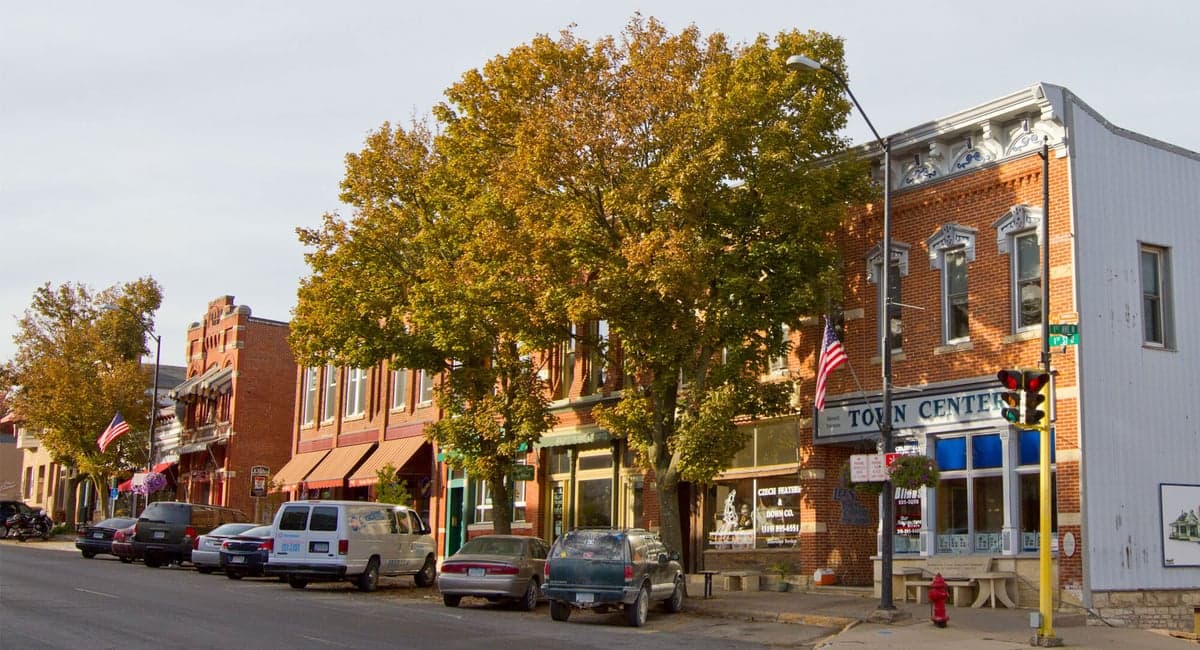
Mount Vernon, Iowa, feels like a small liberal arts college town that happens to have a working railroad track running right through its compact downtown. It’s the kind of place where you can walk from a coffee shop to a cornfield in under ten minutes, and where the town’s identity is wrapped up in Cornell College’s hilltop campus and the steady rumble of grain trains. With a population just over 4,500, it’s small enough that you’ll recognize faces at the grocery store, but the presence of the college and a surprisingly high median income of $106,356 give it a slightly more polished, educated feel than many other Eastern Iowa towns its size.
The Daily Rhythm: College Town Meets Quiet Commuter Life
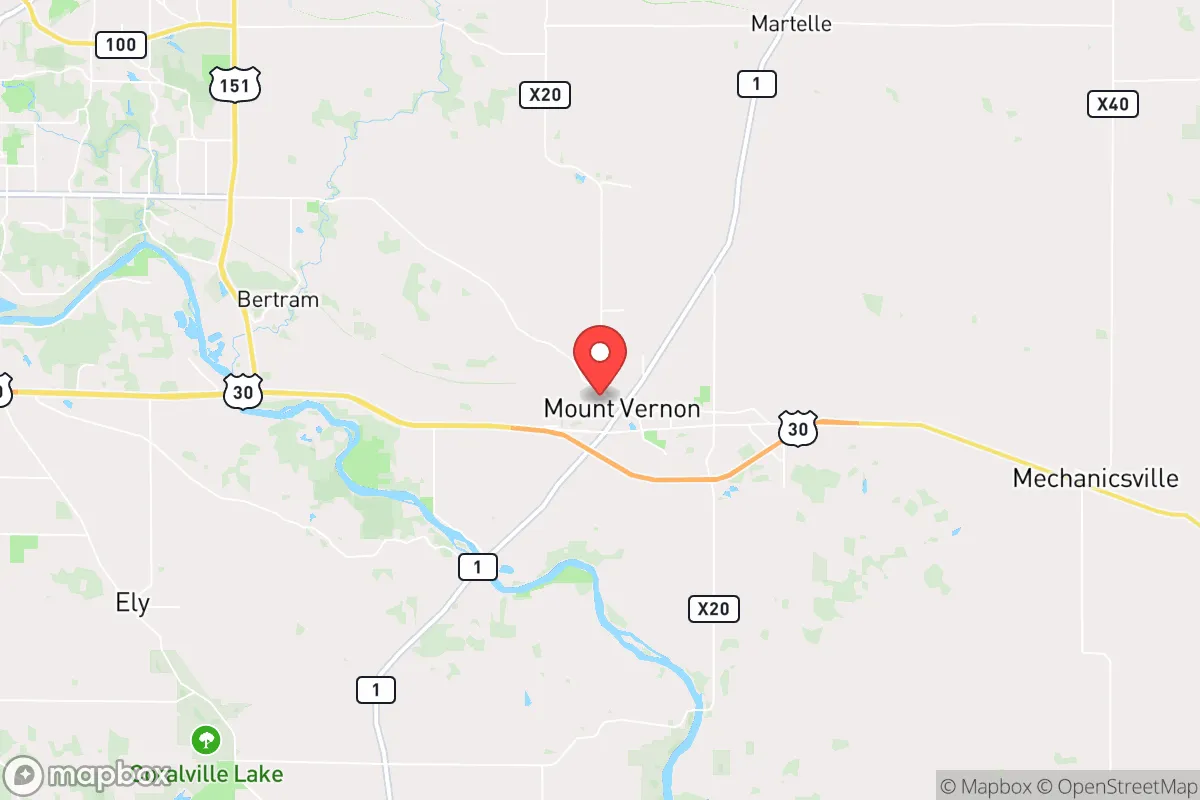
Life in Mount Vernon moves at a deliberate, unhurried pace. The median age is just 23.7, which is almost entirely driven by Cornell College’s student body. Outside of the academic calendar, the permanent residents—many of whom are professionals, remote workers, or faculty—tend to be in their 30s through 50s. The average commute is a short 19 minutes, which means most people either work locally at the college, in nearby Cedar Rapids (about 15 minutes west), or remotely from home offices in the older homes lining the tree-shaded streets. Weekends often start with a stop at Brewed Awakenings on 1st Street for coffee, followed by a walk through Palmer Park or a trip to the Mount Vernon Farmers Market (May through October) on the town square. The downtown is walkable, with a handful of locally-owned shops, a hardware store, and a couple of restaurants that double as social hubs. There’s no big-box retail within city limits; for a Walmart or Target, you drive to Cedar Rapids.
Sports, School Pride, and the Cornell College Factor
High school sports are a genuine community gathering point here. Mount Vernon High School (the Mustangs) draws solid crowds for football and basketball games, especially when rival Lisbon or Solon comes to town. The town’s youth sports leagues are well-organized, and the school system itself is a major reason families move here—it consistently ranks among the top in the state. On the college side, Cornell College’s athletics (the Rams) are Division III, so you won’t find packed stadiums, but the wrestling and basketball programs have loyal local followings. A quirk of the town: the railroad tracks that split downtown mean you’ll occasionally get stuck waiting for a train during a Friday night game or a dinner out. Locals just plan around it. The trains are part of the town’s rhythm, not a nuisance—most residents will tell you they barely notice the noise anymore.
What’s There to Do: Festivals, Parks, and the Local Food Scene
For a town of 4,551, Mount Vernon punches above its weight in things to do. The biggest annual event is Mount Vernon’s Lincoln Highway Festival in late summer, which shuts down the main street for a parade, live music, craft vendors, and a car show. It draws people from all over Linn County. The Cornell College Performing Arts Center brings in concerts, plays, and guest speakers throughout the year, giving residents access to cultural events you’d normally expect in a much larger city. Outdoor options include Morgan Creek Park just outside town—good for hiking, disc golf, and fishing—and the Linn County Trail system, which connects to Cedar Rapids for cyclists and runners. The restaurant scene is small but respectable: Lincoln Wine Bar is the go-to for date nights and craft beer, Uptown Grill serves solid American fare, and Subway and Casey’s cover the quick-and-cheap end. There’s no fast-food drive-through in town, which residents either love or mildly resent.
Pros and Cons of Living Here: The Honest Trade-Offs
Longtime residents will tell you the upsides are real, but so are the frustrations. Here’s the breakdown:
- Pro: Low cost of living. The cost of living index sits at 78 (22% below the national average), and the median home value of $256,900 buys you a well-maintained older home or a newer build on the edge of town. Property taxes are reasonable compared to nearby Johnson County (Iowa City).
- Pro: Safe, tight-knit community. The violent crime rate is 88.7 per 100,000—well below the national average. People don’t lock their doors as a rule, and neighbors actually know each other’s names.
- Pro: Excellent schools. The Mount Vernon Community School District is a genuine draw. Nearly half the adult population (49.5%) holds a college degree, which translates into high parental involvement and strong academic outcomes.
- Con: Limited job market. Unless you work at Cornell College, in healthcare, or remotely, you’re commuting to Cedar Rapids or Iowa City. There’s not much local industry beyond the college and a handful of small businesses.
- Con: Few rental options. The housing market leans heavily toward owner-occupied homes. Rentals are scarce and often go to students, making it hard for young families or singles to find a place without a long wait.
- Con: Quiet evenings. If you want nightlife beyond a bar or a wine bar, you’re driving to Cedar Rapids. The town rolls up sidewalks early, especially outside of the academic year.
The kind of person who fits best in Mount Vernon is someone who values a safe, educated, walkable small town and doesn’t mind driving 15-20 minutes for a big-box store or a concert. It’s a place for families who want good schools without the sprawl of a suburb, and for professionals who work remotely or have short commutes. The college gives it a youthful energy during the school year, but the permanent population is stable, civic-minded, and slightly more affluent than the surrounding area. It’s not a place for someone seeking anonymity or a fast-paced social scene—but for those who want a genuine community with a strong sense of place, Mount Vernon delivers.

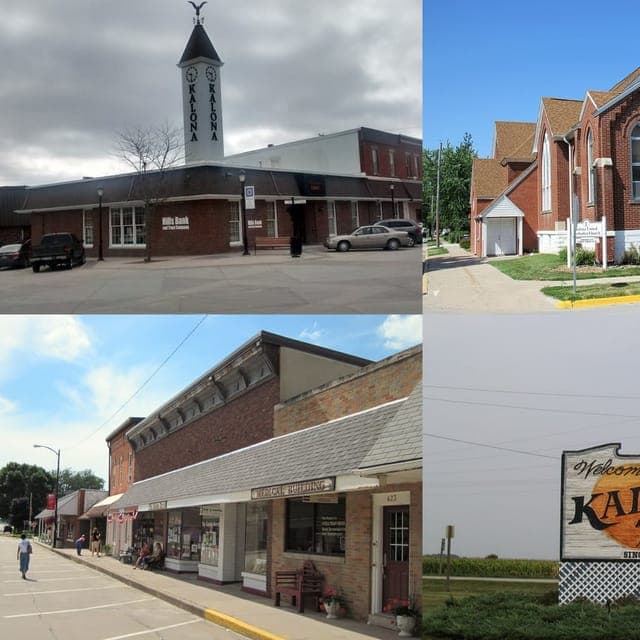
Similar small towns to Mount Vernon

* Values derived from national, state, county, city and local statistics and may differ in a specific area. Last updated: 2026-10-20T17:16:53.000Z
Narrative content on this page is AI-generated and may contain mistakes. Verify any details that matter before acting on them.
ReloMaps may earn a commission from affiliate links at no extra cost to you.

