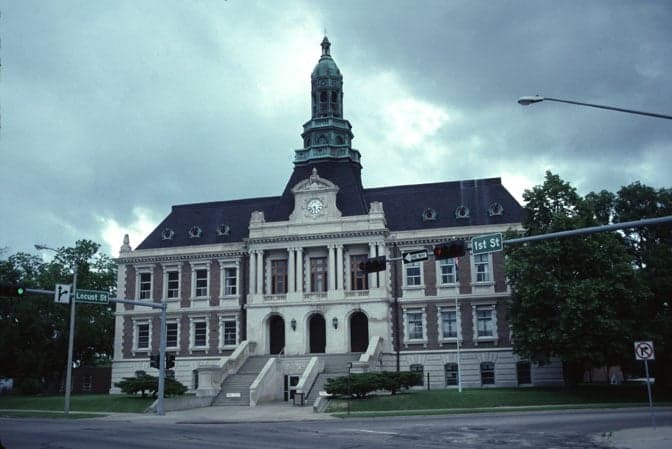
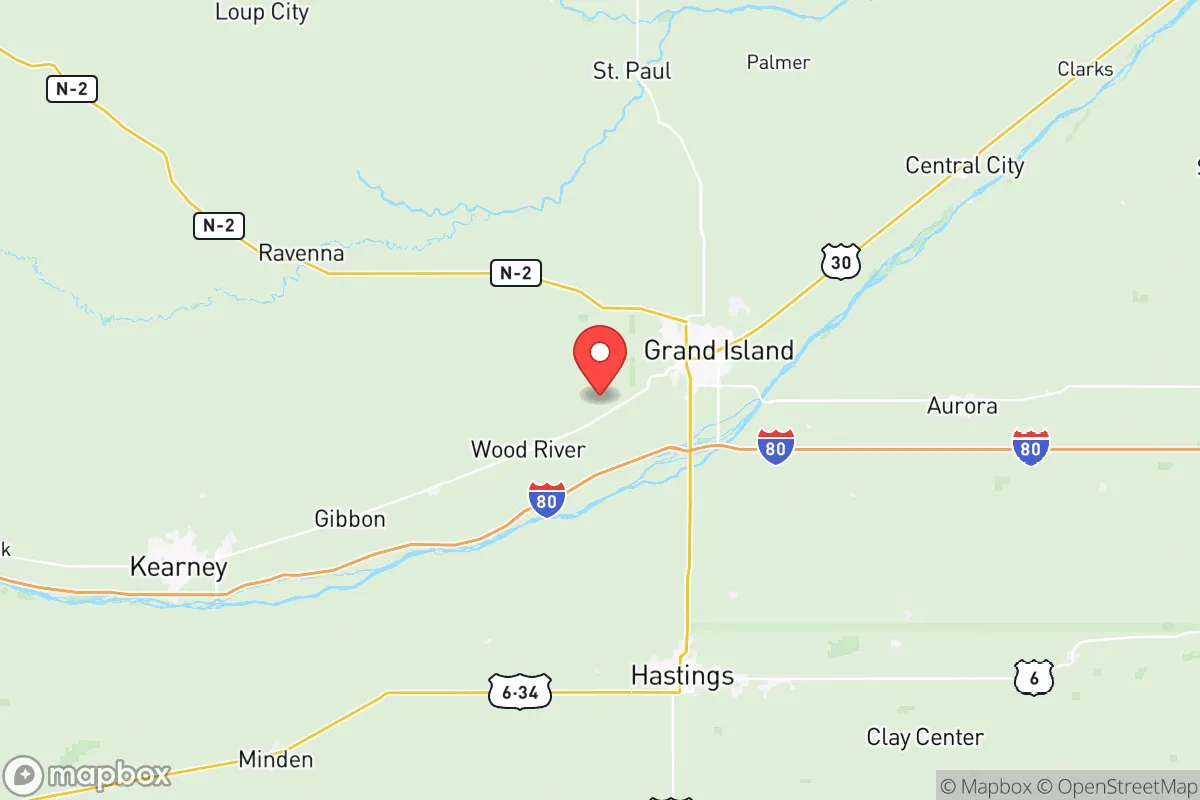
Photo: Wikipedia
Political ClimatePolitical Climate in Hall County
Showing district-level results — no local-only data available.
Local Political AnalysisPolitical Analysis of Hall County
Hall County, Nebraska, is a rock-solid conservative stronghold, with a Cook Partisan Voting Index of R+27 that makes it one of the most reliably Republican counties in the state. That’s not just a number on a map—it reflects a deep-rooted, live-and-let-live culture where folks have long valued personal responsibility over government handouts. But if you’ve been around here as long as I have, you’ve seen the winds start to shift, especially in the county seat of Grand Island, where a growing Hispanic population and younger transplants are nudging things just a bit to the left. Don’t get me wrong—the county still votes red by a landslide, but the trajectory is worth watching, because what happens in Hall County often signals where the rest of Nebraska is headed.
How it compares
When you stack Hall County up against the rest of Nebraska, the difference is stark. The state as a whole sits at R+10, meaning Hall County is nearly three times more conservative than the average Nebraska county. That’s because the rural towns outside Grand Island—places like Wood River, Doniphan, and Cairo—vote red by margins that would make a Democrat weep. In Wood River, for instance, precincts regularly go 80% Republican, driven by a strong agricultural base and a no-nonsense attitude toward taxes and regulations. Meanwhile, Grand Island itself is a mixed bag: the older, established neighborhoods near the downtown core still lean conservative, but the south side precincts around Stolley Park and the newer subdivisions near Highway 281 have started trending purple, with some even flipping blue in recent midterms. The swing precincts are those with a high concentration of meatpacking plant workers and immigrant families—folks who care about economic stability but are less locked into the traditional GOP platform. Compare that to the rest of Nebraska, where even Lincoln and Omaha have pockets of blue, but the rural counties like Hall hold the line. The gap between Hall County and the state average is a reminder that Nebraska’s conservative reputation is carried by its heartland counties, not its cities.
What this means for residents
For those of us living here, the political climate means a government that mostly stays out of your business—low taxes, minimal zoning hassles, and a school board that isn’t pushing woke curriculum. But the creeping changes in Grand Island are a red flag. The city council has seen more progressive members elected in the last few cycles, pushing for things like increased funding for diversity initiatives and tighter rental regulations that feel like government overreach to longtime residents. If you’re a conservative who values personal freedoms, you’ll feel right at home in the county’s small towns, where the biggest political fight is over whether to pave a gravel road. But in Grand Island, you’ll start to notice more signs of the same overreach you see in Lincoln—higher property taxes to fund pet projects, and a growing push for bike lanes and public art that nobody asked for. The trajectory is clear: if the progressive shift in Grand Island continues, Hall County could become a battleground within a decade, with the rural towns fighting to keep the county’s conservative soul intact.
Culturally, Hall County still holds onto its Nebraska roots—the Nebraska State Fair in Grand Island is a celebration of agriculture and family, not a platform for political grandstanding. But the policy distinctions are starting to show. While the state legislature in Lincoln debates property tax relief and school choice, Hall County’s local governments are quietly adopting ordinances that feel more like Omaha-lite. The takeaway? If you’re looking for a place where the government respects your rights and doesn’t meddle, stick to the towns outside Grand Island. The county’s R+27 rating is a shield, but it’s not impenetrable—and the fight to keep it that way is just beginning.

State Political ClimatePolitical Climate in Nebraska
State Political AnalysisPolitical Environment in the State
Nebraska is a solidly Republican state with a Cook PVI of R+10, but don’t let that single number fool you into thinking it’s a monolith. The state has been reliably red in presidential elections since 1968, but the last 10-15 years have seen a fascinating realignment: the rural, agricultural west and central regions have hardened into deep red territory, while the Omaha metro area (Douglas County) has shifted blue, creating a political tug-of-war that plays out in the state legislature. If you’re a conservative looking for a place where your values are the norm, Nebraska still delivers, but you need to know where the fault lines are—and where they’re widening.
Urban vs. rural divide
The political map of Nebraska is a textbook case of the urban-rural split. The eastern third of the state, anchored by Omaha (Douglas County) and Lincoln (Lancaster County), is where the Democratic vote is concentrated. Omaha’s 2nd Congressional District has become a genuine swing seat—it voted for Joe Biden in 2020 and has sent Republican Don Bacon to Congress by razor-thin margins. Lincoln, home to the University of Nebraska, leans left but not as aggressively as Omaha. Meanwhile, the rest of the state is deeply red. Scottsbluff in the Panhandle, Grand Island in the central Platte Valley, and Norfolk in the northeast are all reliably conservative. The rural counties—like Cherry, Box Butte, and Dawes—routinely vote 80%+ Republican. The divide isn’t just cultural; it’s economic. Omaha’s tech, insurance, and finance sectors attract a younger, more diverse workforce, while the rest of the state depends on agriculture, ranching, and manufacturing, which tend to produce more traditional, liberty-minded voters.
Policy environment
Nebraska’s policy environment is generally favorable for conservatives, but it’s not a libertarian paradise. The state has a flat income tax rate of 3.99% (as of 2025, down from 6.84% in 2020), and the legislature passed LB 754 in 2023 to accelerate cuts, aiming for a 3.99% flat rate by 2026. Property taxes are a sore spot—they’re high relative to the region, especially in rural areas where school funding relies heavily on local levies. The state has no sales tax on groceries, but the base rate is 5.5%, with local options. On education, Nebraska has a robust school choice movement: the Opportunity Scholarship Act (LB 753), passed in 2023, provides tax credits for donations to private school scholarships, a win for parental rights. Healthcare policy is mixed; the state expanded Medicaid under the Affordable Care Act in 2020 via ballot initiative, but the legislature has resisted further expansion. Election laws are solid: Nebraska has voter ID (LB 514, passed in 2023), no-excuse absentee voting, and same-day registration. The unicameral, nonpartisan legislature is unique—it keeps party politics out of committee assignments, but the body has become more partisan in recent years, with a conservative majority that’s been willing to override vetoes from Governor Jim Pillen.
Trajectory & freedom
Nebraska is moving in a more conservative direction on several key freedom fronts, but there are warning signs. On gun rights, the state passed constitutional carry (LB 77) in 2023, allowing permitless concealed carry for anyone 21 or older—a clear expansion of Second Amendment liberty. On parental rights, the Parents’ Bill of Rights (LB 1082) was enacted in 2024, requiring schools to notify parents of curriculum changes and medical services. On abortion, Nebraska banned the procedure after 12 weeks in 2023 (LB 574), with exceptions for rape, incest, and medical emergencies. However, the same bill also banned gender-affirming care for minors, which has drawn legal challenges. The state’s medical autonomy record is mixed: COVID-era mandates were minimal compared to coastal states, but Governor Pete Ricketts (2015-2023) did impose some business restrictions. The biggest threat to freedom is property taxes—they’re high and growing, and while the legislature has passed relief measures (like LB 1107 in 2020, which increased state aid to schools), the burden remains a top complaint. On the whole, Nebraska is becoming more free on guns, education, and medical choice, but less free on taxation.
Civil unrest & political movements
Nebraska is not a hotbed of civil unrest, but there have been flashpoints. The 2020 George Floyd protests in Omaha turned violent, with looting and fires in the downtown area, leading to a heavy National Guard presence. That event galvanized conservative voters in the suburbs—places like Papillion and Gretna in Sarpy County saw a surge in Republican turnout. On the right, the Nebraska Republican Party has been split between establishment and populist factions, with the latter pushing for more aggressive action on election integrity and immigration. The state has no sanctuary cities; in fact, Lexington and Schuyler, which have large meatpacking-plant immigrant populations, have seen local tensions over housing and schools. There’s been no serious secession talk, but the “Nebraska Panhandle” has occasionally floated the idea of joining Wyoming or South Dakota over water rights and federal land management. Election integrity is a live issue: the 2020 and 2022 cycles saw lawsuits over mail-in ballot procedures, and the legislature tightened rules with LB 514. A new resident would notice that political activism is quieter than in swing states—people here tend to vote and then go back to their lives.
Projection
Over the next 5-10 years, Nebraska is likely to hold its conservative character, but the Omaha metro will continue to drift left, making the 2nd Congressional District a perennial battleground. In-migration is modest—the state grows about 0.5% annually—and most newcomers are from neighboring red states like Iowa, South Dakota, and Kansas, which reinforces the conservative base. However, Lincoln and Omaha are attracting some remote workers from California and Colorado, which could slowly shift the cultural tone in those cities. The rural areas will continue to depopulate, losing a state legislative seat or two in the 2030 reapportionment. The biggest wildcard is the state’s tax structure: if property taxes aren’t reformed, the state could see an exodus of retirees and farmers to South Dakota or Wyoming. On the plus side, the legislature’s conservative majority is likely to hold, meaning more school choice, gun rights, and pro-life legislation. A person moving in now should expect a state that’s stable, safe, and increasingly conservative—but with a growing urban-liberal enclave that will keep things interesting.
Bottom line for a new resident: Nebraska is a great bet if you want a state where your vote counts, your rights are respected, and your kids can go to a school that reflects your values. Just know that if you move to Omaha, you’ll be living in a blue bubble, while the rest of the state feels like a different country. The property taxes will sting, but the low crime, strong communities, and expanding personal freedoms make it a solid choice for conservatives who want to put down roots without the chaos of coastal states.
* Values derived from national, state, county, city and local statistics and may differ in a specific area. Last updated: 2026-05-23T21:58:33.000Z
Narrative content on this page is AI-generated and may contain mistakes. Verify any details that matter before acting on them.
ReloMaps may earn a commission from affiliate links at no extra cost to you.

