
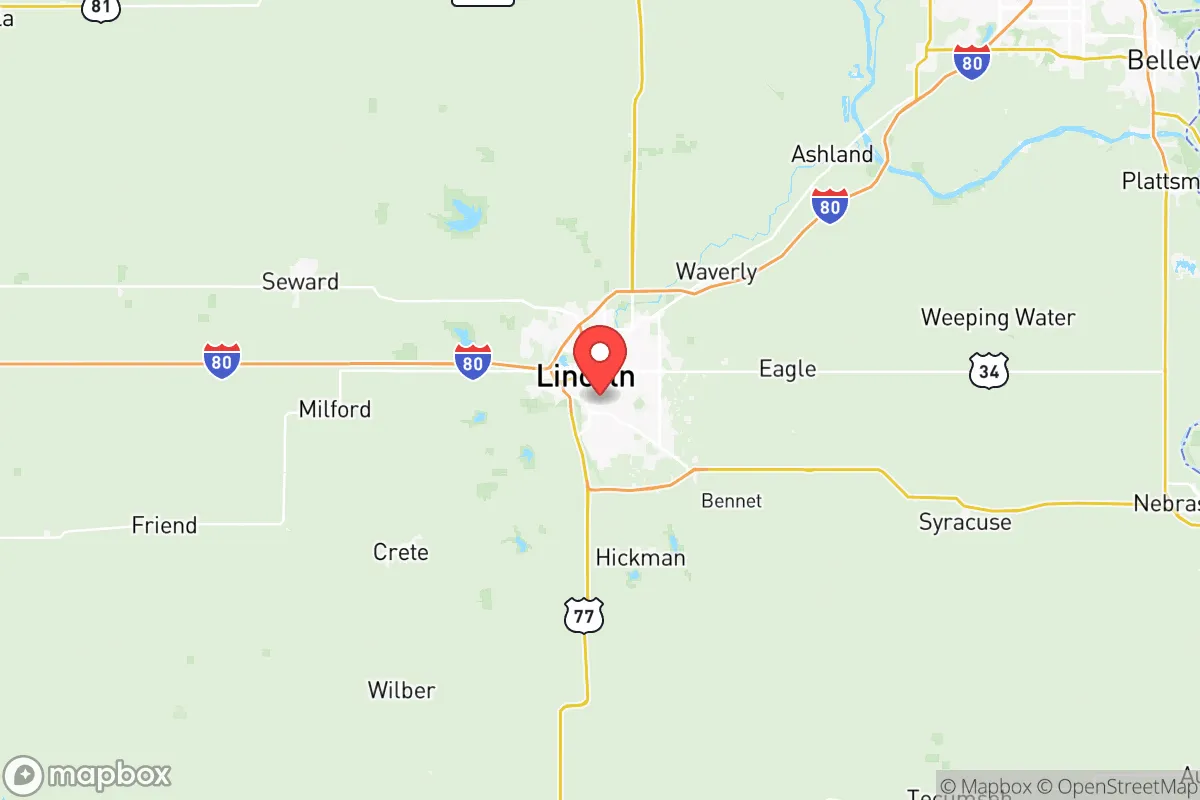
Photo: Wikipedia
Personal Sovereignty in Lancaster County
Viable for self-reliance. Generally workable, though some barriers may limit total independence.
What does Personal Sovereignty tell us?
Personal Sovereignty measures your capacity for self-reliance and independence with minimal government friction. Higher scores mean fewer barriers between you and the way you want to live... but it assumes you have the space you need and good neighbors.
What does this tell us?
Personal Sovereignty measures your capacity for self-reliance and independence with minimal government friction. Higher scores mean fewer barriers between you and the way you want to live... but it assumes you have the space you need and good neighbors.
State Policy
Energy independence: Importer (35% of energy produced in-state)
Personal Liberty
Homesteading

Personal Liberty Analysis
Lancaster County, Nebraska, anchored by Lincoln, presents a mixed picture for those prioritizing personal sovereignty. While Nebraska’s state-level legal framework offers some protections—such as constitutional carry and a right-to-farm amendment—the county’s regulatory environment, particularly within Lincoln’s city limits, imposes notable constraints on individual autonomy. For conservative-leaning individuals and families seeking maximum self-reliance, the key is understanding where within the county you plant your flag: the rural townships and unincorporated areas offer a far freer hand than the urban core.
Tax burden and regulatory posture across Lancaster County
Nebraska’s tax burden is moderate compared to high-tax states like California or New York, but it is not a low-tax haven. The state income tax rate ranges from 2.46% to 6.64%, and property taxes are among the highest in the nation relative to home values—averaging roughly 1.7% of assessed value in Lancaster County. Within the county, the regulatory posture varies sharply. Lincoln imposes a city sales tax of 1.5% on top of the state’s 5.5%, and its zoning code is dense, with strict building permits, occupancy limits, and business licensing requirements. In contrast, unincorporated areas like Hickman and Bennet operate under county-level zoning that is far less intrusive. For a prepper-minded individual, the regulatory drag in Lincoln can feel like a slow erosion of freedom—permits for everything from fence heights to home-based businesses. Outside city limits, the county’s posture is more laissez-faire, though state-level property taxes remain a constant drain on self-reliant budgets.
Self-defense and gun law specifics in Lancaster County
Nebraska is a constitutional carry state as of 2023, meaning no permit is required to carry a concealed firearm for residents 21 and older. This is a significant win for personal sovereignty. Lancaster County does not impose its own gun restrictions beyond state law, but Lincoln has a local ordinance banning the discharge of firearms within city limits—a critical detail for anyone wanting to practice defensive shooting on their own property. The sheriff’s office in Lancaster County is generally pro-Second Amendment, and permit applications for those who still want a concealed handgun permit (useful for reciprocity in other states) are processed without undue delay. In rural areas like Waverly or Malcolm, you can legally discharge firearms on private land with adequate safety buffers, but in Lincoln’s suburban neighborhoods, even a backyard target range is off-limits. For the survivalist, this means living outside the city limits is essential for maintaining the right to train and defend without bureaucratic interference.
Self-reliance and homesteading viability: lot sizes, zoning, and off-grid feasibility
Homesteading viability in Lancaster County is a tale of two landscapes. Inside Lincoln, lot sizes average 6,000 to 10,000 square feet, and zoning prohibits keeping livestock like chickens or goats in most residential zones. Off-grid living is effectively impossible—the city requires connection to municipal water and sewer, and solar panels face HOA restrictions in many subdivisions. Rural townships like Denton and Raymond offer a dramatically different picture. Here, acreages of 1 to 10 acres are common, and county zoning allows for chickens, goats, and even small-scale cattle operations. Off-grid feasibility improves: while the county requires a septic system and well permit, there are no mandates to connect to a grid. Solar panels, rainwater catchment, and wood stoves are all permissible, though building codes still apply for structural safety. For the prepper seeking a bug-out location or a self-sufficient homestead, the area around Roca and Sprague is particularly attractive—low population density, minimal zoning enforcement, and access to the Big Blue River for water security. The trade-off is that these areas lack the infrastructure of Lincoln, so you must be prepared to haul supplies and maintain your own roads.
Personal liberties: parental rights, medical autonomy, speech, and property
Nebraska has a strong track record on parental rights. The state’s “Parental Bill of Rights” law, passed in 2024, explicitly affirms that parents have the fundamental right to direct the upbringing, education, and healthcare of their children. This includes opting out of school curricula and medical treatments without state interference. Medical autonomy is more contested: Nebraska does not have a broad medical freedom law, but it has resisted federal vaccine mandates for state employees and contractors. Lancaster County’s health department has been more proactive in public health orders than rural counties, which may concern those wary of government overreach. Free speech is protected under the First Amendment, but Lincoln’s city council has debated noise ordinances and permit requirements for public gatherings that could chill spontaneous protest. Property rights are generally strong outside city limits—eminent domain is rare, and the county does not impose rent control or restrictive land-use overlays. Inside Lincoln, however, historic preservation districts and tree ordinances can limit what you do with your own land. For the conservative individual, the sovereignty sweet spot is in the unincorporated areas where local government is minimal and state-level protections hold sway.
Overall, Lancaster County offers a tiered sovereignty environment. The urban core of Lincoln is a place of moderate regulation, where personal freedoms are constrained by city ordinances, high property taxes, and limited homesteading options. The surrounding towns—Hickman, Bennet, Waverly, Denton, and Roca—provide a far more permissive landscape for self-reliance, gun rights, and off-grid living. Compared to counties in deep-blue states like Colorado or Oregon, Lancaster County is a relative haven for personal sovereignty. But compared to rural Nebraska counties like Cherry or Sioux, it still carries a heavier regulatory hand. For the strategic relocator, the decision comes down to proximity to Lincoln’s jobs and services versus the liberty of the open countryside. If maximum autonomy is your goal, aim for the townships outside the city limits, where the government’s footprint is lighter and your ability to live on your own terms is greatest.

* Values derived from national, state, county, city and local statistics and may differ in a specific area. Last updated: 2026-05-12T08:57:47.000Z
Narrative content on this page is AI-generated and may contain mistakes. Verify any details that matter before acting on them.
ReloMaps may earn a commission from affiliate links at no extra cost to you.

