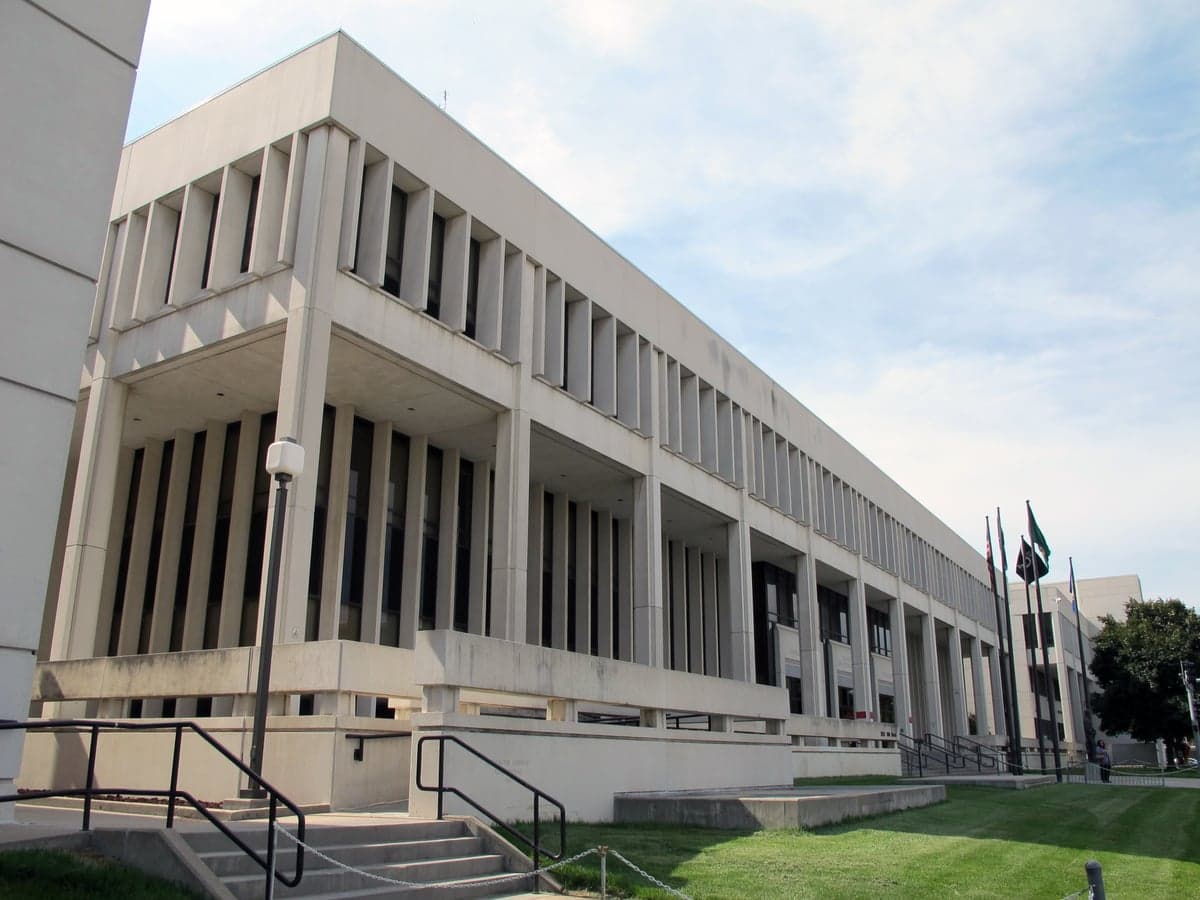
Photo: Wikipedia
Political ClimatePolitical Climate in Lancaster County
Showing district-level results — no local-only data available.
Local Political AnalysisPolitical Analysis of Lancaster County
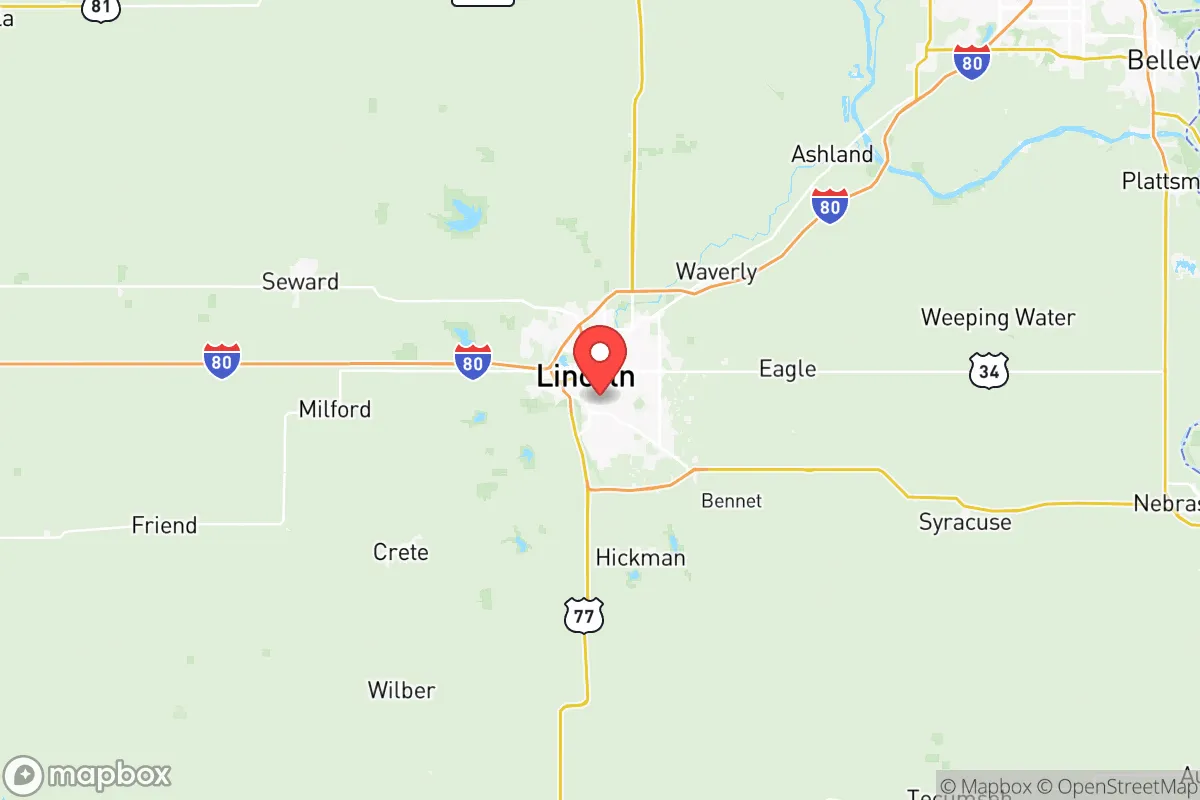
Lancaster County, anchored by Lincoln, has a political climate that’s a bit of a mixed bag compared to the rest of Nebraska. The county’s Cook PVI is R+6, which is noticeably less conservative than the state’s overall R+10 rating. That shift is almost entirely driven by Lincoln’s growing progressive influence, while the rural parts of the county—places like Hickman, Bennet, and Waverly—still vote solidly red. If you’ve been around here long enough, you’ve seen the change: Lincoln used to be a reliably moderate city, but over the last decade, it’s drifted left, especially in the core neighborhoods near the University of Nebraska-Lincoln and downtown.
How it compares
When you stack Lancaster County against the rest of Nebraska, the difference is stark. The state’s R+10 PVI means places like Scottsbluff, Norfolk, and most of the Panhandle are deep red, with little appetite for progressive policies. In Lancaster County, you’ve got a real split. Lincoln’s precincts around the university and the Haymarket area lean blue, often voting Democratic by 15-20 points in recent elections. Meanwhile, the towns just outside the city—like Malcolm, Raymond, and Walton—are reliably Republican, often voting +30 or more. The swing precincts are in the newer subdivisions on Lincoln’s south and east edges, where families are more focused on taxes and school quality than social issues. That’s where the county’s R+6 rating gets its balance, but it’s a fragile one. The progressive push in Lincoln is real, and it’s starting to bleed into countywide races.
What this means for residents
For folks who value personal freedoms and limited government, the trend in Lancaster County is concerning. Lincoln’s city council has been pushing ordinances that feel like government overreach—think mask mandates that lasted longer than most places, zoning rules that make it harder to build on your own land, and a growing appetite for higher taxes to fund pet projects. The rural towns in the county are fighting to keep that kind of thinking from spreading. In Hickman and Bennet, you’ll find a strong sense of local control and a healthy skepticism of Lincoln’s influence. The county board itself is still majority conservative, but that’s getting tighter every cycle. If you’re looking to move here, the key is picking your spot carefully. Stick to the smaller towns if you want neighbors who believe in personal responsibility over government solutions.
The cultural divide is also showing up in everyday life. Lincoln’s public schools have been adopting curriculum changes that prioritize social-emotional learning over core academics, which has a lot of parents in the county’s rural districts worried. Meanwhile, places like Waverly and Norris have kept their schools focused on traditional subjects and local values. The state legislature in Nebraska is still solidly conservative, which provides a check on Lincoln’s more progressive impulses, but that’s a constant battle. Long-term, if you value your rights and want to keep government out of your business, Lancaster County’s rural towns are still a good bet—but keep an eye on Lincoln. The city’s influence is growing, and it’s not always in a direction that respects personal freedom.

State Political ClimatePolitical Climate in Nebraska
State Political AnalysisPolitical Environment in the State
Nebraska is a solidly Republican state with a Cook PVI of R+10, but don’t let that number fool you into thinking it’s a monolith. The state has been drifting rightward in the rural stretches while its two major metro areas—Omaha and Lincoln—have become increasingly competitive, with Omaha’s Douglas County often flipping blue in presidential years. Over the last 10-20 years, the GOP has tightened its grip on the legislature and statewide offices, but a unique unicameral, nonpartisan system means you’ll find more ideological crosscurrents than in a typical red state. For a conservative looking to relocate, Nebraska offers a mix of reliable Republican governance at the state level, tempered by local battles over taxes, education, and personal freedoms that are worth watching closely.
Urban vs. rural divide
The political map of Nebraska is a textbook study in contrast. The eastern third of the state, anchored by Omaha (Douglas County) and Lincoln (Lancaster County), is where the Democratic vote is concentrated. Omaha’s 2nd Congressional District has become a perennial swing seat, flipping between parties and even awarding one of Nebraska’s five electoral votes to Joe Biden in 2020. Lincoln, home to the University of Nebraska, leans left but not as aggressively as Omaha—think more moderate, with a strong libertarian streak among younger voters. Drive west of Grand Island, and the landscape turns deep red. Counties like Scotts Bluff (home to Gering and Scottsbluff) and Dawson (Lexington) vote Republican by 30-40 points, driven by agriculture, energy, and a strong sense of local autonomy. The rural-urban split is stark: the state’s five largest counties (Douglas, Lancaster, Sarpy, Hall, and Buffalo) account for over 60% of the population, but the remaining 88 counties often feel ignored by Lincoln and Omaha. This divide fuels tension over everything from property tax relief to school funding, with rural conservatives pushing back against what they see as urban overreach.
Policy environment
Nebraska’s policy environment is broadly conservative but with some notable wrinkles. The state has no income tax on Social Security benefits and a flat individual income tax rate that was recently cut from 6.84% to 5.84% (with further reductions scheduled). Property taxes, however, are a perennial pain point—among the highest in the region relative to home values, which drives constant legislative battles over relief. The regulatory posture is light: no state-level minimum wage above the federal $7.25 (though a 2022 ballot measure raised it to $15 by 2026), and occupational licensing is less burdensome than in coastal states. On education, Nebraska has a robust school choice movement: the state passed a tax-credit scholarship program in 2023 (LB 753) that allows dollar-for-dollar credits for donations to private school scholarships, though it’s been challenged in court. Election laws are solid: voter ID was enacted in 2023 (LB 514), and the state maintains a clean voter roll with no same-day registration. Healthcare policy is a mixed bag—Nebraska expanded Medicaid under the Affordable Care Act via a 2018 ballot initiative, but the state has resisted further federal encroachment, with no state-run insurance exchange and limited abortion access after a 2023 law (LB 574) banned the procedure at 12 weeks. For a conservative, the policy environment is generally favorable, but the property tax burden and the Medicaid expansion are reminders that Nebraska isn’t a pure libertarian paradise.
Trajectory & freedom
Nebraska has been moving in a direction that should please most conservatives, but the pace is uneven. On gun rights, the state is a standout: constitutional carry was signed into law in 2023 (LB 77), allowing permitless concealed carry for anyone 21 or older. No red flag laws exist, and the state preempts local gun ordinances, so Omaha can’t impose its own restrictions. Parental rights got a boost with the 2023 “Parents’ Bill of Rights” (LB 705), which requires schools to notify parents about curriculum changes and medical services. On medical autonomy, Nebraska took a cautious approach during COVID—no statewide mask mandates after 2021, and the legislature banned vaccine passports in 2022 (LB 906). However, the 12-week abortion ban (LB 574) was a compromise that left some pro-life advocates unsatisfied, and a 2024 ballot initiative to enshrine abortion rights was narrowly defeated, signaling the issue remains volatile. Property rights are generally strong, with no statewide rent control and limited eminent domain abuse, though local zoning in Omaha and Lincoln can be restrictive. The biggest freedom concern is taxation: the state’s high property taxes feel like a creeping infringement, and while income tax cuts are underway, they’re phased in slowly. Overall, Nebraska is becoming more free in the areas that matter most to conservatives—guns, parental rights, and COVID-era autonomy—but the tax burden and the ongoing abortion debate are reminders that freedom isn’t a finished product here.
Civil unrest & political movements
Nebraska is not a hotbed of civil unrest, but it has its flashpoints. The most visible in recent years was the 2020 George Floyd protests in Omaha, which saw some property damage and a heavy police response, but nothing on the scale of Portland or Seattle. Since then, left-wing activism has been mostly confined to campus politics at the University of Nebraska-Lincoln and a few progressive nonprofits in Omaha. On the right, the most organized movement is the “Nebraska Freedom Coalition,” a grassroots group pushing for school choice, tax reform, and election integrity. Immigration politics are a simmering issue: Nebraska has a significant meatpacking workforce, with towns like Lexington and Schuyler seeing large Hispanic populations. There’s been no sanctuary city movement—in fact, the state passed a law in 2023 (LB 535) requiring local law enforcement to cooperate with federal immigration authorities. Election integrity controversies flared after 2020, with some rural counties calling for hand-count audits, but the state’s Republican Secretary of State, Bob Evnen, has maintained confidence in the system. The most notable political movement is the ongoing push for property tax relief, which has spawned a “Taxpayer Bill of Rights” style campaign that nearly succeeded in 2024. For a new resident, you won’t see daily protests, but you’ll hear plenty of talk about taxes and school choice at the local coffee shop.
Projection
Over the next 5-10 years, Nebraska is likely to stay red but with a slowly shrinking margin. The key demographic shift is the growth of Omaha’s suburbs—places like Papillion and Gretna in Sarpy County are booming with young families and remote workers, and they tend to vote Republican but are less culturally conservative than rural areas. Lincoln is also growing, driven by the university and tech startups, which could push the city further left. Meanwhile, rural counties are losing population, which dilutes their electoral weight. The state’s nonpartisan unicameral legislature means that even as Omaha and Lincoln gain influence, the rural-urban coalition-building will keep things from swinging too far left. Expect continued fights over property tax reform (likely some relief, but not a revolution), school choice expansion (the scholarship program will survive court challenges), and abortion (a 2026 ballot measure is possible). The biggest wildcard is in-migration: Nebraska is attracting Californians and Texans looking for lower costs, and they tend to bring moderate-to-conservative politics, which could bolster the GOP. For a conservative moving in now, expect a state that remains reliably Republican on most issues, but with a growing urban-liberal voice that will keep things interesting.
For a new resident, the bottom line is this: Nebraska offers a solid conservative foundation—constitutional carry, school choice, voter ID, and low income taxes—but you’ll need to stomach high property taxes and a politically active urban core in Omaha and Lincoln. If you’re looking for a place where your vote counts and your freedoms are respected, Nebraska is a strong bet. Just keep an eye on the property tax debate and the Omaha suburbs, because that’s where the future of the state is being written.
* Values derived from national, state, county, city and local statistics and may differ in a specific area. Last updated: 2026-05-12T08:57:47.000Z
Narrative content on this page is AI-generated and may contain mistakes. Verify any details that matter before acting on them.
ReloMaps may earn a commission from affiliate links at no extra cost to you.

