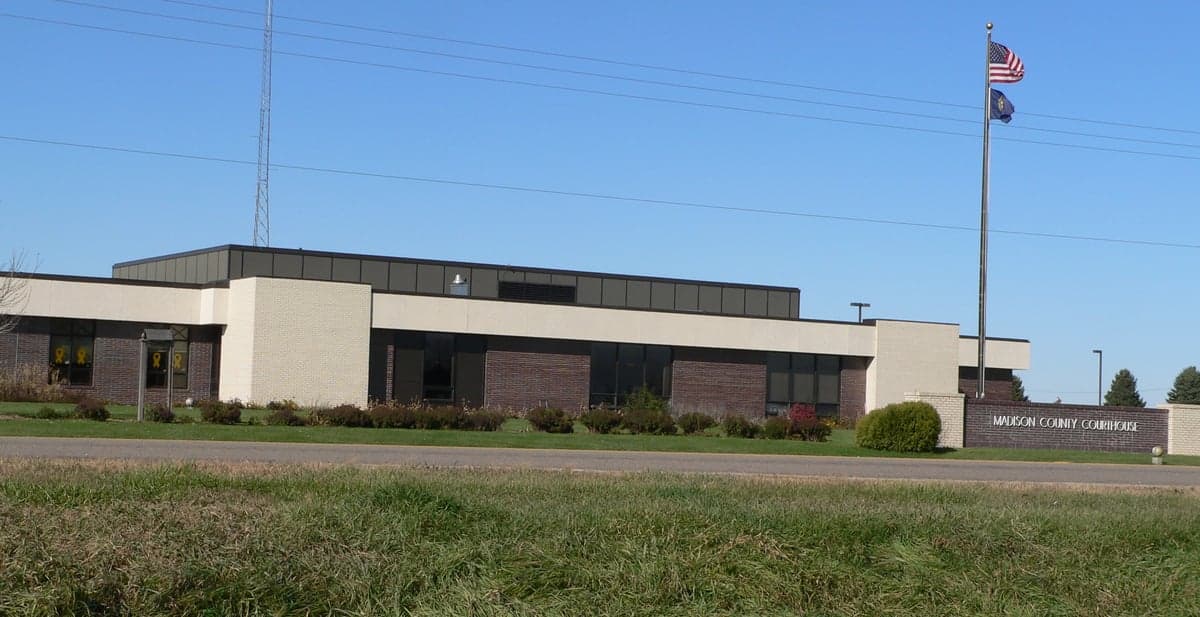
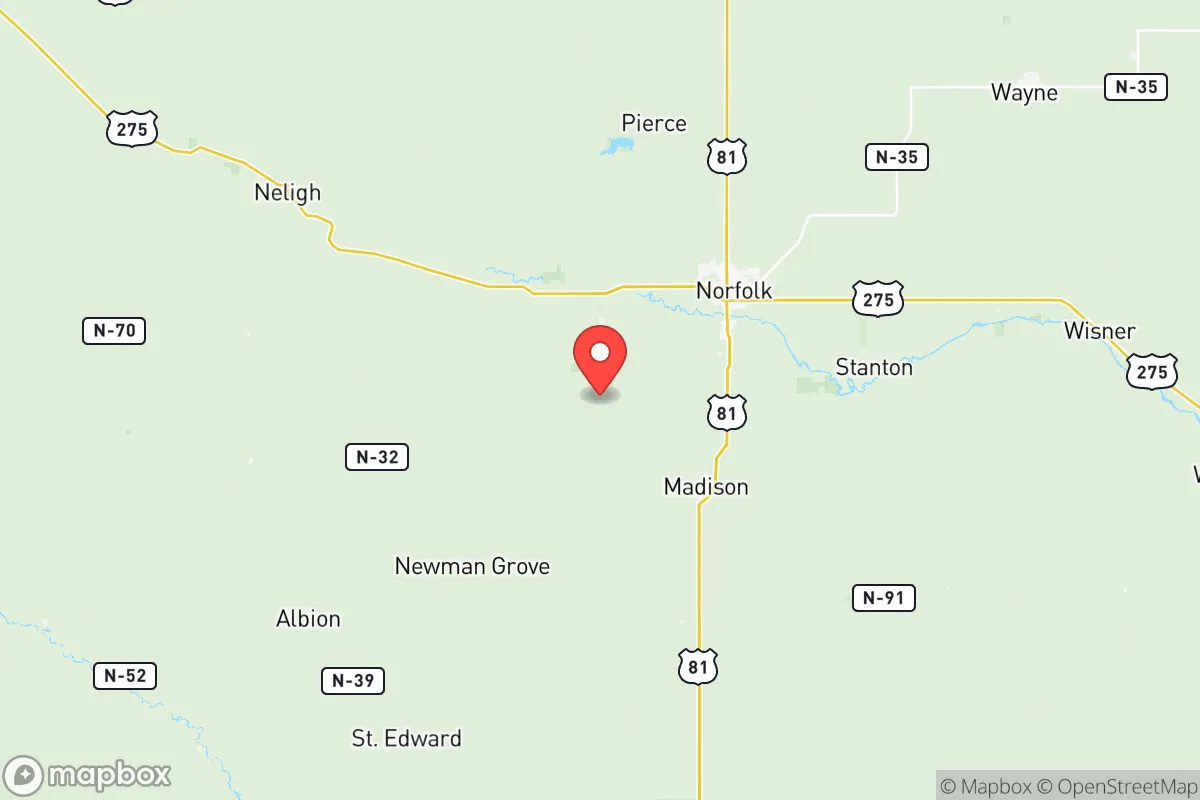
Photo: Wikipedia
Quality of Life in Madison County
A livable area that tracks near national norms for affordability, walkability, and neighborhood health.
What does Quality of Life tell us?
Quality of Life measures an area by evaluating factors like cost of living, nearby amenities, country club access, airport proximity, socioeconomic signals and neighborhood character. For large states, this is a general average — quality of life can vary dramatically between metro areas, suburbs, and rural communities within the same state.
What does this tell us?
Quality of Life measures an area by evaluating factors like cost of living, nearby amenities, country club access, airport proximity, socioeconomic signals and neighborhood character. For large states, this is a general average — quality of life can vary dramatically between metro areas, suburbs, and rural communities within the same state.
Cost of Living
28% below national average
115%
The Real Cost of Living in Madison County for 2026
| Tier | Individual | Family (4) |
|---|---|---|
| Survival | $14k | $26k |
| Comfortable | $38k | $56k |
| Luxury | $117k+ | $181k+ |
| Elite (Top 5%) | $144k+ | $223k+ |
Quality-of-Life Analysis
Madison County, Nebraska offers a distinct quality-of-life spectrum that ranges from the modest urban amenities of its county seat to the quiet self-sufficiency of its unincorporated farm communities, drawing residents who value affordability, short commutes, and a slower pace of life. With a cost of living index of 72—well below the national average of 100—and a median home value of $196,000, the county appeals strongly to first-time homebuyers, agricultural workers, and families seeking a low-stress environment. The character of daily life shifts noticeably between the larger towns and the surrounding rural pockets, each offering a different balance of convenience and solitude.
Largest town(s) & population centers
Norfolk is the county's primary population center and economic hub, home to roughly 24,000 residents. Daily life here offers the most complete set of amenities in the region, including a regional hospital (Faith Regional Health Services), a four-year college (Northeast Community College), and a variety of retail and dining options along U.S. Highway 81. The town's economy is anchored by manufacturing, healthcare, and education, with major employers like Nucor Steel and the Norfolk Public Schools providing stable local jobs. The average commute in the county is just over 14 minutes, and Norfolk residents typically enjoy that short drive to work, school, and shopping. While not a bustling metropolis, Norfolk provides a functional small-city lifestyle with enough services that most residents rarely need to travel to Omaha or Sioux City for routine needs.
Smaller towns & rural pockets
Outside of Norfolk, the county's smaller communities offer a distinctly quieter, more agrarian way of life. Madison, the county's namesake town with about 2,200 residents, sits just west of Norfolk and retains a historic downtown core with a few local businesses and a strong sense of community identity. Battle Creek (population ~1,200) and Meadow Grove (population ~300) are even smaller, with Meadow Grove functioning largely as a bedroom community and service point for surrounding farms. The unincorporated area of Emerald and the rural townships that fan out across the county's 575 square miles are home to families working in row-crop agriculture and livestock operations. In these areas, the nearest grocery store or gas station may be a 15-minute drive, and social life revolves around church suppers, school events, and county fairs rather than commercial entertainment.
Cost & lifestyle range
The cost of living varies noticeably across the county, though it remains low by national standards everywhere. Norfolk sits at the higher end of the local spectrum, with median rent around $851 and home values that can reach $250,000 or more for newer construction in subdivisions on the city's south and west sides. In contrast, Meadow Grove and the rural townships offer the lowest housing costs, with older farmhouses and fixer-uppers often selling well below the county median of $196,000. Property taxes in Nebraska are relatively high compared to income taxes, which is a factor for landowners in the rural areas. Amenities thin out quickly as you move away from Norfolk: the city has a hospital, a movie theater, and multiple grocery chains, while smaller towns like Battle Creek may have only a convenience store and a volunteer fire department. Residents in the far eastern or western parts of the county accept longer drives to Norfolk or even to nearby Pierce or Stanton counties for basic services.
Madison County is best suited for those who prioritize affordability, short commutes, and a close-knit community over urban diversity and late-night entertainment. Young families and retirees alike find the low cost of living and safe streets appealing, while agricultural workers and commuters to Norfolk's industrial base appreciate the minimal traffic and predictable daily rhythms. The county offers a genuine rural-to-small-city gradient, allowing residents to choose exactly how much isolation or convenience they want within a 20-minute drive.

Crime in Madison County
Generally safer than 65% of comparable U.S. locations.
Violent CrimeViolent Crime Analysis
Property CrimeProperty Crime Analysis
Crime Analysis
Madison County, Nebraska, reports a violent crime rate of 220.9 per 100,000 residents and a property crime rate of 1,394.3 per 100,000, placing it in a moderate risk category relative to the state. While these figures are not the highest in Nebraska, they are elevated compared to the safest rural counties, and the county's two primary cities — Norfolk and Madison — experience distinct safety profiles. The overall picture is one of manageable risk, but residents and prospective movers should be aware of localized crime patterns and the influence of local judicial philosophy on public safety outcomes.
Crime in context
Madison County's violent crime rate of 220.9 per 100,000 is roughly 40% lower than the national average of 380 per 100,000, but it is higher than the Nebraska state average of approximately 240 per 100,000. The property crime rate of 1,394.3 per 100,000 is about 15% below the national average of 1,954 per 100,000, yet it exceeds the Nebraska state average of roughly 1,200 per 100,000. This means that while violent crime is less of a concern than in many parts of the country, property crime — including theft, burglary, and motor vehicle theft — is a more pressing issue locally. The county's crime index is comparable to other agricultural hub counties in northeast Nebraska, such as Platte County (Columbus) and Dakota County (South Sioux City), but it is notably higher than in smaller, more rural counties like Antelope or Pierce.
What residents experience
Norfolk, the county seat and largest city, accounts for the majority of reported crime in Madison County. The city's violent crime rate is slightly above the county average, driven by aggravated assault and robbery incidents, while property crime is concentrated in commercial districts and near the U.S. Highway 81 corridor. The smaller city of Madison, with a population under 2,500, reports fewer violent incidents but has a disproportionate share of property crime relative to its size, often linked to transient populations and seasonal agricultural labor. The unincorporated areas and towns like Battle Creek and Meadow Grove are significantly safer, with crime rates well below both the county and state averages. Residents in Norfolk report that property crime — particularly theft from vehicles and unlocked garages — is the most common safety concern, while violent crime is largely confined to specific neighborhoods and domestic situations.
Neighborhood-level variation and judicial considerations
Safety varies considerably within Madison County. The southwestern neighborhoods of Norfolk, near the Faith Regional Health Services campus, and the newer subdivisions along 13th Street are considered the safest, with low incident rates. Conversely, areas near the downtown Norfolk core and the industrial zones along the Elkhorn River see higher concentrations of both property and violent crime. The Madison County District Court, which handles felony cases, operates under a judicial philosophy that has historically emphasized rehabilitation over incarceration. Progressive sentencing policies and a district attorney's office that prioritizes diversion programs have led to concerns among residents that repeat offenders are cycled back into the community without meaningful consequences. This approach, while intended to reduce recidivism, has resulted in a perception that the justice system is lenient on property criminals and low-level violent offenders, undermining public confidence and potentially contributing to the county's elevated property crime rate. For those considering a move, the safest choice is to target the outlying towns of Battle Creek or Meadow Grove, or the residential neighborhoods on Norfolk's west side, while remaining vigilant about property security throughout the county.
* Values derived from national, state, county, city and local statistics and may differ in a specific area. Last updated: 2026-08-08T11:49:34.000Z
Narrative content on this page is AI-generated and may contain mistakes. Verify any details that matter before acting on them.
ReloMaps may earn a commission from affiliate links at no extra cost to you.

