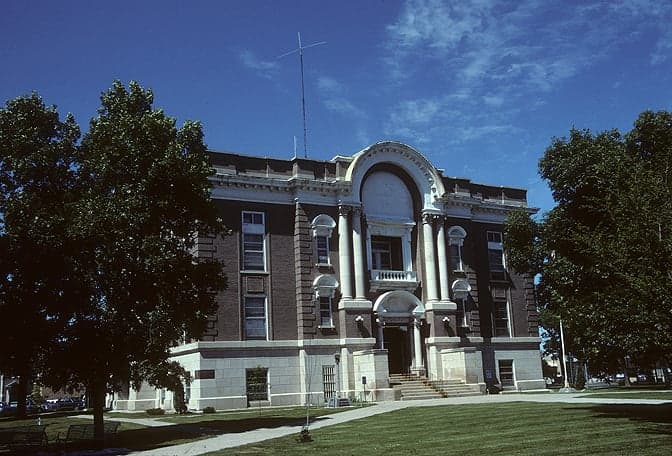
Photo: Wikipedia
Political ClimatePolitical Climate in Phelps County
Showing district-level results — no local-only data available.
Local Political AnalysisPolitical Analysis of Phelps County
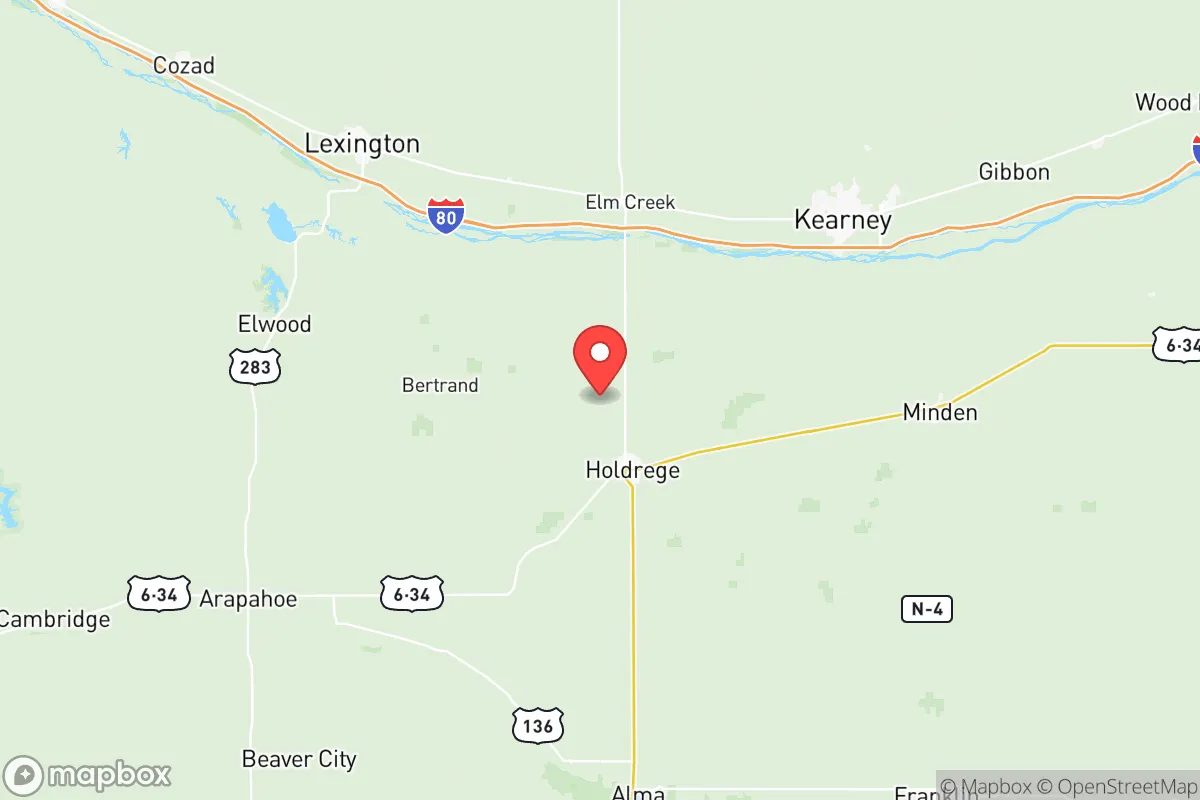
Phelps County, Nebraska, is about as reliably conservative as it gets, with a Cook PVI of R+27 that makes it one of the most solidly Republican counties in the state. That’s not a fluke or a recent shift—it’s been that way for decades, rooted in a deep-seated belief in limited government, personal responsibility, and a way of life that doesn’t take kindly to outside interference. The county seat, Holdrege, is the political and cultural hub, and it votes overwhelmingly red, but even the smaller towns like Bertrand, Funk, and Loomis follow suit, with precincts routinely delivering 75-80% of the vote to Republican candidates. There’s no real blue pocket here; the closest thing to a swing area might be a few precincts around the college in Holdrege, where younger voters occasionally tip a bit more moderate, but even that’s a stretch. The trajectory is steady—if anything, the county has gotten redder over the last decade as rural Nebraska pushes back against state and federal overreach.
How it compares
Compared to Nebraska as a whole, which has a Cook PVI of R+10, Phelps County is a full 17 points more conservative. That’s a massive gap. The state’s R+10 rating already reflects a reliably Republican lean, but it’s tempered by the more moderate suburbs of Omaha and Lincoln, where you’ll find swing districts and even some blue pockets. In Phelps County, there’s none of that. The difference is stark when you look at policy preferences: while the state has seen some progressive inroads—like the push for expanded Medicaid or debates over property tax relief that sometimes favor government solutions—Phelps County residents tend to view those as warning signs. The local sentiment is that the state legislature in Lincoln is already too willing to compromise on core conservative principles, and the county’s voting record reflects a desire to pull the state back to the right. For example, in the 2024 primaries, Phelps County gave overwhelming support to the most conservative candidates, often by margins 10-15 points higher than the state average.
What this means for residents
For folks living here, the political climate means a daily life that’s largely free from the kind of government overreach you hear about in bigger cities. There’s no push for progressive social policies in local schools, no aggressive zoning or environmental regulations that stifle farming and small business, and a general expectation that elected officials will keep their hands off personal freedoms—whether that’s gun rights, property rights, or how you raise your kids. The downside, if you can call it that, is that the county’s deep red tilt can feel insular. If you’re not on board with the conservative consensus, you might feel out of step, but that’s a trade-off most residents are happy to make. The long-term concern is that as Nebraska’s urban areas continue to grow and shift left, the state legislature might impose policies that override local control—like stricter gun laws or mandates on renewable energy—and Phelps County will have to fight to preserve its way of life.
Culturally, Phelps County stands apart from the rest of Nebraska in its no-nonsense approach to governance. There’s a strong tradition of self-reliance here—neighbors help neighbors, but nobody expects the government to solve their problems. You see it in the low tax burden, the minimal local bureaucracy, and the fact that most folks just want to be left alone to work their land and raise their families. That’s not to say there aren’t challenges—the county’s population has been slowly declining, and younger people often leave for college and don’t come back—but the political identity remains rock solid. If anything, the contrast with the rest of Nebraska is growing sharper, and for those who value personal liberty and limited government, Phelps County is a stronghold worth holding onto.

State Political ClimatePolitical Climate in Nebraska
State Political AnalysisPolitical Environment in the State
Nebraska is a solidly Republican state with a Cook PVI of R+10, but that number hides a more complicated reality than you might expect. The state has voted for the GOP presidential candidate in every election since 1968, except for 2008 when Obama narrowly won the Omaha-based 2nd Congressional District. Over the last 10-20 years, the dominant coalition has been a mix of rural conservatives, agricultural interests, and Omaha-area suburbanites, but the growing urban centers of Omaha and Lincoln are slowly shifting the needle leftward, while the rest of the state remains deeply red. If you’re looking for a place where conservative values still hold strong at the state level, Nebraska is a solid bet, but you need to know where the fault lines are.
Urban vs. rural divide
The political map of Nebraska is a textbook example of the urban-rural split. The eastern third of the state, anchored by Omaha (Douglas County) and Lincoln (Lancaster County), is where the Democratic vote is concentrated. Omaha’s 2nd Congressional District is the only competitive seat in the state, flipping between parties in presidential years and currently represented by Republican Don Bacon in a district that Biden won in 2020. Lincoln, home to the University of Nebraska, leans blue but not overwhelmingly so—Lancaster County voted for Biden by about 8 points in 2020. Drive 20 minutes outside either city, and you’re in deep red territory. Grand Island, Kearney, and North Platte are reliably conservative, with the rural counties west of the 100th meridian often voting 80%+ Republican. The Panhandle, including Scottsbluff and Chadron, is even more conservative. The divide isn’t just about population density—it’s cultural. Omaha’s suburbs like Papillion and Gretna are growing fast and trending more moderate, while the small towns are holding firm. If you’re moving to Nebraska for a conservative environment, you’ll want to be in the western two-thirds or the Omaha suburbs, not downtown Lincoln.
Policy environment
Nebraska’s policy environment is broadly conservative, but with some notable quirks. The state has no income tax on Social Security benefits and a flat state income tax rate of 5.84% (down from 6.84% in 2020 thanks to LB 873, which phased in cuts). Property taxes are high—among the top 10 in the nation—because the state relies heavily on them to fund schools. The legislature passed LB 1107 in 2023 to provide some relief via refundable income tax credits, but it’s still a pain point. Education policy is a mixed bag: Nebraska has school choice through charter schools and a new Education Savings Account program (LB 753, passed in 2023), but it’s limited compared to states like Arizona. The state also has a “Stand Your Ground” law (LB 62, passed in 2023) and constitutional carry (LB 77, passed in 2023), making it one of the more gun-friendly states in the Midwest. On healthcare, Nebraska expanded Medicaid under the Affordable Care Act in 2020 via a ballot initiative, which was a rare progressive win. Election laws are solid: voter ID is required (passed in 2021 via LB 76), and the state has no-excuse absentee voting. The unicameral, nonpartisan legislature is unique—it keeps party politics from getting too nasty, but it also means you can’t always predict how a bill will land. Overall, the policy environment is favorable for conservatives, but the property tax burden and Medicaid expansion are sore spots.
Trajectory & freedom
Nebraska has been moving in a more freedom-oriented direction over the last five years, but it’s not a straight line. On the plus side, the 2023 passage of constitutional carry (LB 77) and Stand Your Ground (LB 62) were major wins for Second Amendment advocates. The state also passed a near-total abortion ban in 2023 (LB 574), prohibiting the procedure after 12 weeks with exceptions for rape, incest, and medical emergencies—a clear win for pro-life residents. Parental rights got a boost with the 2023 “Parents’ Bill of Rights” (LB 705), which requires schools to notify parents about curriculum changes and medical services. On the concerning side, the state’s property tax burden remains high, and the legislature has been slow to rein in spending. The 2020 Medicaid expansion, while popular, added a significant entitlement program that some conservatives worry will grow. Medical freedom took a hit during COVID—Nebraska had mask mandates in Omaha and Lincoln, and the state health department pushed vaccine mandates for healthcare workers, though those were later rolled back. The trajectory is generally positive for personal liberty, but the property tax issue and the creeping influence of Omaha’s progressive politics are worth watching. If you’re moving here, expect more freedom on guns and education than you’d get in a blue state, but don’t expect a libertarian paradise.
Civil unrest & political movements
Nebraska has seen relatively little civil unrest compared to coastal states, but there have been flashpoints. The 2020 George Floyd protests in Omaha turned violent, with looting and fires in the downtown area, leading to a heavy police response and a curfew. The state’s immigrant communities, particularly in South Omaha and Lexington, have been a political flashpoint. In 2023, the legislature debated a bill (LB 535) to ban sanctuary cities, though it didn’t pass—the issue remains alive. There’s a small but vocal secessionist movement in the western part of the state, with some counties floating the idea of joining Wyoming or South Dakota over frustration with Omaha and Lincoln’s influence. Election integrity has been a hot topic: the 2020 election saw Trump win Nebraska by 19 points, but the 2nd District’s electoral vote went to Biden, leading to calls for a winner-take-all system (which the GOP-controlled legislature has tried to pass but hasn’t yet). You’ll see “Trump Won” flags in rural areas, but the political violence is minimal. The most visible organized movements are the pro-life groups (like Nebraska Right to Life) and the gun rights activists (Nebraska Firearms Owners Association). If you’re moving here, you won’t see daily protests, but you’ll feel the tension between the urban and rural worlds.
Projection
Over the next 5-10 years, Nebraska is likely to stay red at the state level, but the margins will narrow. The Omaha metro area is growing fast—Douglas County added about 50,000 people between 2010 and 2020—and that growth is bringing more moderate and left-leaning voters. The 2nd Congressional District will remain competitive, and if Democrats ever win the governorship, you could see a shift on issues like abortion and taxes. The rural counties are losing population, which means their political weight is shrinking. The state’s in-migration is mostly from other Midwestern states (Iowa, Kansas, South Dakota) and from California and Colorado, which could bring some cultural change. The property tax issue isn’t going away, and the legislature will likely pass more relief, but it’ll be a slow grind. On the freedom front, expect more school choice expansion and maybe a push for a flat income tax rate below 5%. The biggest wildcard is the 2024 election and whether the state goes winner-take-all for presidential electoral votes—if it does, it’ll lock in the R+10 lean for the foreseeable future. If you’re moving in now, expect Nebraska in 2035 to be slightly more purple than it is today, but still a solidly conservative state with a strong rural backbone.
For a new resident, the bottom line is this: Nebraska offers a high degree of personal freedom on guns, education, and taxes compared to blue states, but you’ll pay for it with high property taxes and a growing urban-liberal influence in Omaha and Lincoln. If you’re a conservative looking for a place where your values are still the norm, stick to the western half of the state or the Omaha suburbs. If you’re a parent, the school choice options are decent and getting better. Just keep an eye on the property tax situation and the slow demographic shift—it’s not Texas or Florida, but it’s a solid, stable choice for someone who wants to live in a state that still respects individual liberty.
* Values derived from national, state, county, city and local statistics and may differ in a specific area. Last updated: 2026-05-08T16:10:36.000Z
Narrative content on this page is AI-generated and may contain mistakes. Verify any details that matter before acting on them.
ReloMaps may earn a commission from affiliate links at no extra cost to you.

