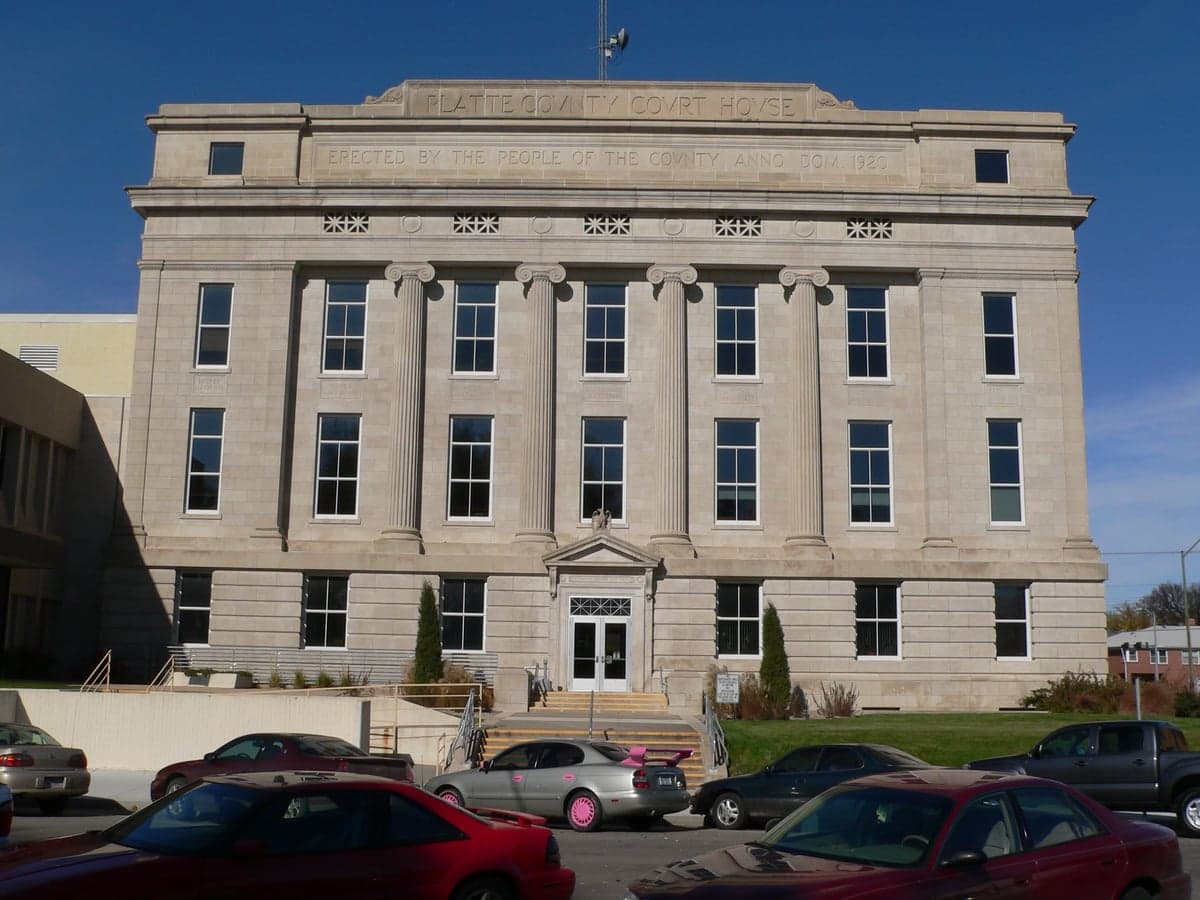
Photo: Wikipedia
Strategic Assessment of Platte County
Strong survivability profile. Good buffer from population centers, with manageable environmental and tactical risks.
What does the Strategic Assessment tell us?
Our Strategic Assessment grades tactical survivability of an area. Major population centers, military targets, fallout zones, natural disasters, and border exposure all drive risk — lower exposure means a more defensible position in a crisis.
This is heavily inspired by Joel Skousen's Strategic Relocation book. Highly recommended you checkout the book ($)What does this tell us?
Our Strategic Assessment grades tactical survivability of an area. Major population centers, military targets, fallout zones, natural disasters, and border exposure all drive risk — lower exposure means a more defensible position in a crisis.
This is heavily inspired by Joel Skousen's Strategic Relocation book. Highly recommended you checkout the book ($)Strategic Pillars

Key Distances
Strategic Assessment Analysis
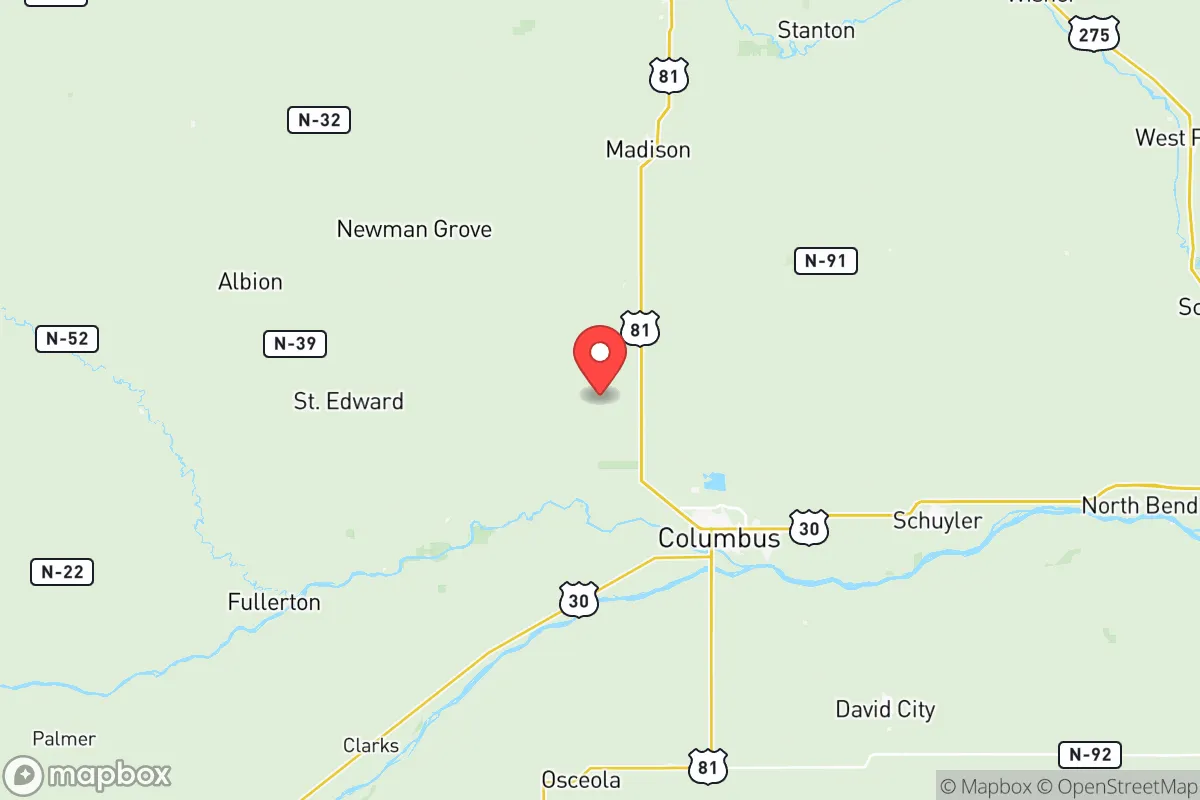
Platte County, Nebraska, sits in a sweet spot that few relocators fully appreciate until they run the numbers. Anchored by Columbus, a working-class city of about 24,000, the county offers a blend of agricultural self-sufficiency and industrial backbone without the exposure that comes with living near a major metropolitan area. It's roughly 80 miles west of Omaha and 70 miles northwest of Lincoln, placing it far enough from those population centers to avoid the worst of any civil unrest or fallout scenario, yet close enough to access their logistics if needed. The Platte River runs through the county's southern half, providing a reliable water source, and the surrounding farmland ensures that food production isn't just theoretical—it's the local economy.
Why Platte County's geographic position works for a prepper strategy
The county's layout is defined by the Platte River valley, which cuts a wide, fertile corridor through east-central Nebraska. This isn't mountainous terrain—it's flat, open agricultural land that gives you long sightlines and makes movement predictable. The Loup River joins the Platte just west of Columbus, creating a natural water confluence that historically supported settlement and today offers redundant water access. Towns like Humphrey, Lindsay, and Platte Center are small, tight-knit communities where everyone knows who belongs and who doesn't, which is a form of social defensibility that's hard to replicate in a suburb. The county sits at the intersection of U.S. Highway 81 and U.S. Highway 30, giving you north-south and east-west ground routes that avoid the interstate chokepoints. I-80 does run through the southern tip of the county near the town of Duncan, but that corridor is a double-edged sword—it's useful for supply movement but also a likely evacuation route during a crisis, meaning you'll want to be positioned north of the interstate if you're serious about staying put. The terrain is mostly row-crop agriculture, which means open ground but also limited natural cover; defensibility here comes from distance and community, not from hills or forests.
Fallout risks and exposure points you need to know about
No place in the continental U.S. is completely safe from fallout scenarios, but Platte County's risk profile is manageable if you understand the map. The single biggest exposure is Offutt Air Force Base, located about 80 miles east near Bellevue. Offutt is home to U.S. Strategic Command (STRATCOM) and is a top-tier nuclear target. A ground burst there would send fallout eastward with prevailing winds, but Platte County sits west of the base, which is the safer side. Still, any major exchange involving ICBM silos in western Nebraska or the Dakotas could produce fallout that drifts east across the state, so you're not immune—you just have better odds than someone living in Omaha. Closer to home, Columbus hosts a large Archer Daniels Midland (ADM) ethanol plant and a major Union Pacific rail yard. These are industrial targets for sabotage or secondary effects during civil unrest, not primary nuclear targets, but they could attract attention. The TransCanada pipeline (Keystone XL route) runs through the county, which adds a long-term infrastructure risk if pipeline sabotage becomes a tactic. On the plus side, there are no major refineries, ports, or military bases within the county itself, and the nearest large city—Grand Island, about 40 miles west—is not a high-value target. The county's position in the Platte River valley also means it's not directly downwind of any major urban center in a prevailing-westerly scenario.
Practical resilience: food, water, energy, and defensibility in Platte County
For a relocator thinking about long-term self-sufficiency, Platte County checks several boxes. Water is the strongest asset. The Platte River is a perennial, braided river that flows year-round, and the underlying Ogallala Aquifer provides groundwater that is accessible via wells across most of the county. Towns like Lindsay and Humphrey have municipal water systems that draw from deep wells, and rural properties with private wells are common. Food production is embedded in the local economy. The county is one of Nebraska's top corn and soybean producers, and livestock operations—especially cattle and hogs—are widespread. You can buy direct from farmers at local markets in Columbus and at smaller co-ops in Platte Center and Creston. For long-term storage, the county has multiple grain elevators and feed mills that could become barter hubs in a crisis. Energy is a mixed picture. The grid is reliable in normal times, but rural areas are vulnerable to extended outages during winter storms or cyberattacks. Natural gas lines run along the U.S. 30 corridor, and there is growing wind energy infrastructure in the region, but you'll want solar panels and a backup generator if you're serious about independence. Defensibility comes from community structure, not terrain. The county sheriff's office is active and well-funded relative to rural Nebraska standards, and the Columbus Police Department maintains a visible presence. In a breakdown scenario, the small towns offer natural social units where mutual aid is a cultural norm, not a theoretical concept. The downside is that the open farmland offers little concealment, so a determined group could move through the area quickly. Your best bet is to integrate into a small town like Humphrey or Lindsay, where you're part of the network, rather than trying to hole up on an isolated farmstead.
So what's the bottom line for a relocator with a prepper mindset? Platte County offers a solid foundation: reliable water, local food production, and

* Values derived from national, state, county, city and local statistics and may differ in a specific area. Last updated: 2026-05-15T01:04:20.000Z
Narrative content on this page is AI-generated and may contain mistakes. Verify any details that matter before acting on them.
ReloMaps may earn a commission from affiliate links at no extra cost to you.

