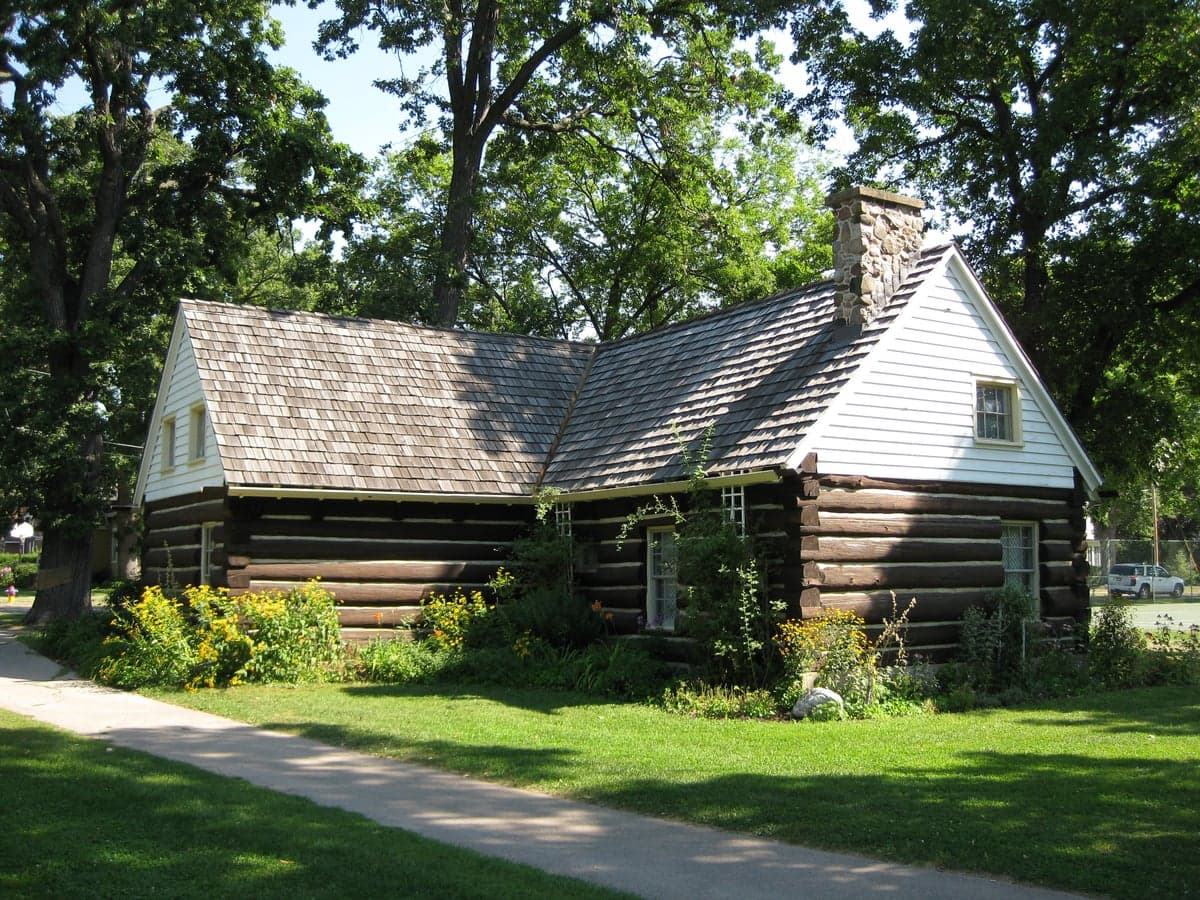
Photo: Wikipedia
Political ClimatePolitical Climate in Neenah, WI
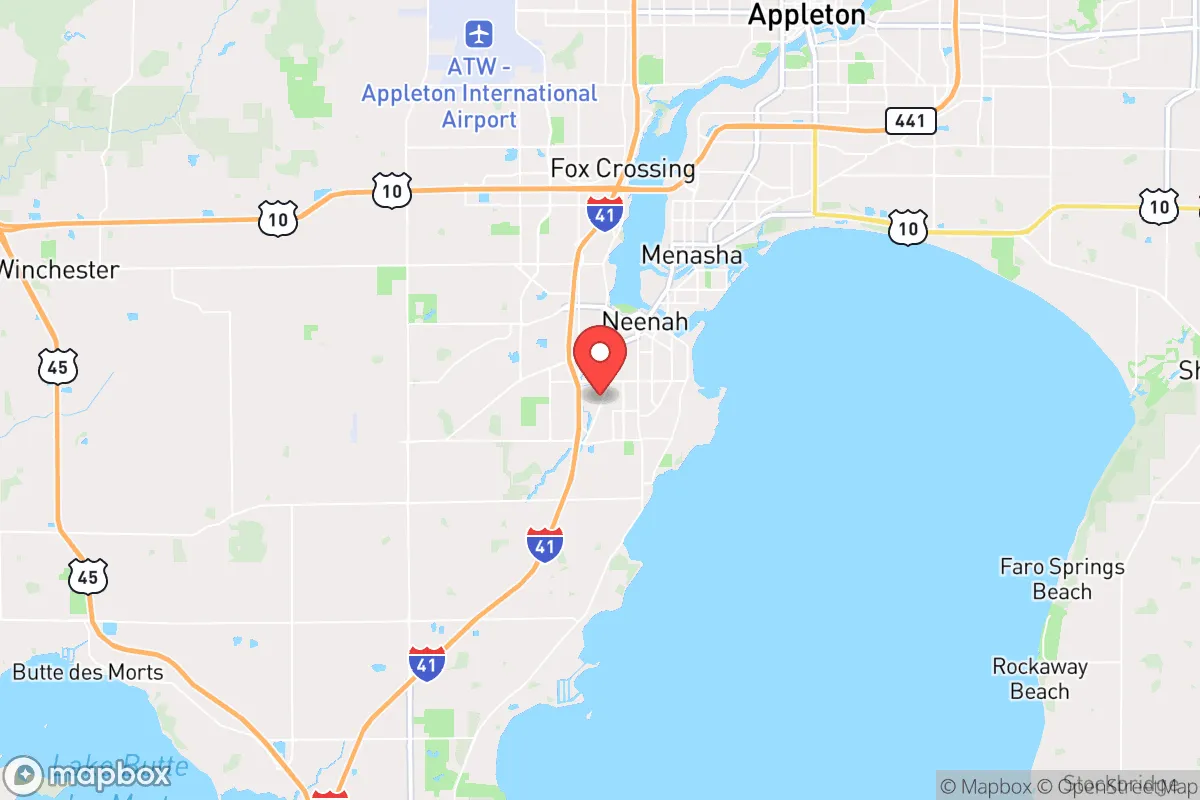
District shown is the primary district for this city’s centroid. Cities may span multiple districts.
Local Political AnalysisPolitical Analysis of Neenah, WI
Neenah has long been a solidly conservative community, and that hasn't changed much despite some national trends. The Cook PVI rating of R+8 tells you the real story—this area leans Republican by a comfortable margin, and it's been that way for as long as I can remember. You see it in local elections, in the school board races, and in the way folks around here talk about things like taxes and personal responsibility. That said, there's been a noticeable shift in the last five or six years, especially as younger families move in from the Fox Valley corridor, and some of that old-school, live-and-let-live attitude is starting to rub up against more progressive ideas creeping in from Appleton and Oshkosh.
How it compares
If you drive ten minutes north to Appleton, you'll feel a different political vibe entirely. Appleton's got a more mixed electorate—still conservative in the outskirts, but the city itself has been trending left, especially on social issues. Oshkosh to the south is similar, with a younger, more transient population tied to the university. Neenah, by contrast, feels like the last holdout of old-school, common-sense conservatism in the Fox Valley. We don't have the same kind of activist energy you see in those bigger towns. Our city council meetings are still about potholes and zoning, not culture war battles. But I've watched the school board get more contentious over the last couple cycles, with folks pushing for things like DEI initiatives and "equity" language that would have been laughed out of the room a decade ago. That's the kind of government overreach that gets my hackles up—when they start telling parents what their kids should be taught about values, or when they try to micromanage how businesses operate.
What this means for residents
For the average person living here, the political climate still feels pretty safe. You're not going to get sideways for flying a flag or speaking your mind at a town hall. Property taxes are reasonable compared to Appleton, and the city government hasn't gone on a spending spree like some of our neighbors. But you have to keep an eye on the long game. The same progressive playbook that's been rolled out in Madison and Milwaukee is starting to show up here—things like "affordable housing" mandates that actually drive up costs, or "sustainability" committees that want to tell you what kind of lightbulb to buy. If you value your personal freedoms and don't want some bureaucrat deciding how you live your life, Neenah is still a good place to be, but you can't afford to be complacent. The next few elections will tell us whether we stay on the conservative path or start sliding into the kind of overregulation that's choking other parts of the state.
One thing that sets Neenah apart culturally is the strong sense of local identity. People here are proud of the paper mill history, the lakefront, and the fact that we're not just a bedroom community for Appleton. That pride translates into a resistance to outside influence, which is a good thing when it comes to preserving our way of life. But I've seen that same pride get weaponized by folks who want to paint anyone with a different view as an outsider. The real test will be whether we can keep the government small and the community tight without turning into a place that's hostile to anyone who doesn't fit the mold. For now, I'd say Neenah is still a place where you can raise a family, run a business, and live your life without a lot of interference. Just don't take it for granted—because the political winds are shifting, and if you're not paying attention, you might wake up one day and find your town looking a lot more like Appleton than you'd like.

State Political ClimatePolitical Climate in Wisconsin
State Political AnalysisPolitical Environment in the State
Wisconsin has long been a classic swing state, but over the past decade it has hardened into a deeply polarized battleground where the outcome of any statewide election is often decided by fewer than 30,000 votes. The state’s political soul is split between the reliably blue, union-heavy cities of Milwaukee and Madison and the increasingly red, rural and exurban counties that make up the rest of the state. Over the last 20 years, the state has shifted from a purple bellwether to a place where the two sides are dug in, with conservatives holding a structural advantage in the legislature thanks to gerrymandered maps, while Democrats have won three of the last four gubernatorial elections and both U.S. Senate seats.
Urban vs. rural divide
The political map of Wisconsin is a textbook case of the urban-rural chasm. Milwaukee County, home to the state’s largest city, delivers roughly 250,000 Democratic votes in a typical presidential election, while Dane County (Madison) adds another 200,000. Together, these two counties produce a blue wall that Democrats must build on to win statewide. Meanwhile, the WOW counties — Waukesha, Ozaukee, and Washington — just west and north of Milwaukee, are among the most reliably Republican suburbs in the nation, often voting 60-70% for GOP candidates. The real story, however, is the shift in the once-blue, working-class areas of the state. Places like Racine and Kenosha on the Lake Michigan shore, and the Fox River Valley cities of Green Bay, Appleton, and Oshkosh, have moved sharply rightward over the past decade, driven by cultural and economic concerns. In 2020, Trump flipped Wisconsin by carrying these smaller industrial cities and rural counties by larger margins than previous Republicans. The rural northwoods counties — Vilas, Oneida, Lincoln — are now solidly red, a shift from the days when they were competitive. The result is a state where the political geography is essentially two blue islands in a red sea.
Policy environment
Wisconsin’s policy environment is a mixed bag for conservatives. On the plus side, the state has a flat income tax rate of 4.4% (down from 7.75% in 2011), and property taxes are relatively low compared to neighboring Illinois and Minnesota. The state is a “right-to-work” state, meaning you can’t be forced to join a union as a condition of employment, which has helped keep the business climate competitive. However, the state’s regulatory posture is not uniformly conservative. The Department of Natural Resources (DNR) has a long history of aggressive enforcement on environmental issues, and the state’s election laws have been a flashpoint. Wisconsin uses a bipartisan election commission, but after the 2020 election, the legislature passed a series of voting reforms, including stricter voter ID requirements and limits on absentee ballot drop boxes, which were upheld by the state Supreme Court. On education, the state has a robust school choice program, including the Milwaukee Parental Choice Program, the oldest in the nation, and a statewide voucher program. But the state also has a high level of per-pupil spending, and the teachers’ union remains powerful in Madison. Healthcare is a mixed bag: the state expanded Medicaid under Obamacare, but also has a strong private insurance market. The biggest concern for many conservatives is the state’s tax burden on retirees — Social Security benefits are partially taxed, and the state has no estate tax, but property taxes can be a shock for newcomers from low-tax states.
Trajectory & freedom
The trajectory of freedom in Wisconsin is a tug-of-war. On the positive side, the state has seen a significant expansion of gun rights. In 2011, Wisconsin became a “shall-issue” state for concealed carry, and in 2023, the legislature passed a bill allowing permitless carry, which was signed into law by Democratic Governor Tony Evers. This was a major win for Second Amendment advocates. On parental rights, the state has seen a push for school transparency, with a 2023 law requiring schools to post curriculum materials online and notify parents of any health services provided to students. However, the state’s medical autonomy landscape is concerning. In 2023, the state Supreme Court ruled that a 1849 law banning abortion was not enforceable, effectively legalizing abortion up to fetal viability. This was a major setback for pro-life advocates. On property rights, Wisconsin has a strong tradition of local control, but the DNR’s authority over wetlands and shoreland zoning has been a persistent source of friction. The state’s tax burden, while not as high as Illinois, is still above the national average, and the flat income tax is a positive, but the state’s sales tax is relatively low at 5%. The biggest threat to freedom in the near term is the state Supreme Court, which flipped to a 4-3 liberal majority in 2023 after a high-spending election. This court has already struck down the state’s gerrymandered legislative maps and is likely to take up cases on voting laws and abortion restrictions.
Civil unrest & political movements
Wisconsin has been a hotbed of political activism, both left and right. The 2011 Act 10 protests, which saw tens of thousands of union members and their supporters occupy the state capitol for weeks, were a defining moment in modern Wisconsin politics. More recently, the 2020 Kenosha unrest, following the shooting of Jacob Blake, led to riots, arson, and the killing of two protesters by Kyle Rittenhouse, which became a national flashpoint on self-defense and the Second Amendment. The state has also seen a rise in election integrity activism, with groups like the Wisconsin Election Integrity Network pushing for audits and reforms. On the left, the group Indivisible has a strong presence in Madison and Milwaukee, while on the right, the Wisconsin Family Action and the Wisconsin Institute for Law & Liberty are influential. Immigration politics are less visible here than in border states, but the issue of sanctuary cities has flared up, with Milwaukee and Dane County declaring themselves “welcoming” jurisdictions, leading to legislative efforts to ban such policies. The state has also seen a growing secessionist movement in the northern counties, with some rural residents calling for a breakaway state called “New Wisconsin” or “Superior,” though this remains fringe. The overall atmosphere is one of high political tension, with protests and counter-protests common in Madison and Milwaukee.
Projection
Looking ahead 5-10 years, the trajectory is concerning for conservatives. The state’s demographic trends favor Democrats: Milwaukee and Dane County are growing, while rural counties are aging and shrinking. In-migration from Illinois, Minnesota, and California is bringing more progressive voters to the Madison and Milwaukee suburbs. The state Supreme Court’s liberal majority is likely to redraw legislative maps, potentially giving Democrats a chance to win the Assembly and Senate for the first time in over a decade. This could lead to a wave of progressive legislation on voting, abortion, and taxes. However, the rural and exurban areas are not going away, and the cultural divide is likely to deepen. The state’s economy, driven by manufacturing, agriculture, and healthcare, is stable but not booming. The biggest wild card is the state’s political culture: Wisconsinites are fiercely independent, and the state has a long history of electing split-ticket candidates. A new resident moving in now should expect a state that is politically volatile, with a high likelihood of continued gridlock and periodic flashpoints. The state’s freedom index is likely to decline if the progressive majority on the court and in the governor’s office consolidates power, but the state’s strong tradition of local control and civic engagement will provide some check.
For a conservative considering a move to Wisconsin, the bottom line is this: you’ll find a state with a strong economy, low crime in most areas, and a vibrant outdoor lifestyle, but you’ll also be living in a political battleground where your vote matters. The state’s tax burden is manageable, and the school choice program is a major plus for parents. However, you’ll need to be prepared for a state government that is increasingly divided, with a governor and court that are likely to push progressive policies. If you’re looking for a place where your values are reflected in state law, you may be better off in a state like Texas or Florida. But if you’re willing to fight for your freedoms and want to live in a state with a rich history and a strong sense of community, Wisconsin can be a rewarding place to call home. Just be ready for the political weather to change with the seasons.
* Values derived from national, state, county, city and local statistics and may differ in a specific area. Last updated: 2026-04-21T10:19:42.000Z
Narrative content on this page is AI-generated and may contain mistakes. Verify any details that matter before acting on them.
ReloMaps may earn a commission from affiliate links at no extra cost to you.

