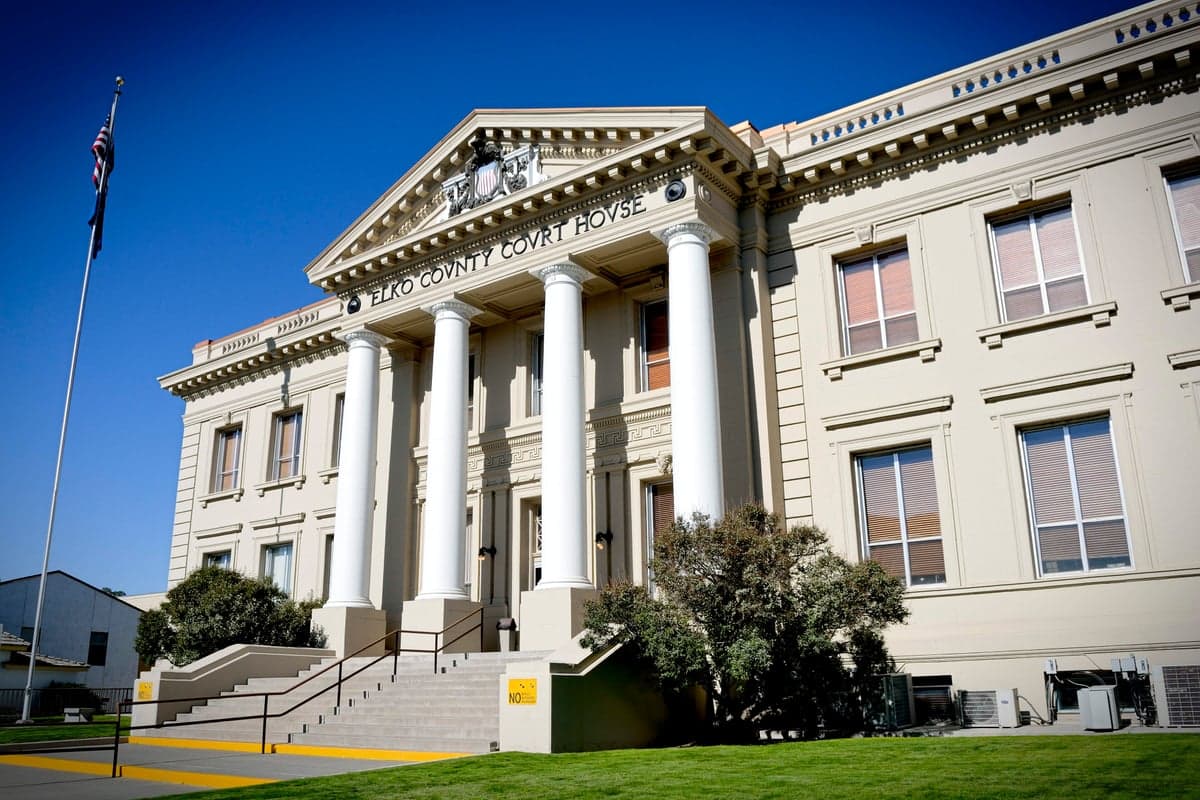
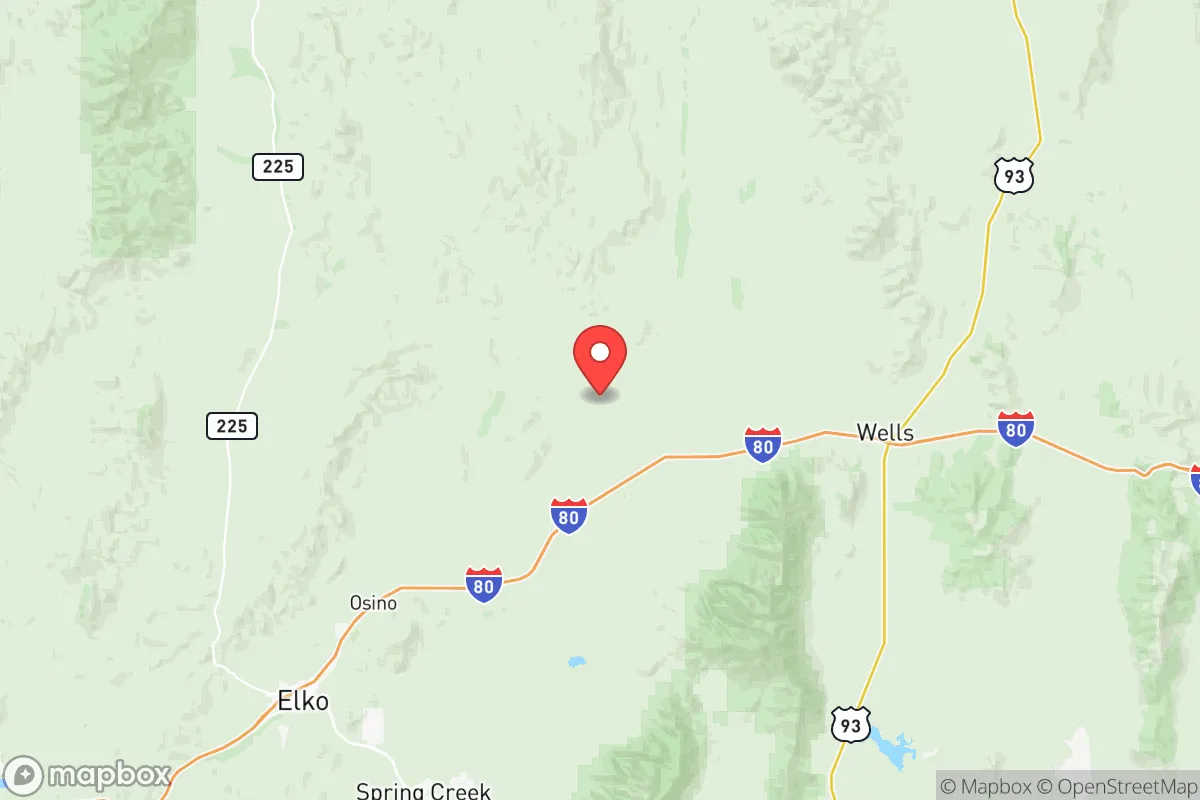
Photo: Wikipedia
Personal Sovereignty in Elko County
Viable for self-reliance. Generally workable, though some barriers may limit total independence.
What does Personal Sovereignty tell us?
Personal Sovereignty measures your capacity for self-reliance and independence with minimal government friction. Higher scores mean fewer barriers between you and the way you want to live... but it assumes you have the space you need and good neighbors.
What does this tell us?
Personal Sovereignty measures your capacity for self-reliance and independence with minimal government friction. Higher scores mean fewer barriers between you and the way you want to live... but it assumes you have the space you need and good neighbors.
State Policy
Energy independence: Importer (15% of energy produced in-state)
Personal Liberty
Homesteading

Personal Liberty Analysis
Elko County, Nevada, stands as one of the last strongholds of genuine personal sovereignty in the lower 48, where the state’s constitutional framework and the county’s remote geography combine to create an environment that actively resists government overreach. For those who view the accelerating erosion of individual rights elsewhere with alarm—whether it’s federal mandates, state-level overrides, or local ordinances that micromanage daily life—this high desert region offers a tangible alternative. The key distinction here is not just the absence of certain restrictions, but the presence of a deeply ingrained culture that treats personal autonomy as the default, not a privilege granted by the state. From the mining towns of Carlin and Wells to the sprawling ranchlands around Jackpot and Mountain City, the expectation is that you handle your own affairs, and the law is structured to stay out of your way unless you invite it in.
Tax burden and regulatory posture: How Elko County compares to the West Coast and Front Range
Nevada’s lack of a state income tax is the headline, but the real sovereignty story in Elko County is the regulatory posture that accompanies it. Unlike the aggressive permitting regimes found in California, Oregon, or even Colorado’s Front Range, Elko County operates with a light administrative touch. Property taxes are capped by the state’s constitutionally mandated 3% annual increase limit, meaning your tax bill won’t spike due to rising land values—a critical factor for those building a long-term homestead. The county’s planning department is small and pragmatic; for unincorporated areas like Lamolle or Ruby Valley, building permits are often straightforward or even unnecessary for agricultural structures. There is no county-level business license requirement for most sole proprietorships, and the state’s corporate tax rate is zero. Compare this to the bureaucratic gauntlet of building a shop in Washington County, Oregon, or the endless fees in California’s Central Valley—Elko County’s approach is a deliberate rejection of the administrative state. The trade-off is minimal services in remote areas, but for the sovereignty-minded, that is precisely the point.
Self-defense and gun law specifics: Constitutional carry and the culture of armed preparedness
Nevada is a constitutional carry state, meaning no permit is required to carry a concealed firearm for anyone legally allowed to possess one, and Elko County’s sheriff’s office is openly supportive of that right. The county has formally declared itself a “Second Amendment Sanctuary” through resolution, and local law enforcement has a stated policy of not enforcing any federal firearms restrictions they deem unconstitutional—including the 2024 pistol brace rule and any future magazine capacity bans. In practice, this means you can walk into a gun shop in Elko city or Spring Creek and walk out with a suppressed rifle or a standard-capacity magazine without a background check delay beyond the NICS check. The culture here is not just permissive; it is expectant. Most households in the outlying areas—Jiggs, Deeth, Oasis—keep firearms for predator control and personal defense, and the social norm is that you are responsible for your own security. The sheriff’s response time in the backcountry can exceed 45 minutes, so the legal framework aligns with the practical reality: you are the first responder. For those fleeing jurisdictions where self-defense laws have been narrowed or where “red flag” orders are weaponized, Elko County represents a return to the baseline of the Second Amendment as originally understood.
Self-reliance and homesteading viability: Lot sizes, zoning, and off-grid feasibility across the county
The viability of a self-reliant lifestyle in Elko County varies dramatically by location, and understanding these differences is critical for anyone planning to go off-grid. In the unincorporated areas outside Wells and West Wendover, zoning is minimal: you can purchase a 5-acre parcel and build a dwelling without a county inspection for owner-built structures, provided you meet basic health department requirements for a septic system. The county allows “primitive” dwellings—yurts, shipping containers, RVs—as permanent residences on rural land, something that would trigger code enforcement in most of the Pacific Northwest. Water rights are the primary constraint; while groundwater is available, you must file for a permit with the Nevada Division of Water Resources, and in some basins near Mountain City, new appropriations are closed. Solar is unrestricted, and there are no net-metering caps that penalize full off-grid setups. However, within the city limits of Elko itself, the zoning code tightens: minimum lot sizes are smaller, building permits are required, and the city enforces a 30-day limit on RV occupancy. The sweet spot for homesteaders is the corridor between Carlin and Battle Mountain, where BLM land abuts private parcels and the county’s “rural residential” zoning allows for livestock, workshops, and alternative structures with minimal interference. The key takeaway: Elko County is not a free-for-all—water law is real—but it is one of the few places in the West where you can legally build a life from scratch without a government permission slip for every nail.
Personal liberties: Parental rights, medical autonomy, speech, and property protections
Elko County’s school district operates with a strong deference to parental authority, reflecting the local culture that the family, not the state, is the primary unit of society. The district has a transparent curriculum review process, and parents can opt their children out of any lesson or activity without providing a reason—a stark contrast to the mandatory “social-emotional learning” programs in blue states. Medical autonomy is similarly robust: Nevada has no state-level vaccine mandate for adults or children, and Elko County’s health department does not enforce any local mandates. The county’s hospitals and clinics in Elko and Spring Creek treat informed consent as a baseline, and alternative medicine practitioners operate without the harassment seen in more regulated states. On speech, the county’s public meetings are a testament to the First Amendment: citizens regularly voice grievances about federal land management, BLM overreach, and state-level policies without being censored or removed. Property rights are protected by Nevada’s strong eminent domain laws, which require “public use” in the traditional sense—no Kelo-style takings for private economic development. The county assessor’s office is known for reasonable valuations, and there is no county-level rent control or landlord licensing scheme. For those who have watched their local governments in Oregon, Washington, or Colorado slowly chip away at these liberties, Elko County feels like a time capsule of what America used to be.
In the broader landscape of American sovereignty, Elko County ranks among the top-tier jurisdictions for those prioritizing personal autonomy over government convenience. It lacks the extreme libertarian legal experiments of New Hampshire’s “Free State Project” towns, but it also avoids the instability that sometimes accompanies those experiments. Compared to rural Idaho or Montana, Elko County offers a drier, more arid environment but a more consistent legal framework—Nevada’s state constitution is genuinely protective of individual rights, and the state legislature has not shown the same appetite for preempting local control as seen in Boise or Helena. The trade-offs are real: the isolation can be brutal, the economy is tied to mining cycles, and the healthcare system is thin. But for the single individual or parent who views the current trajectory of the country with deep concern and wants a place where the government is a background noise rather than a daily obstacle, Elko County delivers a level of personal sovereignty that is increasingly rare and increasingly valuable.

* Values derived from national, state, county, city and local statistics and may differ in a specific area. Last updated: 2026-05-12T09:34:01.000Z
Narrative content on this page is AI-generated and may contain mistakes. Verify any details that matter before acting on them.
ReloMaps may earn a commission from affiliate links at no extra cost to you.

