Photo: Wikipedia
Demographics of Nevada
Affluence Level in Nevada
An upper-middle-class area. Household wealth, education levels, and homeownership run ahead of national benchmarks.
People of Nevada
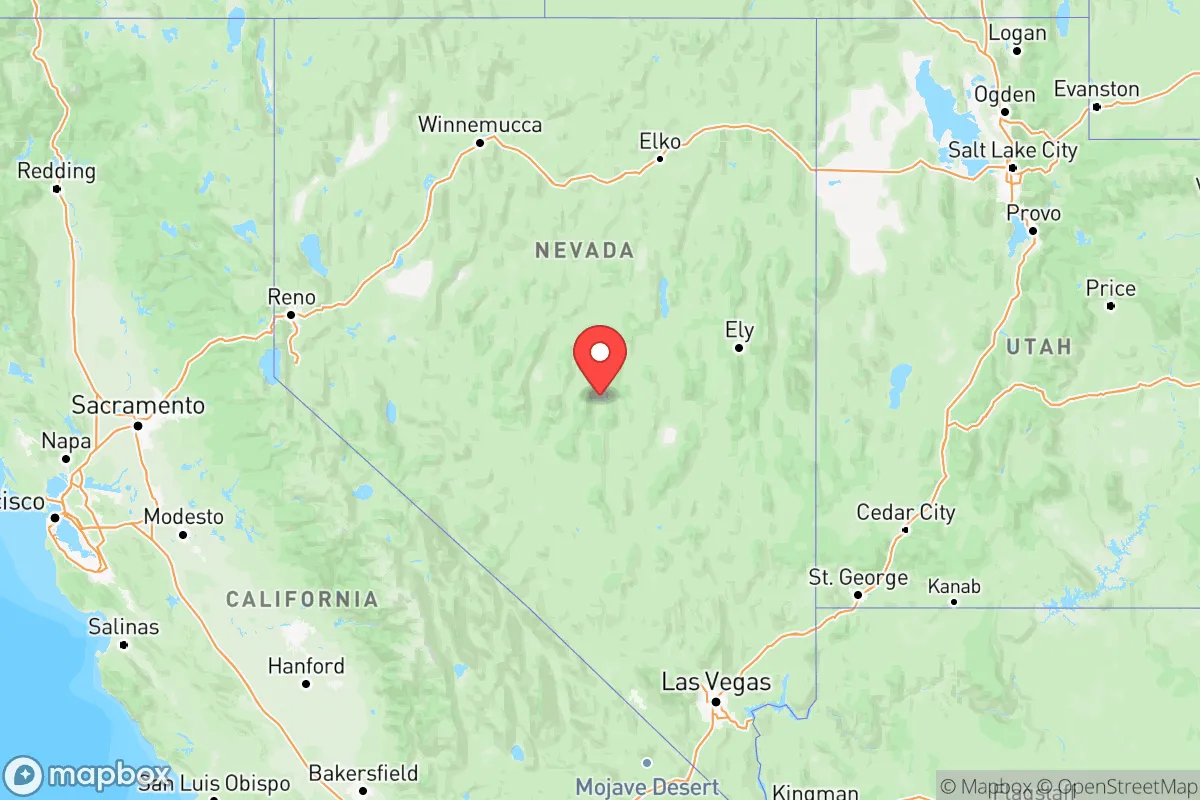
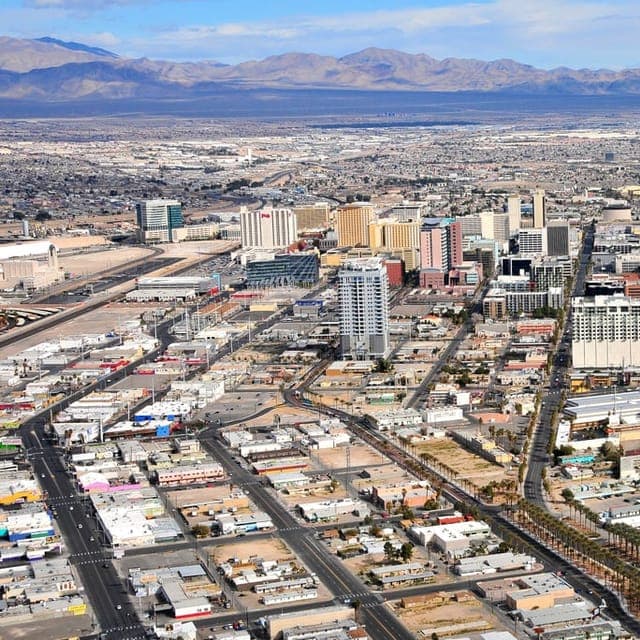
Nevada’s 3.1 million residents form one of the most transient, service-driven, and ethnically diverse populations in the Mountain West. The state is overwhelmingly urban, with nearly 90% of people living in the Las Vegas metropolitan area, giving it a character defined by rapid growth, tourism employment, and a libertarian-leaning culture of personal freedom. Distinctive markers include the highest percentage of unionized hospitality workers in the nation, a large and politically active Mormon minority concentrated in the rural north, and a Hispanic population that now approaches 30% and is reshaping the state’s cultural and economic landscape.
Settlement & growth (pre-1960)
Long before any European arrival, Nevada was home to the Western Shoshone, Northern Paiute, and Southern Paiute nations, who lived in small, mobile bands across the Great Basin’s arid valleys. Their population was sparse—likely under 10,000 at contact—because the environment could not support large settled communities. Spanish explorers and Mexican traders passed through the region’s southern edge in the 18th and early 19th centuries, but they established no permanent settlements; the first non-Native presence was the fur trappers and mountain men of the 1820s and 1830s, who followed the Humboldt River corridor through what is now Elko and Winnemucca.
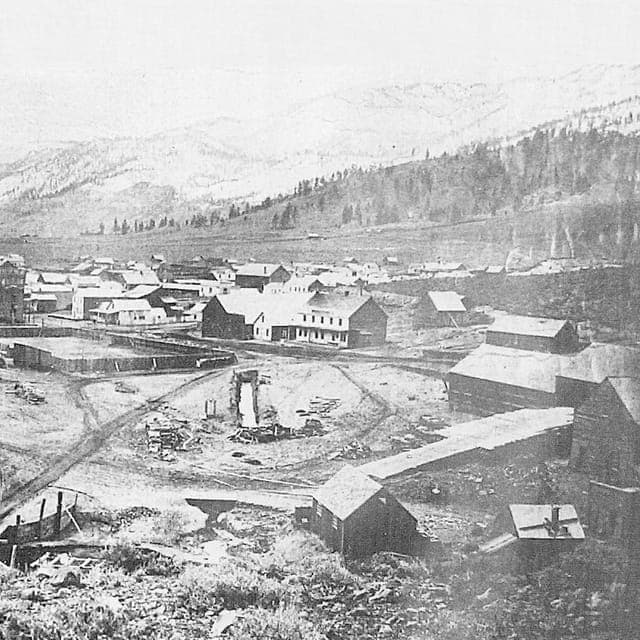
The first real population wave came with the 1849 California Gold Rush, which turned Nevada into a transit zone. Thousands of emigrants crossed the Forty-Mile Desert and the Sierra Nevada, and a few hundred stayed to ranch or trade at way stations like Genoa (the state’s first permanent settlement, founded 1851) and Carson City. The 1859 discovery of the Comstock Lode at Virginia City triggered the first boom: between 1860 and 1880, Nevada’s population exploded from under 7,000 to over 62,000, driven almost entirely by white American and European miners—Cornish, Irish, German, and Italian men who worked the silver shafts. Virginia City briefly became one of the richest and most cosmopolitan cities in the West, with a population that was 40% foreign-born at its peak.
When the Comstock ore played out in the 1880s, Nevada entered a half-century of stagnation and decline. By 1900 the population had fallen to 42,000, and the state was the most thinly settled in the union. The 1900s brought two new mining booms—gold at Tonopah (1900) and copper at Ely (1906)—which drew a fresh wave of immigrant miners, this time including significant numbers of southern and eastern Europeans (Slavs, Greeks, Italians) and a small but notable Chinese population that had been present since the railroad construction of the 1860s. But these booms were localized and short-lived; the state’s population only reached 110,000 by 1940.
The transformative event was the legalization of wide-open gambling in 1931 and the construction of Hoover Dam (1931–1936). The dam project brought 5,000 workers to Boulder City, many of whom stayed in Nevada. More importantly, the 1931 gambling law set the stage for Las Vegas, which was then a small railroad town of about 5,000 people. The real takeoff began after World War II, when returning servicemen and defense workers—many from the Midwest and Plains states—moved to Las Vegas to work in the new casino resorts along the nascent Strip. By 1960, Las Vegas had grown to 64,000 residents, and the state’s population had reached 285,000, still overwhelmingly white and native-born.
Modern era (post-1965)
The 1965 Hart-Cellar Act fundamentally reshaped Nevada’s population, but the state’s explosive growth in the post-1965 era was driven even more by domestic migration than by immigration. Between 1960 and 2000, Nevada’s population grew by over 500%, the fastest rate of any state in the union. The primary engine was the continued expansion of Las Vegas as a tourist and convention destination, which created a constant demand for service workers, construction laborers, and professionals. Domestic migrants came overwhelmingly from California—fleeing high housing costs, taxes, and congestion—and from the Rust Belt states of the Midwest and Northeast, seeking warm weather and jobs.
Immigration from abroad added a second layer. The Hispanic population, which was negligible in 1960, grew rapidly after 1970 as Mexican and Central American immigrants arrived to work in construction, landscaping, and hospitality. Today, Hispanics make up 29.2% of Nevada’s population, concentrated heavily in the Las Vegas valley—particularly in North Las Vegas and east Las Vegas—and in the agricultural communities of the rural north like Fallon and Yerington. The Asian population, at 7.8% East and Southeast Asian, is the next largest immigrant-origin group, with large Filipino and Chinese communities in the Las Vegas suburbs of Spring Valley and Henderson, and a smaller but established Japanese and Korean presence in Reno. The Indian-subcontinent population is much smaller at 0.7%, clustered in professional and tech roles in the Las Vegas and Reno metro areas.
The Black population, at 9.1%, is almost entirely concentrated in Las Vegas, where it grew from the post-1960 migration of African Americans from the South and Midwest seeking jobs in the casino industry. Historically, Black workers were restricted to back-of-house roles in the casinos; the civil rights era and the 1960s desegregation of the Strip opened up broader opportunities, and today the Black community is well-established in North Las Vegas and the western parts of the city. The foreign-born share of the state is 8.9%, lower than the national average, reflecting the fact that most of Nevada’s growth has come from domestic migration rather than immigration.
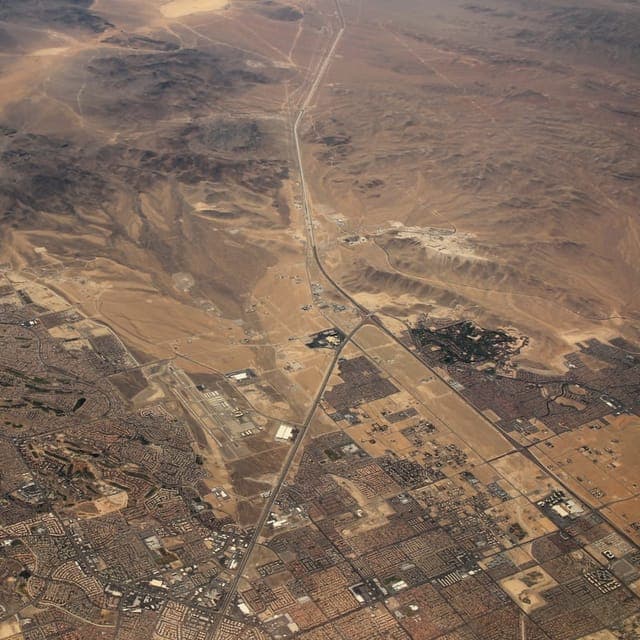
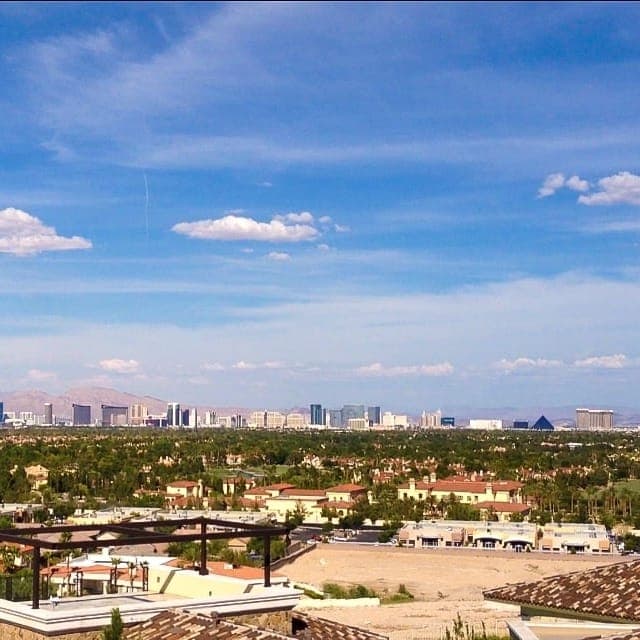
Suburbanization has been the dominant spatial trend since 1980. Las Vegas has sprawled outward in all directions, with master-planned communities like Summerlin (west) and Green Valley (south) attracting middle-class families, while the rural counties—Elko, White Pine, Lander—have seen only modest growth, driven by mining booms and a small but culturally significant influx of conservative refugees from California and the Pacific Northwest. Reno, the state’s second city, has grown more slowly but has seen a recent tech-driven boom, with companies like Tesla and Google establishing operations in the Tahoe-Reno Industrial Center, drawing a younger, more educated workforce.
The future
Nevada’s population is projected to reach 3.8 million by 2040, with growth continuing to concentrate in the Las Vegas metro area. The state is becoming more ethnically diverse, but it is also tribalizing geographically: the Las Vegas suburbs are increasingly stratified by income and ethnicity, with affluent, predominantly white areas like Summerlin and Henderson on one side and lower-income, heavily Hispanic and Black areas of North Las Vegas on the other. The Hispanic population is growing faster than any other group and is projected to approach 35% by 2040, while the white non-Hispanic share continues to decline, now at 46.0%.
Immigrant communities are growing but not at the pace seen in California or Texas; Nevada’s lower foreign-born share means that assimilation into a broader American identity is more common than the formation of permanent ethnic enclaves. The state’s libertarian political culture—low taxes, minimal regulation, a live-and-let-live social attitude—continues to attract domestic migrants from high-cost, high-regulation states, particularly California, Oregon, and Washington. These newcomers tend to be politically moderate or conservative, reinforcing the state’s swing-state status.
The next 10–20 years will likely see continued suburban expansion, a gradual aging of the population as baby boomers retire to Las Vegas and Reno, and a slow but steady diversification driven by Hispanic natural increase. The rural counties will remain small, white, and politically conservative, while the urban centers become more ethnically mixed and culturally distinct from the rest of the Mountain West.
For someone moving in now, Nevada offers a population that is young, mobile, and service-oriented, with a culture that prizes personal freedom over collective identity. The state is becoming more diverse and more urban, but its essential character—transient, opportunity-driven, and resistant to regulation—shows no sign of changing. The key question for newcomers is whether they can adapt to a place where community ties are often thin and where the economy depends heavily on the fortunes of tourism and gaming.

Most Diverse Cities in Nevada
Most Homogenous Cities in Nevada
* Values derived from national, state, county, city and local statistics and may differ in a specific area. Last updated: 2026-04-16T01:51:34.000Z
Narrative content on this page is AI-generated and may contain mistakes. Verify any details that matter before acting on them.
ReloMaps may earn a commission from affiliate links at no extra cost to you.

