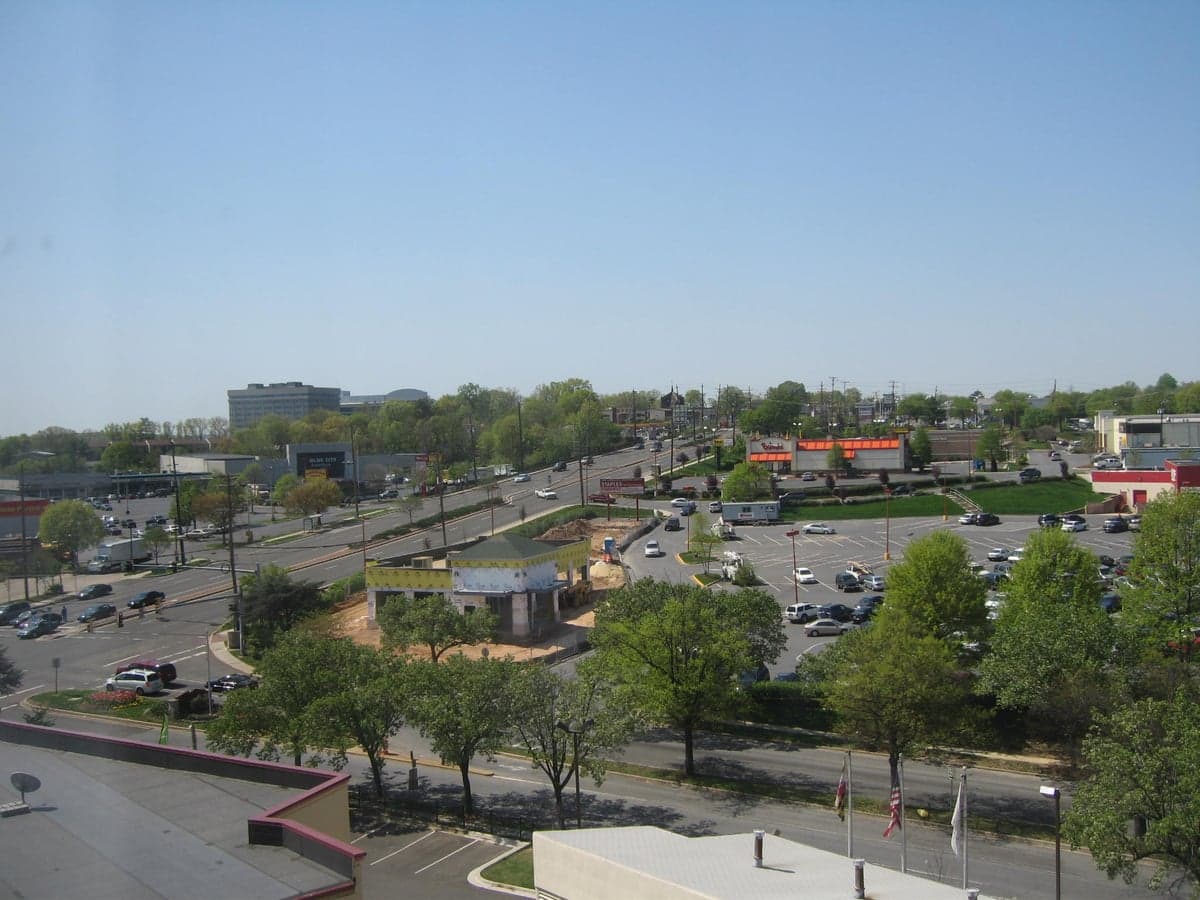
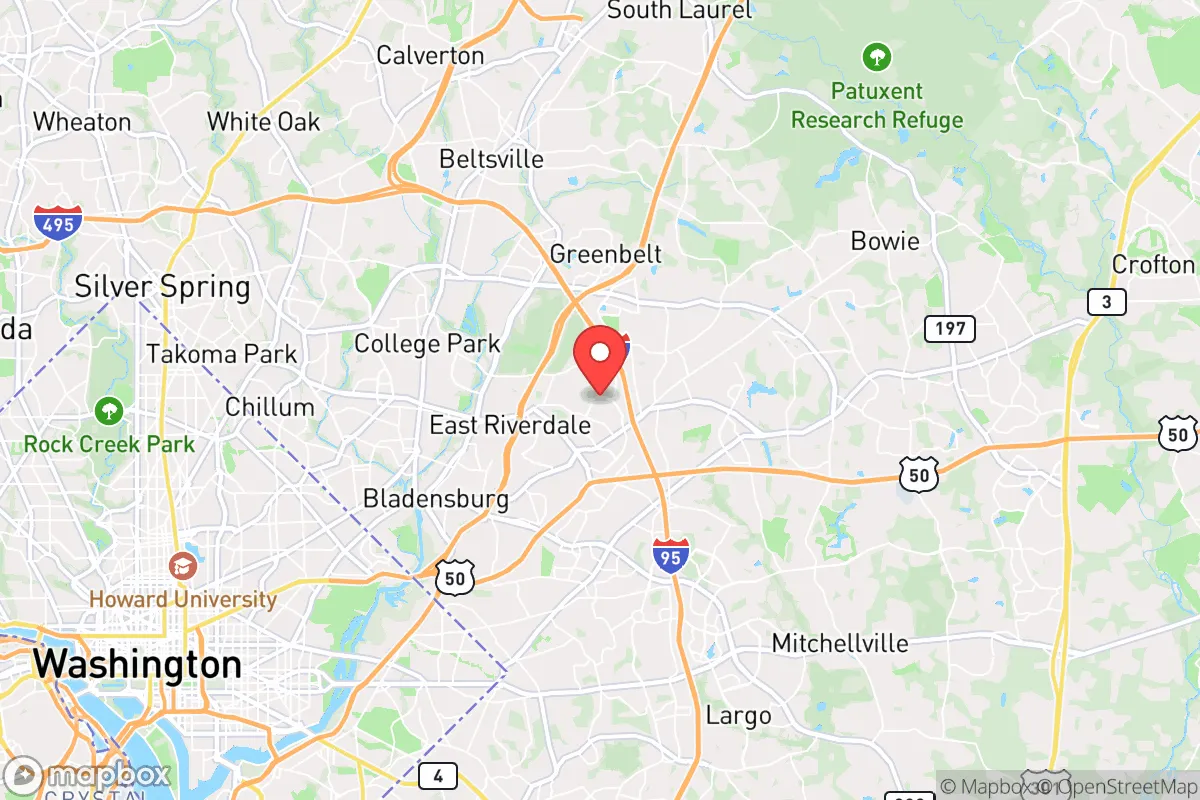
Photo: Wikipedia
Personal Sovereignty in New Carrollton, MD
Viable for self-reliance. Generally workable, though some barriers may limit total independence.
What does Personal Sovereignty tell us?
Personal Sovereignty measures your capacity for self-reliance and independence with minimal government friction. Higher scores mean fewer barriers between you and the way you want to live... but it assumes you have the space you need and good neighbors.
What does this tell us?
Personal Sovereignty measures your capacity for self-reliance and independence with minimal government friction. Higher scores mean fewer barriers between you and the way you want to live... but it assumes you have the space you need and good neighbors.
State Policy
Energy independence: Importer (8% of energy produced in-state)
Personal Liberty
Homesteading

Personal Liberty Analysis
New Carrollton, Maryland, presents a challenging environment for personal sovereignty, particularly for those with a survivalist or prepper mindset who prioritize autonomy over government reach. As a Prince George’s County suburb within the Washington, D.C. metropolitan area, it is subject to Maryland’s dense regulatory framework, high tax burden, and restrictive gun laws—factors that significantly limit individual freedom compared to less governed states. For conservative-leaning individuals and families seeking to minimize government overreach into daily life, New Carrollton requires careful strategic consideration, as state-level policies often override local flexibility, creating a landscape where self-reliance is possible but heavily circumscribed by bureaucratic and legal constraints.
Tax burden and regulatory posture: How Maryland’s fiscal policies affect your autonomy
Maryland’s tax structure is among the most aggressive in the nation, directly impacting personal sovereignty by reducing disposable income and savings for prepping and self-sufficiency. The state imposes a progressive income tax with rates ranging from 2% to 5.75%, and Prince George’s County adds a local income tax of 3.2%, bringing the combined top marginal rate to nearly 9%—one of the highest in the country. Property taxes are also steep: the county’s effective rate hovers around 1.1% of assessed value, and annual reassessments can increase bills unpredictably. Sales tax is 6%, applied to most goods, including preparedness supplies like generators, tools, and non-prescription medical items. Regulatory posture is equally burdensome. Maryland mandates strict environmental and building codes, including stormwater management requirements that can complicate even minor property modifications like adding a shed or rainwater catchment system. For a prepper, this means every step toward self-reliance—from installing solar panels to raising backyard chickens—requires permits and inspections, eroding the ability to act independently. The state’s overall tax burden ranks among the top five nationally, and combined with high cost of living, it forces residents to allocate significant resources to government rather than personal resilience.
Self-defense and gun law specifics: Navigating Maryland’s restrictive firearm environment
For those prioritizing the right to self-defense, New Carrollton sits in one of the most restrictive gun law states in the U.S. Maryland requires a Handgun Qualification License (HQL) to purchase a handgun, which involves a background check, fingerprinting, and a four-hour training course—a process that can take weeks and costs over $100. The state also maintains a “may issue” concealed carry permit system, though recent court rulings (e.g., Bruen in 2022) have shifted it toward “shall issue” in practice. However, the application process remains onerous: applicants must demonstrate a “good and substantial reason” beyond general self-defense, submit references, and undergo a 16-hour training course. Permits are valid for two years and require renewal. Assault weapons and high-capacity magazines (over 10 rounds) are banned, and private firearm sales must go through a licensed dealer with a background check. In Prince George’s County, local law enforcement has historically been less cooperative with gun owners, and the county’s high crime rate—violent crime is roughly double the national average—means that even legal gun owners face heightened scrutiny. For a prepper, this environment severely limits the ability to stockpile defensive tools or train freely. The state’s “red flag” law allows authorities to seize firearms based on temporary protective orders, further eroding due process. Compared to states like Texas or Florida, Maryland’s gun laws are a major sovereignty liability.
Self-reliance and homesteading viability: Lot sizes, zoning, and off-grid feasibility
New Carrollton’s suburban density makes traditional homesteading nearly impossible. The city is a densely developed inner suburb with typical lot sizes of 0.1 to 0.25 acres, and most homes are attached townhouses or small single-family houses on postage-stamp lots. Zoning codes in Prince George’s County are restrictive: raising livestock (chickens, goats, bees) is generally prohibited in residential zones, and even vegetable gardens must comply with setback and height rules. Rainwater harvesting is legal but limited to 2,500 gallons of storage without a permit, and any system must meet state health department standards that discourage DIY setups. Off-grid living is effectively illegal—Maryland requires connection to the electrical grid for new construction, and solar panels must be grid-tied unless you obtain a rare variance. Composting toilets are not permitted as primary sanitation. For a prepper seeking land for a bug-out location or self-sufficient homestead, New Carrollton itself is a dead end. However, the broader region offers some options: rural areas of Prince George’s County, like the southern end near the Patuxent River, have larger lots (1-5 acres) and more permissive agricultural zoning, but these are 30-45 minutes away and still subject to Maryland’s state-level restrictions. The city’s proximity to D.C. (less than 10 miles) means land prices are high—$300-$400 per square foot for residential lots—making acquisition for prepping purposes cost-prohibitive. For families, this means self-reliance must focus on urban prepping: stockpiling supplies, building community networks, and investing in portable gear rather than land-based independence.
Personal liberties: Parental rights, medical autonomy, speech, and property
Maryland’s stance on personal liberties is mixed, with some protections and significant overreach. Parental rights are relatively strong in law—parents have authority over education, medical decisions, and religious upbringing—but state mandates can override them. For example, Maryland requires all schoolchildren to receive certain vaccinations (with limited medical exemptions), and during the COVID-19 pandemic, the state imposed mask mandates and remote learning that bypassed local school board control. Medical autonomy is constrained: the state has strict prescription drug monitoring, and while medical marijuana is legal, recreational use is not, and possession limits are low. For preppers concerned about medical freedom, Maryland’s health insurance mandates and emergency powers laws (which allow the governor to suspend certain rights during declared emergencies) are red flags. Speech is protected under the First Amendment, but Maryland has hate crime laws that can be applied broadly, and local jurisdictions like Prince George’s County have noise ordinances that restrict public assembly. Property rights are heavily regulated: the state’s “critical area” laws restrict development near waterways, and the county’s zoning board has broad discretion to deny permits for structures like fences, sheds, or even large trees. Eminent domain is used for transit projects (e.g., the Purple Line light rail), and property taxes can rise with assessments, effectively taxing unrealized gains. For a conservative individual, these constraints create a sense of living under constant government permission—a far cry from the autonomy sought by preppers.
Overall, New Carrollton scores poorly on personal sovereignty compared to other areas in the U.S. Its tax burden, gun restrictions, and regulatory density place it in the bottom tier for individual freedom, alongside states like California and New York. For a survivalist or prepper, the city’s only advantages are its proximity to federal resources (e.g., FEMA, military bases) and a dense population that could offer community support in a crisis—but these are outweighed by the constant friction of government overreach. If you value low taxes, minimal regulation, and the right to defend yourself and your family without bureaucratic hurdles, New Carrollton is not a strategic choice. Better options include states like Texas, Florida, or Tennessee, where tax burdens are lower, gun laws are more permissive, and zoning allows for genuine self-reliance. For those already in the D.C. area, consider moving to rural Maryland counties like Garrett or Allegany, or across the border into West Virginia or Pennsylvania, where sovereignty is far more attainable. In New Carrollton, personal freedom is a privilege granted by the state, not a right you can exercise without permission.

* Values derived from national, state, county, city and local statistics and may differ in a specific area. Last updated: 2026-04-22T02:39:31.000Z
Narrative content on this page is AI-generated and may contain mistakes. Verify any details that matter before acting on them.
ReloMaps may earn a commission from affiliate links at no extra cost to you.

