Photo: Wikipedia
Demographics of New Carrollton, MD
Affluence Level in New Carrollton, MD
A middle-class area roughly in line with national averages across income, home values, education, and employment.
People of New Carrollton, MD
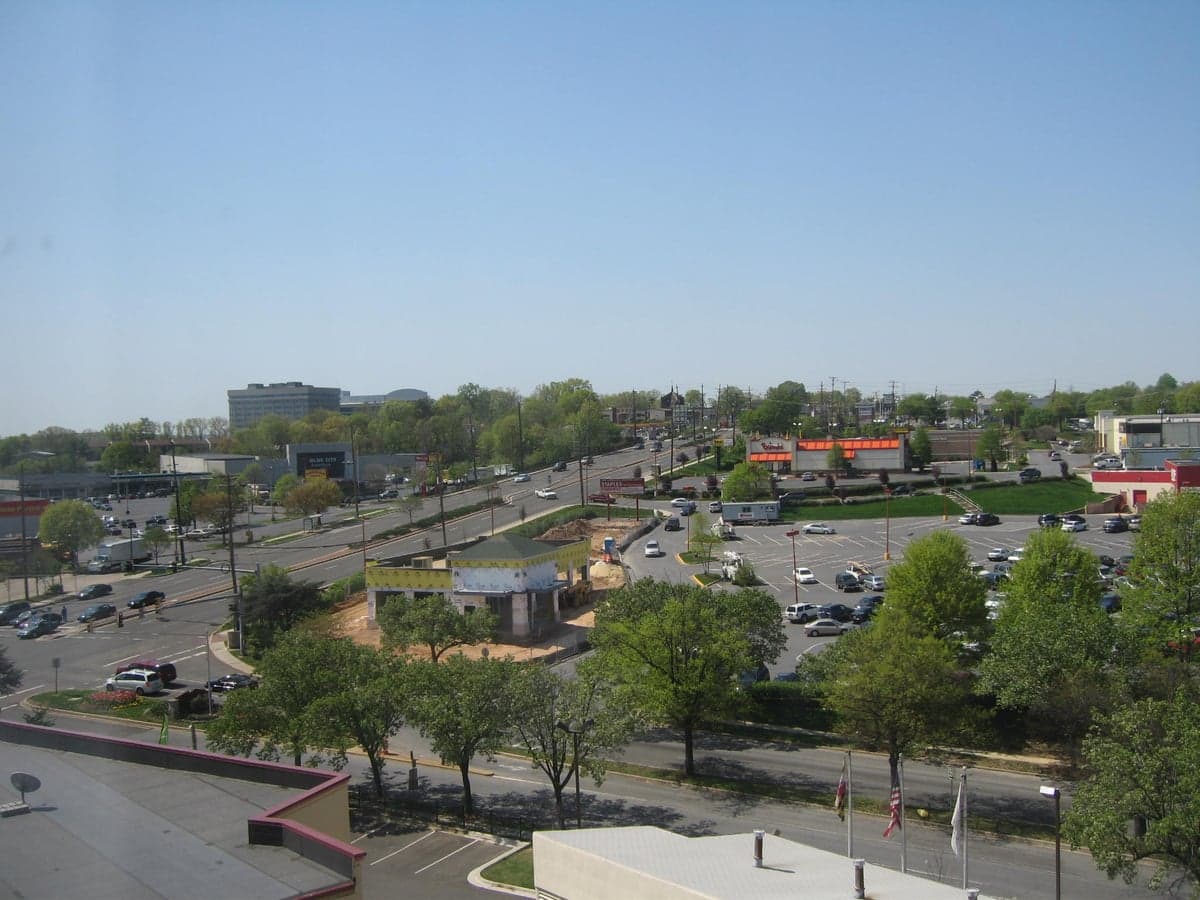
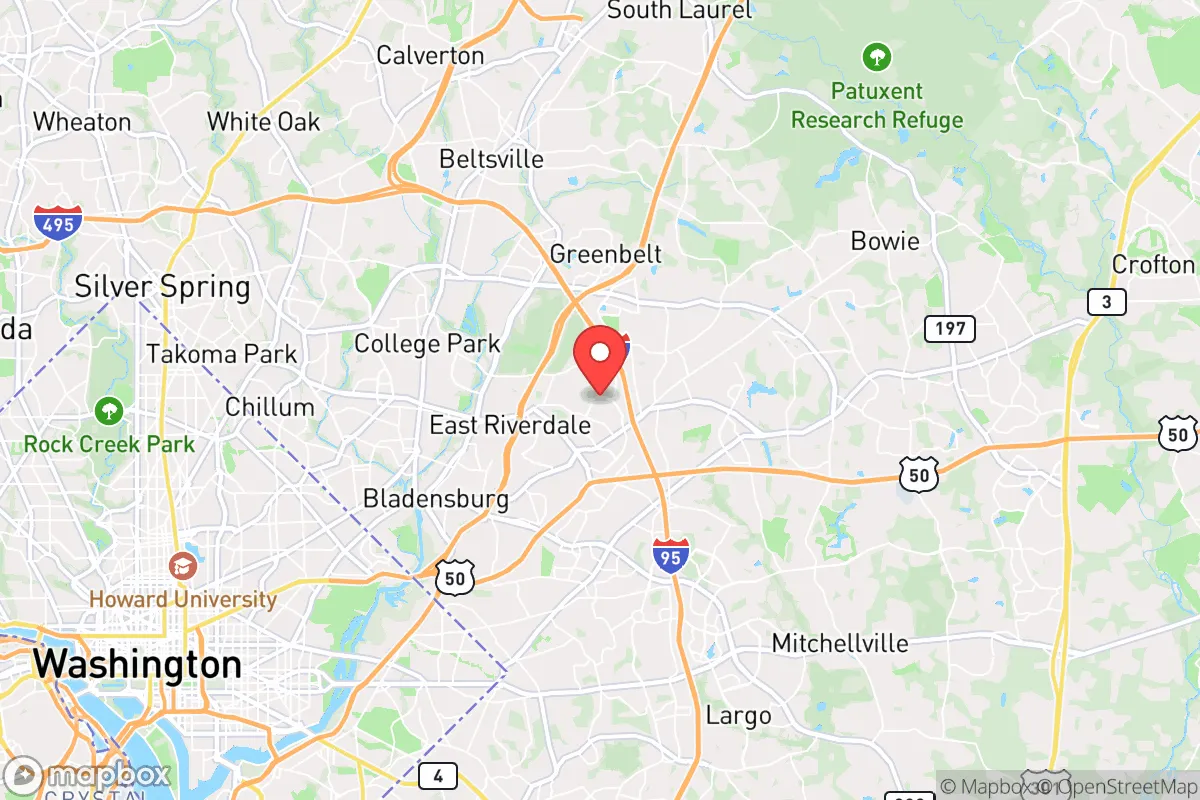
New Carrollton, Maryland, is a densely settled, majority-Black city of 13,544 residents with a substantial Hispanic minority and a foreign-born population of 23.0%. Its identity is shaped by its role as a classic inner-ring Washington, D.C., suburb—a transit-oriented community where a majority of adults commute to federal jobs or service-sector work in the capital. The city’s character is distinctly working- to middle-class, with a 28.4% college-educated rate, and its population is notably younger and more diverse than neighboring Prince George’s County averages.
How the city was settled and grew
New Carrollton is a post-1900 planned suburb, not a colonial settlement. The area was originally farmland and timberland, part of larger land grants to the Calvert family in the 17th century, but remained sparsely populated until the railroad arrived. The Baltimore and Potomac Railroad (later part of the Penn Central) established a station at what is now the New Carrollton Metro stop in the late 19th century, but the real population wave began after World War II. The city was formally incorporated in 1953, carved out of unincorporated Prince George’s County to provide municipal services to a growing bedroom community for federal workers. The original housing stock—Cape Cods, ranchers, and split-levels—was built in the 1950s and early 1960s, largely attracting white middle-class families moving from D.C. proper. The Carrollton Estates neighborhood, centered along Riverdale Road, was the first major subdivision, settled by these early commuters. West Lanham Hills, just east of the city limits, also absorbed many of these original white residents, though it remains unincorporated.
Modern era (post-1965)
The Hart-Cellar Immigration Act of 1965 and the Fair Housing Act of 1968 transformed New Carrollton’s population. White flight accelerated through the 1970s and 1980s as Black families, many moving from D.C.’s historically Black neighborhoods like Shaw and Anacostia, purchased homes in the city’s affordable subdivisions. By 1990, the city had become majority-Black, a shift that mirrored Prince George’s County as a whole. The Ardwick-Ardmore area, a cluster of garden apartments and townhouses along Annapolis Road, became a primary landing point for Black middle-class families and, later, for Caribbean immigrants (especially from Jamaica and Trinidad). The Hispanic population began growing in the 1990s, driven by Central American (Salvadoran and Guatemalan) and Mexican immigrants seeking affordable rents near Metro access. Today, the New Carrollton Station apartment complex, directly adjacent to the Metro and MARC train station, is the densest Hispanic enclave, with many residents working in construction, hospitality, and landscaping. The East/Southeast Asian population (0.8%) is small but visible in the Riverdale Park Station area, a newer mixed-use development just west of the city line, where Korean and Vietnamese families have opened small businesses. The Indian-subcontinent population (0.6%) is similarly modest, concentrated in the Greenbelt Station corridor to the north, where tech workers employed at NASA Goddard or the University of Maryland have settled.
The future
New Carrollton’s population is likely to continue diversifying, but not homogenizing. The city is at the center of a major transit-oriented development plan—the New Carrollton Transit District—which will add thousands of new apartment units and office space over the next 10–15 years. This development is expected to attract a younger, more educated, and more racially mixed population, including more white and Asian professionals who work in D.C. or at the nearby University of Maryland. However, the existing Black and Hispanic communities are deeply rooted and are not being displaced at scale yet; the new construction is largely on vacant or underused land near the Metro station. The Hispanic share (29.3%) is growing steadily, driven by both immigration and higher birth rates, and is likely to approach 35–40% by 2040. The Black majority (60.9%) is slowly declining as a share but remains the dominant cultural and political force. The East/Southeast Asian and Indian populations are expected to grow modestly, but will remain small single-digit percentages. The city is not tribalizing into hostile enclaves, but distinct neighborhoods are emerging: Carrollton Estates remains predominantly Black and older; Ardwick-Ardmore is mixed Black and Hispanic; and the New Carrollton Station area is heavily Hispanic and younger.
For someone moving in now, New Carrollton offers a genuinely diverse, transit-connected community with a stable but evolving demographic profile. It is becoming more mixed and more urban, but remains a majority-Black city with a strong Hispanic presence and a growing professional class. The key question for newcomers is whether they are comfortable in a place where no single group dominates culturally, and where the public schools and local services reflect the challenges of a working-class suburb in transition.

* Values derived from national, state, county, city and local statistics and may differ in a specific area. Last updated: 2026-04-22T02:39:31.000Z
Narrative content on this page is AI-generated and may contain mistakes. Verify any details that matter before acting on them.
ReloMaps may earn a commission from affiliate links at no extra cost to you.

