
Photo: Wikipedia
Political ClimatePolitical Climate in New Carrollton, MD
District shown is the primary district for this city’s centroid. Cities may span multiple districts.
Local Political AnalysisPolitical Analysis of New Carrollton, MD
Look, I’ve lived in New Carrollton long enough to watch this place shift from a quiet, middle-class suburb into a deep-blue stronghold where progressive politics are the only game in town. With a Cook PVI of D+39, this area votes more than 39 points more Democratic than the national average—and that’s not just a statistic, it’s a way of life. The trajectory has been steady: every election cycle, the margins get wider, and the local government feels more comfortable pushing policies that I’d argue step on personal freedoms and individual rights. If you’re coming from a more balanced or conservative area, you’ll notice the difference immediately.
How it compares
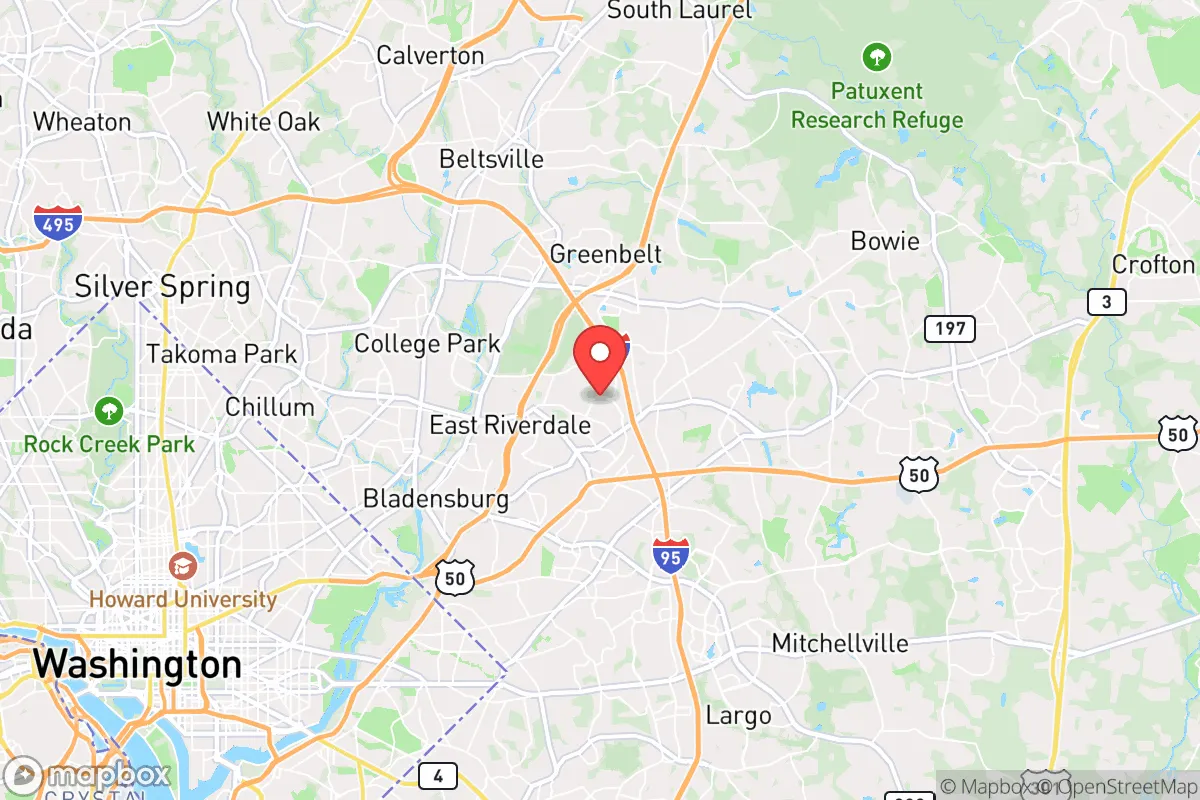
New Carrollton sits in Prince George’s County, which is one of the most reliably Democratic counties in Maryland. Drive 15 minutes north to Laurel, and you’ll find a slightly more mixed political scene—still blue, but with a few more conservative voices at the dinner table. Head west toward Bowie, and it’s the same story: solidly Democratic, but with a bit more fiscal conservatism. But New Carrollton itself? It’s a different animal. The contrast with nearby towns like Upper Marlboro or even parts of Anne Arundel County (think Crofton or Davidsonville) is stark. Those areas still have room for debate on taxes, zoning, and school policies. Here, the conversation is already decided: progressive ideology drives the agenda, and dissent is often met with silence or social pressure. It’s not the kind of place where you’ll find a thriving Republican club or even a vocal libertarian group.
What this means for residents
For the average person, this political climate translates into a few concrete realities. First, expect higher taxes—Prince George’s County has some of the highest property tax rates in Maryland, and the money flows into programs that prioritize social equity over individual choice. Second, local schools and public services are heavily influenced by progressive education models, which can feel like government overreach if you value parental rights or curriculum transparency. Third, zoning and housing policies are increasingly centralized, with the county pushing for denser development and rent control measures that limit what you can do with your own property. If you’re a small business owner or a homeowner who likes to make your own decisions, you’ll feel the weight of bureaucracy. The county council and school board elections rarely feature competitive races, so the same ideological direction keeps reinforcing itself.
On a cultural level, New Carrollton has lost some of its old character. Back in the 80s and 90s, this was a place where neighbors knew each other, and politics didn’t dominate every block party or PTA meeting. Now, there’s a noticeable shift toward activism and identity-based organizing, which can make everyday life feel more charged. The local government has embraced policies like sanctuary city status and police reform that sound good on paper but often leave residents feeling less safe or less free to speak their minds. If you’re looking for a community where you can live and let live without the government breathing down your neck, New Carrollton might feel like a step in the wrong direction. The trend lines are clear: more regulation, less local control, and a political culture that rewards conformity over independence.

State Political ClimatePolitical Climate in Maryland
State Political AnalysisPolitical Environment in the State
Maryland has long been a solidly blue state, but the reality is more complicated than a simple label. The state’s overall partisan lean is heavily Democratic, driven by the massive, vote-rich populations of the Washington, D.C. suburbs and Baltimore. Over the last 10-20 years, the Democratic advantage has actually deepened, with the party now holding a supermajority in the legislature and every statewide office. However, this blue wave masks a stark internal divide: the rural western and eastern shores remain deeply conservative, while the urban core and inner suburbs have shifted further left, creating a political landscape that feels like two different states under one governor.
Urban vs. rural divide
The political map of Maryland is a tale of two worlds. The western counties—Garrett, Allegany, and Washington—vote reliably Republican, often by 30-40 point margins. The Eastern Shore, including Wicomico and Queen Anne’s counties, is similarly red, with a strong rural and agricultural identity. But these areas are politically swamped by the population centers. Montgomery County (just north of D.C.) and Prince George’s County (east of D.C.) alone cast over a third of the state’s votes, and they are among the most liberal jurisdictions in the nation. Baltimore City is another Democratic stronghold, while the surrounding Baltimore County has trended blue as its suburbs have diversified. The key swing area used to be Anne Arundel County (home to Annapolis), but it has moved decisively left in recent cycles, driven by growth in the tech and defense sectors around Fort Meade. The result is that a Republican candidate for statewide office must win the rural areas by massive margins just to be competitive, a feat that has become nearly impossible as the D.C. suburbs continue to grow.
Policy environment
Maryland’s policy environment is a textbook example of progressive governance with a heavy hand. The state has a progressive income tax structure with rates up to 5.75%, plus a local “piggyback” tax that can push the combined rate over 8% in places like Montgomery County. Property taxes are also high, especially in the D.C. suburbs. The regulatory posture is aggressive: Maryland has some of the strictest environmental regulations in the country, a state-level paid family leave program, and a $15 minimum wage that is indexed to inflation. On education, the state spends heavily per pupil, but the Blueprint for Maryland’s Future law has centralized control and mandated massive funding increases, raising concerns about long-term fiscal sustainability and local autonomy. Healthcare is dominated by the expansion of Medicaid and the state-run Maryland Health Benefit Exchange. Election laws have been loosened significantly: no-excuse mail-in voting, same-day registration, and automatic voter registration are all in place, which critics argue erodes ballot integrity. For a conservative, the policy environment feels like a one-way ratchet toward bigger government and higher costs.
Trajectory & freedom
Over the last five years, Maryland has become less free by almost any measure of personal liberty. The most glaring example is the Firearm Safety Act of 2013, which banned many semi-automatic rifles and limited magazine capacity to 10 rounds. In 2023, the legislature passed a concealed carry “sensitive places” law that effectively nullified the Bruen Supreme Court decision by banning firearms in a vast array of public spaces, including parks, hospitals, and any establishment serving alcohol. This law is currently being challenged in court, but it signals the legislature’s intent. On parental rights, Maryland passed a law requiring all public schools to adopt a comprehensive sex education curriculum that includes LGBTQ+ content, with no opt-out for parents. Medical autonomy took a hit with the state’s strict COVID-19 mandates, which were among the longest-lasting in the nation. Property rights are under constant pressure from the state’s aggressive land-use planning and the Maryland Department of the Environment, which can block development over stormwater concerns. The trend is clear: the state government is actively expanding its reach into daily life, and the legislature shows no sign of slowing down.
Civil unrest & political movements
Maryland has a history of visible political flashpoints. The 2015 Baltimore riots following the death of Freddie Gray were a national story, and the city still grapples with a legacy of mistrust between residents and law enforcement. More recently, the “Parents’ Rights” movement has been active in counties like Howard and Frederick, pushing back against school board policies on critical race theory and gender identity. On the left, groups like CASA de Maryland are powerful advocates for sanctuary policies, and the state has some of the strongest immigrant protections in the country, including a law that limits local law enforcement cooperation with ICE. Election integrity remains a hot-button issue: the 2020 election saw widespread use of mail-in ballots, and the state’s automatic voter registration system has been criticized for registering non-citizens in some cases. You’ll see occasional protests in Annapolis over gun rights or abortion, but the dominant political energy is in the D.C. suburbs, where activism is professionalized and well-funded. A new resident in a rural county will feel politically isolated, while someone in Montgomery County will find the local culture deeply aligned with progressive activism.
Projection
Looking ahead 5-10 years, the trajectory is not favorable for conservatives. Demographic trends are accelerating the blue shift: the D.C. suburbs are growing faster than the rest of the state, driven by federal employment and tech jobs. The rural counties are losing population, which means their political influence will continue to wane. The state’s Gerrymandering of congressional districts is so aggressive that only one of eight seats is competitive. The most likely scenario is that Maryland becomes a one-party state in practice, with the only meaningful political fights happening in Democratic primaries. For a conservative moving in, this means accepting that your vote for statewide office will likely not matter, and that state policy will continue to move left on taxes, regulation, and personal freedoms. The only potential check is the courts, but the state judiciary is also dominated by Democratic appointees. If you value local control, you’ll find some refuge in the rural counties, but even there, state preemption laws are eroding local autonomy on issues like zoning and education.
For a new resident, the bottom line is this: Maryland offers a high quality of life in terms of natural beauty, proximity to D.C., and strong public services, but it comes at the cost of high taxes, heavy regulation, and a government that is actively expanding its control over your personal choices. If you are a conservative, you will be in the minority, and you will need to be comfortable with that reality. The state is not going to flip, and the political culture will only become more progressive. Your best bet is to choose a county like Carroll or Harford, where local government is more conservative, but understand that state-level policies will still affect your daily life. It’s a trade-off: you get the economic opportunities of the D.C. region, but you surrender a significant degree of personal and political freedom.
* Values derived from national, state, county, city and local statistics and may differ in a specific area. Last updated: 2026-04-22T02:39:31.000Z
Narrative content on this page is AI-generated and may contain mistakes. Verify any details that matter before acting on them.
ReloMaps may earn a commission from affiliate links at no extra cost to you.

