Photo: Wikipedia
Demographics of New Castle, DE
Affluence Level in New Castle, DE
A middle-class area roughly in line with national averages across income, home values, education, and employment.
People of New Castle, DE
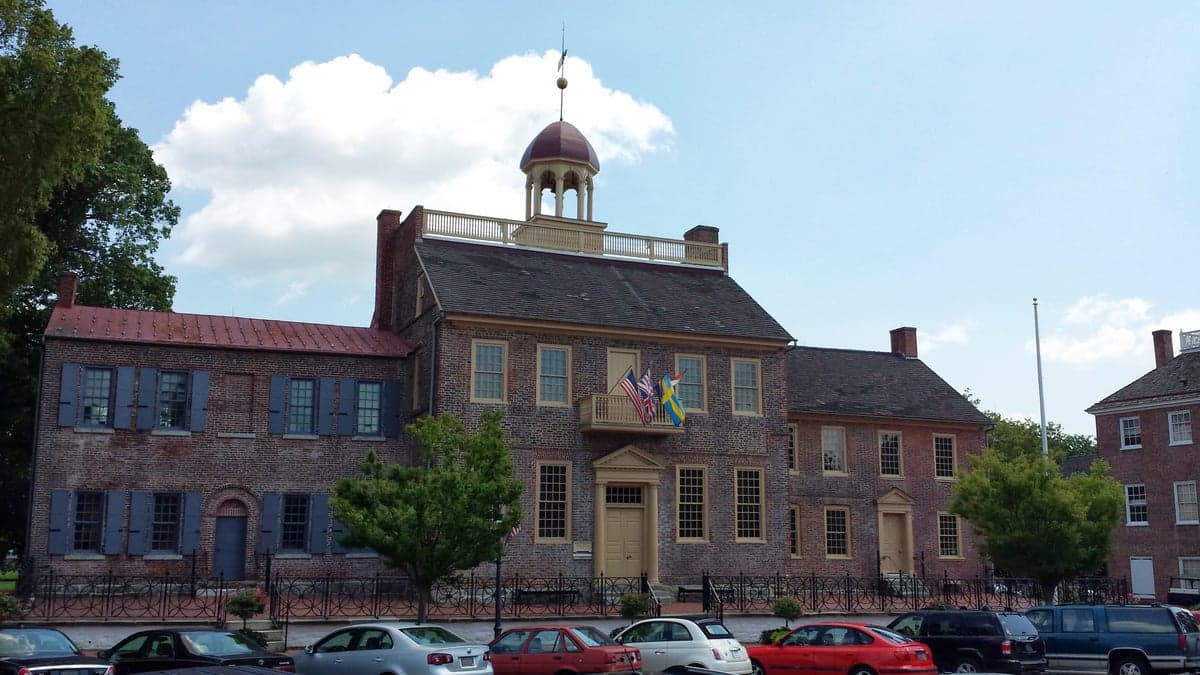
The people of New Castle, Delaware, today form a small, historically rooted community of 5,519 residents, characterized by a strong Black presence (27.8%) alongside a White majority (64.5%) and a modest Hispanic minority (5.2%). The city retains a dense, walkable colonial core distinct from the surrounding suburban sprawl of New Castle County, with a foreign-born population of just 2.7%—far below the national average. Its identity is shaped by a deep sense of place, anchored by the historic New Castle Court House and the cobblestone streets of the Old New Castle district, rather than by rapid demographic churn.
How the city was settled and grew
New Castle was founded in 1651 by the Dutch as Fort Casimir, making it one of the oldest European settlements in the Mid-Atlantic. The original population was a mix of Dutch traders and Swedish farmers, followed by English Quakers after William Penn took control in 1682. The city served as the colonial capital of Delaware until 1777, and its early growth was driven by its deepwater port on the Delaware River, which attracted merchants, shipbuilders, and artisans. The historic Old New Castle neighborhood—with its 18th-century brick homes and narrow streets—was built by this mercantile elite and remains the city’s most architecturally significant district. By the 19th century, the arrival of the railroad and the rise of nearby industrial towns like Wilmington drew Irish and German immigrants, who settled in the South Street and Harmony Street areas, working as laborers and domestic servants. The city’s population remained small and overwhelmingly White through the early 1900s, with Black residents largely confined to the New Castle Hundred area outside the historic core.
Modern era (post-1965)
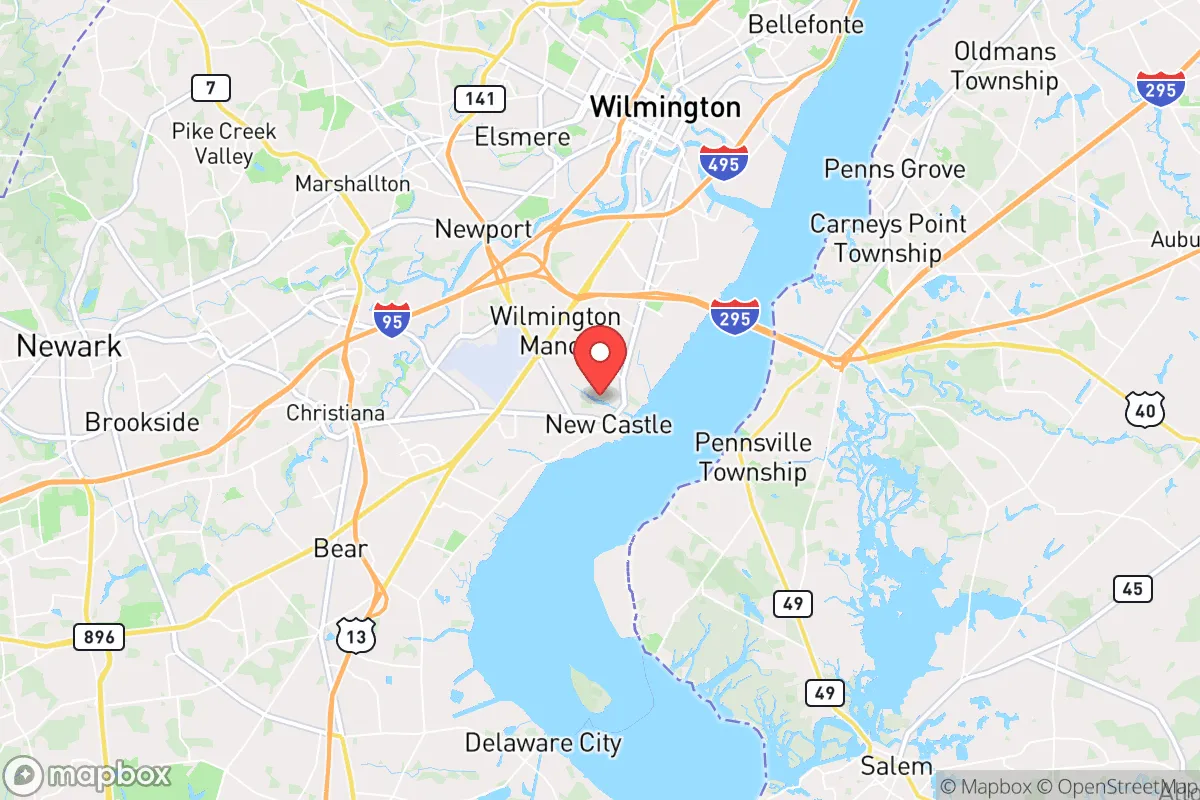
The post-1965 era brought significant demographic change, driven by suburbanization and the expansion of the Wilmington metropolitan area. The construction of Interstate 295 and the Delaware Memorial Bridge in the 1960s made New Castle more accessible, spurring development in the Battery Park and New Castle Corporate Commons areas. White flight from Wilmington after the 1968 riots accelerated Black in-migration to New Castle, with many families settling in the West Side and Dobbinsville neighborhoods, where older housing stock was more affordable. By 2020, the Black share of the population had risen to 27.8%, up from roughly 15% in 1970. The Hispanic population, now at 5.2%, began growing in the 1990s, primarily with Puerto Rican and Mexican families moving into the New Castle Heights area near Route 9. The East/Southeast Asian population remains negligible at 0.1%, and the Indian-subcontinent share is 0.8%, reflecting the city’s limited appeal to newer immigrant streams compared to nearby Newark or Wilmington. The foreign-born rate of 2.7% underscores that New Castle has not been a major immigrant destination; most population change has come from domestic migration within the region.
The future
Looking ahead, New Castle’s population is likely to remain stable or decline slightly, given its built-out historic core and lack of large developable tracts. The city is not homogenizing into a single demographic bloc; rather, it is tribalizing into distinct enclaves. Old New Castle will likely stay predominantly White and affluent, with rising property values pushing out lower-income renters. The West Side and Dobbinsville neighborhoods will remain majority Black, with limited new in-migration from outside the region. The Hispanic share may grow slowly, reaching 7-8% by 2040, as families from the broader Wilmington area seek affordable housing. The East/Southeast Asian and Indian populations are not expected to increase significantly, as New Castle lacks the job centers or ethnic infrastructure that attract these groups. The college-educated share of 32.2% is modest for the region, and without a major employer or university anchor, the city will likely continue to lose younger adults to nearby Newark or Wilmington. For someone moving in now, New Castle offers a stable, walkable historic environment with a clear sense of community, but little demographic dynamism—a place where the population is aging in place rather than turning over rapidly.

* Values derived from national, state, county, city and local statistics and may differ in a specific area. Last updated: 2026-04-29T23:48:05.000Z
Narrative content on this page is AI-generated and may contain mistakes. Verify any details that matter before acting on them.
ReloMaps may earn a commission from affiliate links at no extra cost to you.

