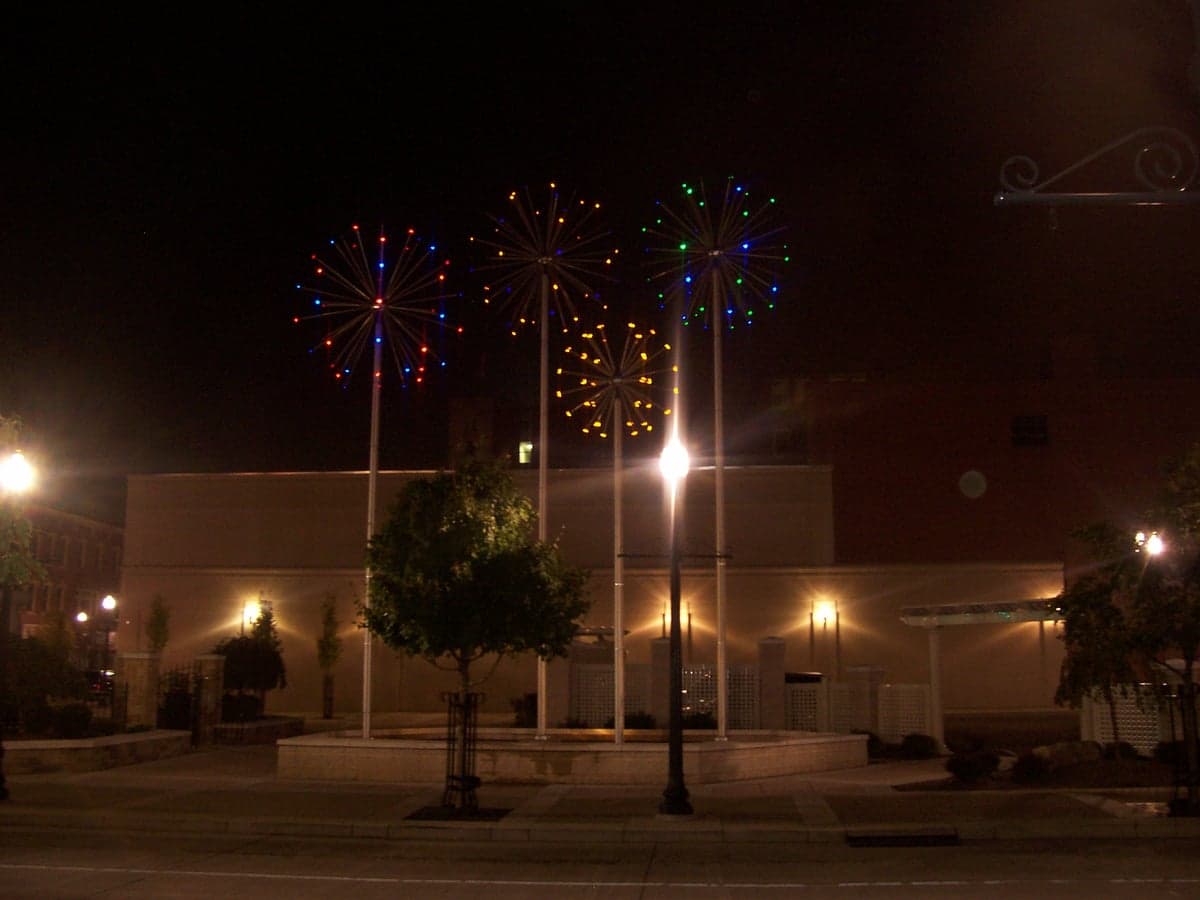
Photo: Wikipedia
Personal Sovereignty in New Castle, PA
Strong independent fundamentals that actively favor personal liberty and low regulation.
What does Personal Sovereignty tell us?
Personal Sovereignty measures your capacity for self-reliance and independence with minimal government friction. Higher scores mean fewer barriers between you and the way you want to live... but it assumes you have the space you need and good neighbors.
What does this tell us?
Personal Sovereignty measures your capacity for self-reliance and independence with minimal government friction. Higher scores mean fewer barriers between you and the way you want to live... but it assumes you have the space you need and good neighbors.
State Policy
Energy independence: Net exporter (150% of energy produced in-state)
Personal Liberty
Homesteading

Personal Liberty Analysis
New Castle, Pennsylvania, offers a mixed but increasingly attractive environment for personal sovereignty, particularly for those who prioritize minimal government interference in daily life. While Pennsylvania is not a libertarian stronghold like New Hampshire or Idaho, the state’s legal framework—especially its strong firearm preemption laws, lack of a state income tax on retirement income, and relatively permissive zoning in rural areas—creates a workable base for self-reliant living. For a single individual or a family looking to build a life with fewer entanglements from Harrisburg or Washington, New Castle’s position in Lawrence County provides a strategic balance of affordability, legal autonomy, and access to resources, though it requires careful navigation of local ordinances and state-level regulatory creep.
Tax burden and regulatory posture: How Pennsylvania compares for the self-reliant
Pennsylvania’s tax structure is a double-edged sword for those seeking sovereignty. The state levies a flat 3.07% personal income tax on all earned income, which is moderate compared to neighboring Ohio (up to 3.99%) or New York (up to 10.9%). Crucially, Pennsylvania does not tax retirement income—pensions, 401(k) withdrawals, and Social Security benefits are fully exempt—making it a stronghold for those planning to age off-grid. However, the state’s 6% sales tax (with exemptions on food and clothing) and property taxes that average 1.58% of assessed home value in Lawrence County can bite. New Castle itself has a local Earned Income Tax of 1.5%, which adds to the burden. On the regulatory front, Pennsylvania is a Dillon’s Rule state, meaning municipalities only have powers explicitly granted by the state. This limits local overreach but also means state-level mandates—like building codes or environmental regulations—can preempt local flexibility. For a prepper, the key takeaway is that Pennsylvania’s regulatory posture is moderately permissive for rural properties but becomes more restrictive in incorporated areas like New Castle city limits. Zoning for home-based businesses, small-scale livestock, or alternative energy is generally easier in the surrounding townships than within the city.
Self-defense and gun law specifics: What Pennsylvania allows for armed preparedness
Pennsylvania is a shall-issue state for concealed carry, meaning the sheriff’s office in Lawrence County must issue a License to Carry Firearms (LTCF) to any applicant who passes a background check and completes a brief application—no subjective “good cause” requirement. This is a major plus for personal sovereignty. The state also has preemption of all firearm laws, so New Castle cannot enact its own bans on magazine capacity, assault weapons, or open carry. Open carry is legal without a permit for anyone 18 or older who can legally possess a firearm, though it becomes concealed carry in a vehicle without an LTCF. Stand-your-ground laws are in effect, with no duty to retreat in any place where you are lawfully present. Castle Doctrine protections extend to your home, vehicle, and workplace. However, Pennsylvania does require a Firearm Owner’s Identification (FOID) card—called a License to Purchase—for buying handguns or long guns from a dealer, which is a minor bureaucratic hurdle. Private transfers of long guns are legal without a background check, but handgun transfers must go through a dealer. For the survivalist, the legal environment is solid: you can defend your property, carry concealed with minimal hassle, and stockpile ammunition without state-level restrictions. The only real concern is the FOID requirement, which creates a paper trail, and the fact that Pennsylvania is not a constitutional carry state—you still need the LTCF for concealed carry.
Self-reliance and homesteading viability: Lot sizes, zoning, and off-grid feasibility in Lawrence County
For those looking to live off-grid or establish a homestead, New Castle’s surrounding rural areas offer genuine opportunity. Lot sizes in unincorporated Lawrence County typically start at 1 to 5 acres for residential zoning, with agricultural zones allowing parcels of 10 acres or more. The county’s zoning code generally permits small-scale livestock (chickens, goats, bees) on parcels of 2 acres or larger, though you’ll want to verify with the specific township—some, like Shenango Township, are more lenient than others. Off-grid feasibility is high: Pennsylvania has no statewide ban on rainwater collection, and many rural properties rely on private wells and septic systems. Solar panels are permitted without special permits in most townships, though grid-tied systems require utility approval. The biggest hurdle is building codes—Pennsylvania enforces the Uniform Construction Code (UCC) statewide, which means any new dwelling or major renovation must meet modern standards for insulation, electrical, and structural integrity. This can be a barrier for those wanting to build a simple cabin or tiny home without permits. However, existing structures on rural land often have grandfathered status. For a prepper, the strategy is to buy a property with an existing dwelling and then modify it for self-sufficiency—adding a wood stove, installing a backup generator, and establishing a garden. The cost of land is a major advantage: raw land in Lawrence County can be found for $3,000 to $8,000 per acre, with improved lots with a house starting around $80,000 to $150,000.
Personal liberties: Parental rights, medical autonomy, speech, and property protections
Pennsylvania’s record on personal liberties is a mixed bag that requires vigilance. Parental rights are relatively strong in the state: there is no state-level mandate for comprehensive sex education that overrides parental opt-out, and parents have the right to homeschool under the Homeschool Law (Act 169 of 1988) with minimal oversight—just a notarized affidavit and an annual portfolio evaluation. Medical autonomy is more concerning. Pennsylvania has not passed any broad medical freedom legislation, and during the 2020-2021 period, the state imposed some of the longest-lasting emergency orders in the Northeast, including mask mandates and business closures. While those are now lifted, the legal precedent for future overreach remains. There is no state-level protection for refusing medical treatments based on religious or philosophical beliefs beyond existing federal exemptions. On speech, Pennsylvania is generally free, with no state-level “hate speech” laws that criminalize protected expression. Property rights are solid: Pennsylvania has strong eminent domain protections requiring just compensation and public use, and there is no statewide rent control. However, the state’s Act 135 of 1998 allows municipalities to impose blight ordinances that can lead to property seizure if a home is deemed uninhabitable—a potential tool for overreach in older neighborhoods like those in New Castle’s core. For the sovereignty-minded, the key is to live outside city limits where such ordinances are less aggressively enforced.
Overall, New Castle and Lawrence County offer a B-tier environment for personal sovereignty in the current American landscape. It is not a free state like Alaska or New Hampshire, but it avoids the worst excesses of New York or California. The tax burden is manageable, gun laws are favorable, and rural zoning allows for meaningful self-reliance. The main risks are state-level regulatory creep—especially around building codes and emergency powers—and the need to stay out of the city’s more restrictive ordinances. For a single individual or a family willing to buy a few acres in the surrounding townships, New Castle provides a low-cost, legally permissive base to build a prepared, independent life. Just keep an eye on Harrisburg, and be ready to move if the state tilts further toward control.

* Values derived from national, state, county, city and local statistics and may differ in a specific area. Last updated: 2026-05-01T09:19:43.000Z
Narrative content on this page is AI-generated and may contain mistakes. Verify any details that matter before acting on them.
ReloMaps may earn a commission from affiliate links at no extra cost to you.

