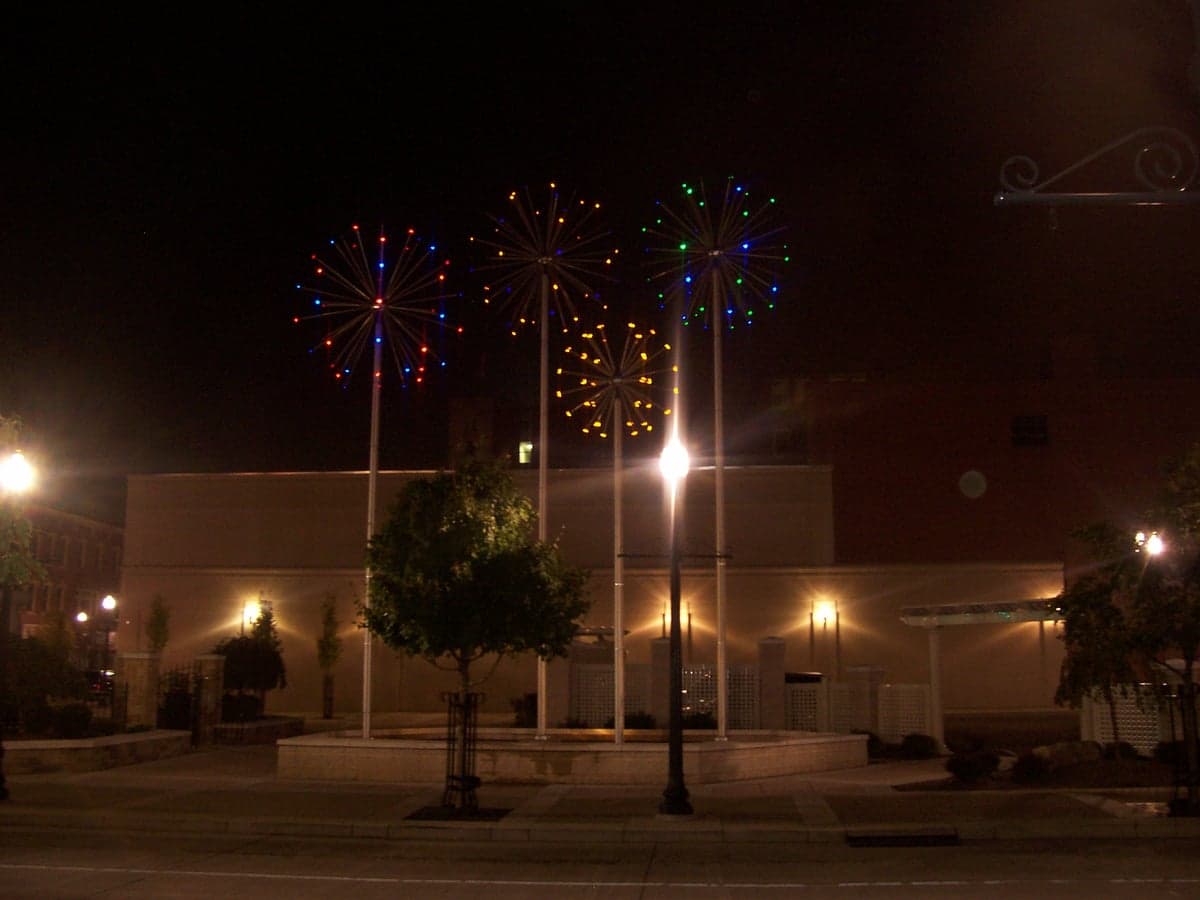
Photo: Wikipedia
Political ClimatePolitical Climate in New Castle, PA
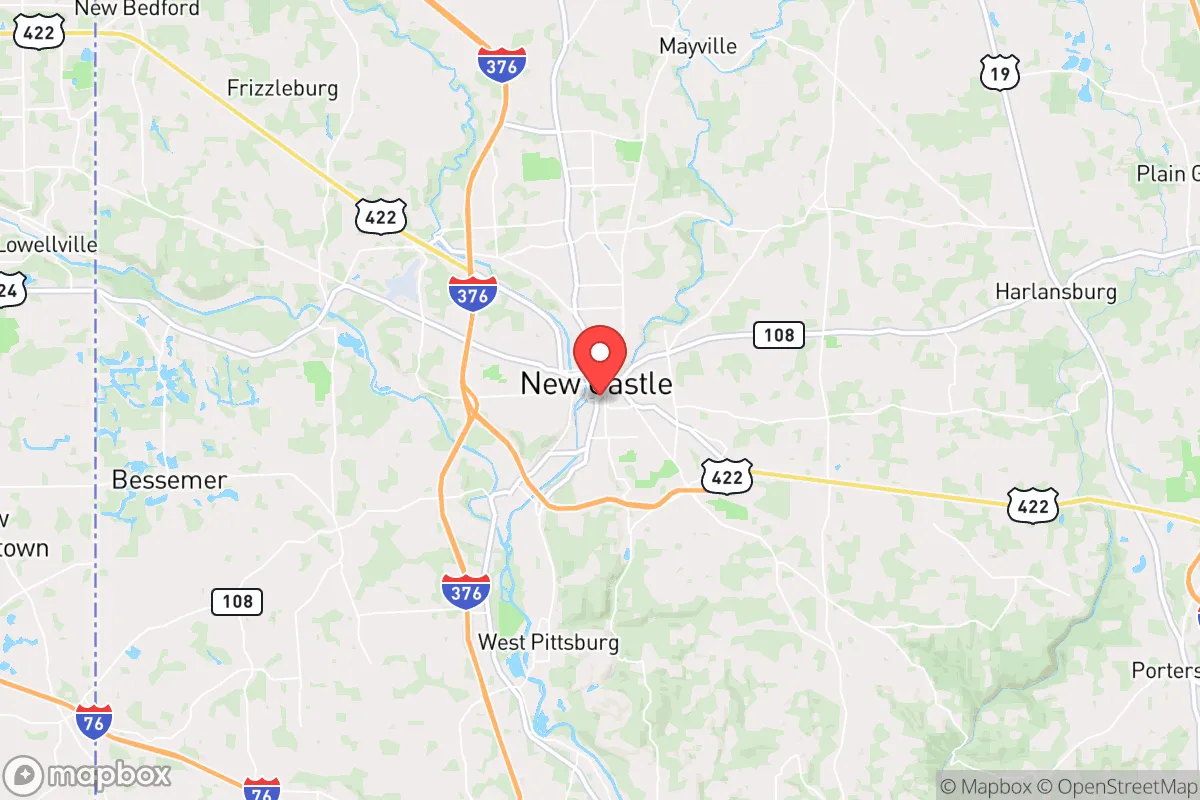
District shown is the primary district for this city’s centroid. Cities may span multiple districts.
Local Political AnalysisPolitical Analysis of New Castle, PA
New Castle, Pennsylvania, sits in a solidly conservative pocket of western PA, with a Cook PVI of R+11 that tells you the lay of the land pretty clearly. For decades, this was a blue-collar steel and manufacturing town where folks voted their union card, but the cultural and political center of gravity has shifted hard right over the last twenty years. You’ll still find plenty of old-school Democrats on the voter rolls, but they’re the kind who cross over for gun rights and against any talk of defunding the police—the national party left them behind a while ago.
How it compares
Drive ten miles east to the college town of Slippery Rock and you’ll feel the difference immediately—more yard signs for progressive candidates, more talk about sustainability and equity. Head south to Beaver County, and you’re in similar R+ territory, but New Castle has a grittier, more working-class edge that makes the conservatism feel less suburban and more "leave me alone." The contrast with Pittsburgh, just 50 miles south, is night and day. Pittsburgh’s Allegheny County went +17 for Biden in 2020, while Lawrence County (home to New Castle) went +18 for Trump. That gap isn’t an accident—it’s a deliberate rejection of the urban progressive agenda that many here see as government overreach into how they raise their kids, run their businesses, and live their lives.
What this means for residents
For someone moving here, the biggest practical takeaway is that local government still mostly believes in staying out of your way. Zoning is light, property taxes are manageable compared to Pittsburgh’s suburbs, and you won’t see the kind of mask mandates or business shutdowns that became common in blue areas during the pandemic. The school board fights you hear about in national news—critical race theory, library book challenges, transgender bathroom policies—those are real here, and the conservative majority usually holds the line. That said, there’s a creeping concern among long-time residents that the progressive wave washing over Pennsylvania’s urban centers is starting to trickle into state-level mandates. Harrisburg’s push for electric vehicle quotas and renewable energy targets feels like a distant bureaucrat telling New Castle how to live, and it doesn’t sit well. The near-term outlook is stable—the R+11 lean isn’t going anywhere—but the long-term worry is that state preemption could erode local control on everything from gun ordinances to school curriculum.
Culturally, New Castle is a place where the VFW hall still matters, the gun show at the county fairgrounds packs the house, and the phrase "government efficiency" gets a skeptical laugh. There’s no pretense here—people wave in the grocery store parking lot and expect their elected officials to answer the phone. The biggest policy distinction you’ll notice is the absence of the kind of boutique progressive programs you see in bigger cities: no plastic bag bans, no sanctuary city resolutions, no community reparations task forces. What you get instead is a town that prioritizes pothole repair and police funding over symbolic gestures. If you value personal freedom, low interference, and a community that still believes in self-reliance, New Castle is about as straightforward as it gets. Just don’t expect it to change anytime soon—and don’t ask it to.

State Political ClimatePolitical Climate in Pennsylvania
State Political AnalysisPolitical Environment in the State
Pennsylvania is a true battleground state, and if you’re looking at it from a conservative perspective, the picture is complicated. The state leans slightly Democratic at the presidential level—voting for Biden by about 1.2 points in 2020 after Trump won it by 0.7 in 2016—but its state legislature has been reliably Republican for decades, and the rural and exurban areas are deeply red. Over the last 20 years, the state has shifted left in the populous southeast (Philly suburbs) and southwest (Pittsburgh), while the vast middle and northern tier have gotten redder. The net result is a state that feels like it’s being pulled in two directions, and the tension is palpable.
Urban vs. rural divide
The political map of Pennsylvania is a tale of two worlds. Philadelphia and its collar counties—Montgomery, Delaware, Chester, and Bucks—are the engine of Democratic power, delivering massive margins. In 2020, Philadelphia County alone gave Biden over 600,000 votes, more than Trump’s entire margin in the state. Pittsburgh and Allegheny County are similarly blue, though less extreme. Meanwhile, the rest of the state is overwhelmingly Republican. Counties like Lycoming (Williamsport), Butler (north of Pittsburgh), and Franklin (Chambersburg) routinely vote 65-70% Republican. The real story is the suburbs: places like Lancaster and York counties, once reliably red, have become competitive as Philly’s sprawl pushes left-leaning voters outward. Conversely, the rural northern tier—counties like Tioga, Potter, and Bradford—are as red as any place in America, with Trump winning some precincts by 80 points. The divide isn’t just political; it’s cultural. Drive an hour west of Philly and you’re in a different world, where gun racks and Trump flags are the norm.
Policy environment
Pennsylvania’s policy environment is a mixed bag for conservatives. The state has a flat income tax of 3.07%, which is relatively low, and no tax on Social Security benefits—a plus for retirees. But the state sales tax is 6%, and property taxes are high, especially in the southeast. The regulatory posture is moderate: Pennsylvania is not Texas, but it’s not California either. On education, the state has a robust school choice movement—there are charter schools and a tax-credit scholarship program (the Educational Improvement Tax Credit, or EITC)—but the teachers’ unions are powerful, and the state’s public schools are among the most expensive per pupil in the nation. Healthcare is a mixed bag: the state expanded Medicaid under Obamacare, but private insurance markets are competitive. Election laws are a flashpoint: Pennsylvania has no-excuse mail-in voting (passed in 2019 with bipartisan support), but voter ID is not required at the polls (only first-time voters need ID). This has been a major source of tension, with many conservatives pushing for stricter laws. The state also has a Republican-controlled legislature that has passed numerous pro-life bills, but Democratic Governor Josh Shapiro has vetoed them, creating a stalemate.
Trajectory & freedom
On the freedom front, Pennsylvania is trending in a concerning direction for conservatives. The most significant recent expansion of liberty was the passage of Act 79 of 2022, which made Pennsylvania a “constitutional carry” state—anyone who can legally own a firearm can carry it concealed without a permit. That was a big win. But the state has also seen a push to restrict gun rights: Philadelphia and Pittsburgh have passed local ordinances banning firearms in city parks and buildings, though these are often challenged in court. On parental rights, the state has not passed a “Parents’ Bill of Rights” like Florida, and school boards in blue areas have been aggressive in implementing LGBTQ curriculum without parental opt-outs. Medical autonomy took a hit during COVID: Governor Wolf imposed some of the nation’s strictest lockdowns and business closures, and the state’s emergency powers were only reined in by a 2021 constitutional amendment (passed by voters) limiting the governor’s emergency authority to 21 days without legislative approval. Property rights are generally respected, but the state’s Clean and Green program offers tax breaks for farmland, which helps rural landowners. Overall, the trajectory is mixed: gun rights expanded, but government overreach during the pandemic left a bad taste, and the cultural left is winning in the cities.
Civil unrest & political movements
Pennsylvania has seen its share of political flashpoints. The 2020 election was a firestorm: Philadelphia’s ballot counting center was the scene of protests and counter-protests, and the state was at the center of numerous lawsuits over mail-in ballots. The Pennsylvania Freedom Caucus in the state legislature has been a vocal force, pushing for election integrity reforms and opposing vaccine mandates. On the left, groups like Indivisible and Pennsylvania Stands Up are active in the cities, organizing around climate and social justice issues. Immigration politics are less heated than in border states, but Philadelphia is a sanctuary city, and the state has seen a surge of migrants bused from Texas, causing friction. There have been no serious secession movements, but there is a growing “rural-urban” divide that feels like two different states. The most visible flashpoint for a new resident would be the constant political advertising—Pennsylvania is a swing state, so you can’t escape campaign mailers and TV ads during election season.
Projection
Looking ahead 5-10 years, Pennsylvania is likely to become more polarized. The Philadelphia suburbs are getting bluer as young professionals and minorities move in, while the rural areas are getting redder and older. The state’s population growth is anemic—it’s projected to lose a congressional seat after 2030—so the political balance will hinge on turnout. For conservatives, the best-case scenario is that the state legislature remains Republican, acting as a check on a Democratic governor. But the cultural tide in the cities is moving left, and if the Democratic Party can hold its coalition together, Pennsylvania could become a solidly blue state in presidential elections. The wild card is the energy transition: the state’s natural gas industry (Marcellus Shale) is a huge economic driver, and any federal crackdown on fracking would devastate rural communities and shift the political calculus. For someone moving in now, expect to live in a state where your local government reflects your values if you’re in a red county, but where state-level policy will be a constant tug-of-war.
Bottom line for a new resident: Pennsylvania is a state where you can find a community that matches your values, but you’ll have to pick your county carefully. If you want low taxes, gun rights, and a conservative school board, look at the northern tier or south-central counties like Adams or Lebanon. If you’re in the Philly or Pittsburgh suburbs, you’ll be fighting a rear-guard action against progressive policies. The state’s political future is uncertain, but one thing is clear: the fight over freedom and government overreach is not going away. Come prepared to vote in every election, because your vote actually matters here.
* Values derived from national, state, county, city and local statistics and may differ in a specific area. Last updated: 2026-05-01T09:19:43.000Z
Narrative content on this page is AI-generated and may contain mistakes. Verify any details that matter before acting on them.
ReloMaps may earn a commission from affiliate links at no extra cost to you.

