Photo: Wikipedia
Strategic Assessment of New Castle, PA
Meaningful friction. Expect exposure to either population pressure, blast zones, or natural disaster risk. Consider buying a retreat property.
What does the Strategic Assessment tell us?
Our Strategic Assessment grades tactical survivability of an area. Major population centers, military targets, fallout zones, natural disasters, and border exposure all drive risk — lower exposure means a more defensible position in a crisis.
This is heavily inspired by Joel Skousen's Strategic Relocation book. Highly recommended you checkout the book ($)What does this tell us?
Our Strategic Assessment grades tactical survivability of an area. Major population centers, military targets, fallout zones, natural disasters, and border exposure all drive risk — lower exposure means a more defensible position in a crisis.
This is heavily inspired by Joel Skousen's Strategic Relocation book. Highly recommended you checkout the book ($)Strategic Pillars

Key Distances
Regional Safe Places
Below is our recommended "safe zones" in Pennsylvania and the surrounding area based on our strategic heuristics. For most people, it's unrealistic to live in a “safe zone” full-time due to work, family or other personal reasons. They tend to be more rural. However, many of these areas are perfect for second homes and retreat properties that double as a vacation home or even a short-term rental.
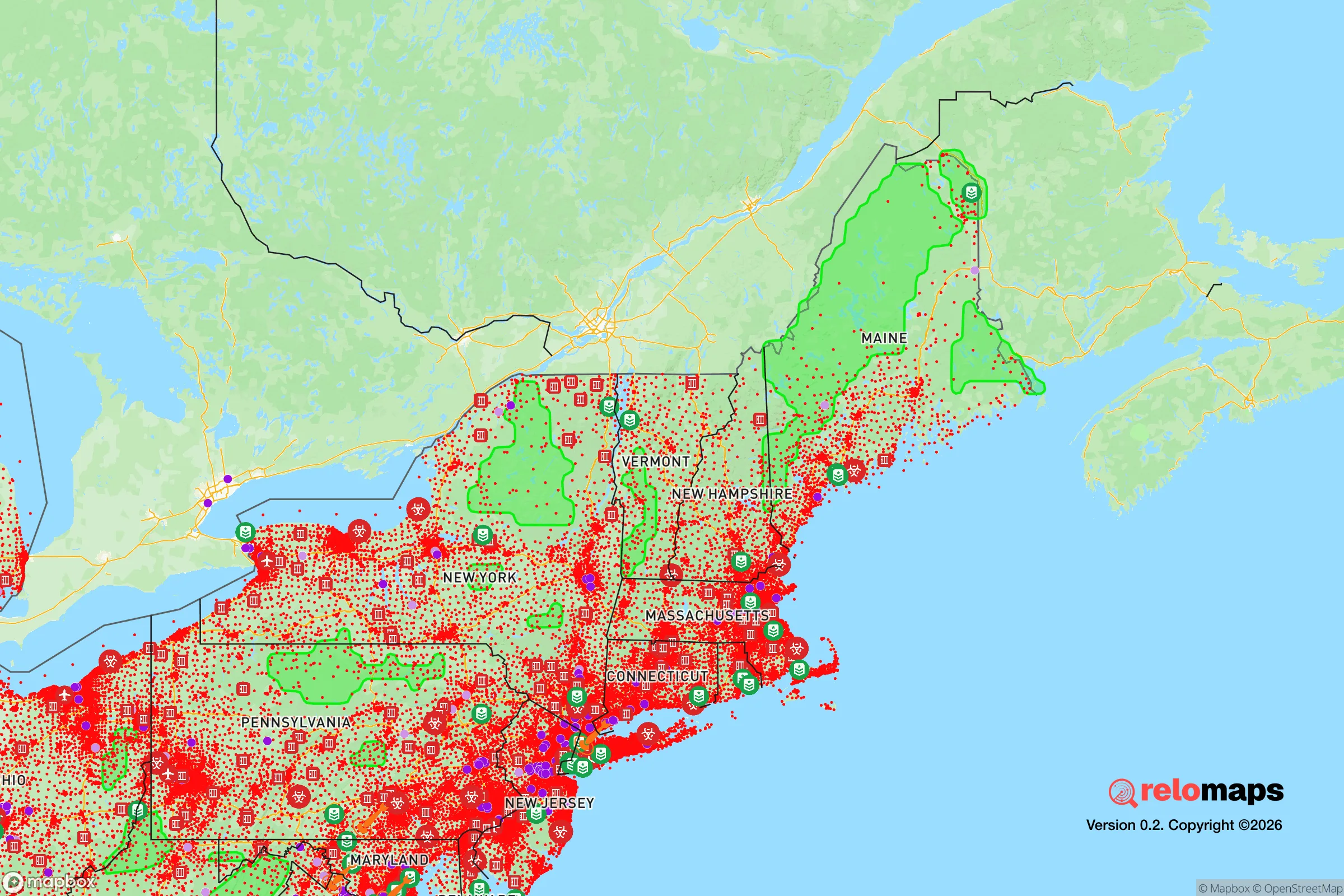
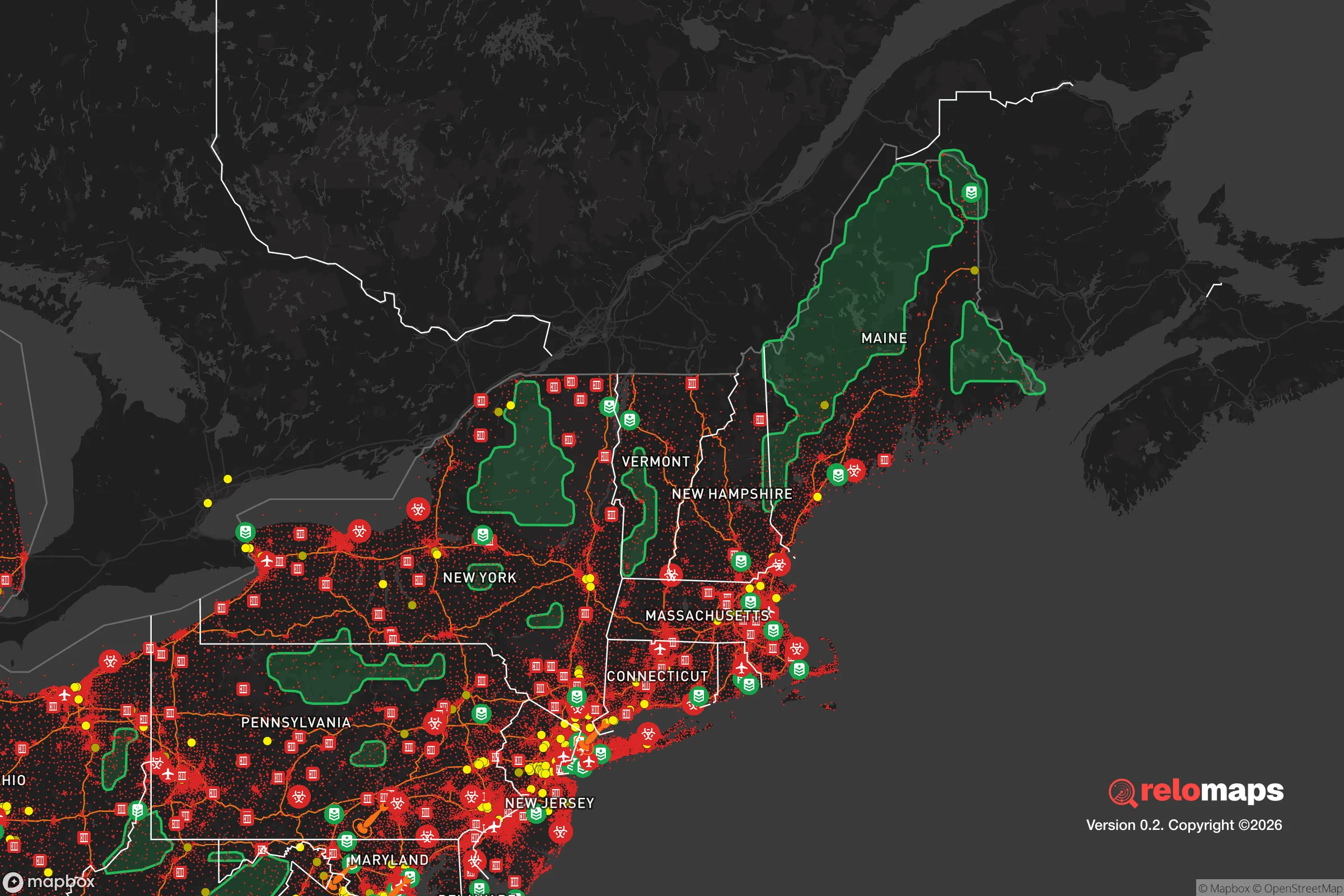


Important Note: For informational purposes only. This does not mean nothing bad ever happens in the green zones. Please use common sense. This is based on public data and modeled with AI. We tried to take a conservative approach but mistakes happen. We update this regularly as new information becomes available.
Solar Generator Recommendations
Backup power matters more here than in safer locations. We've picked three solar generators across budgets and capacity tiers — start with the budget unit if you only need a few essentials, or step up if you want to run a fridge and HVAC for days at a time.

Jackery Portable Power Station Explorer 300
Budget OptionPower on the Go: Weighing only 11 lbs, it's convenient to set up and store with book-sized foldable solar panels

BLUETTI Portable Power Station AC180
Designed for both indoor and outdoor scenarios, AC180 is highly capable as it has a robost capacity and continuous output power.

EF ECOFLOW DELTA Pro Ultra Power Station
Upgraded PickEcoFlow DELTA Pro Ultra is a whole-home energy system designed to grow with your family. Integrated with the Smart Home Panel 2, it scales to meet your evolving energy needs — keeping your home powered, intelligent, and secure through every stage of life.
We earn a commission, at no additional cost to you.
Strategic Assessment Analysis
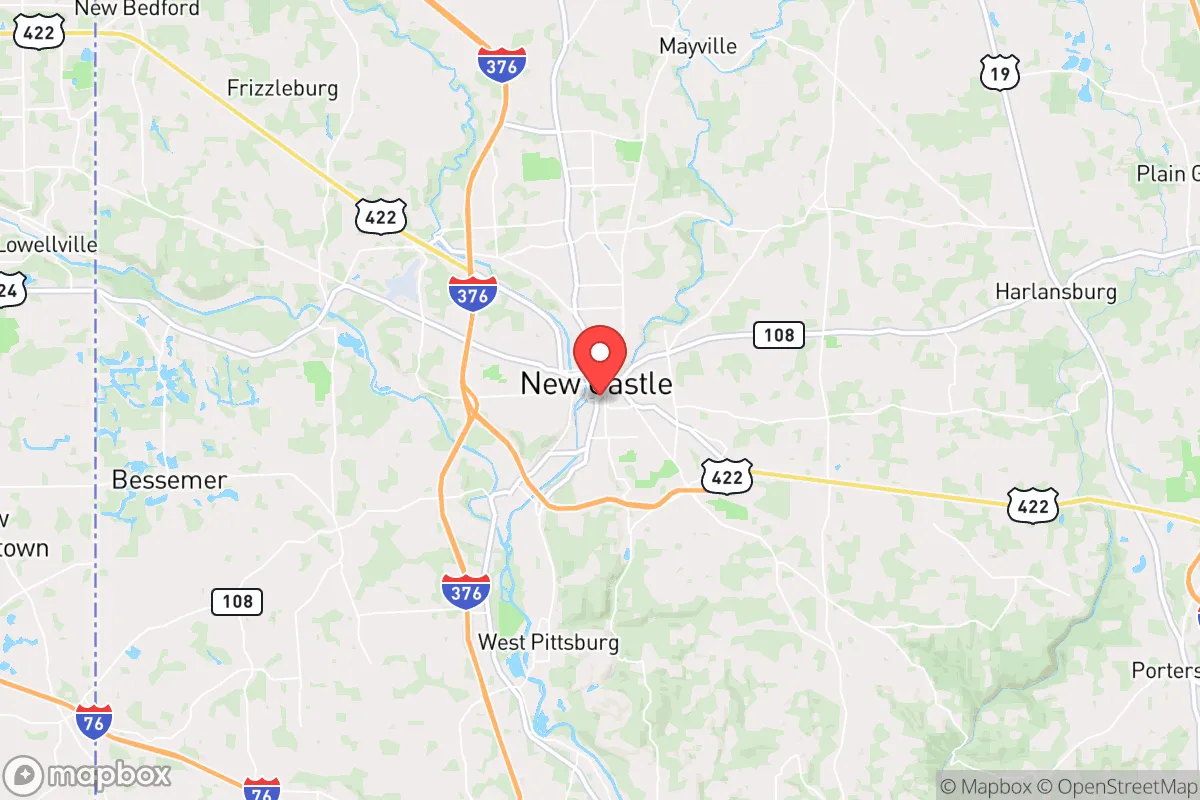
New Castle, Pennsylvania, sits in a geographic pocket that offers a mixed strategic picture for those prioritizing resilience and self-sufficiency. Located roughly 50 miles northwest of Pittsburgh and just a few miles from the Ohio border, the city and its surrounding Lawrence County provide a buffer from major metropolitan chaos while still being close enough to monitor regional events. The area’s historical industrial backbone—steel, manufacturing, and rail—has left behind a network of infrastructure that can be repurposed, but the population decline and economic stagnation since the 1970s mean you’re looking at a place that’s already been stress-tested by hard times. For a conservative-leaning relocator concerned with civic unrest, mass casualty events, and societal breakdown, New Castle offers a blend of isolation and accessibility that deserves a hard look, but only if you’re willing to work with its limitations.
Geographic position and natural advantages for long-term security
New Castle’s location along the Shenango River and its position in the rolling hills of western Pennsylvania give it a natural defensibility that flat, open terrain lacks. The city itself sits in a valley, but the surrounding countryside rises into wooded ridges and farmland, offering multiple egress routes and potential retreat positions. The area is part of the Appalachian Plateau, meaning water is abundant—the Shenango River, Neshannock Creek, and several smaller streams provide surface water sources, though you’ll want to test for industrial runoff from the region’s legacy of steel and coal. The proximity to the Ohio border (about 5 miles west) means you can cross state lines quickly if needed, and the Pennsylvania Turnpike (I-76) and I-80 are within 30 minutes, giving you access to east-west corridors without being directly on them. For a prepper, this is a sweet spot: close enough to major routes for supply runs or evacuation, but far enough that a highway blockade or riot won’t immediately affect your doorstep. The local topography also limits line-of-sight from major roads, which is a plus for operational security.
Risks, exposures, and proximity to fallout-relevant landmarks
The biggest strategic downside is New Castle’s proximity to several high-value targets that could become fallout zones in a major conflict or terrorist event. Pittsburgh, with its nuclear research facilities (Bettis Atomic Power Laboratory in West Mifflin) and major industrial complexes, is only an hour south. The Beaver Valley Nuclear Power Station, located about 25 miles southwest in Shippingport, is a direct concern—a meltdown or attack there could render large portions of Lawrence County uninhabitable depending on wind patterns. Additionally, the rail lines running through New Castle carry hazardous materials (the area is a freight corridor for CSX and Norfolk Southern), and a derailment or sabotage event could contaminate local water supplies. The city’s own industrial history means there are brownfield sites and old landfills that could become secondary hazards during a breakdown of municipal services. For a relocator, this means you need to plan for a 30- to 50-mile buffer zone to the south and west, and you should identify higher ground east of the Shenango River as a potential relocation point if the nuclear plant goes hot. The risk isn’t a dealbreaker, but it requires active monitoring and a pre-planned bug-out route to the north or east.
Practical resilience for a relocator: food, water, energy, and defensibility
For day-to-day resilience, New Castle’s infrastructure is a mixed bag. The water supply comes from the Shenango River and is treated by the New Castle Water Authority, which has aging pipes and a history of boil-water advisories—so you’ll want a well or a reliable rainwater catchment system if you’re buying property. The local power grid is served by Penn Power (a FirstEnergy subsidiary), and outages are common during winter ice storms and summer thunderstorms; a backup generator with a 200-amp transfer switch is non-negotiable. Food security is better than in most urban areas: Lawrence County has active farmland, with Amish and Mennonite communities in the surrounding towns of Volant and New Wilmington that produce dairy, eggs, and produce. You can buy direct from farmers at the New Castle Farmers Market or through local co-ops, and the area’s deer population is healthy for hunting. Defensibility is moderate—the city itself has a dense urban core with narrow streets and older brick buildings that could be fortified, but the suburbs and rural outskirts offer better standoff distance. The local law enforcement presence is thin (Lawrence County has about 60 sheriff’s deputies for a population of 86,000), so you’re largely responsible for your own security. The community is predominantly working-class and politically conservative, which means you’re less likely to face ideological friction, but you should still keep a low profile and avoid advertising preps.
The overall strategic picture for New Castle is one of calculated trade-offs. You get affordable land (median home prices around $80,000–$120,000), abundant water, and a location that’s off the beaten path but not completely isolated. The risks from the Beaver Valley nuclear plant and the Pittsburgh metro area are real but manageable with proper planning—think of it as a forward operating base rather than a final redoubt. The area’s economic decline means you can buy property cheap, but it also means local services (healthcare, emergency response) are stretched thin. For a single individual or a family willing to invest in off-grid infrastructure and maintain a low profile, New Castle offers a viable base for weathering the next decade of instability. Just don’t expect to ride out a major event without having your own water, power, and security plan in place—the city’s resilience is what you make of it, not what it provides for free.

* Values derived from national, state, county, city and local statistics and may differ in a specific area. Last updated: 2026-05-01T09:19:43.000Z
Narrative content on this page is AI-generated and may contain mistakes. Verify any details that matter before acting on them.
ReloMaps may earn a commission from affiliate links at no extra cost to you.

