Photo: Wikipedia
Demographics of Sullivan County
Affluence Level in Sullivan County
A middle-class area roughly in line with national averages across income, home values, education, and employment.
People of Sullivan County
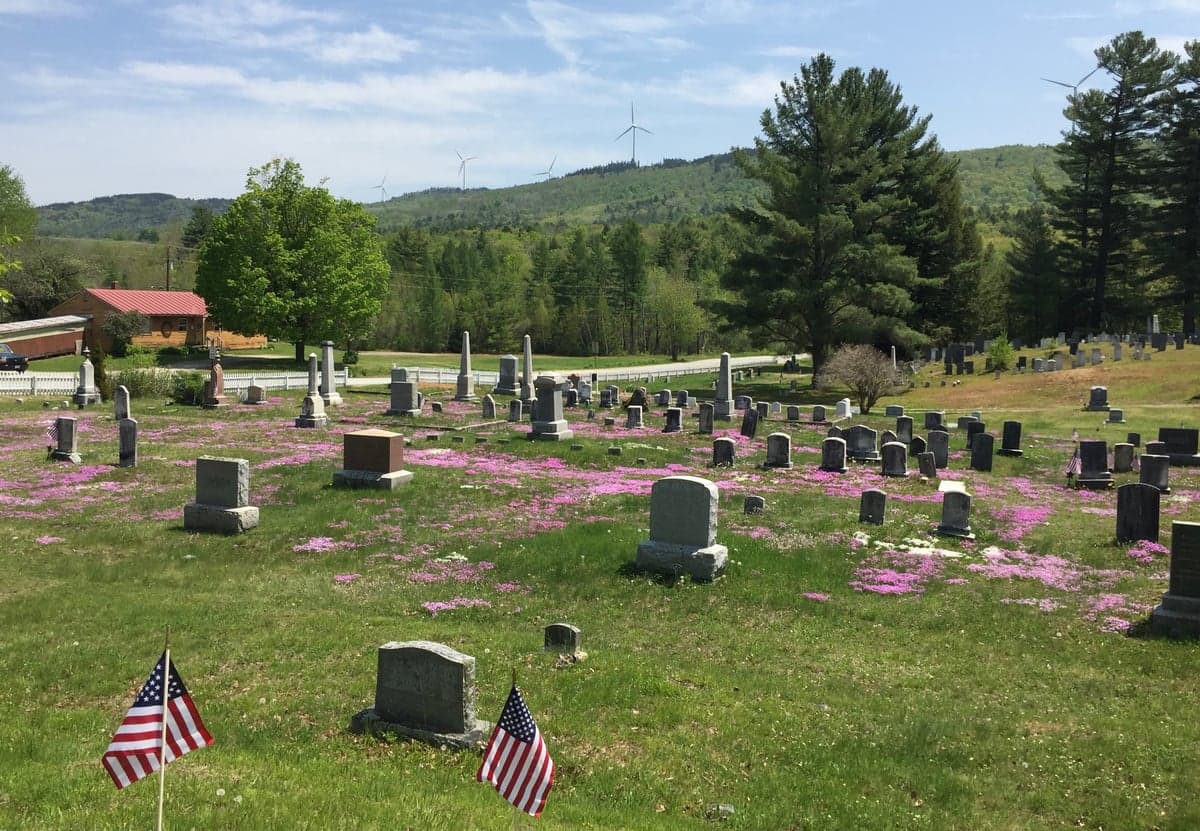
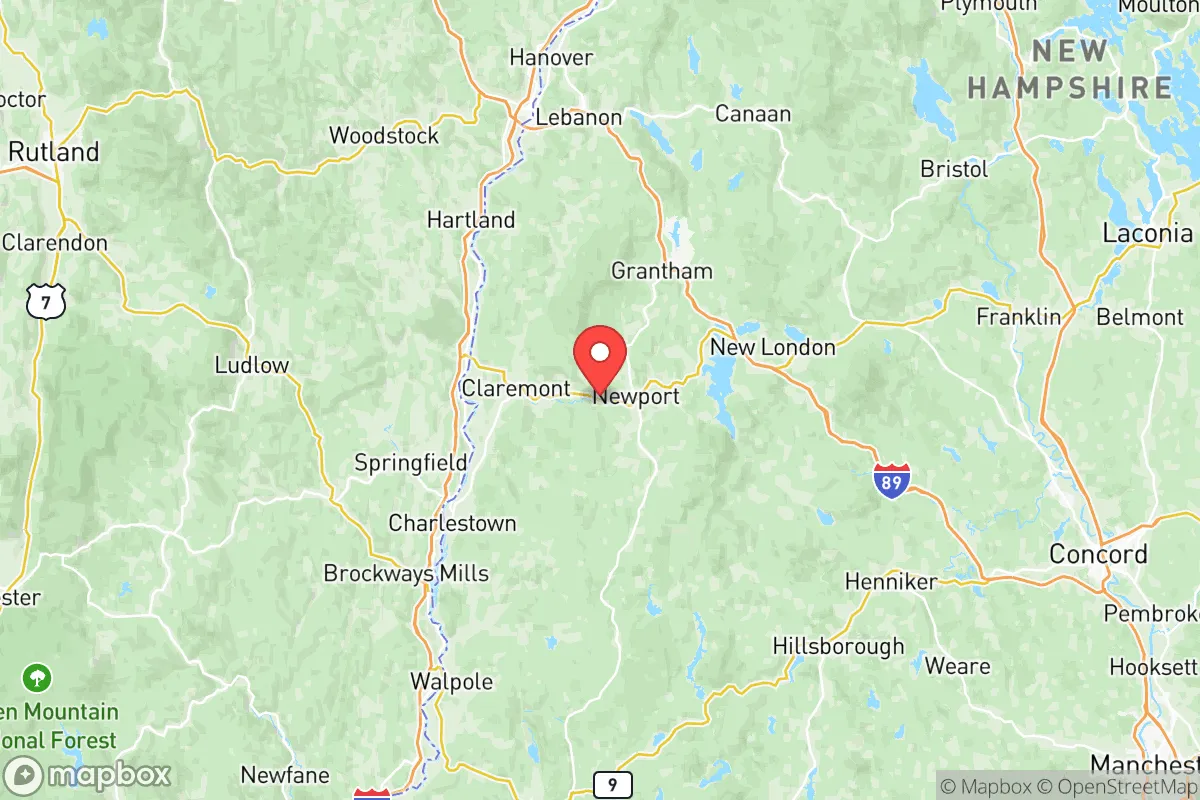
Sullivan County, New Hampshire, is today a predominantly white, rural county of 43,529 residents, where 91.8% of the population identifies as white and only 0.6% are foreign-born. The county’s character is defined by small towns like Claremont, Newport, and Charlestown, where a conservative, self-reliant culture persists alongside a modest 30.5% college-educated rate. With negligible racial or ethnic diversity—Hispanic residents make up 2.0%, Black 0.8%, and East/Southeast Asian 0.5%—Sullivan County remains one of the most demographically homogeneous areas in New England, a legacy of its settlement history and limited modern immigration.
Settlement & growth (pre-1960)
Long before European arrival, the land now called Sullivan County was home to the Abenaki people, particularly the Pennacook tribe, who used the Connecticut River as a travel and trade corridor. French explorers and Jesuit missionaries passed through in the 17th century, but permanent European settlement began only after the English established Fort at Number 4 in present-day Charlestown in 1744, a fortified outpost during the French and Indian Wars. After the war, New Hampshire’s Masonian land grants opened the region to English colonists from Massachusetts and Connecticut, who founded towns such as Charlestown (1753), Newport (1761), and Claremont (1764). These early settlers were overwhelmingly of English and Scots-Irish stock, drawn by cheap land and the promise of self-sufficient farming.
The 19th century brought industrialization, especially to Claremont, where the Sugar River’s water power fueled textile mills, machine shops, and foundries. This economic shift attracted two major immigrant waves. First, Irish laborers arrived in the 1840s and 1850s to build railroads and work in the mills, settling in Claremont’s “Irish Hill” neighborhood. Second, French-Canadian families from Quebec poured in between 1870 and 1920, seeking work in the mills and machine shops. By 1900, Claremont had a substantial French-Canadian community, with its own Catholic parishes and French-language newspapers. Smaller numbers of German and Polish immigrants also arrived, but never formed large enclaves. Towns like Unity, Sunapee, and Goshen remained almost entirely Yankee and agricultural. The 20th century saw mill decline and outmigration; the county’s population peaked around 1950 and then began a slow, steady drop as manufacturing jobs moved south.
Modern era (post-1965)
The 1965 Hart-Cellar Act, which reshaped U.S. immigration, had almost no impact on Sullivan County. The foreign-born share remains minuscule at 0.6%, and no new immigrant enclaves formed. Instead, the county’s demographic story since 1965 has been one of domestic stagnation and selective in-migration. The decline of Claremont’s textile and machine industries continued through the 1970s and 1980s, leading to population loss in the city itself. Meanwhile, towns like Sunapee and Grantham attracted second-home owners and retirees drawn to Lake Sunapee and Mount Sunapee ski area, many from southern New Hampshire and Massachusetts. Newport saw a modest revival as a regional service center, while Plainfield (including the village of Meriden) retained a rural, educated character, partly due to proximity to Dartmouth College in neighboring Hanover. The county’s racial composition barely shifted: the small Hispanic population (2.0%) is concentrated in Claremont, often in service and agricultural work, while the Black and East/Southeast Asian populations remain tiny and scattered. No suburban sprawl occurred; the county’s population density is just 55 people per square mile, and most growth has been in lakeside vacation homes rather than new subdivisions.
The future
Sullivan County’s demographic future appears stable and homogeneous. The foreign-born share is unlikely to rise significantly, as the county lacks the urban job base or ethnic networks that attract immigrants. The white population will likely remain above 90% for the foreseeable future, though the county is aging—the median age is over 47, and many young adults leave for college and jobs elsewhere. In-migration is limited to retirees and remote workers seeking lower taxes and rural quiet, especially in towns like Sunapee, Lempster, and Acworth. These newcomers are culturally similar to existing residents, so no enclave formation or cultural friction is expected. The Hispanic and Asian populations may grow slightly through natural increase and a trickle of agricultural workers, but will remain small. The county is not tribalizing; rather, it is slowly homogenizing as older Yankee and French-Canadian families intermarry and assimilate. The next 10–20 years will likely see continued population stability or slight decline, with Claremont struggling to retain young families and the lake towns maintaining a seasonal, older demographic.
For someone moving in now, Sullivan County offers a deeply rooted, traditional New England community where change comes slowly. The population is overwhelmingly white, native-born, and conservative-leaning, with strong local identities in each town. If you seek racial and ethnic diversity, this is not the place. But if you value quiet, rural living, low crime, and a population that shares a common cultural heritage, Sullivan County remains a stable choice in an increasingly diverse nation.

* Values derived from national, state, county, city and local statistics and may differ in a specific area. Last updated: 2026-05-14T20:13:37.000Z
Narrative content on this page is AI-generated and may contain mistakes. Verify any details that matter before acting on them.
ReloMaps may earn a commission from affiliate links at no extra cost to you.

