
Photo: Wikipedia
Political ClimatePolitical Climate in Sullivan County
Showing district-level results — no local-only data available.
Local Political AnalysisPolitical Analysis of Sullivan County
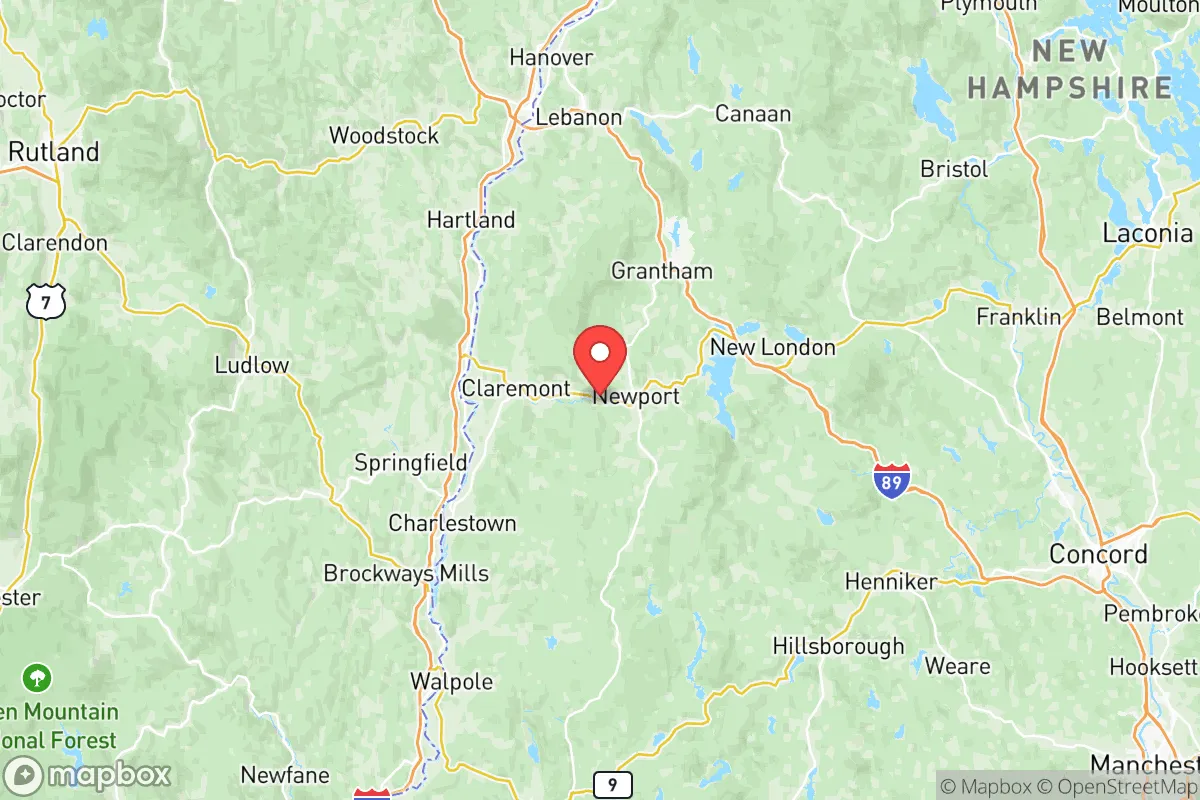
If you’re looking at Sullivan County, you’re looking at a place that’s officially rated D+2 on the Cook Partisan Voting Index—same as the state as a whole—but the real story is in the towns. I’ve lived here long enough to watch Claremont stay reliably blue, while places like Sunapee and Lempster lean red, and Newport still swings like a weather vane. The trajectory over the past decade has been a slow creep leftward, especially in the more populated corners, and that’s got a lot of us worried about how much government reach we’re willing to accept.
How it compares
New Hampshire as a state is also D+2, but Sullivan County’s political flavor is more rural and independent than the fast-growing southern tier. In the 2024 presidential race, the county went for Trump by a slim margin—around 50.5%—while the state overall flipped to Harris by about 2 points. That gap tells you something. Towns like Charlestown and Unity still vote reliably red, while Plainfield (home to some Dartmouth spillover) and parts of Claremont push the other way. The swing precincts are in Newport and Grantham, where a few hundred votes can decide a county commissioner race. Compared to the state, Sullivan County is less influenced by the Boston exurb growth that’s reshaping Rockingham and Hillsborough, which means our local politics stay closer to the ground—and more resistant to top-down mandates from Concord.
What this means for residents
For folks who value personal freedom and limited government, the D+2 rating is a yellow flag, not a red one—yet. The real concern is how progressive policies from the state level trickle down. We’ve seen it with school curriculum mandates, property tax pressures tied to state education funding formulas, and the push for tighter land-use regulations that hit rural landowners hardest. Locally, the balance of power in the county commission and school boards still leans center-right, but you have to stay engaged. In Claremont, the city council has moved left on housing and zoning, while Sunapee’s town meeting still votes down most new spending. The key takeaway: your vote matters more here than in a deep-blue or deep-red county. If you’re worried about government overreach, Sullivan County still offers a fighting chance to push back—but only if you show up at the polls and town hall.
Culturally, Sullivan County remains a place where hunting, snowmobiling, and small-town self-reliance are the norm, not the exception. The policy distinction that stands out most is the strong tradition of local control—town meetings still decide budgets and ordinances, and the state’s “Live Free or Die” ethos is taken seriously, even by many Democrats. That’s a double-edged sword: it protects property rights and gun freedoms, but it also means progressive changes can slip through if conservatives get complacent. Compared to the more suburbanized parts of New Hampshire, Sullivan County feels like a last bastion of old-school Yankee independence. If that’s what you’re looking for, you’ll find it here—but you’ll have to work to keep it that way.

State Political ClimatePolitical Climate in New Hampshire
State Political AnalysisPolitical Environment in the State
New Hampshire has long been the most libertarian-leaning state in New England, but its presidential voting has shifted from a true swing state to a lean-Democratic D+2 over the past decade. The state voted for Hillary Clinton by 0.4% in 2016, then Joe Biden by 7.4% in 2020, and Kamala Harris by about 2.8% in 2024 — yet it simultaneously elected a Republican governor (Chris Sununu for four terms, then Kelly Ayotte in 2024) and has maintained Republican majorities in both the state House and Senate. That split tells you everything: the state’s dominant coalition is a mix of fiscal conservatives, libertarians, and moderate independents who distrust both parties but lean right on taxes and personal freedom. The 10–20 year arc shows a slow blue shift driven by in-migration from Massachusetts, but the “Live Free or Die” ethos still runs deep in the rural north and west.
Urban vs. rural divide
The political map of New Hampshire is a textbook case of the urban-rural split. The Democratic strongholds are the southeastern cities along the Massachusetts border: Manchester, Nashua, Portsmouth, and Concord. These four cities alone account for roughly a third of the state’s population and reliably deliver 60%+ Democratic margins. Manchester and Nashua have grown significantly with commuters to Boston, bringing progressive attitudes on social issues and government spending. The Seacoast around Portsmouth is especially blue, fueled by out-of-state transplants and a thriving tech scene. In contrast, the rural north — Berlin, Lancaster, and the rest of Coos County — votes Republican by 20–30 points. The Lakes Region (Meredith, Wolfeboro) is more mixed, trending red in the outer towns but purple near the water. The western Keene area is a blue island thanks to Keene State College, but the surrounding towns of Cheshire County lean conservative. The real battleground is the exurban ring around Manchester — towns like Salem, Derry, and Londonderry — where moderate Republicans and independents decide close races.
Policy environment
New Hampshire’s policy environment is the main reason conservatives still consider moving here. There is no state income tax and no state sales tax, making it one of the lowest-tax states in the country. Property taxes are high (among the top 10 nationally), but local control keeps them somewhat in check. The regulatory posture is generally light: no statewide zoning mandates, no rent control, and a right-to-work law that keeps unions weak. On education, the state has a robust school choice system with charter schools, open enrollment, and a new Education Freedom Account program that lets parents use state funds for private or homeschool expenses — a major win for parental rights. Healthcare is a mixed bag: New Hampshire expanded Medicaid under Sununu, but the state also has some of the highest insurance premiums in the nation. Election laws are relatively loose — same-day registration is allowed, and voter ID is required but can be bypassed with an affidavit. This has been a point of contention for conservatives who worry about election integrity, though no major fraud has been proven.
Trajectory & freedom
On the freedom front, New Hampshire has been a beacon, but the trajectory is concerning. The state passed constitutional carry in 2017, allowing permitless concealed carry, and has repeatedly blocked “red flag” laws. In 2024, a Parents’ Bill of Rights was signed into law, requiring schools to notify parents about curriculum changes and medical decisions — a direct response to progressive overreach in other states. However, the state also saw a push for paid family leave in 2023 that was vetoed by Sununu but could return under a Democratic governor. Medical autonomy remains strong: no vaccine mandates for adults, and COVID-era restrictions were lifted early. Property rights are protected by a lack of statewide rent control and strong eminent domain protections. The biggest threat to freedom is the steady in-migration from Massachusetts and New York, which brings voters who support higher taxes and more government intervention. The Free State Project, a movement to move 20,000 libertarians to NH, has slowed but still brings a steady stream of freedom-minded residents to towns like Keene and Berlin.
Civil unrest & political movements
New Hampshire is not known for violent unrest, but it has a vibrant activist scene on both sides. The Free State Project holds annual Porcupine Freedom Festival in Lancaster, drawing thousands of libertarians. On the left, groups like Rights & Democracy have organized protests in Manchester and Concord for racial justice and abortion access. Immigration politics are relatively quiet — NH is not a sanctuary state, but Manchester has a “welcoming city” resolution that rankles conservatives. Election integrity has been a flashpoint: in 2020, the state’s same-day registration and mail-in voting expansion (temporary) led to lawsuits and calls for reform. A 2024 bill to require proof of citizenship for voter registration failed, but the issue remains alive. Secessionist rhetoric is mostly fringe, though “Live Free or Die” license plates occasionally appear at rallies. The most visible flashpoint for a new resident would be the stark difference in political signage: Trump flags in the north, Harris signs in Portsmouth. It’s a civil but divided state.
Projection
Over the next 5–10 years, New Hampshire is likely to become more purple, but not deeply blue. The in-migration from Massachusetts is accelerating — the state added 30,000 residents between 2020 and 2024, mostly in the southeastern counties. These newcomers tend to be moderate Democrats or independents, not hard-left progressives. Meanwhile, the rural north is losing population, which weakens the Republican base. However, the Free State Project and other liberty-minded migrants are offsetting some of that loss in places like Berlin and Lancaster. The state legislature is likely to remain split, with Republicans holding a narrow edge in the House and Senate. The biggest risk is a Democratic trifecta (governor + both chambers) that could pass an income tax or weaken gun rights — that would be a dealbreaker for many conservatives. For now, the state’s political culture is resilient, but anyone moving here should expect the southeastern corridor to keep trending left while the north holds the line.
Bottom line for a
* Values derived from national, state, county, city and local statistics and may differ in a specific area. Last updated: 2026-05-14T20:13:37.000Z
Narrative content on this page is AI-generated and may contain mistakes. Verify any details that matter before acting on them.
ReloMaps may earn a commission from affiliate links at no extra cost to you.

