
Photo: Wikipedia
Strategic Assessment of Middlesex County
High tactical risk. This location is likely close to major population centers, strategic targets, or sits in a high-disaster corridor. A retreat property and careful exit planning is required.
What does the Strategic Assessment tell us?
Our Strategic Assessment grades tactical survivability of an area. Major population centers, military targets, fallout zones, natural disasters, and border exposure all drive risk — lower exposure means a more defensible position in a crisis.
This is heavily inspired by Joel Skousen's Strategic Relocation book. Highly recommended you checkout the book ($)What does this tell us?
Our Strategic Assessment grades tactical survivability of an area. Major population centers, military targets, fallout zones, natural disasters, and border exposure all drive risk — lower exposure means a more defensible position in a crisis.
This is heavily inspired by Joel Skousen's Strategic Relocation book. Highly recommended you checkout the book ($)Strategic Pillars

Key Distances
Strategic Assessment Analysis
Middlesex County, New Jersey, presents a complex strategic picture for the conservative relocator prioritizing resilience. Its dense population, proximity to the New York City metroplex, and concentration of industrial and infrastructure targets create significant vulnerabilities that outweigh its geographic advantages for those seeking a true retreat. While the county offers robust local governance and some practical resources, its location within the most densely populated state in the nation makes it a high-risk zone for fallout-relevant events, civil unrest, and supply chain disruptions, rather than a safe haven.
Geographic position and natural advantages for long-term stability
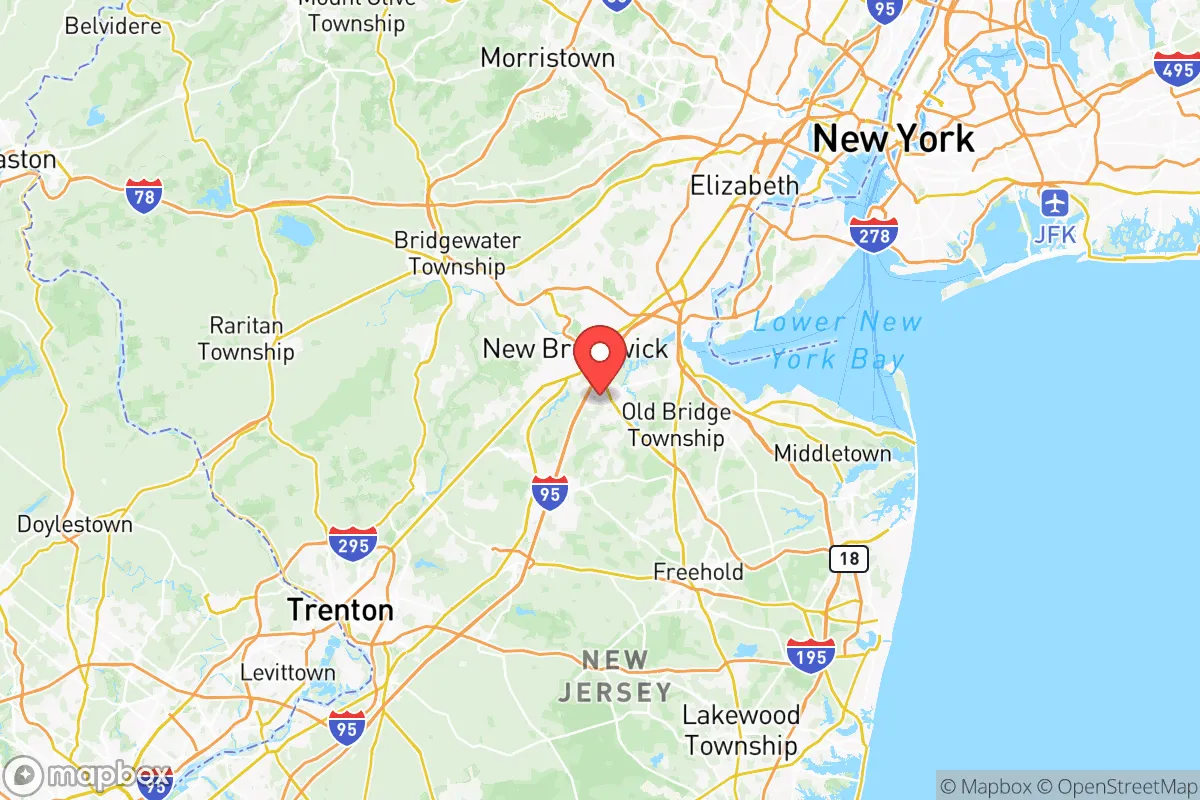
Middlesex County sits in central New Jersey, roughly midway between New York City and Philadelphia, placing it within the Northeast megalopolis, a primary target corridor for any major conflict or cascading disaster. The county’s defining natural feature is the Raritan River, which bisects the area and provides a freshwater source, but also serves as a potential contamination vector from upstream industrial sites. The terrain is mostly flat to gently rolling, with the Pine Barrens to the south offering some undeveloped buffer, but the county itself is heavily suburbanized. The Raritan Bay coastline to the east exposes the county to storm surge and sea-level rise, a growing concern for long-term habitability. For a relocator, the lack of significant elevation, dense forest cover, or natural chokepoints means defensibility is poor. The county’s real advantage is its proximity to major transportation arteries—Interstates 95, 287, and the New Jersey Turnpike—which could be used for rapid evacuation, but these same routes become impassable during a mass exodus.
Risks, exposures, and proximity to fallout-relevant landmarks
This is where Middlesex County’s strategic assessment turns sharply negative. The county is home to several high-value targets that make it a likely secondary or tertiary impact zone. Port Newark-Elizabeth, one of the busiest container ports on the East Coast, lies just north in Union County, but its supply chain effects ripple directly through Middlesex. The ExxonMobil Bayway Refinery in Linden (adjacent to Middlesex) and the Phillips 66 Bayway Refinery are massive chemical and petroleum complexes that would be primary targets in a conflict or could cause catastrophic secondary disasters from accidents or sabotage. Within Middlesex itself, the Middlesex County Utilities Authority and numerous chemical storage facilities along the Raritan River present ongoing contamination risks. The county also hosts Joint Base McGuire-Dix-Lakehurst partially within its borders—a major military installation that would be a high-priority target in any kinetic conflict, drawing fallout and potential ground operations. For the prepper, living within 20 miles of these assets means accepting a high probability of being in a blast, fallout, or civil unrest zone. The dense suburban population—over 860,000 people—means that any event triggering a panic would result in gridlocked roads and resource competition within hours.
Practical resilience for a relocator: food, water, energy, and defensibility
For a single individual or family committed to staying in Middlesex County despite the risks, practical resilience requires a layered approach. Water access is the strongest point: the Raritan River and its tributaries (the Millstone, Lawrence Brook, and South River) provide surface water, but all require heavy filtration and boiling due to agricultural runoff and industrial contamination. Food resilience is poor—the county has limited farmland, with most agriculture concentrated in the southern portion near Monroe Township and Cranbury, where some small farms and nurseries exist. The Middlesex County Farmers Market in East Brunswick is a seasonal resource, but year-round food security would depend on stockpiling or extensive gardening, which is difficult in typical suburban lots. Energy resilience is a mixed bag: the grid is reliable in normal times but vulnerable to cascading failures from storms or cyberattacks. Solar with battery backup is feasible on many homes, but local permitting can be slow. Defensibility is the weakest link—most neighborhoods are open, with easy vehicle access and limited natural barriers. The best options for a relocator would be a property on a cul-de-sac near the Pine Barrens edge in southern Middlesex (around Jamesburg or Helmetta), where wooded lots and lower density offer slightly better concealment and escape routes. However, no location in the county provides true standoff from the masses.
The overall strategic picture for Middlesex County is one of calculated risk for the conservative prepper. It is not a retreat location—it is a high-density, high-target zone where resilience is possible only with significant preparation, financial resources, and a willingness to operate within a compromised environment. The county’s advantages—access to jobs, healthcare, and infrastructure—are precisely what make it dangerous in a crisis. For a relocator seeking true security, the recommendation would be to look further west into Pennsylvania or south into the less populated parts of the Pine Barrens. But if family or work ties bind you to central New Jersey, Middlesex County can be made workable with a focus on water filtration, food stockpiling, off-grid energy, and a pre-planned evacuation route to the Delaware River crossings. Just don’t mistake convenience for safety—this is a place to endure, not to thrive, when the lights go out.

* Values derived from national, state, county, city and local statistics and may differ in a specific area. Last updated: 2026-05-16T08:26:09.000Z
Narrative content on this page is AI-generated and may contain mistakes. Verify any details that matter before acting on them.
ReloMaps may earn a commission from affiliate links at no extra cost to you.

