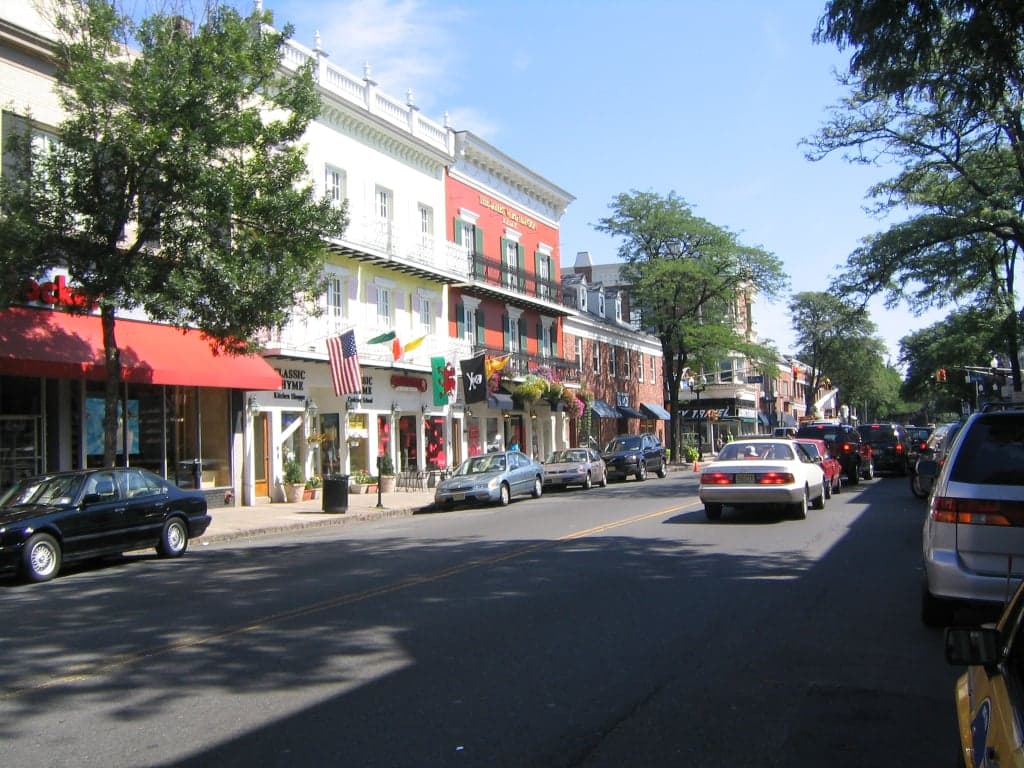
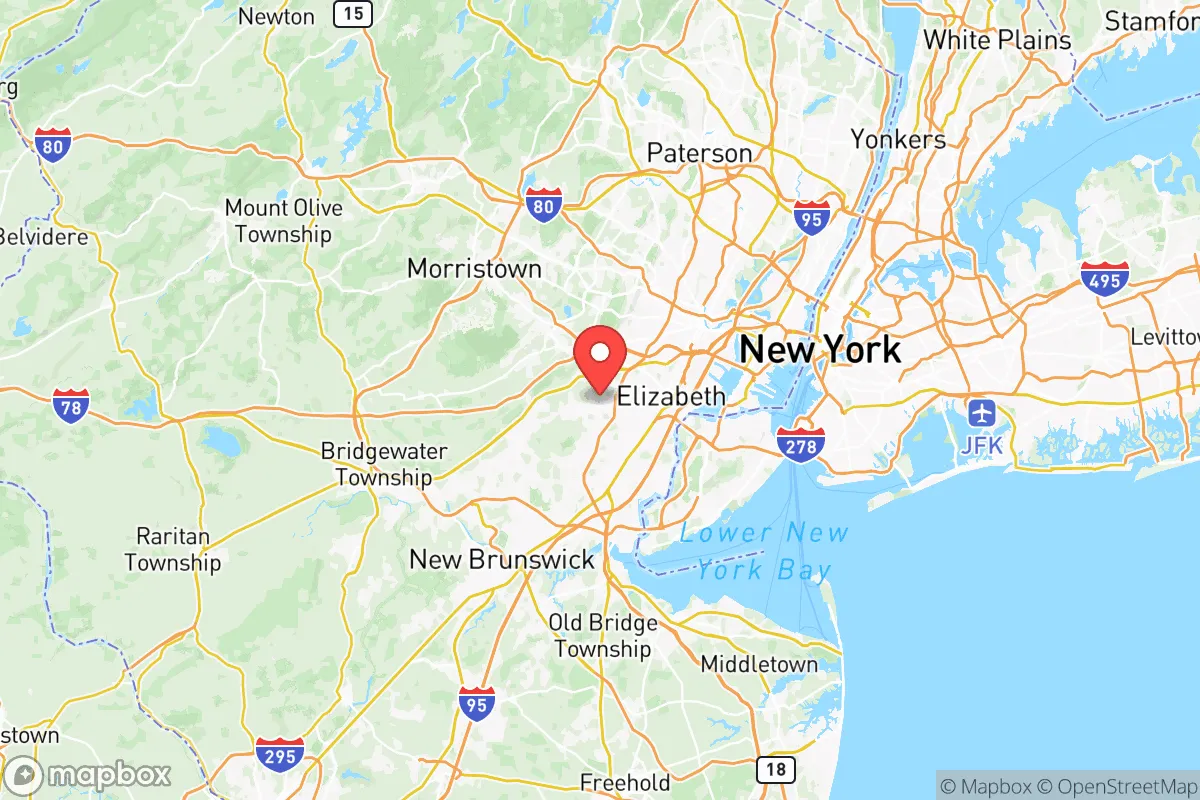
Photo: Wikipedia
Personal Sovereignty in Union County
Viable for self-reliance. Generally workable, though some barriers may limit total independence.
What does Personal Sovereignty tell us?
Personal Sovereignty measures your capacity for self-reliance and independence with minimal government friction. Higher scores mean fewer barriers between you and the way you want to live... but it assumes you have the space you need and good neighbors.
What does this tell us?
Personal Sovereignty measures your capacity for self-reliance and independence with minimal government friction. Higher scores mean fewer barriers between you and the way you want to live... but it assumes you have the space you need and good neighbors.
State Policy
Energy independence: Importer (8% of energy produced in-state)
Personal Liberty
Homesteading

Personal Liberty Analysis
Union County, New Jersey, presents a challenging environment for personal sovereignty, ranking among the most densely populated and heavily regulated counties in the nation. For the conservative-leaning individual or family prioritizing autonomy, self-reliance, and minimal government overreach, this area demands a clear-eyed assessment: the state-level regulatory apparatus is thick, and local enforcement varies significantly from the urban core of Elizabeth to the more suburban enclaves like Westfield and Summit. While the county offers proximity to economic opportunity, the trade-off for personal freedom is substantial, with state preemption limiting local flexibility on everything from firearms to land use.
Tax burden and regulatory posture in Union County
New Jersey carries the highest property tax burden in the United States, and Union County is no exception. The average effective property tax rate hovers around 2.3%, meaning a home valued at $400,000 carries an annual tax bill near $9,200. This is a direct claim on personal capital that funds a state apparatus with expansive regulatory reach. Towns like Plainfield and Linden have seen property tax increases outpace income growth, while affluent Summit and Westfield maintain high rates but deliver services that some residents view as value for the cost. The state's regulatory posture is aggressive: New Jersey imposes strict environmental regulations, building codes, and land-use rules that can delay or block home-based businesses, accessory dwelling units, and even basic renovations without permits. For the prepper or homesteader, the state's Uniform Construction Code and Department of Environmental Protection oversight mean that installing a backup generator, rainwater catchment system, or solar array requires navigating a thicket of approvals. The overall tax and regulatory climate in Union County is best described as high-cost, low-flexibility—a significant drag on personal sovereignty.
Self-defense and gun law specifics in Union County
New Jersey's gun laws are among the most restrictive in the country, and Union County residents must operate within a framework that the state legislature has deliberately tightened. The state requires a Firearms Purchaser Identification Card (FPID) for long guns and a separate permit for handguns, each involving background checks, fingerprinting, and references. The 2022 "Gun Safety" law (Chapter 131) further restricted carry permits, requiring a "justifiable need" standard that effectively ended constitutional carry. In practice, obtaining a carry permit in Union County can take 6-12 months and involves a $200+ fee, a mental health records check, and a firearms training course. Towns like Elizabeth and Plainfield have higher crime rates and more restrictive local ordinances regarding firearm storage and transport, while Berkeley Heights and New Providence tend to have more gun-friendly sheriffs who process applications efficiently. However, even in these suburban areas, the state's ban on "assault firearms" and high-capacity magazines (over 10 rounds) means that common self-defense platforms like AR-15s are effectively illegal. For the survivalist, this creates a stark reality: self-defense options are limited, and legal compliance requires significant time and money. The state's red flag law (Extreme Risk Protective Order) allows for temporary firearm seizure without criminal charges, a tool that critics argue is ripe for abuse in politically charged environments.
Self-reliance and homesteading viability in Union County
Homesteading and off-grid living face severe constraints in Union County due to high population density and restrictive zoning. The county's average lot size is 0.2 acres in urban areas like Elizabeth and Hillside, rising to only 0.5-1 acre in suburbs like Scotch Plains and Fanwood. Raising livestock is heavily regulated: chickens are permitted in some towns but require permits and setback distances, while goats, pigs, or larger animals are generally banned in residential zones. Off-grid systems face near-insurmountable hurdles. Solar panels require building permits and utility interconnection agreements; rainwater collection is limited by state law to 100 gallons per property without a DEP permit; and composting toilets are not recognized as a primary sanitation method. The state's Right to Farm Act provides some protections for agricultural operations, but these apply only to properties of 5 acres or more with active farming—a rarity in Union County. For the prepper seeking true self-reliance, the county's infrastructure dependency is a vulnerability: power outages from storms (common in the Northeast) can last days, and the dense grid means backup generators must comply with noise ordinances. The most viable option for a homesteading mindset within Union County is to target the western towns like Mountainside or Springfield, where larger lots and more permissive zoning allow for modest vegetable gardens and small-scale food preservation, but full self-sufficiency remains out of reach.
Personal liberties in Union County: parental rights, medical autonomy, speech, and property
Personal liberties in Union County are shaped by a state government that has increasingly asserted authority over individual and family decisions. Parental rights have been a flashpoint: New Jersey's 2022 "Fairness in Women's Sports Act" and subsequent policies on gender identity in schools have led to conflicts between parents and school boards, particularly in districts like Westfield and Summit, where progressive school boards have implemented policies that some parents view as undermining their authority. Medical autonomy is similarly constrained: New Jersey mandates COVID-19 vaccines for healthcare workers and has a strict vaccine schedule for school attendance, with limited religious exemptions. The state's Medical Aid in Dying for the Terminally Ill Act (2019) reflects a broader trend of state control over end-of-life decisions. Free speech faces subtle but real pressures: the state's Anti-Bullying Bill of Rights has been used to discipline students for off-campus speech, and local ordinances in Elizabeth and Plainfield restrict public gatherings and demonstrations. Property rights are heavily circumscribed by eminent domain powers, which have been used aggressively in Elizabeth for redevelopment projects, displacing homeowners and small businesses. The state's Rent Control laws in many Union County towns further limit what property owners can do with their investments. For the conservative individual, the cumulative effect is a sense that the state views personal sovereignty as secondary to collective goals, with local governments acting as enforcers rather than buffers.
Overall, Union County offers a low-to-moderate level of personal sovereignty compared to other regions in the United States. While it provides economic opportunity and access to New York City, the trade-offs in tax burden, regulatory density, gun restrictions, and limits on self-reliance are substantial. For the prepper or survivalist, the county's dense population and infrastructure dependency create vulnerabilities that are hard to mitigate within the legal framework. Those seeking greater autonomy would find more favorable conditions in rural areas of Pennsylvania, upstate New York, or the Midwest, where property taxes are lower, gun laws are more permissive, and zoning allows for genuine self-sufficiency. Union County is best viewed as a place to build wealth and connections, not a long-term haven for personal sovereignty.

* Values derived from national, state, county, city and local statistics and may differ in a specific area. Last updated: 2026-05-18T12:37:20.000Z
Narrative content on this page is AI-generated and may contain mistakes. Verify any details that matter before acting on them.
ReloMaps may earn a commission from affiliate links at no extra cost to you.

