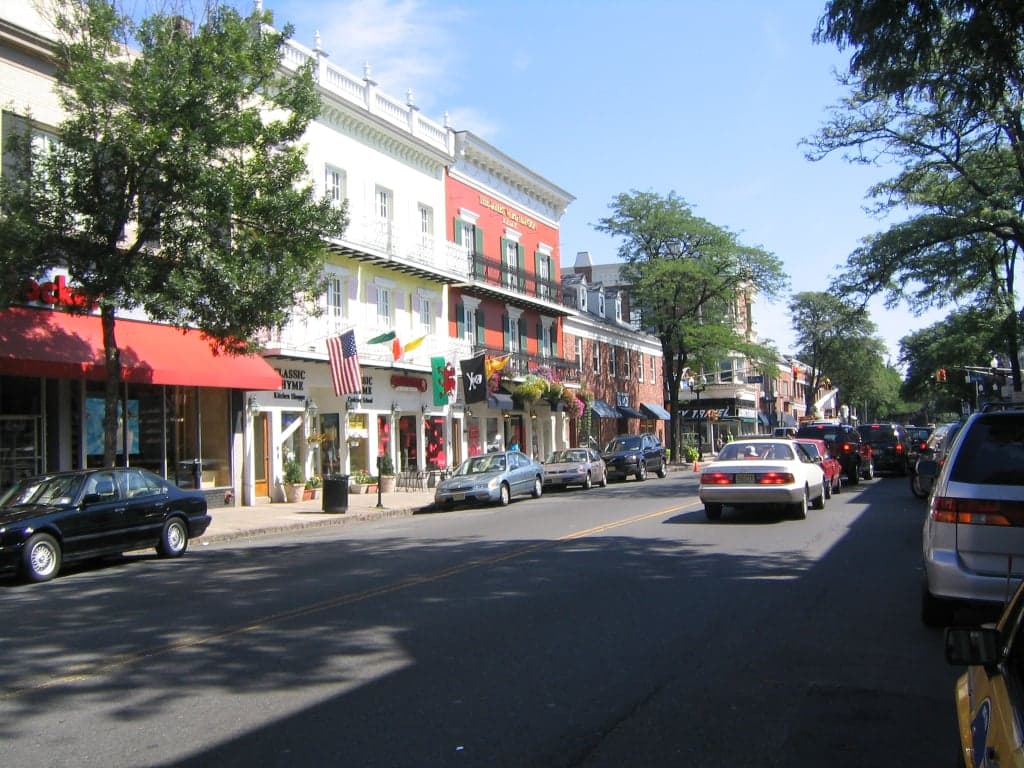
Photo: Wikipedia
Political ClimatePolitical Climate in Union County
Showing district-level results — no local-only data available.
Local Political AnalysisPolitical Analysis of Union County
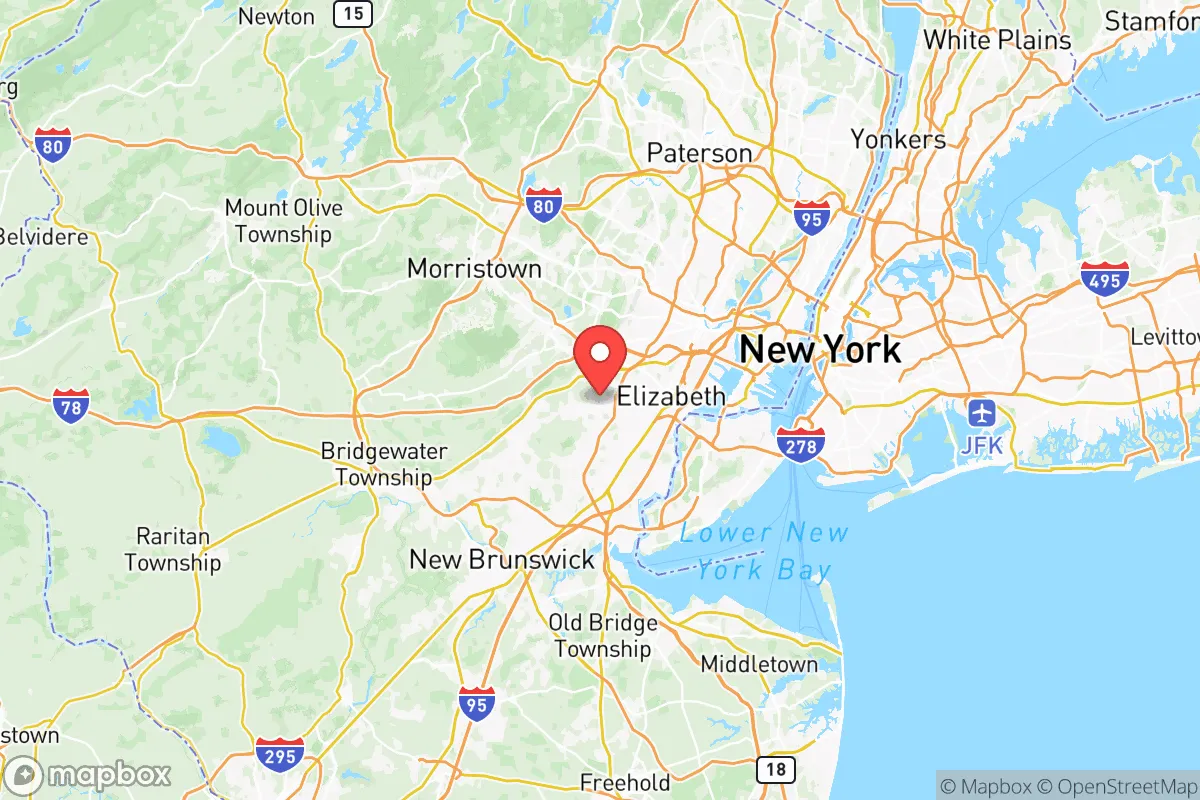
Union County has been a Democratic stronghold for decades, and the numbers back it up—a Cook PVI of D+27 makes it one of the bluest counties in New Jersey, which itself leans D+5. But if you’ve lived here as long as I have, you know the political map isn’t a single shade of blue. Towns like Elizabeth and Plainfield are deep-blue machines, where progressive policies on taxes, zoning, and public safety have been the norm for years. Meanwhile, places like Cranford, Westfield, and Summit still hold onto a more moderate, fiscally conservative streak—though even those communities have shifted leftward over the past decade. The swing precincts you’ll find in Clark and Roselle Park used to be toss-ups, but now they’re reliably Democratic, which tells you something about the direction things are heading.
How it compares
Compared to the rest of New Jersey, Union County is a political outlier. The state as a whole is D+5, meaning it’s competitive enough that Republicans can still win statewide races if they run the right candidate—think Chris Christie’s two terms. But here in Union County, the Democratic machine is so entrenched that a Republican candidate rarely cracks 40% in a countywide race. That D+27 PVI isn’t just a number; it translates into a local government that’s increasingly comfortable with progressive experiments. You see it in the push for higher property taxes to fund social programs, in the school boards adopting controversial curriculum changes, and in the county’s embrace of sanctuary policies that limit cooperation with federal immigration enforcement. The contrast with more purple counties like Morris or Ocean is stark—those places still have a healthy two-party debate. Here, it’s mostly one-party rule, and that’s concerning for anyone who values limited government and personal freedom.
What this means for residents
For conservatives and libertarians living in Union County, the practical effect is a constant feeling of being on the defensive. Local ordinances on everything from short-term rentals to mask mandates get passed with little opposition, and the county’s Democratic leadership often uses its majority to fast-track policies that would struggle in a more balanced environment. Property taxes are already among the highest in the nation, and the county’s progressive spending priorities—like expanded public transit subsidies and affordable housing mandates—only add to the burden. If you’re a small business owner or a homeowner trying to keep your head above water, the political climate here can feel like a slow squeeze. The silver lining is that towns like Cranford and Westfield still have active Republican clubs and local candidates who fight for fiscal sanity, but they’re swimming against a strong tide.
One cultural distinction that stands out is Union County’s approach to public safety and policing. While many suburban counties have maintained a tough-on-crime stance, Union County’s leadership has pushed for criminal justice reform and alternatives to prosecution, even as property crime rates tick up in certain areas. The county prosecutor’s office has been criticized for declining to charge certain low-level offenses, which some residents see as a green light forerunner to the kind of progressive prosecution that’s plagued larger cities. For anyone who believes in personal responsibility and the rule of law, this trend is a red flag. Looking ahead, the county’s demographic shifts—more young professionals and out-of-state transplants moving into formerly red towns—suggest the political pendulum will keep swinging left. If you’re considering a move here, know that the local government’s appetite for regulation and taxation is only growing, and your voice as a conservative will be a minority one.

State Political ClimatePolitical Climate in New Jersey
State Political AnalysisPolitical Environment in the State
New Jersey carries a Cook PVI of D+5, meaning it votes about five points more Democratic than the national average in presidential elections. But if you’ve lived here as long as I have, you know that number doesn’t capture the full picture. The state has drifted leftward over the past two decades, driven by the urban cores of Newark and Jersey City and the densely populated suburbs closest to New York City, yet the 2021 gubernatorial race — where Democrat Phil Murphy beat Republican Jack Ciattarelli by just three points — showed that the blue wave has real limits, especially when voters focus on taxes and freedom.
Urban vs. rural divide
The political map of New Jersey is a study in contrasts. The northeastern corridor — Newark, Jersey City, Hoboken, and much of Bergen County — is solidly Democratic, powered by dense populations, public-sector unions, and a strong progressive activist base. These areas deliver massive margins that offset the rest of the state. Head west or south, and the landscape changes fast. Sussex County and Hunterdon County in the northwest are reliably Republican, with rural and exurban voters who feel increasingly alienated from Trenton’s one-party rule. Ocean County, anchored by Toms River, is another conservative stronghold, where retirees and working-class families have pushed back against tax hikes and COVID mandates. The real battleground is the suburban ring — places like Monmouth County and parts of Burlington County — where independent voters decide elections. Those voters swung toward Murphy in 2017 and 2021, but the margins are razor-thin, and any shift in sentiment could flip the state’s trajectory.
Policy environment
New Jersey’s policy environment is a cautionary tale for anyone who values limited government. The state has the highest property taxes in the nation, with an average effective rate above 2.2%, and a progressive income tax that tops out at 10.75% for earners over $1 million. The regulatory posture is heavy: strict environmental rules, a $15 minimum wage, and some of the nation’s toughest gun laws, including a may-issue carry regime that became even more restrictive after the Bruen decision. On education, Trenton pours money into urban districts while suburban schools face funding cuts under the S2 formula, sparking resentment in communities like Cherry Hill and Montclair. Healthcare is dominated by the state’s exchange and Medicaid expansion, and election laws have shifted toward universal mail-in voting and same-day registration — changes that critics argue erode ballot integrity. For a conservative newcomer, the tax burden alone is a dealbreaker for many.
Trajectory & freedom
Over the past five years, New Jersey has become less free by nearly any measure. The COVID era was a flashpoint: Governor Murphy imposed some of the nation’s longest school closures and strictest business mandates, and the state’s emergency powers law gave the executive branch sweeping authority with minimal legislative check. On gun rights, the legislature passed a sweeping carry reform bill in 2022 that created “sensitive places” so broad they effectively nullify the Bruen ruling — a move that’s now being challenged in court. Parental rights have taken hits too: the state’s curriculum standards include LGBTQ+ content in elementary grades, and several districts have faced battles over library books and gender policy. Property rights are constrained by strong zoning laws and rent control in cities like Jersey City and Newark. The only bright spot for freedom advocates is the 2023 bail reform rollback of some COVID-era emergency powers, but the
* Values derived from national, state, county, city and local statistics and may differ in a specific area. Last updated: 2026-05-18T12:37:20.000Z
Narrative content on this page is AI-generated and may contain mistakes. Verify any details that matter before acting on them.
ReloMaps may earn a commission from affiliate links at no extra cost to you.

