 Popular
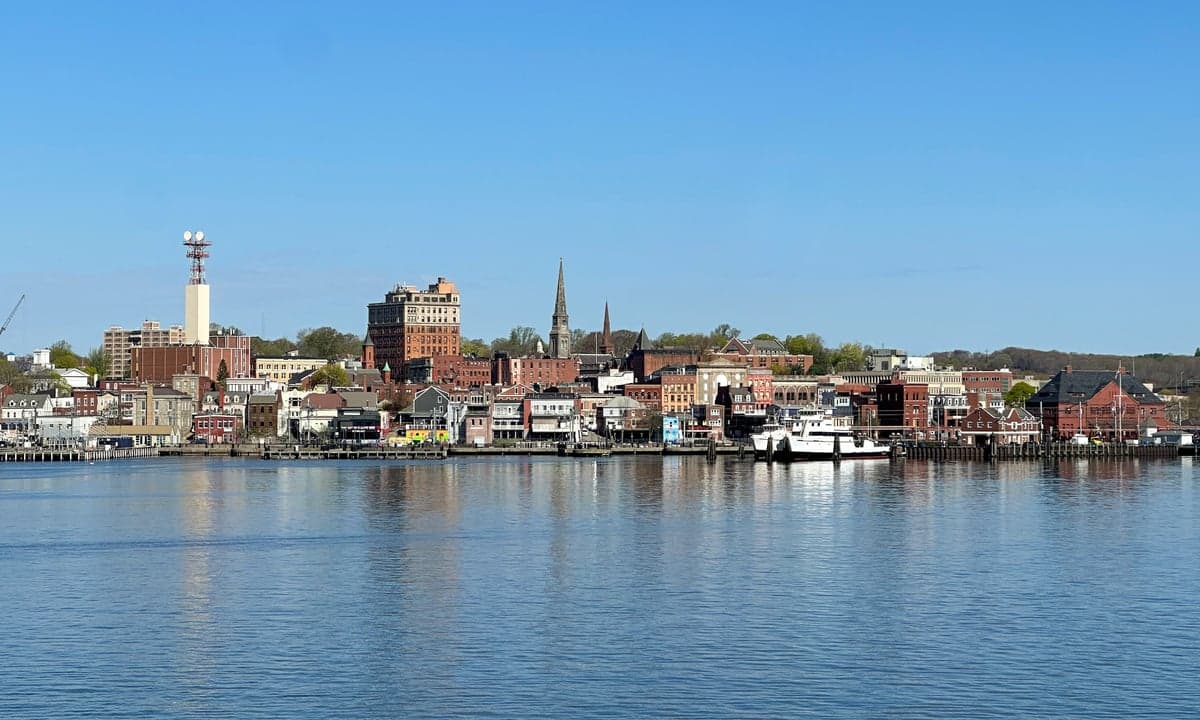
Photo: Wikipedia
Demographics of New London, CT
Affluence Level in New London, CT
A below-average socioeconomic profile. Incomes, home values, and educational attainment trail the U.S., with higher poverty and unemployment.
People of New London, CT
New London, Connecticut, is a small coastal city of 27,199 residents with a dense, urban feel and a notably diverse population shaped by centuries of maritime trade and military presence. Its identity today is a blend of a historic Yankee seaport, a working-class industrial hub, and a growing Hispanic-majority community, creating a demographic profile distinct from much of suburban New England. The city is characterized by a high proportion of renters, a significant foreign-born population (10.8%), and a racial and ethnic mix where no single group holds an absolute majority, with White residents at 44.8% and Hispanic residents at 34.4%.
How the city was settled and grew
New London was founded in 1646 by English Puritan colonists from the Massachusetts Bay Colony, who were drawn by the deep, protected harbor of the Thames River. The original settlement clustered around what is now the Bankside neighborhood, a waterfront area that became the center of a thriving shipping and whaling economy. By the 18th and 19th centuries, the city’s maritime prosperity attracted waves of immigrants: Irish laborers arrived in the 1840s and 1850s to build the railroad and work the docks, settling in the Starr Street and Green’s Harbor neighborhoods. German and Italian immigrants followed in the late 1800s, finding work in the city’s shipyards, factories, and the burgeoning submarine base across the river in Groton. These groups established ethnic enclaves in the South End and along Bank Street, building churches, social clubs, and small businesses that anchored the city’s working-class character. The U.S. Navy’s establishment of the Submarine Base New London in 1916 solidified the city’s economic reliance on the military, drawing a steady stream of domestic migrants from across the country through the mid-20th century.
Modern era (post-1965)
The 1965 Hart-Cellar Immigration Act and the subsequent decline of manufacturing reshaped New London’s population dramatically. The city’s White population, which had been the overwhelming majority through the 1950s, began a steady decline as families moved to newer suburbs like Waterford and East Lyme. Into this vacuum came new waves of immigrants. Puerto Ricans began arriving in the 1970s and 1980s, drawn by service jobs at the submarine base and the nearby casinos that opened in the 1990s. They concentrated in the Ocean Beach and Bates Woods areas, establishing a strong Hispanic presence that has grown to 34.4% of the city’s population today. A smaller but notable community of East and Southeast Asian residents (1.6%)—primarily Vietnamese and Filipino—settled near the base and the Fort Trumbull area, often connected to military service. The Black population (13.5%) has deep roots in the city, with families historically concentrated in the Peqout Avenue corridor and the Deshon-Allyn neighborhood, a legacy of both the Great Migration and earlier maritime labor. The foreign-born share of 10.8% is significantly higher than the state average, reflecting ongoing immigration from Latin America and, to a lesser extent, from India (0.7%) and other regions.
The future
New London’s population is trending toward a Hispanic-plurality future, with the White share continuing to decline and the Hispanic share rising steadily. The city is not homogenizing; rather, it is tribalizing into distinct enclaves, with the Hispanic community concentrated in the southern and western neighborhoods, Black residents in the central corridor, and White residents increasingly clustered in the historic North End and the newer waterfront developments around Fort Trumbull. The immigrant community, particularly from Puerto Rico and other Latin American countries, is growing and shows signs of generational persistence rather than rapid assimilation into a single civic identity. The city’s college-educated share (28.9%) is below the national average, but recent investments in the downtown arts district and the redevelopment of the State Pier are attracting a small but visible cohort of younger, professional residents. Over the next 10–20 years, New London will likely become a majority-Hispanic city with a stable Black minority and a shrinking White population, while the East/Southeast Asian and Indian communities remain small but stable, tied to the submarine base and healthcare jobs.
For a conservative-leaning individual or family considering a move, New London offers a genuinely diverse, urban environment with a strong military and maritime heritage, but it is also a city grappling with the challenges of deindustrialization, a high poverty rate, and a public school system that struggles to meet the needs of its changing population. The city is becoming more Hispanic and more working-class, with a distinct cultural flavor that sets it apart from the surrounding suburbs. It is not a place of rapid gentrification or homogenization, but rather a city where distinct ethnic and economic enclaves persist, and where newcomers should expect to navigate a community shaped by deep historical roots and ongoing demographic change.

* Values derived from national, state, county, city and local statistics and may differ in a specific area. Last updated: 2026-04-19T07:22:29.000Z
Narrative content on this page is AI-generated and may contain mistakes. Verify any details that matter before acting on them.
ReloMaps may earn a commission from affiliate links at no extra cost to you.

