 Popular

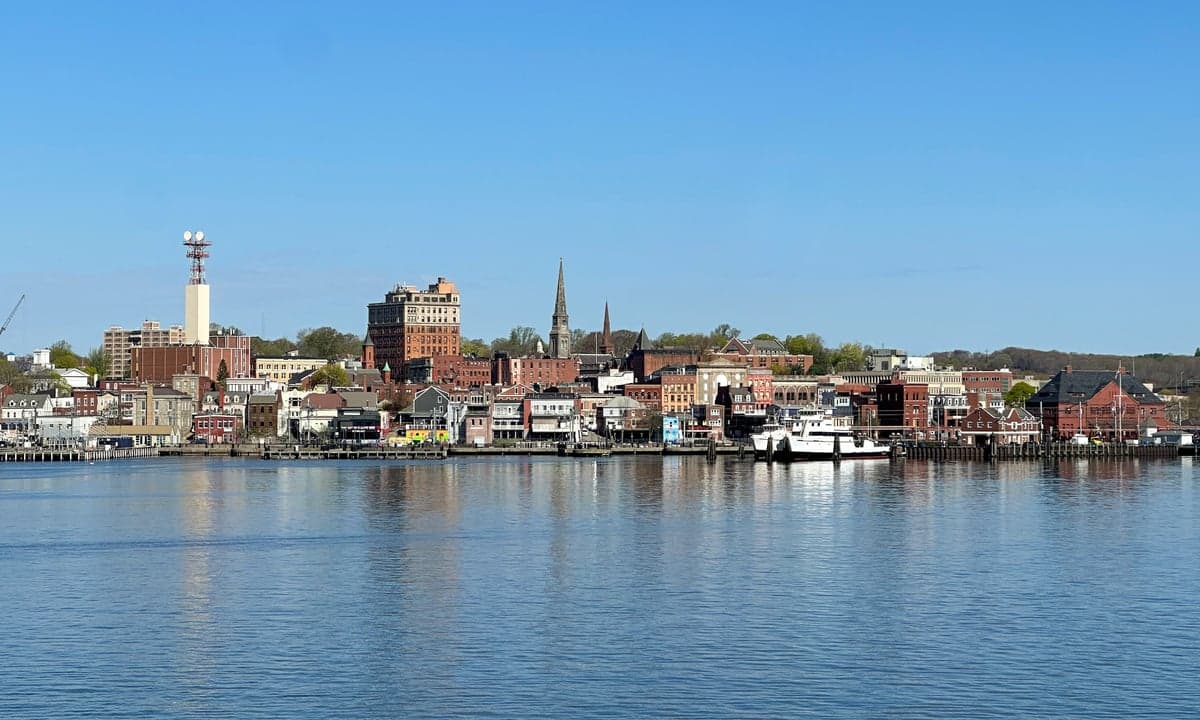
Photo: Wikipedia
Personal Sovereignty in New London, CT
Viable for self-reliance. Generally workable, though some barriers may limit total independence.
What does Personal Sovereignty tell us?
Personal Sovereignty measures your capacity for self-reliance and independence with minimal government friction. Higher scores mean fewer barriers between you and the way you want to live... but it assumes you have the space you need and good neighbors.
What does this tell us?
Personal Sovereignty measures your capacity for self-reliance and independence with minimal government friction. Higher scores mean fewer barriers between you and the way you want to live... but it assumes you have the space you need and good neighbors.
State Policy
Energy independence: Importer (5% of energy produced in-state)
Personal Liberty
Homesteading

Personal Liberty Analysis
New London, Connecticut, presents a challenging environment for personal sovereignty, where state-level policies significantly constrain individual autonomy compared to more liberty-oriented regions. While the city itself offers a lower cost of entry for coastal Connecticut, residents face a dense web of state mandates on taxation, self-defense, medical choice, and property use that systematically reduce the scope of independent decision-making. For a survivalist or prepper evaluating this area, the core calculation is whether the strategic advantages of coastal access and lower property prices outweigh the persistent, top-down control exerted by Hartford and local municipal codes.
Tax burden and regulatory posture: how state policy impacts your wallet and freedom
Connecticut’s tax burden is among the highest in the nation, and New London residents feel this acutely. The state imposes a progressive income tax with rates reaching 6.99%, a sales tax of 6.35% (with no local option to reduce it), and some of the highest property taxes in the country. New London’s mill rate hovers around 45 mills, meaning a property assessed at $200,000 carries an annual tax bill of roughly $9,000. This is a heavy, recurring drain on any prepper’s budget—funds that could otherwise go toward land, supplies, or training are instead funneled to state and local government. The regulatory posture is equally aggressive: Connecticut has a statewide building code with strict energy and environmental add-ons, a complex permitting process for any structural changes, and a notoriously burdensome business registration system. For someone seeking to operate a home-based trade, run a small farm, or even install a backup generator, the paperwork and fees can be prohibitive. The state also mandates a minimum wage of $15.69 per hour (as of 2025), which, while appealing to workers, raises costs for any small enterprise and reduces flexibility for self-employed individuals. In short, the tax and regulatory climate in New London is designed to extract maximum revenue and control, leaving little room for the kind of financial independence that underpins true personal sovereignty.
Self-defense and gun law specifics: what you can and cannot own in New London
For anyone prioritizing the right to keep and bear arms, New London is a deeply restrictive jurisdiction. Connecticut requires a permit to purchase any handgun or long gun, a process that involves a background check, a mandatory safety course, and a waiting period. The state also maintains a ban on so-called "assault weapons" (defined by a feature-based test that includes common semi-automatic rifles like the AR-15), limits magazine capacity to ten rounds, and requires registration of all firearms. Open carry is effectively illegal without a permit, and concealed carry permits are issued at the state level but subject to "may issue" discretion in practice—meaning local authorities can deny a permit based on subjective "suitability" standards. Stand-your-ground laws do not exist in Connecticut; instead, the state imposes a duty to retreat in public spaces before using deadly force, even in self-defense. Castle doctrine protections apply only inside one’s home, and even then, the burden of proof falls heavily on the defender. For a prepper, this means that stockpiling standard defensive rifles, carrying a concealed firearm for daily protection, or even keeping a high-capacity magazine for a home-defense pistol are all illegal. The legal landscape actively discourages armed preparedness and places the state’s authority above an individual’s right to self-defense.
Self-reliance and homesteading viability: lot sizes, zoning, and off-grid feasibility
New London’s urban and suburban character makes traditional homesteading difficult. The city is densely built out, with typical residential lots ranging from 5,000 to 10,000 square feet—far too small for meaningful food production or livestock. Zoning codes prohibit keeping chickens, goats, or bees in most residential districts, and any attempt to raise animals for meat or eggs will likely draw complaints and code enforcement visits. Off-grid living is essentially impossible: Connecticut law requires all habitable dwellings to be connected to the electrical grid or an approved alternative (like solar with battery backup), and the state’s building code mandates specific insulation, ventilation, and septic standards that make independent systems costly and legally precarious. Rainwater collection is technically legal but restricted to non-potable uses, and any well or septic system must be permitted and inspected by the local health department. For a prepper seeking to reduce reliance on municipal infrastructure, New London offers little room to maneuver. The best strategy here is to view the city as a base for earning income while maintaining a separate, more rural property elsewhere—perhaps in a less restrictive state like New Hampshire or Maine—where actual self-reliance is feasible.
Personal liberties: parental rights, medical autonomy, speech, and property
Connecticut’s approach to personal liberties is consistently top-down, with the state asserting broad authority over family and individual decisions. Parental rights are notably weak: the state has a mandatory vaccination schedule for school attendance (with only narrow medical exemptions), and during the COVID-19 pandemic, it imposed mask mandates and school closures without parental input. Medical autonomy is similarly constrained—Connecticut has a state-run health insurance exchange, mandates coverage for a wide range of services, and has actively restricted the use of alternative or unapproved treatments. The state also has a "red flag" law that allows authorities to seize firearms based on a complaint without a criminal conviction, a direct infringement on due process. Free speech is protected under the First Amendment, but local ordinances in New London can limit signage, leafleting, and public gatherings in certain zones. Property rights are heavily circumscribed by zoning, environmental regulations, and historic district commissions that can dictate paint colors, fence heights, and even the type of roofing material you can use. For a conservative-leaning individual who values the right to raise children without state interference, make personal medical decisions, speak freely, and control their own property, New London feels like a place where the government is constantly looking over your shoulder.
Overall, New London’s personal sovereignty profile is poor relative to most of the United States, and especially compared to states in the South, Midwest, or Mountain West. The combination of high taxes, restrictive gun laws, limited homesteading potential, and weak parental and medical autonomy creates an environment where individual freedom is systematically subordinated to state authority. For a prepper or survivalist, this city might serve as a temporary base for coastal access or employment, but it is not a place to build a long-term, self-reliant life. If you are serious about maximizing personal sovereignty, you would be better served looking at states like New Hampshire, Idaho, or Texas, where the legal and cultural climate actively supports individual liberty rather than eroding it.

* Values derived from national, state, county, city and local statistics and may differ in a specific area. Last updated: 2026-04-19T07:22:29.000Z
Narrative content on this page is AI-generated and may contain mistakes. Verify any details that matter before acting on them.
ReloMaps may earn a commission from affiliate links at no extra cost to you.

