 Popular
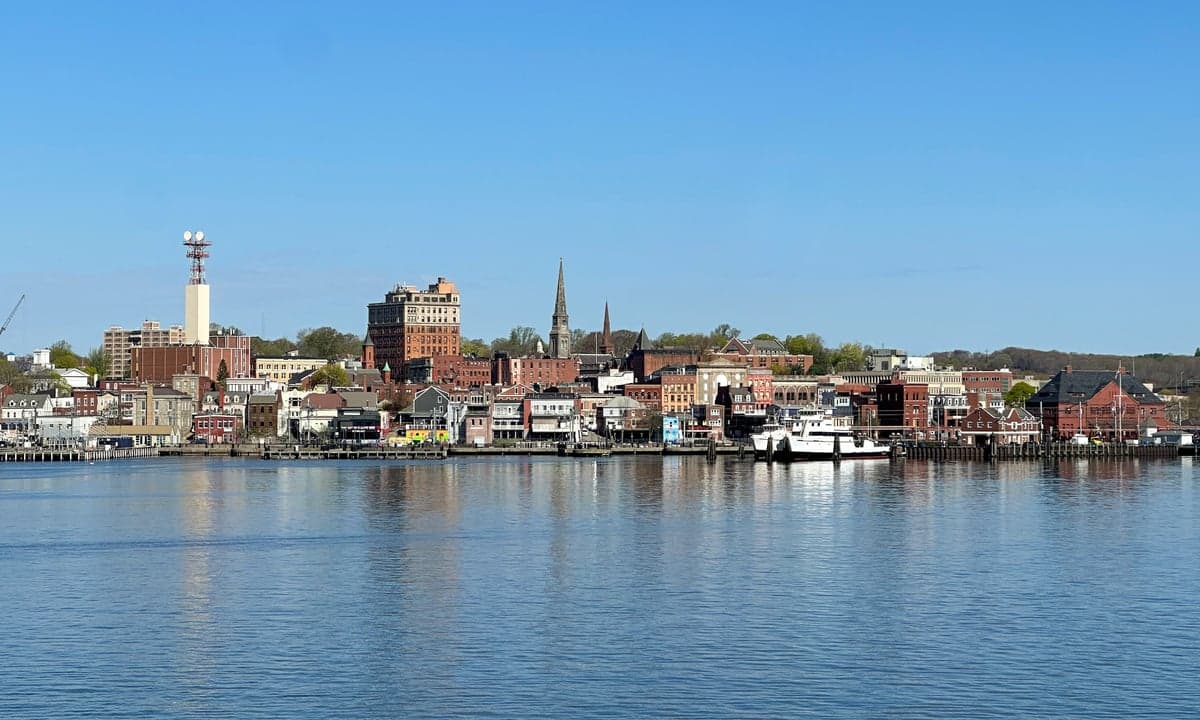
Photo: Wikipedia
Strategic Assessment of New London, CT
High tactical risk. This location is likely close to major population centers, strategic targets, or sits in a high-disaster corridor. A retreat property and careful exit planning is required.
What does the Strategic Assessment tell us?
Our Strategic Assessment grades tactical survivability of an area. Major population centers, military targets, fallout zones, natural disasters, and border exposure all drive risk — lower exposure means a more defensible position in a crisis.
This is heavily inspired by Joel Skousen's Strategic Relocation book. Highly recommended you checkout the book ($)What does this tell us?
Our Strategic Assessment grades tactical survivability of an area. Major population centers, military targets, fallout zones, natural disasters, and border exposure all drive risk — lower exposure means a more defensible position in a crisis.
This is heavily inspired by Joel Skousen's Strategic Relocation book. Highly recommended you checkout the book ($)Strategic Pillars

Key Distances
Regional Safe Places
Below is our recommended "safe zones" in Connecticut and the surrounding area based on our strategic heuristics. For most people, it's unrealistic to live in a “safe zone” full-time due to work, family or other personal reasons. They tend to be more rural. However, many of these areas are perfect for second homes and retreat properties that double as a vacation home or even a short-term rental.
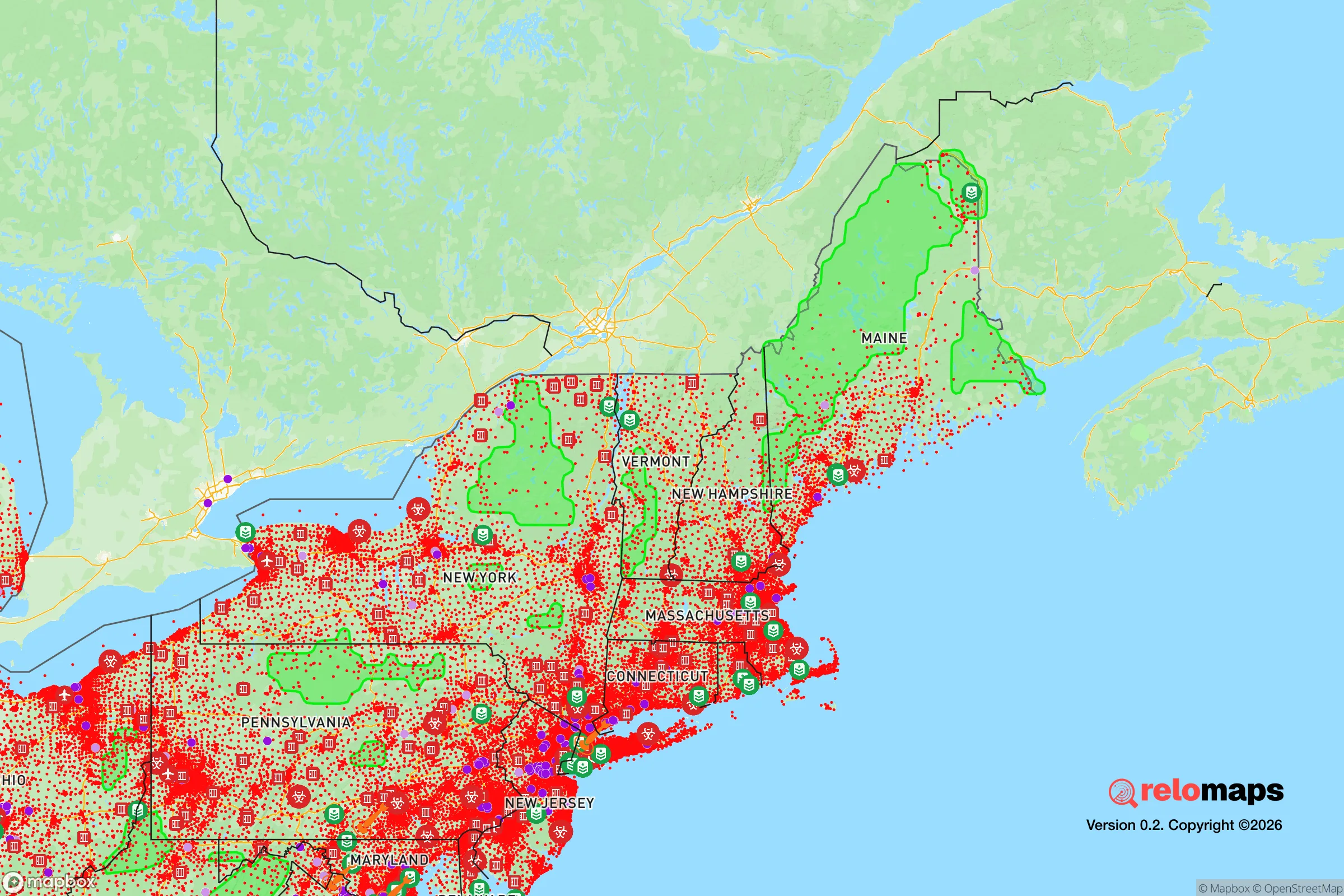
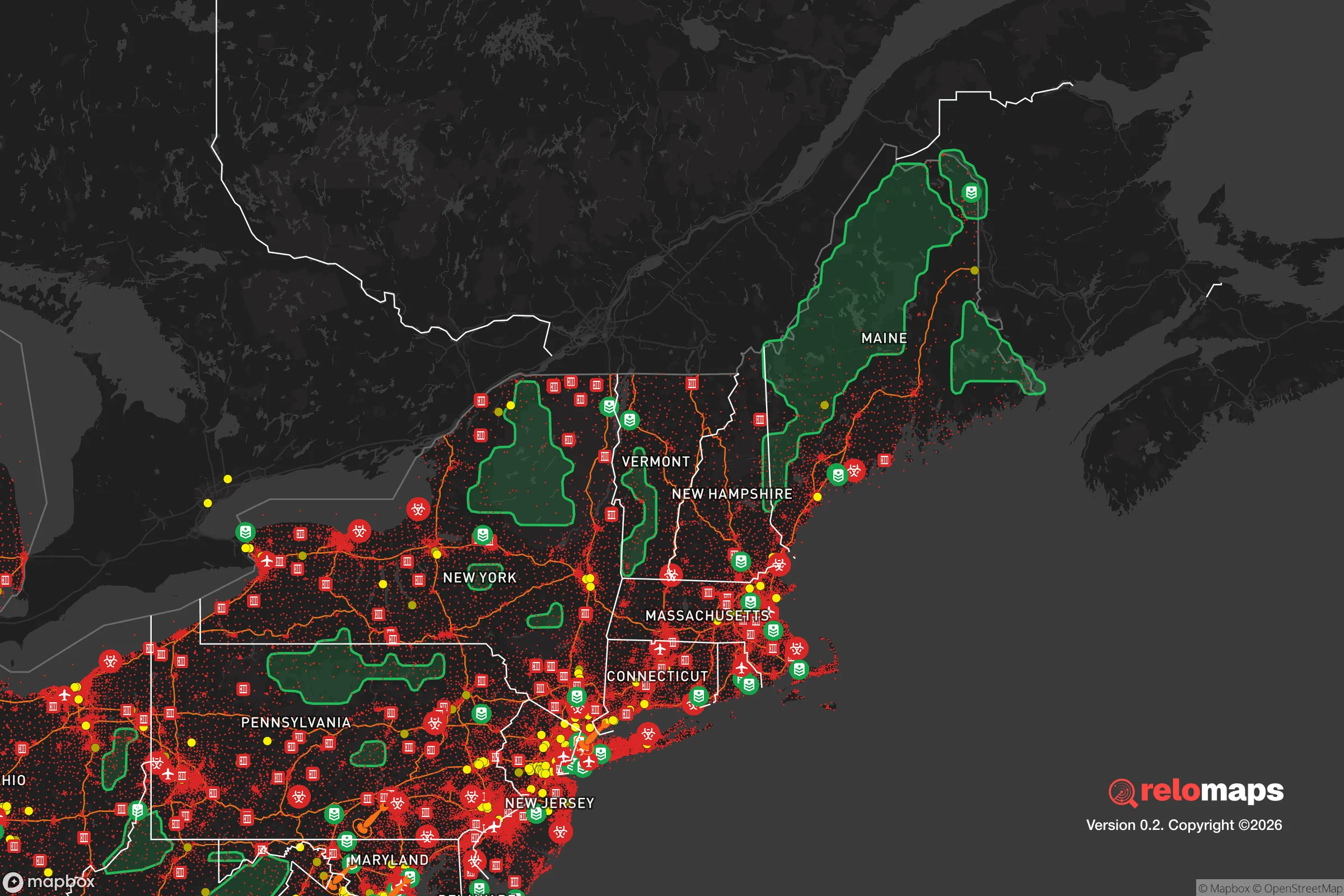


Important Note: For informational purposes only. This does not mean nothing bad ever happens in the green zones. Please use common sense. This is based on public data and modeled with AI. We tried to take a conservative approach but mistakes happen. We update this regularly as new information becomes available.
Solar Generator Recommendations
Backup power matters more here than in safer locations. We've picked three solar generators across budgets and capacity tiers — start with the budget unit if you only need a few essentials, or step up if you want to run a fridge and HVAC for days at a time.

Jackery Portable Power Station Explorer 300
Budget OptionPower on the Go: Weighing only 11 lbs, it's convenient to set up and store with book-sized foldable solar panels

BLUETTI Portable Power Station AC180
Designed for both indoor and outdoor scenarios, AC180 is highly capable as it has a robost capacity and continuous output power.

EF ECOFLOW DELTA Pro Ultra Power Station
Upgraded PickEcoFlow DELTA Pro Ultra is a whole-home energy system designed to grow with your family. Integrated with the Smart Home Panel 2, it scales to meet your evolving energy needs — keeping your home powered, intelligent, and secure through every stage of life.
We earn a commission, at no additional cost to you.
Strategic Assessment Analysis
New London, Connecticut, sits in a precarious strategic position that demands a hard look from anyone serious about resilience. Its location on the Thames River estuary, just three miles from Long Island Sound, offers maritime advantages but also places it within a 40-mile radius of major population centers like Hartford and Providence, and within 100 miles of New York City and Boston. For a prepper or survivalist, this proximity to dense urban zones is a double-edged sword: it provides access to resources in normal times, but in a crisis, it makes New London a likely destination for refugees fleeing those same cities. The city’s own population of roughly 27,000 is small enough to manage, but its role as a regional hub for healthcare, transportation, and the submarine base at Groton means it could become a chokepoint or a target.
Geographic position and natural advantages for long-term survival
New London’s geography is defined by water and modest terrain. The city sits on a deep-water port, which is a significant asset for maritime resupply, fishing, and evacuation by sea if roads become impassable. The Thames River provides a natural barrier to the east, and the surrounding area is a mix of coastal lowlands and rolling hills, with the nearest significant elevation gain about 10 miles north in the Ledyard area. The climate is humid continental, with cold winters averaging 28°F in January and warm summers around 73°F in July, which supports a growing season of roughly 180 days—long enough for subsistence gardening. The region’s natural advantages include abundant freshwater from the Thames and numerous smaller rivers and ponds, plus a coastline that offers shellfish and finfish. However, the soil is rocky and acidic, typical of New England, so large-scale agriculture would require significant amendment and terracing. For a relocator, the key takeaway is that New London is defensible by water but not by elevation; the terrain offers limited concealment or natural fortification against a determined threat.
Risks, exposures, and proximity to fallout-relevant landmarks
The most glaring risk for New London is its proximity to critical infrastructure that would be high-value targets in a conflict or major disaster. The Naval Submarine Base New London in Groton, just across the river, is a primary base for the U.S. Atlantic submarine fleet and home to multiple nuclear-powered submarines. In a war scenario, this base is a top-tier target for a kinetic or cyber attack, and a detonation—even a conventional one—could release radioactive materials or trigger a cascading failure. Additionally, the Millstone Nuclear Power Plant in Waterford, about 8 miles southwest, is a 2,100-megawatt facility that, while well-regulated, represents a catastrophic fallout risk if compromised. The city is also within the blast radius of a potential improvised nuclear device detonated in New York City or Boston, with prevailing winds from the west and southwest carrying fallout directly over southeastern Connecticut. Beyond nuclear threats, New London is vulnerable to hurricanes and nor’easters; the 1938 Great New England Hurricane caused a 15-foot storm surge that inundated downtown, and modern projections show a Category 2 storm could flood 30% of the city. For a prepper, these exposures mean that a retreat to New London requires a robust plan for evacuation or shelter-in-place, with a focus on radiological and flood protection.
Practical resilience for a relocator: food, water, energy, and defensibility
For a single individual or family looking to establish a resilient foothold, New London offers a mixed bag. Water is plentiful—the Thames River is a reliable surface source, but it requires filtration and treatment due to industrial runoff and saltwater intrusion during high tides. The city’s municipal water comes from the Thames River and is treated, but in a grid-down scenario, a private well outside the city limits is far safer. Food security is moderate: the local fishing industry is active, with flounder, lobster, and bluefish available, but the growing season is short, and soil quality is poor. Community gardens exist, but they are not sufficient for a full diet. The area has several farms within a 20-minute drive, but they are not hardened for crisis. Energy resilience is a weak point. The grid is old and prone to outages from storms; the 2011 Halloween nor’easter left 30,000 customers without power for over a week. Solar potential is decent—about 4.5 peak sun hours per day—but winter cloud cover reduces output. Natural gas is available in the city, but propane and wood are the most reliable backup fuels. Defensibility is poor within the city itself. The urban layout is dense, with narrow streets and many choke points like the Gold Star Memorial Bridge, which could be blocked by a single accident or attack. The best defensive posture is to live on the outskirts, such as in the rural areas of Waterford or Montville, where you have more standoff distance and natural cover. The local police force is small (about 80 officers) and would be overwhelmed in a major event, so self-reliance is mandatory. The presence of the Coast Guard Academy and the submarine base means there is a military presence, but that also makes the area a target.
Overall strategic picture for the conservative prepper
New London is not a survivalist paradise, but it is a viable option for someone who values maritime access and is willing to accept significant risk from nearby infrastructure. The city’s strengths—deep-water port, moderate climate, and proximity to resources—are offset by its vulnerability to nuclear fallout, storm surge, and refugee flows from the Northeast Corridor. For a conservative-leaning relocator, the political climate in New London is solidly blue (the city voted 70% for Biden in 2020), which may create cultural friction but is not a survival issue. The broader region, however, has a strong independent streak and a history of self-reliance, particularly in the rural towns north of the city. The bottom line: New London works as a base for a maritime-oriented prepper who has a boat, a well-stocked retreat outside the city limits, and a plan to bug out by sea if the worst happens. For anyone else, the risks from the submarine base and nuclear plant likely outweigh the benefits. If you are serious about long-term resilience, look further inland—toward the Litchfield Hills or the Berkshires—where the population density drops and the fallout risk diminishes. New London is a strategic outpost, not a sanctuary.

* Values derived from national, state, county, city and local statistics and may differ in a specific area. Last updated: 2026-04-19T07:22:29.000Z
Narrative content on this page is AI-generated and may contain mistakes. Verify any details that matter before acting on them.
ReloMaps may earn a commission from affiliate links at no extra cost to you.

