Photo: Wikipedia
Political ClimatePolitical Climate in New Martinsville, WV
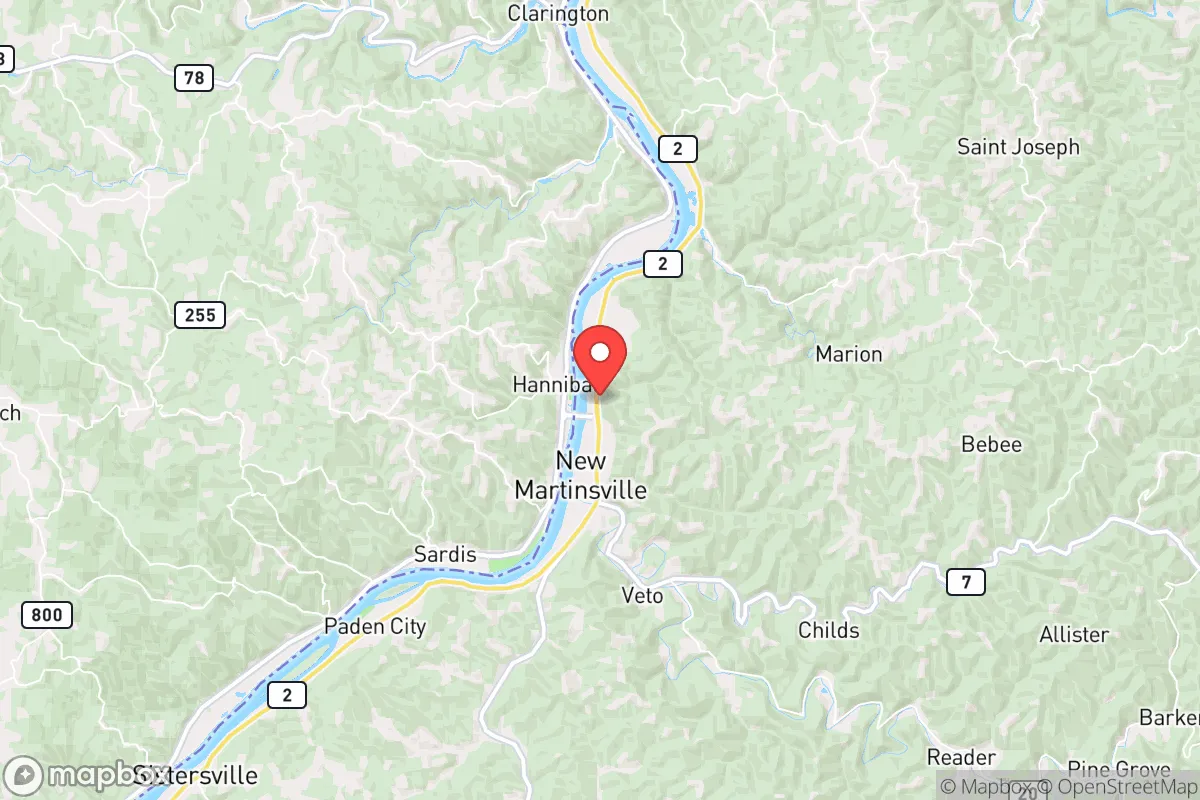
District shown is the primary district for this city’s centroid. Cities may span multiple districts.
Local Political AnalysisPolitical Analysis of New Martinsville, WV
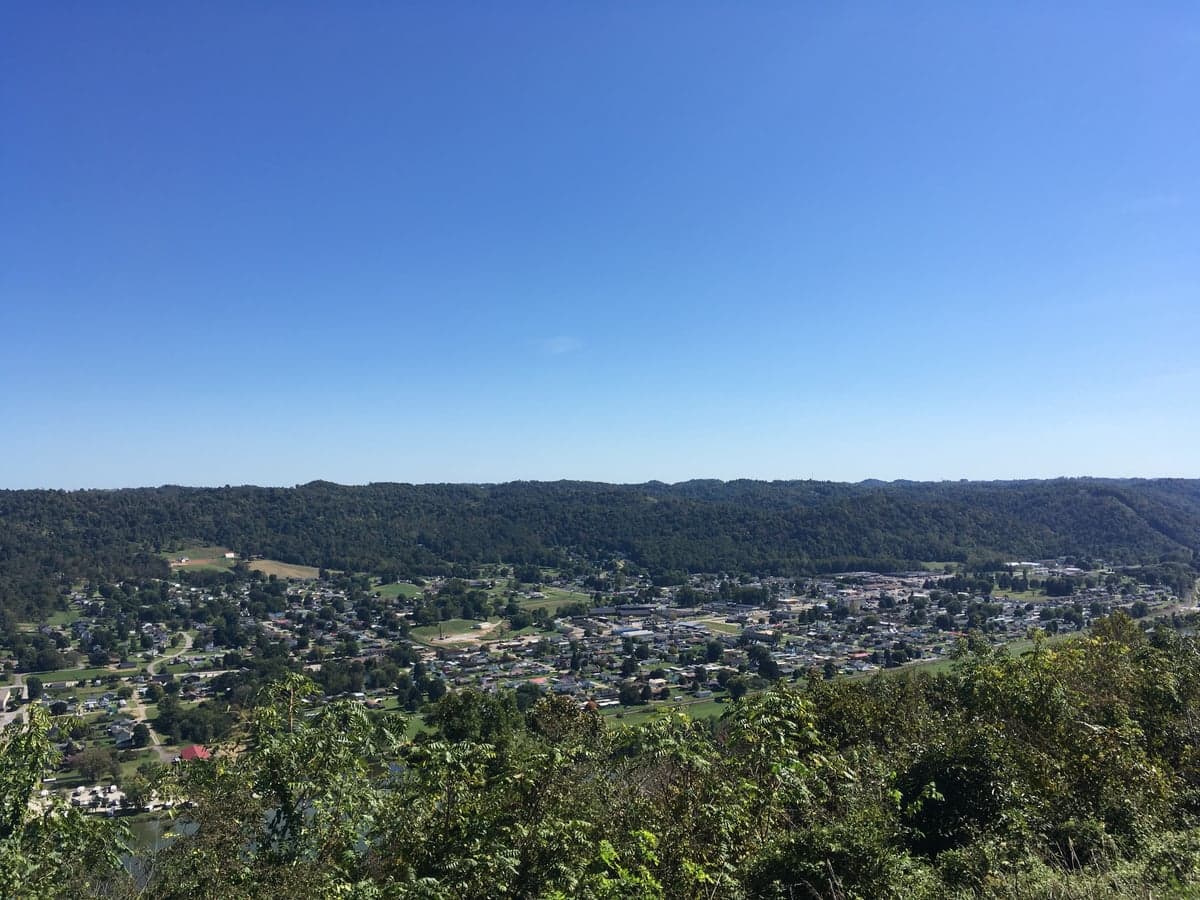
New Martinsville, West Virginia, is about as solidly conservative as small-town America gets, and it’s been that way for as long as anyone can remember. The Cook PVI of R+20 tells you the math, but it doesn’t capture the feel—this is a place where folks still wave at each other on the street and expect the government to stay out of their business. Over the last decade, the political lean has only hardened, with local elections routinely going to candidates who talk about protecting Second Amendment rights, keeping taxes low, and pushing back against any hint of progressive overreach from Charleston or Washington.
How it compares
Drive thirty minutes east to Morgantown, and you’re in a different world—a college town that votes blue and has a much younger, more transient population. Head south to Parkersburg, and you’ll find a similar conservative vibe, but it’s a bit more mixed, with some union-heavy precincts that can swing things. New Martinsville, though, is the real deal. It’s the kind of place where the county commission meetings are packed when there’s talk of a new zoning ordinance that might step on property rights. Compared to Wheeling, which has a slightly more moderate streak thanks to its healthcare and education sectors, New Martinsville feels like a fortress of traditional values. The surrounding Wetzel County is even more rural and red, so there’s no real progressive counterweight nearby—just a steady, quiet consensus that the old ways are the right ways.
What this means for residents
For someone living here, the political climate means you can pretty much count on your local government not to mess with your daily life. There’s no talk of defunding the police or imposing strict environmental regulations that would hurt the small manufacturing and energy jobs that keep the town alive. The downside? If you’re not on board with the majority view, you might feel a bit isolated. But for most folks, that’s a feature, not a bug. The real concern is when outside forces—like state-level mandates on vaccine passports or school curriculum changes—try to creep in. Locals keep a sharp eye on that, and they’ve been known to show up at the statehouse in Charleston to make their voices heard. The trajectory is clear: New Martinsville is digging in its heels, and any shift toward progressive ideology is met with immediate, organized pushback.
Culturally, this is a place where the local churches still anchor the community, and the annual Riverfest is more about family and fireworks than any political statement. The biggest policy distinction you’ll notice is the near-total absence of any kind of “sanctuary city” talk or diversity initiatives—those concepts just don’t land here. Instead, the focus stays on keeping the Ohio River clean enough for fishing, maintaining the volunteer fire department, and making sure the school board doesn’t get any bright ideas about critical race theory. If you’re looking for a place where personal freedom and local control are still the default, New Martinsville is holding the line. Just don’t expect it to change anytime soon—and honestly, most of us hope it never does.

State Political ClimatePolitical Climate in West Virginia
State Political AnalysisPolitical Environment in the State
West Virginia has long been one of the most reliably Republican states in the nation, but that wasn’t always the case. As recently as the 1990s, it was a Democratic stronghold at the state and local level, but a massive realignment over the past 20 years has flipped it deep red. In 2024, Donald Trump carried the state by nearly 40 points, and Republicans now hold supermajorities in both chambers of the legislature, the governorship, and every statewide office. The shift is driven by a cultural and economic backlash against the national Democratic Party’s environmental and energy policies, which directly threatened the state’s coal and natural gas industries. Today, the dominant coalition is a mix of rural conservatives, working-class voters who feel abandoned by the left, and a growing number of out-of-state transplants seeking lower taxes and fewer regulations.
Urban vs. rural divide
The political map of West Virginia is starkly divided between a few small urban centers and the vast, deeply conservative countryside. The state’s largest city, Charleston, and its surrounding Kanawha County are the most competitive ground, but even there, Republicans have made steady gains. In 2024, Kanawha County voted for Trump by about 12 points, a far cry from the 20-point Democratic margins it delivered just two decades ago. Morgantown, home to West Virginia University, is the state’s most liberal pocket, with Monongalia County often voting within single digits of the national average. The university’s influence brings a younger, more progressive population, but it’s an island in a red sea. Huntington and Cabell County have shifted hard right, driven by the opioid crisis and economic stagnation, while Wheeling and the Northern Panhandle are reliably Republican. The rural counties—like Mingo, Logan, and McDowell in the south—routinely deliver 80%+ margins for GOP candidates. The divide isn’t just about geography; it’s about economic survival. Coal country votes red out of a sense of cultural and economic self-preservation, while the university towns and a handful of white-collar suburbs in Berkeley County (part of the D.C. exurbs) are more moderate but still lean Republican.
Policy environment
West Virginia’s policy environment is aggressively conservative, with a focus on low taxes, deregulation, and cultural traditionalism. The state has no personal income tax on Social Security benefits and a flat 4.12% income tax on other income, with a goal of phasing it out entirely. Property taxes are among the lowest in the nation, capped by the state constitution. The regulatory posture is business-friendly, especially for energy extraction, manufacturing, and outdoor recreation. Education policy has been a flashpoint: in 2021, the legislature passed a broad school choice bill creating Education Savings Accounts (ESAs) for all students, one of the most expansive programs in the country. This was a major win for parental rights advocates. On healthcare, the state expanded Medicaid under the Affordable Care Act, a decision that remains controversial among conservatives, but there’s been no push to repeal it. Election laws are solid: voter ID is required, early voting is available, and the state has no mail-in ballot expansion beyond what’s federally required. There’s no state-level gun control to speak of; West Virginia is a constitutional carry state, meaning no permit is needed to carry a concealed firearm. The legislature also passed a Second Amendment Preservation Act in 2021, asserting that federal firearms laws deemed unconstitutional by the state are null and void.
Trajectory & freedom
West Virginia is becoming more free in several key areas, particularly on gun rights, school choice, and tax relief. The 2021 ESA law was a landmark for parental freedom, allowing families to use state education funds for private school, homeschooling, or tutoring. The 2021 Second Amendment Preservation Act was a direct challenge to federal overreach, though it hasn’t been tested in court. In 2023, the legislature passed a law banning transgender procedures for minors, a move that aligns with the state’s cultural conservatism. On the economic freedom front, the state has been cutting business taxes and reducing occupational licensing requirements. However, there are limits. The state still has a state income tax, though the rate is low and trending downward. Medical marijuana is legal, but recreational cannabis is not, and there’s little political will to change that. The biggest threat to freedom in the near term is the state’s reliance on federal funding—about 40% of the budget comes from Washington—which creates a vulnerability to federal mandates. Still, for a conservative moving in, the trajectory is positive: the state is actively rolling back government involvement in education, healthcare, and personal defense.
Civil unrest & political movements
West Virginia has a history of labor activism, but in recent years, political movements have been dominated by the right. The 2018 teachers’ strike was a rare moment of cross-party unity, but it didn’t translate into lasting progressive gains. Today, the most visible movements are the pro-gun, pro-life, and school choice coalitions. There’s a strong strain of nullification rhetoric, particularly around federal environmental regulations and gun laws. In 2023, a bill to create a state-level “Second Amendment Sanctuary” designation for counties passed easily. Immigration politics are muted because the state has one of the smallest foreign-born populations in the country—less than 2%—so there are no sanctuary city debates. Election integrity controversies have been minimal; the state uses paper ballots and has robust audit procedures. The most notable flashpoint in recent years was the 2021 debate over the governor’s emergency powers during COVID-19, which led to the legislature curbing executive authority. A new resident would find a state where political activism is mostly local and focused on school boards, county commissions, and gun rights. There’s no visible left-wing protest culture outside of Morgantown, and even there, it’s tame compared to other states.
Projection
Over the next 5-10 years, West Virginia is likely to become even more conservative, but with a few caveats. The state’s population is aging and shrinking, which could lead to a more moderate electorate if younger, more diverse transplants move in—especially from the D.C. suburbs into the Eastern Panhandle counties like Jefferson and Berkeley. Those areas are growing faster than the rest of the state and are slightly more moderate, but they still vote Republican. The real wild card is the energy transition: if coal continues to decline, the state will need to diversify its economy. That could bring in new industries and new people, potentially diluting the current political consensus. But for now, the legislature is likely to continue cutting taxes, expanding school choice, and pushing back against federal overreach. A full income tax repeal is possible within a decade. The state’s political culture will remain deeply skeptical of government power, especially from Washington. Someone moving in now should expect a state that values personal liberty, low taxes, and traditional social norms, with a government that is generally on their side—as long as they don’t expect much in the way of public services or infrastructure.
For a conservative individual or family looking to relocate, West Virginia offers a rare combination of low taxes, strong gun rights, school choice, and a culture that respects personal autonomy. The trade-offs are real: limited economic opportunity outside of energy and healthcare, a shrinking population, and a reliance on federal dollars that creates long-term risk. But if you value freedom from government overreach and want to live in a place where your vote actually counts, West Virginia is one of the best bets in the country. Just know that you’ll be trading the amenities of a big city for a slower, quieter, and more self-reliant way of life.
* Values derived from national, state, county, city and local statistics and may differ in a specific area. Last updated: 2026-04-21T09:25:29.000Z
Narrative content on this page is AI-generated and may contain mistakes. Verify any details that matter before acting on them.
ReloMaps may earn a commission from affiliate links at no extra cost to you.

