Political ClimatePolitical Climate in Mckinley County
Showing district-level results — no local-only data available.
Local Political AnalysisPolitical Analysis of Mckinley County
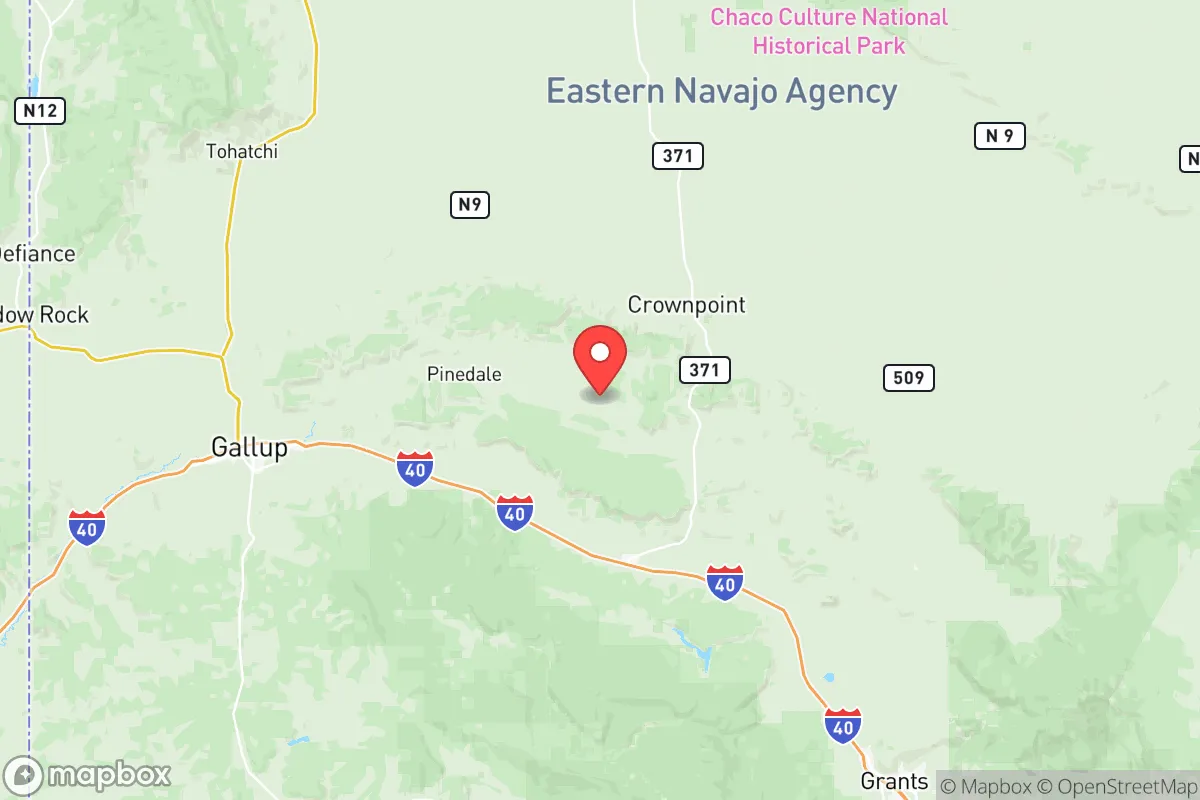
McKinley County, New Mexico, leans blue with a Cook PVI of D+3, identical to the state as a whole, but the local political texture is more complicated than that single number suggests. I’ve lived here long enough to remember when this area was more moderate—even conservative in parts—especially outside Gallup. Now, the county’s heavy Native American population, concentrated in places like Zuni Pueblo and Crownpoint, drives consistent Democratic margins, while small farming and ranching communities like Ramah and Vanderwagen still hold onto more traditional, limited-government views. The trajectory here is slowly shifting further left as national progressive messaging seeps into local politics, something that worries folks who value personal freedom and local control.
How it compares
On paper, McKinley County and New Mexico share the same D+3 rating, but the county’s voting patterns are actually more polarized than the state average. In the last few presidential cycles, Gallup itself has swung between 55-60% Democratic, while precincts around the Zuni Reservation and Navajo chapters near Crownpoint hit 70-80% Democratic. Meanwhile, precincts in the rural southern part of the county—think Ramah and Vanderwagen—often vote 55-60% Republican. The state as a whole has a broader mix of moderate suburbs (Albuquerque’s East Mountains, Los Alamos) that keep the PVI at D+3, but McKinley lacks that moderating influence. What this means is that policy fights here are more stark: state mandates on everything from energy extraction to public health land harder on a county where many people already distrust government overreach.
What this means for residents
Living in a D+3 county means that the majority of elected officials—county commissioners, school board members, even judges—come from a progressive playbook. For residents who prioritize personal freedoms, that can feel like a constant battle. Statewide gun laws, for instance, are among the strictest in the West, and local enforcement in McKinley tends to be aggressive. Energy policy is another sore spot: the county sits on significant oil and gas potential, yet state-level green mandates are choking off new drilling permits, hurting jobs and property rights. On the plus side, because the county is so reliably blue, there’s little incentive for state politicians to pander to conservative voters, which means folks in Ramah or Vanderwagen often feel ignored when it comes to infrastructure spending or property tax relief.
Culturally, McKinley County stands apart from the rest of New Mexico because of its strong Navajo and Zuni influence. That means a deeper emphasis on tribal sovereignty, which sometimes clashes with state authority—a dynamic that can benefit conservatives who want to limit government intrusion. But it also means local politics can feel tribal-first, and residents who aren’t part of those communities (anglo ranchers, Hispanic families in Gallup) sometimes get lost in the shuffle. The bottom line: if you value small government and personal liberty, McKinley County isn’t an easy place to live, but the fight for those values is still alive in its rural corners.

State Political ClimatePolitical Climate in New Mexico
State Political AnalysisPolitical Environment in the State
New Mexico has a Cook Partisan Voting Index of D+3, making it a reliably Democratic state in presidential elections, but that single number hides a deeply divided political landscape. The state hasn't voted for a Republican presidential candidate since 2004, when George W. Bush narrowly carried it, but the coalition that keeps it blue is fragile and geographically lopsided. Over the last 20 years, the Democratic advantage has been driven almost entirely by Albuquerque’s Bernalillo County and the heavily Hispanic, union-heavy counties of Santa Fe and Doña Ana (Las Cruces), while the rest of the state—especially the eastern plains and the oil-rich southeast—has become as red as West Texas.
Urban vs. rural divide
The political map of New Mexico is a tale of three regions. The Albuquerque metro area (Bernalillo County) casts about a third of the state’s votes and leans Democratic by roughly 15 points, powered by government workers at Sandia National Labs, the University of New Mexico, and a growing service sector. Santa Fe County is the deep-blue anchor, voting 2-to-1 Democratic, driven by a mix of wealthy retirees, artists, and state government employees. Las Cruces (Doña Ana County) is a swing county that has trended left as the city’s population has grown, but it’s still competitive at the local level. Meanwhile, the eastern counties—Lea, Roosevelt, Curry, and Chaves—vote Republican by 30 to 40 points, fueled by oil and gas jobs in Hobbs and Carlsbad, and by the agricultural economy around Clovis and Portales. The northwest corner, including Farmington and the Four Corners area, is also reliably red, though the Navajo Nation parts of McKinley and San Juan counties lean Democratic. The result is a state where a Republican can win statewide office (like Governor Susana Martinez, 2011–2019) by running up margins in the east and south while keeping losses in Bernalillo manageable, but that path has narrowed as Albuquerque has grown more liberal.
Policy environment
New Mexico’s policy environment is a mixed bag that leans progressive but with some notable exceptions. The state has a progressive income tax with a top rate of 5.9%, and a gross receipts tax (essentially a sales tax) that averages around 8% statewide but can hit 9% or higher in some cities. Property taxes are low—among the lowest in the nation—which is a genuine plus for homeowners. The regulatory posture is generally business-friendly in the oil and gas sector, which is the state’s economic engine, but less so for other industries. Education policy is a flashpoint: the state has a universal school voucher program (the Education Choice Act of 2023) that allows parents to use public funds for private or homeschool expenses, a rare win for school choice in a blue state. Healthcare is dominated by the state’s Medicaid expansion, which covers about 40% of the population, and the state has a public option health plan (the Health Security Act) that is slowly rolling out. Election laws are moderately restrictive: New Mexico has no voter ID requirement for in-person voting, but it does require ID for first-time voters who registered by mail. Same-day registration is allowed, and mail-in voting is available without an excuse. The state has a Democratic trifecta (governor, house, senate) as of 2026, so progressive legislation passes easily, but the governor’s office has been a check on some of the more extreme proposals.
Trajectory & freedom
On personal freedom, New Mexico is a state in flux, and the trend is concerning for conservatives. Gun rights have been under sustained attack: in 2021, the state passed a red-flag law (the Extreme Risk Firearm Protection Order Act) allowing courts to temporarily seize firearms from individuals deemed a risk, and in 2023, it passed a ban on carrying firearms at polling places and in the state capitol. A 2025 law raised the minimum age to purchase a semi-automatic rifle to 21, and the governor has called for a full assault weapons ban, though that hasn’t passed yet. On the other hand, the state has a strong preemption law that prevents local governments from enacting their own gun ordinances, which has blocked Santa Fe and Albuquerque from passing stricter local bans. Parental rights have seen some wins: the 2023 Education Choice Act is a genuine expansion of freedom, and the state has not adopted the controversial “gender-affirming care” sanctuary laws that some blue states have. However, the state’s public schools have adopted progressive sex education standards, and there is no parental notification requirement for a minor’s abortion (the state repealed that in 2021). Medical autonomy is limited: the state has legalized recreational marijuana (2021) and has a medical cannabis program, but it also has strict vaccine mandates for schoolchildren, with no philosophical exemption. Property rights are generally strong, but the state’s oil and gas regulations have become more burdensome under the current administration, with new methane capture rules and drilling setbacks that have drawn lawsuits from the industry.
Civil unrest & political movements
New Mexico has a history of political activism, but it’s less visible than in neighboring states. Immigration politics are a constant flashpoint: the state is a sanctuary state (the 2019 New Mexico Immigrant and Refugee Act prohibits state and local law enforcement from asking about immigration status), and the southern border counties like Doña Ana and Luna are heavily affected by cartel activity and human trafficking. The city of Las Cruces has seen protests over Border Patrol checkpoints on the interstate, and the town of Sunland Park has been a staging ground for migrant caravans. On the right, the state has a small but vocal Second Amendment movement, with rallies at the state capitol in Santa Fe during the 2023 gun law debates. The 2020 election integrity controversy was muted here compared to Arizona or Nevada, but there were protests in Albuquerque over the state’s expanded mail-in voting. The most visible political movement in recent years has been the push for a state-level oil and gas production cap, which has pitted environmental activists in Santa Fe against workers in Hobbs and Carlsbad. The 2023 “Green New Deal” bill (the Energy Transition Act) failed to pass, but the debate continues. A new resident would notice that political signs are rare in Albuquerque and Santa Fe, but common in the eastern counties, and that the state’s politics are often overshadowed by the more dramatic battles in Texas and Arizona.
Projection
Over the next 5 to 10 years, New Mexico is likely to become more Democratic and more progressive, but the pace will be slow. The state’s population is aging and growing slowly, with most growth happening in the Albuquerque and Santa Fe metros, which are already blue. The oil and gas counties in the east are losing population as the industry automates and consolidates, which will shrink the Republican base. In-migration is modest, but the people moving in tend to be retirees from California and Colorado who are culturally liberal, not conservatives fleeing blue states. The Democratic trifecta is likely to persist, and the next big fights will be over a state-level assault weapons ban, a carbon tax, and a single-payer healthcare system. The school choice program is a bright spot for conservatives, but it’s unlikely to be expanded. The state’s fiscal health is tied to oil prices, which are volatile, so a downturn could trigger tax hikes that accelerate out-migration from the eastern counties. A new resident moving in now should expect a state that is politically comfortable for progressives but increasingly hostile to traditional values on guns, education, and family autonomy.
For a conservative considering a move to New Mexico, the bottom line is that the state offers low property taxes, a school choice program, and a strong oil and gas economy in the southeast, but the political winds are blowing left. If you’re looking for a place where your vote will matter in statewide elections, New Mexico is not it—the Democratic primary is the only game in town. But if you’re willing to live in the eastern counties (Hobbs, Carlsbad, Clovis) or the Four Corners (Farmington), you can find a community that votes like Texas while enjoying New Mexico’s lower cost of living and outdoor lifestyle. Just don’t expect the state government to have your back on guns, taxes, or parental rights—you’ll need to rely on local communities and your own resources.
* Values derived from national, state, county, city and local statistics and may differ in a specific area. Last updated: 2026-06-01T12:55:37.000Z
Narrative content on this page is AI-generated and may contain mistakes. Verify any details that matter before acting on them.
ReloMaps may earn a commission from affiliate links at no extra cost to you.

