Quality of Life in Mckinley County
A livable area that tracks near national norms for affordability, walkability, and neighborhood health.
What does Quality of Life tell us?
Quality of Life measures an area by evaluating factors like cost of living, nearby amenities, country club access, airport proximity, socioeconomic signals and neighborhood character. For large states, this is a general average — quality of life can vary dramatically between metro areas, suburbs, and rural communities within the same state.
What does this tell us?
Quality of Life measures an area by evaluating factors like cost of living, nearby amenities, country club access, airport proximity, socioeconomic signals and neighborhood character. For large states, this is a general average — quality of life can vary dramatically between metro areas, suburbs, and rural communities within the same state.
Cost of Living
48% below national average
139%
The Real Cost of Living in Mckinley County for 2026
| Tier | Individual | Family (4) |
|---|---|---|
| Survival | $13k | $24k |
| Comfortable | $22k | $32k |
| Luxury | $80k+ | $125k+ |
| Elite (Top 5%) | $100k+ | $156k+ |
Quality-of-Life Analysis
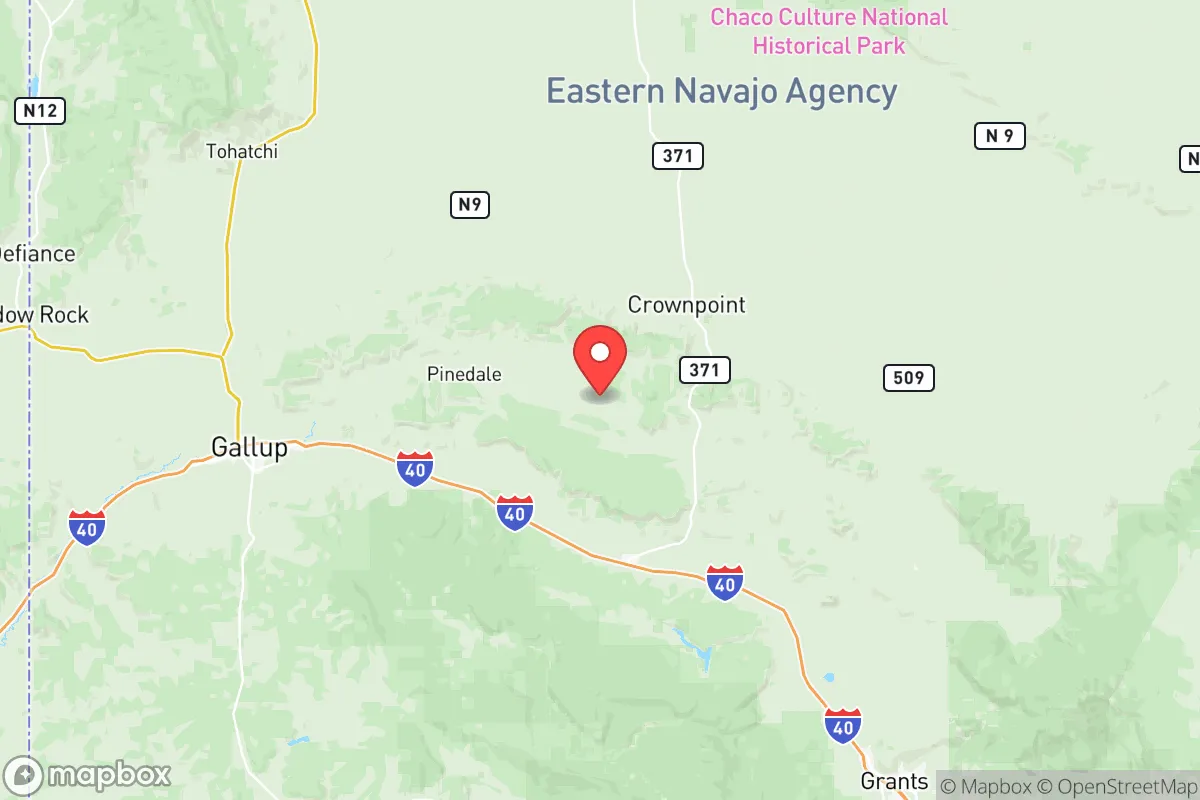
McKinley County, New Mexico, offers a striking spectrum of quality-of-life options, from the small-city conveniences of Gallup to the deeply rural, culturally rich communities scattered across the Navajo Nation and Zuni Pueblo. With a cost-of-living index of 52 (far below the U.S. average of 100) and a median home value of just $72,100, the county attracts a mix of people: Native American families maintaining traditional lifestyles, workers commuting to Gallup for health care and retail jobs, and those seeking an extremely low-cost, off-grid existence. The average commute of 25 minutes reflects a short, often scenic drive across high desert plateaus, but access to amenities varies widely depending on whether you live in the county seat or a remote chapter house.
Largest town(s) & population centers
By far the largest population center in McKinley County is Gallup, the county seat and only incorporated city with more than 20,000 residents. Daily life in Gallup revolves around a downtown historic district, a regional hospital (Gallup Indian Medical Center), and a significant retail and service sector that serves both locals and travelers on Interstate 40. The city also hosts the Navajo Nation’s eastern agency offices and the Zuni Pueblo’s administrative hub nearby. Residents here have access to grocery chains, a community college (University of New Mexico–Gallup), and the McKinley County Courthouse. While Gallup is the most amenity-rich location in the county, its median rent of $810 is notably higher than in outlying communities, though still far below national norms. The city’s dining and arts scene, anchored by the historic El Rancho Hotel and the Gallup Cultural Center, supports a modest tourism economy. For households wanting the shortest commutes and the widest range of jobs—primarily in government, health care, and education—Gallup is the logical choice.
Smaller towns & rural pockets
Outside Gallup, McKinley County contains a dense network of smaller communities, many of them on sovereign tribal lands. Zuni Pueblo (the main village of Zuni) is the second-largest settlement, with roughly 6,000 residents, and offers a slower pace centered on traditional agriculture, arts (especially inlay jewelry), and the Zuni Tribal Government. Thoreau, located along I-40 east of Gallup, is a unincorporated hub for Navajo families, with a few gas stations, a post office, and strong ties to the nearby Bisti/De-Na-Zin Wilderness. Crownpoint, in the northern part of the county, serves as the administrative center for the Eastern Navajo Agency and hosts the Crownpoint Elementary School and a small health clinic. Ramah, nestled in the Ramah Navajo Indian Reservation near the Arizona border, is deeply rural, with limited commercial services and wide-open landscapes. Unincorporated places like Vanderwagen, McGaffey, and Mentmore consist largely of scattered homes, many without grid electricity or municipal water, reflecting the traditional Navajo lifestyle. The sheer geographic spread means that residents in these pockets may drive 30–60 minutes one-way to reach Gallup for groceries or medical appointments, making the 25-minute countywide average commute a misleadingly low figure for outlying areas.
Cost & lifestyle range
The cost-of-living difference within McKinley County is driven primarily by housing type and access to utilities. At the affordable end, a rural mobile home or traditional Navajo dwelling (a hogan or modern house without hookups) on trust land may carry no mortgage and minimal property taxes, with a home value far below the $72,100 median. In areas like Thoreau or Vanderwagen, a small house on a large lot can sell for under $40,000 in some listings. At the higher end of the local market, Gallup’s newer subdivisions (e.g., west of downtown near the hospital) see median home prices approaching $120,000–$150,000, still a fraction of the national median. Rent follows a similar gradient: a studio apartment in central Gallup might lease for $700–$900, whereas a private house rental in rural Crownpoint can go for $500–$650. Utility costs are notably higher in rural areas where well water, propane, and septic systems are the norm; Gallup residents benefit from municipal water and natural gas. This financial trade-off—lower housing costs versus higher infrastructure expenses—defines the lifestyle range. Families seeking schools, consistent internet, and quick access to health care gravitate toward Gallup or Zuni Pueblo; those prioritizing land, privacy, and low overhead choose the remote Navajo communities.
Who thrives here? McKinley County best suits individuals and families who value cultural rootedness, extreme affordability, and a slower, land-based way of life—whether in the Pueblo or Navajo traditions or in the convenience of a compact high-desert city. It is not a place for those seeking vibrant nightlife, luxury retail, or fast-paced urban energy. Retirement on a small fixed income is practical given the low housing costs, especially for those comfortable with rural infrastructure. Remote workers willing to invest in Starlink or fixed wireless can live very inexpensively while enjoying proximity to wilderness and Indigenous cultural events. The county rewards self-reliance and a tolerance for distance from big-box stores, while offering a community fabric that few other parts of the country can replicate.

Crime in Mckinley County
Higher crime rates than 67% of comparable U.S. locations.
Violent CrimeViolent Crime Analysis
Property CrimeProperty Crime Analysis
Crime Analysis
McKinley County, New Mexico, presents a challenging public safety picture, with both violent and property crime rates far exceeding national averages. The county’s largest city, Gallup, drives much of the crime volume, while smaller communities such as Zuni Pueblo, Crownpoint, Thoreau, and Ramah experience varying levels of risk. The county’s criminal justice system operates under progressive prosecutorial policies that prioritize diversion and reduced sentencing, a stance which critics argue has contributed to repeat offending and an overburdened police force.
Crime in context
With a violent crime rate of 603.2 per 100,000 residents and a property crime rate of 2,191.9 per 100,000, McKinley County is significantly more dangerous than both New Mexico state averages (violent ~750, property ~2,600) and the national median (violent ~380, property ~1,950). The county’s figures are dragged upward primarily by Gallup, where concentrated poverty, substance abuse, and gang activity produce rates that rank among the highest in the state for cities of its size. Crownpoint and Zuni Pueblo also report elevated incidents relative to their populations, while rural areas like Ramah and the communities along the Navajo Nation see lower raw numbers but face challenges in response times and law enforcement coverage.
What residents experience
Daily life in McKinley County is marked by a persistent wariness of property crime — theft from vehicles, burglary, and shoplifting are common complaints, especially in Gallup’s commercial corridor along U.S. Route 66 and in the downtown district. Violent crime, including assault and robbery, tends to cluster in specific neighborhoods and around bars or late-night establishments. The county’s District Attorney’s office, which follows reform-minded charging policies, has been criticized by local law enforcement for not holding repeat offenders accountable, a dynamic that residents say fosters a “catch-and-release” cycle that undermines deterrence. Between 2020 and 2025, property crime clearance rates fell below 20% in Gallup according to New Mexico Department of Public Safety data, leaving many victims without recourse.
Neighborhood-level variation and safer areas
While no part of McKinley County is crime-free, notable differences exist. The village of Thoreau, located along Highway 400 on the eastern side of the county, reports fewer violent incidents than Gallup, though property theft remains a concern due to its location as a transit hub. Southwest of Gallup, the rural checkpoint of Vanderwagen and the community of Yah-ta-hey see lower density and a more stable homeowner population, which correlates with modestly reduced crime rates. Gated subdivisions in the foothills west of Gallup, near the Arizona border, offer a measure of security through restricted access. Residents considering relocation should note that progressive justice policies at the county level have a tangible impact on neighborhood safety — areas with higher rates of police contact and community patrols (such as parts of Zuni Pueblo with active tribal monitoring) tend to show less property crime than areas where progressive prosecutor offices fail to prioritize victim outcomes. For the safest daily experience, newcomers are advised to choose rural unincorporated pockets and avoid the dense, high-traffic corridors of Gallup after dark.
* Values derived from national, state, county, city and local statistics and may differ in a specific area. Last updated: 2026-06-01T12:55:37.000Z
Narrative content on this page is AI-generated and may contain mistakes. Verify any details that matter before acting on them.
ReloMaps may earn a commission from affiliate links at no extra cost to you.

