
Photo: Wikipedia
Political ClimatePolitical Climate in Rio Arriba County
Showing district-level results — no local-only data available.
Local Political AnalysisPolitical Analysis of Rio Arriba County
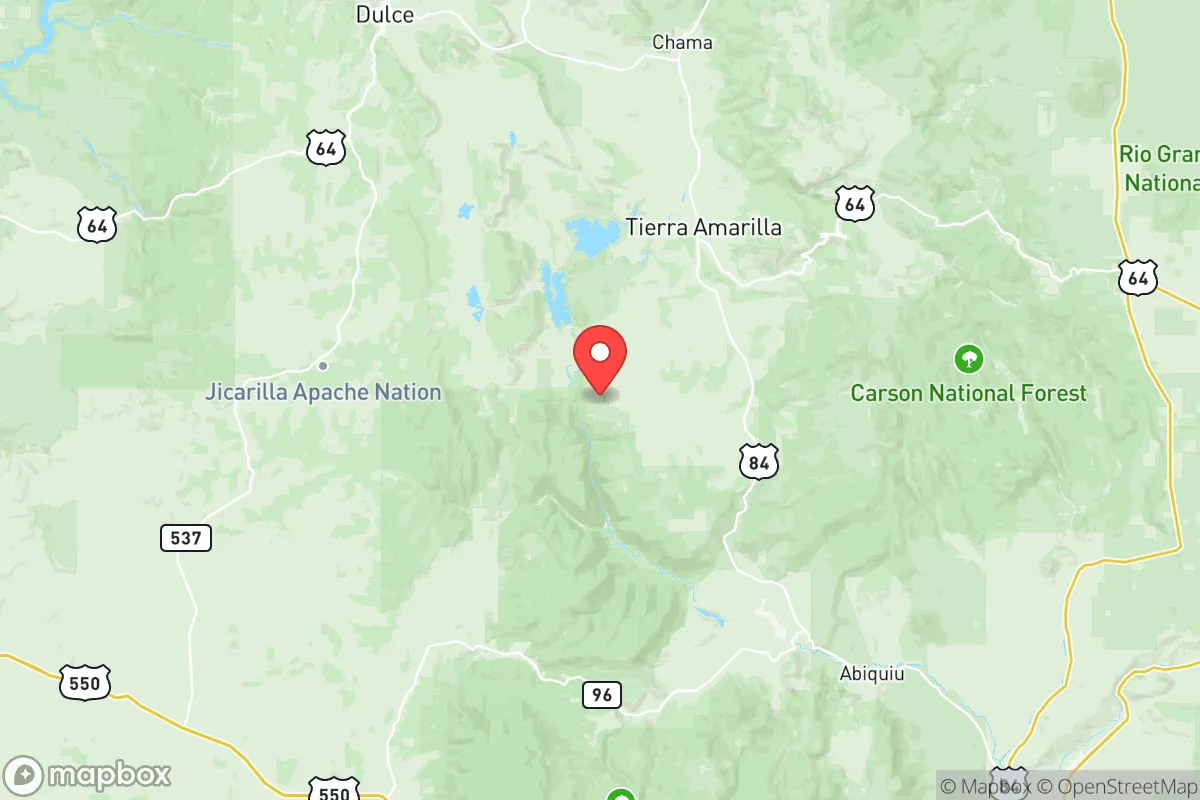
Rio Arriba County has long been a Democratic stronghold, but don't let the Cook PVI of D+3 fool you into thinking it's a monolith. The county's politics are deeply rooted in northern New Mexico's Hispano heritage, with a strong independent streak that resists outside control. Places like Espanola and Chimayo lean reliably blue, but head into the rural reaches around Dulce or Abiquiu and you'll find precincts that vote more like the rest of the West—skeptical of government overreach and protective of personal freedoms. The trajectory here is concerning: progressive policies on land use, energy, and education are creeping in from Santa Fe, and longtime locals are starting to feel like their way of life is being managed from afar.
How it compares
At first glance, Rio Arriba County and New Mexico as a whole share the same D+3 rating, but the similarities end there. The state's urban centers—Albuquerque, Santa Fe, Las Cruces—drive that blue lean with younger, more progressive voters. Rio Arriba, by contrast, is older, more rural, and more culturally conservative. In Chama and Tierra Amarilla, you'll hear more talk about property rights and water access than about climate mandates or social justice initiatives. The county's Democratic registration is a legacy of union ties and New Deal loyalty, not modern leftism. Meanwhile, the state government in Santa Fe has pushed gun restrictions, renewable energy mandates, and land-use regulations that feel like a direct challenge to the self-reliant lifestyle folks here value. So while the PVI numbers match, the political reality is that Rio Arriba is a blue county with a red heart—and that tension is growing.
What this means for residents
For anyone living here, the practical effect is a constant tug-of-war between local tradition and state-level ambition. You see it in the push to restrict oil and gas development near the Jicarilla Apache Nation, which threatens jobs in Dulce. You see it in the school board battles in Espanola, where parents are pushing back against curriculum changes that feel disconnected from community values. The county commission has tried to hold the line on Second Amendment rights and property taxes, but Santa Fe keeps chipping away. If you're considering a move here, understand that your personal freedoms—how you use your land, what you teach your kids, whether you can carry a firearm—are increasingly up for debate. The old hands will tell you: it wasn't always this way. There used to be a live-and-let-live attitude, but now every election feels like a fight to keep the government out of your backyard.
Culturally, Rio Arriba still holds onto distinctions that set it apart from the rest of New Mexico. The Santa Fe Trail and High Road to Taos pass through communities where Spanish is still the first language and acequia water rights are sacred. Policy-wise, the county has resisted the statewide push for sanctuary status and has been slower to adopt green energy mandates than places like Santa Fe County. That independence is what makes this area special—but it's also what makes it a target. If the progressive agenda keeps gaining ground in Santa Fe, Rio Arriba could become a battleground for the soul of rural New Mexico. For now, it's still a place where a handshake matters more than a ballot, but you'd better keep an eye on those voting trends.

State Political ClimatePolitical Climate in New Mexico
State Political AnalysisPolitical Environment in the State
New Mexico has a Cook Partisan Voting Index of D+3, making it a reliably Democratic state in presidential elections, but that number hides a deeply divided political landscape. The dominant coalition is a mix of urban progressives in Albuquerque and Santa Fe, unionized government workers, and a large Hispanic electorate that leans Democratic but is culturally moderate on many social issues. Over the last 10-20 years, the state has drifted leftward on cultural and economic policy, though it remains more conservative than Colorado or California on some fronts. If you’re considering a move here, you need to understand that the political power is concentrated in a few metro areas, while vast rural stretches vote solidly Republican—and the gap is widening.
Urban vs. rural divide
The political map of New Mexico is a tale of two worlds. The Albuquerque metro area (Bernalillo County) and Santa Fe (Santa Fe County) drive the state’s Democratic lean, with Santa Fe being one of the most progressive small cities in the nation—think high taxes, strict land-use regulations, and a heavy presence of government and nonprofit workers. Las Cruces (Doña Ana County) adds another blue anchor, fueled by a large Hispanic population and New Mexico State University. Meanwhile, the eastern plains (Roosevelt, Curry, Lea counties) and the northwest (San Juan County) are deeply red. Cities like Hobbs, Clovis, and Farmington reliably vote Republican by 20-30 points. The divide is stark: in 2024, Bernalillo County gave Democrats a 15-point margin, while Lea County went +40 for the GOP. A new resident moving to the Albuquerque suburbs (e.g., Rio Rancho or Corrales) will find a more mixed environment—Rio Rancho is purple trending red, while Corrales is a liberal enclave. If you want a conservative community, look to the eastern towns or the oil-rich Permian Basin area around Carlsbad.
Policy environment
New Mexico’s state-level policies reflect its blue urban core. The personal income tax is progressive, with a top rate of 5.9% on income over $210,000—moderate by national standards but higher than neighboring Texas. Property taxes are low (roughly 0.8% of assessed value), which is a plus. However, the state’s regulatory posture is increasingly burdensome: a 2023 law (House Bill 7) expanded paid family and medical leave mandates on employers, and the state has adopted California-style clean energy mandates requiring 100% carbon-free electricity by 2045. Education policy is a mixed bag—the state spends heavily per pupil but ranks near the bottom in outcomes. School choice is limited; there’s no universal voucher program, though a 2024 expansion of the charter school cap helped slightly. Healthcare is dominated by the state’s Medicaid expansion (over 40% of residents are on Medicaid), and the state has a public option health plan. Election laws are relatively loose: same-day voter registration, no-excuse absentee voting, and automatic voter registration at the DMV. For conservatives, the policy environment feels like a slow creep toward bigger government, with fewer checks on executive power.
Trajectory & freedom
Over the past five years, New Mexico has become less free in several key areas. On gun rights, the state passed a red-flag law (HB 87) in 2020 and a ban on carrying firearms at polling places and government buildings in 2023. Concealed carry remains shall-issue, but the trend is toward restriction. On parental rights, a 2023 law (SB 137) expanded access to abortion and gender-affirming care for minors without parental consent—a major red flag for conservative families. The state also passed a “safe haven” law for transgender youth, protecting them from out-of-state legal actions. Medical autonomy took a hit with vaccine mandates for healthcare workers (since rescinded) and a 2024 law requiring insurance coverage for elective abortions. Property rights are under pressure from the state’s push for renewable energy corridors that can override local zoning. Taxation is trending upward: the 2024 legislative session raised the gross receipts tax (a sales tax) on certain services. The overall trajectory is one of expanding government control over personal decisions, especially in health and family matters.
Civil unrest & political movements
New Mexico has seen its share of political flashpoints. In 2020, protests in Albuquerque over the death of George Floyd turned violent, with property damage and clashes with police. The state’s sanctuary policies—a 2019 law (HB 83) limits local law enforcement cooperation with federal immigration authorities—have made it a destination for illegal border crossers, straining resources in border towns like Sunland Park and Las Cruces. The “New Mexico Civil Guard,” a far-right militia, has been active in the southern New Mexico, but its influence is small. On the left, the “Mujeres Unidas” and other activist groups push for defunding police and abolishing ICE. Election integrity is a hot topic: the 2020 and 2022 elections saw no major scandals, but rural counties have complained about voting machine security and the state’s universal mail-in ballot system. A new resident will notice the political tension most in the Albuquerque metro, where “Defund the Police” signs coexist with “Back the Blue” rallies. The state’s high crime rate—Albuquerque consistently ranks among the top five for violent crime—adds a layer of daily concern that fuels political anger on both sides.
Projection
Over the next 5-10 years, New Mexico is likely to continue its leftward drift, but with important caveats. In-migration is modest compared to Texas or Arizona, and the people moving in tend to be retirees or remote workers drawn to Santa Fe’s culture or Albuquerque’s low housing costs—many of whom lean progressive. The oil and gas industry in the southeast (Lea, Eddy counties) will keep those areas red, but their population growth is slower than the blue metros. The Hispanic electorate, while still Democratic-leaning, is showing signs of shifting right on economic issues, especially among younger men. If the GOP can field credible candidates and focus on crime and parental rights, they could flip a few state legislative seats in the Albuquerque suburbs. However, the state’s Democratic supermajority in the legislature is entrenched, and the governor (Michelle Lujan Grisham) has veto power. Expect more progressive policies on climate, healthcare, and education, and continued erosion of gun rights and parental authority. A conservative moving here should plan to live in a red county (e.g., Eddy, Lea, or San Juan) and be prepared for state-level policies that feel increasingly out of step with their values.
Bottom line for a new resident: New Mexico offers beautiful landscapes, low property taxes, and a slower pace of life, but the political climate is hostile to conservative values on most cultural and economic fronts. If you’re a single individual or parent who values personal freedom, limited government, and strong parental rights, you’ll want to carefully choose your county—and be ready to fight for your voice in a state that’s trending blue. The inside scoop is that the rural areas are still great places to live, but the state government in Santa Fe is increasingly out of touch with those communities. Move here for the sunsets and the space, not for the politics.
* Values derived from national, state, county, city and local statistics and may differ in a specific area. Last updated: 2026-05-18T12:33:21.000Z
Narrative content on this page is AI-generated and may contain mistakes. Verify any details that matter before acting on them.
ReloMaps may earn a commission from affiliate links at no extra cost to you.

