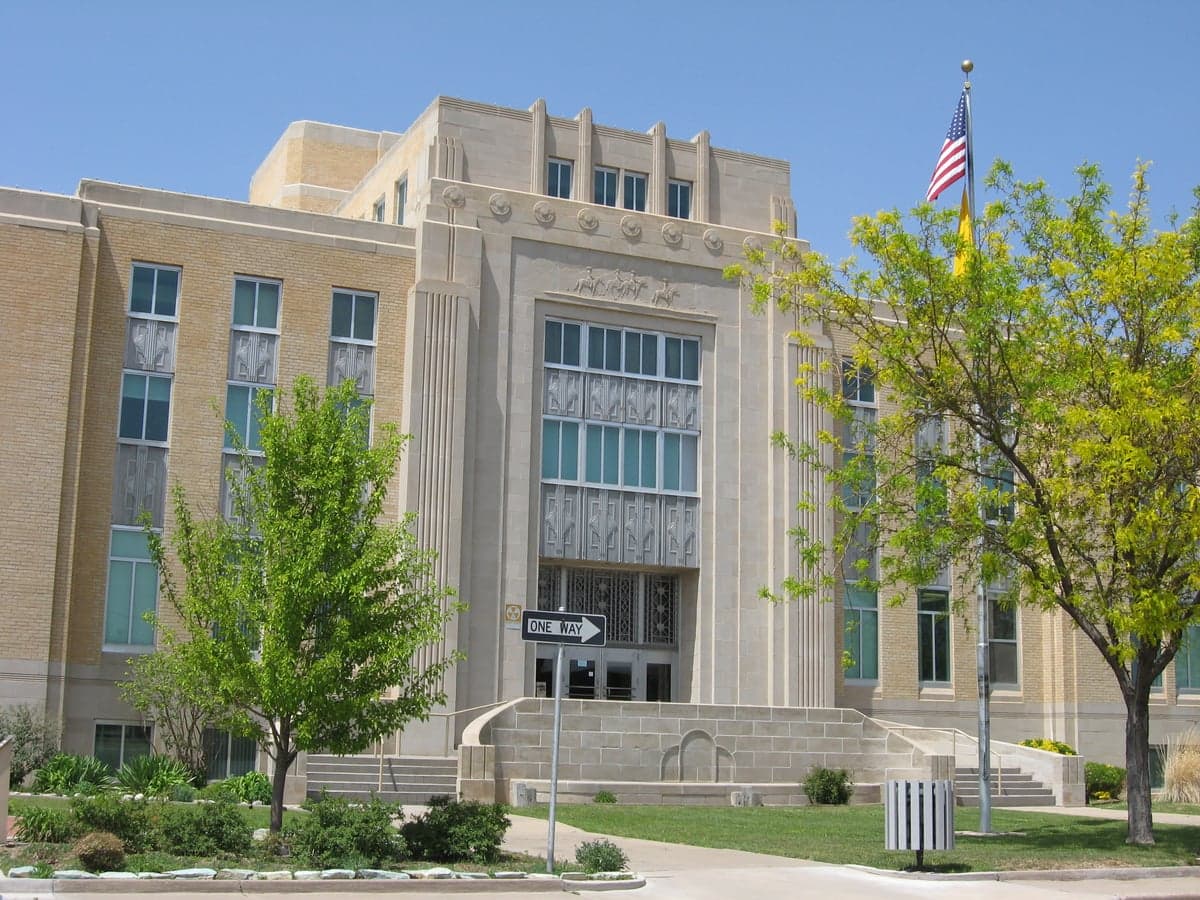
Photo: Wikipedia
Demographics of Roosevelt County
Affluence Level in Roosevelt County
A low-income area with significant economic hardship. Household wealth and educational attainment are well below national averages.
People of Roosevelt County
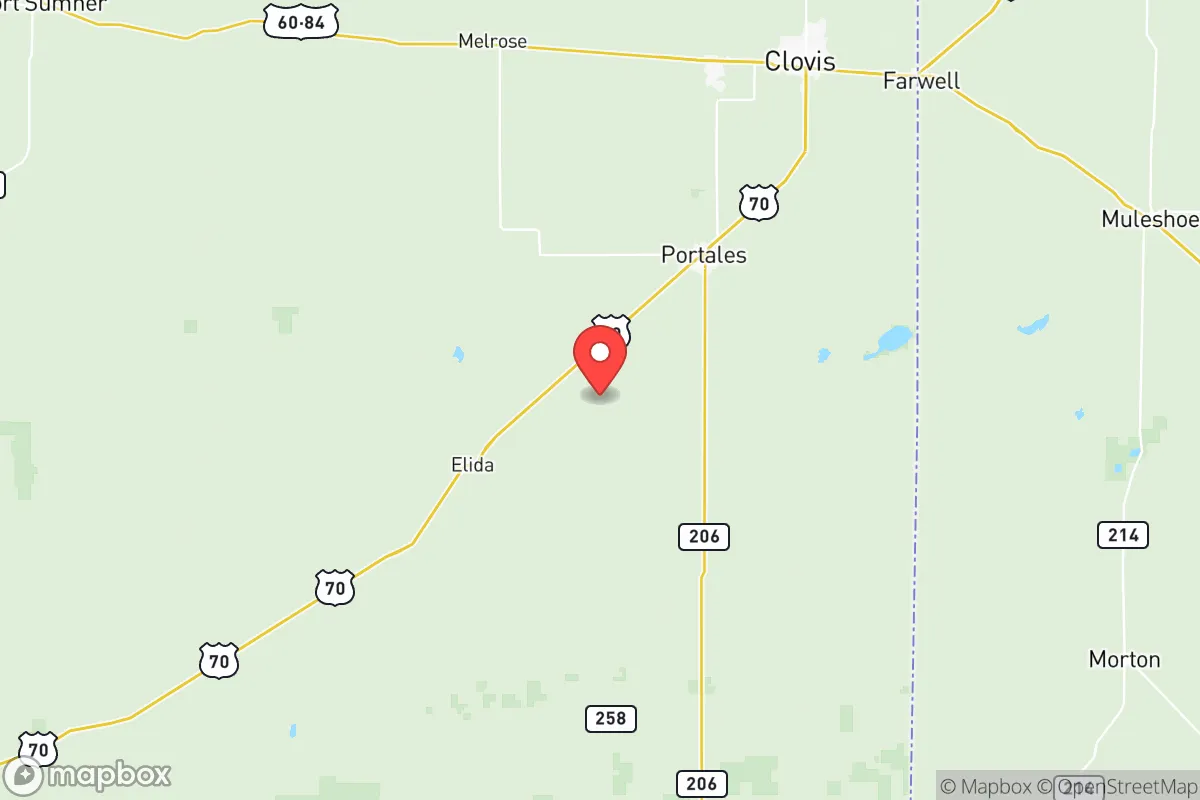
Roosevelt County, New Mexico, today is a sparsely populated, predominantly rural community of 19,002 residents, defined by its agricultural roots and a near-even demographic split between non-Hispanic whites (48.9%) and Hispanic residents (44.4%). The county’s character is shaped by its small-town centers—Portales, the county seat and economic hub, and the smaller communities of Elida, Floyd, and Causey—where a strong sense of local identity and conservative values prevail. With a foreign-born population of just 5.0% and a college attainment rate of 21.3%, Roosevelt County remains a place where generational ties to the land and a slower pace of life are the dominant cultural markers, distinct from the more diverse and urbanized areas of the state.
Settlement & growth (pre-1960)
Before American settlement, the High Plains of eastern New Mexico were part of the vast territory roamed by the Comanche and Apache nations, who followed the bison herds and resisted Spanish and later Mexican incursions. The region was never densely settled by these groups, serving instead as a seasonal hunting ground. Spanish and Mexican land grants did not extend this far east, leaving the area largely unclaimed by European powers until the mid-19th century.
The first permanent American settlers arrived in the 1880s and 1890s, drawn by the promise of cheap land and the expansion of the railroad. The Chicago, Rock Island and Pacific Railroad reached the area in 1899, establishing the town of Portales as a shipping point for cattle and later for agricultural goods. These early settlers were overwhelmingly Anglo-American homesteaders from Texas, Oklahoma, and the Midwest—many of them of Scots-Irish and English descent—who came to farm dryland wheat and corn and to raise cattle on the open range. The town of Portales was officially incorporated in 1909, and the surrounding communities of Elida (founded 1908), Floyd (1910), and Causey (1910) grew as agricultural service centers for the surrounding homesteads.
A significant demographic shift began in the 1910s and 1920s, when Hispanic families from the Rio Grande Valley and northern New Mexico began migrating eastward into Roosevelt County. These were primarily Spanish-speaking Catholic families of mixed Spanish and Pueblo Indian ancestry, seeking work as farm laborers and sharecroppers on the expanding cotton and dairy farms. They settled in the southern and western parts of the county, particularly around Portales and the small unincorporated community of Lingo, forming the foundation of the county’s enduring Hispanic population. By 1930, Hispanic residents made up roughly 20% of the county’s population.
The Dust Bowl of the 1930s hit Roosevelt County hard, causing many Anglo homesteaders to abandon their farms and move to California or to urban centers. However, the population stabilized and even grew slightly during the 1940s and 1950s, as the dairy industry expanded and the establishment of Eastern New Mexico University in Portales in 1934 brought a modest influx of faculty and students. The county’s population peaked at around 20,000 in the 1950s, then began a slow decline as agricultural mechanization reduced the need for farm labor.
Modern era (post-1965)
The post-1965 period, shaped by the Hart-Cellar Act, brought only modest demographic change to Roosevelt County compared to urban New Mexico. The foreign-born population remained low—5.0% in the most recent data—and the county did not experience the large-scale immigration from Latin America or Asia that transformed other parts of the state. The Hispanic population grew primarily through natural increase and continued migration from other parts of New Mexico and Texas, rather than from new international arrivals. By 2020, the Hispanic share had risen to 44.4%, while the non-Hispanic white share had fallen to 48.9%.
The East/Southeast Asian population (0.4%) and Black population (0.9%) remain negligible, concentrated almost entirely in Portales, largely connected to Eastern New Mexico University’s faculty and student body. There is no significant Indian subcontinent population (0.0%). Domestic migration patterns have been dominated by out-migration of young adults seeking jobs in larger cities, offset by some in-migration of retirees and remote workers attracted to the low cost of living and rural lifestyle. The county’s population has been essentially flat since 2000, hovering between 18,000 and 20,000.
Suburbanization has been minimal; the only notable growth area is the fringe of Portales, where a few new subdivisions have been built for commuters who work in Clovis (Curry County) or at Cannon Air Force Base. The smaller towns of Elida, Floyd, and Causey have continued to lose population, with many of their remaining residents being elderly Anglos and Hispanic families who have lived there for generations.
The future
Roosevelt County’s population is likely to continue its slow decline or stagnation over the next 10–20 years, as the agricultural economy consolidates and young people continue to leave for urban opportunities. The Hispanic share of the population will continue to grow gradually through natural increase, while the non-Hispanic white share will decline, but the county will remain overwhelmingly native-born and culturally conservative. The foreign-born population is unlikely to rise significantly, as there are few economic pull factors for new immigrants.
The county is not tribalizing into distinct ethnic enclaves; rather, the Anglo and Hispanic populations are increasingly integrated in schools, churches, and civic life, with intermarriage rates high. The cultural identity of the county is likely to remain a blend of rural Southwestern and Plains traditions, with a strong emphasis on agriculture, family, and local self-reliance. For a newcomer moving in, Roosevelt County offers a stable, low-cost, and safe environment, but one with limited economic diversity and a population that is aging and slowly shrinking.
Roosevelt County is becoming a quieter, more homogenous version of its past—a place where the people are deeply rooted, the pace is slow, and the future is more about preservation than transformation. For those seeking a conservative, rural community with strong social ties and a connection to the land, it remains a viable choice, but one with few opportunities for rapid growth or demographic change.

* Values derived from national, state, county, city and local statistics and may differ in a specific area. Last updated: 2026-05-28T02:24:19.000Z
Narrative content on this page is AI-generated and may contain mistakes. Verify any details that matter before acting on them.
ReloMaps may earn a commission from affiliate links at no extra cost to you.

