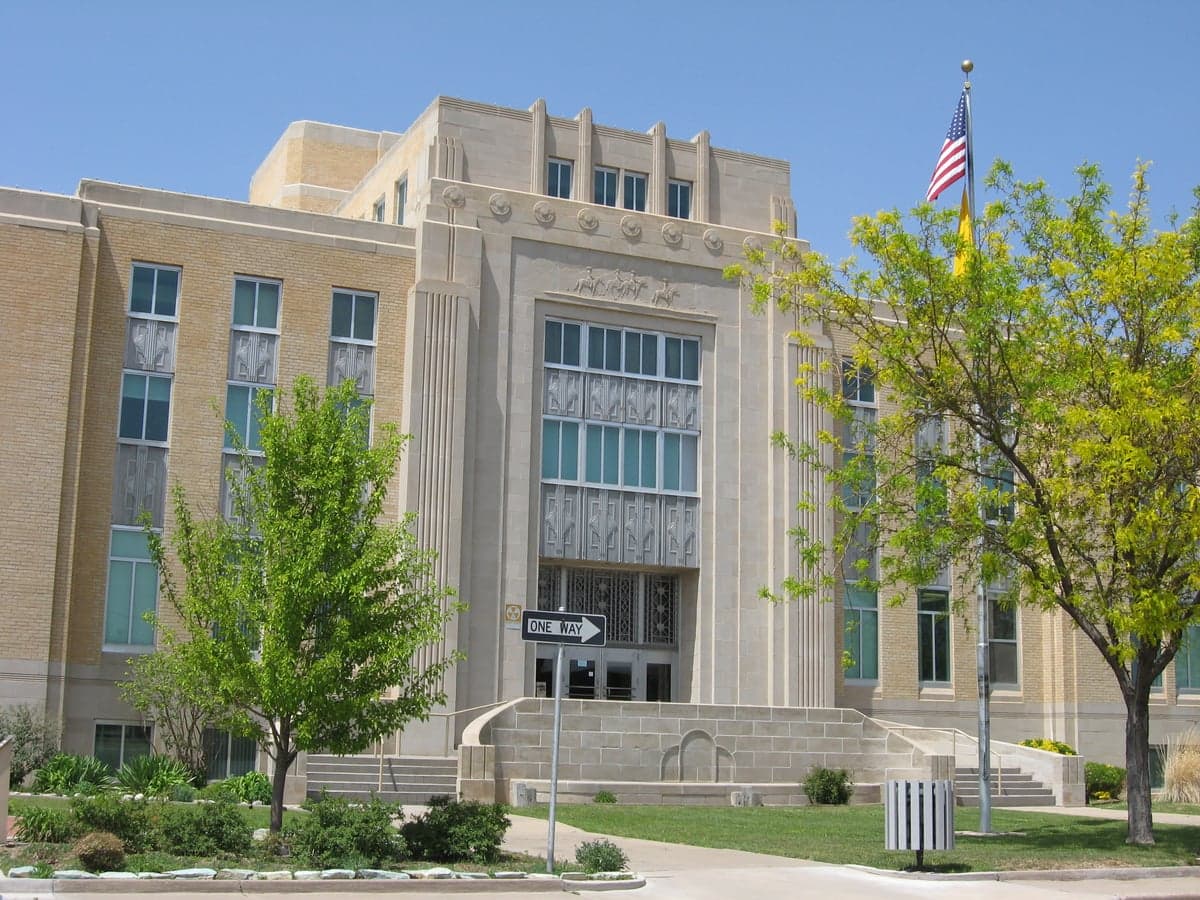
Photo: Wikipedia
Personal Sovereignty in Roosevelt County
Viable for self-reliance. Generally workable, though some barriers may limit total independence.
What does Personal Sovereignty tell us?
Personal Sovereignty measures your capacity for self-reliance and independence with minimal government friction. Higher scores mean fewer barriers between you and the way you want to live... but it assumes you have the space you need and good neighbors.
What does this tell us?
Personal Sovereignty measures your capacity for self-reliance and independence with minimal government friction. Higher scores mean fewer barriers between you and the way you want to live... but it assumes you have the space you need and good neighbors.
State Policy
Energy independence: Net exporter (250% of energy produced in-state)
Personal Liberty
Homesteading

Personal Liberty Analysis
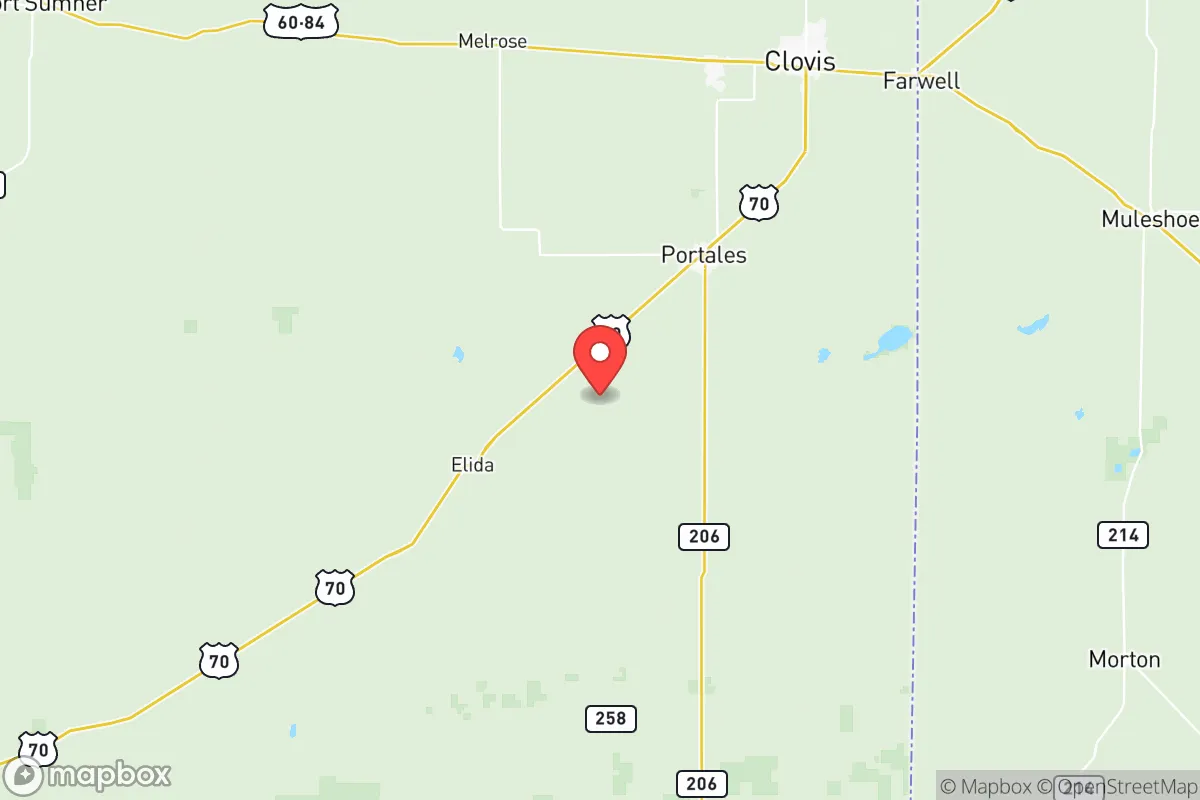
Roosevelt County, New Mexico, offers a notably high degree of personal sovereignty compared to much of the urbanized Southwest, with its rural character and limited local government footprint creating an environment where individual autonomy is the default rather than the exception. The county seat, Portales, and the smaller communities like Elida, Floyd, and Causey operate with a hands-off approach that appeals to those seeking to minimize interactions with regulatory bodies. For the conservative-leaning individual or parent evaluating relocation, this area presents a strategic balance: state-level constraints exist, but local enforcement is often lax, and the culture strongly favors self-reliance over government dependency.
Tax burden and regulatory posture: how local policies compare to state mandates
New Mexico’s state-level tax structure is moderate, but Roosevelt County’s local implementation keeps the burden light for residents. The state’s gross receipts tax (GRT) is a notable factor—Portales levies a combined rate of around 7.8125% on most goods and services, which is higher than some rural New Mexico counties but still below major cities like Albuquerque or Santa Fe. Property taxes are a standout advantage: Roosevelt County’s effective rate hovers near 0.6% of assessed value, among the lowest in the state, thanks to a conservative county commission that resists mill levy increases. There is no local income tax, and the state’s personal income tax is a flat 4.9% on most income—a fixed rate that provides predictability. Regulatory posture at the county level is minimal; there are no county-wide zoning ordinances outside the Portales city limits, meaning that in unincorporated areas like Floyd or Dora, property use is largely unrestricted. The state’s environmental regulations, particularly around water rights and well drilling, do apply, but the county’s sparse population (roughly 19,000 residents) means enforcement is complaint-driven rather than proactive. For a prepper or homesteader, this translates to fewer bureaucratic hurdles for building, land use, and business operations compared to states like Colorado or California.
Self-defense and gun law specifics: what the Second Sanctuary status means for residents
Roosevelt County is a designated Second Amendment Sanctuary, with the sheriff’s office publicly stating non-enforcement of any future state-level gun control measures deemed unconstitutional. New Mexico is a shall-issue state for concealed carry permits, and Roosevelt County’s sheriff, based in Portales, processes permits efficiently—typically within 30 days. Open carry is legal without a permit for anyone 19 or older, and the county’s culture strongly supports firearm ownership for self-defense, hunting, and preparedness. The state does have a background check requirement for private sales at gun shows, but private transfers between individuals outside of shows are not regulated. Magazine capacity restrictions do not exist at the state level, and there is no red flag law as of 2026, though legislative efforts persist. In practical terms, residents in Elida or Causey can carry openly without drawing attention, and the local gun culture is deeply integrated into daily life—shooting ranges are common, and the Portales Gun Club offers a community hub for training. For parents, this means children are often raised with firearms safety as a norm, and there is no social stigma around armed self-defense. The proximity to Texas (just 20 miles east of Portales) also provides a legal buffer, as Texas’s permitless carry laws offer additional flexibility for cross-border movement.
Self-reliance and homesteading viability: lot sizes, zoning, and off-grid feasibility
Homesteading in Roosevelt County is highly viable, particularly outside the Portales city limits where zoning is virtually nonexistent. In unincorporated areas like Floyd, Dora, and Causey, minimum lot sizes are not enforced by the county, allowing for small-acreage setups—parcels as small as 1 acre are common for residential use, while larger tracts of 10-40 acres are affordable, often priced under $2,000 per acre. Off-grid living is feasible but requires navigating state water laws: rainwater harvesting is legal and encouraged, but drilling a well requires a permit from the New Mexico Office of the State Engineer, with a typical wait of 3-6 months. Solar panels are unrestricted, and net metering is available through Roosevelt County Electric Cooperative, though the co-op’s policies are less favorable than some private utilities—excess generation is credited at the wholesale rate rather than retail. Septic systems are permitted by the county’s environmental health department, with inspections required but standards reasonable for rural properties. The climate—semi-arid with 14 inches of annual rainfall—demands drought-tolerant gardening and livestock management, but the growing season (April to October) supports hardy crops like beans, squash, and native grasses. For the survivalist, the county’s low population density (about 5 people per square mile) means privacy and security, with neighbors typically respectful of self-sufficient lifestyles. Portales itself offers essential supplies (feed stores, hardware, a small hospital), but serious homesteaders often stockpile for the 45-minute drive to Lubbock, Texas, for bulk goods.
Personal liberties: parental rights, medical autonomy, speech, and property protections
Parental rights in Roosevelt County are strongly protected by local culture and state law. New Mexico’s statutes affirm parents’ authority over their children’s education, medical decisions, and religious upbringing, and the county’s school board in Portales has resisted progressive curriculum mandates, maintaining local control over sex education and library materials. Homeschooling is straightforward: parents file a simple notice with the state and are not subject to standardized testing requirements or curriculum approval. Medical autonomy is more nuanced—New Mexico has legalized recreational cannabis and maintains a robust medical marijuana program, which may conflict with some conservative values, but the county’s enforcement is minimal, and there is no local pressure to participate. Vaccine mandates for children are not enforced in Roosevelt County’s public schools beyond state requirements (which allow philosophical exemptions), and the local health department does not actively promote mandates. Free speech is robust, with no local hate speech ordinances or content-based restrictions; the Portales News-Tribune and local radio stations reflect a conservative editorial slant. Property rights are a cornerstone: the county does not impose rent control, and eminent domain is rarely used outside of infrastructure projects. The state’s “Right to Farm” act protects agricultural operations from nuisance lawsuits, a critical safeguard for homesteaders raising livestock or running small farms near residential areas. For the prepper, this means building a bunker, storing supplies, or maintaining a large garden is not subject to HOA-style restrictions—Portales has no city-wide HOA requirements, and rural areas are entirely free of such covenants.
Overall, Roosevelt County ranks among the top rural areas in New Mexico for personal sovereignty, offering a blend of low taxes, minimal regulation, strong gun rights, and a culture of self-reliance that is increasingly rare in the United States. Compared to counties in the Pacific Northwest or Northeast, where zoning, environmental rules, and social pressure can stifle autonomy, Roosevelt County provides a practical refuge for those prioritizing freedom over convenience. The trade-offs—limited healthcare access, a 2-hour drive to the nearest major airport (Lubbock), and a harsh climate—are manageable for those with a prepper mindset. For the conservative individual or family seeking a base where government overreach is resisted and personal responsibility is the norm, this area delivers a strategic advantage that few other regions can match.

* Values derived from national, state, county, city and local statistics and may differ in a specific area. Last updated: 2026-05-28T02:24:19.000Z
Narrative content on this page is AI-generated and may contain mistakes. Verify any details that matter before acting on them.
ReloMaps may earn a commission from affiliate links at no extra cost to you.

