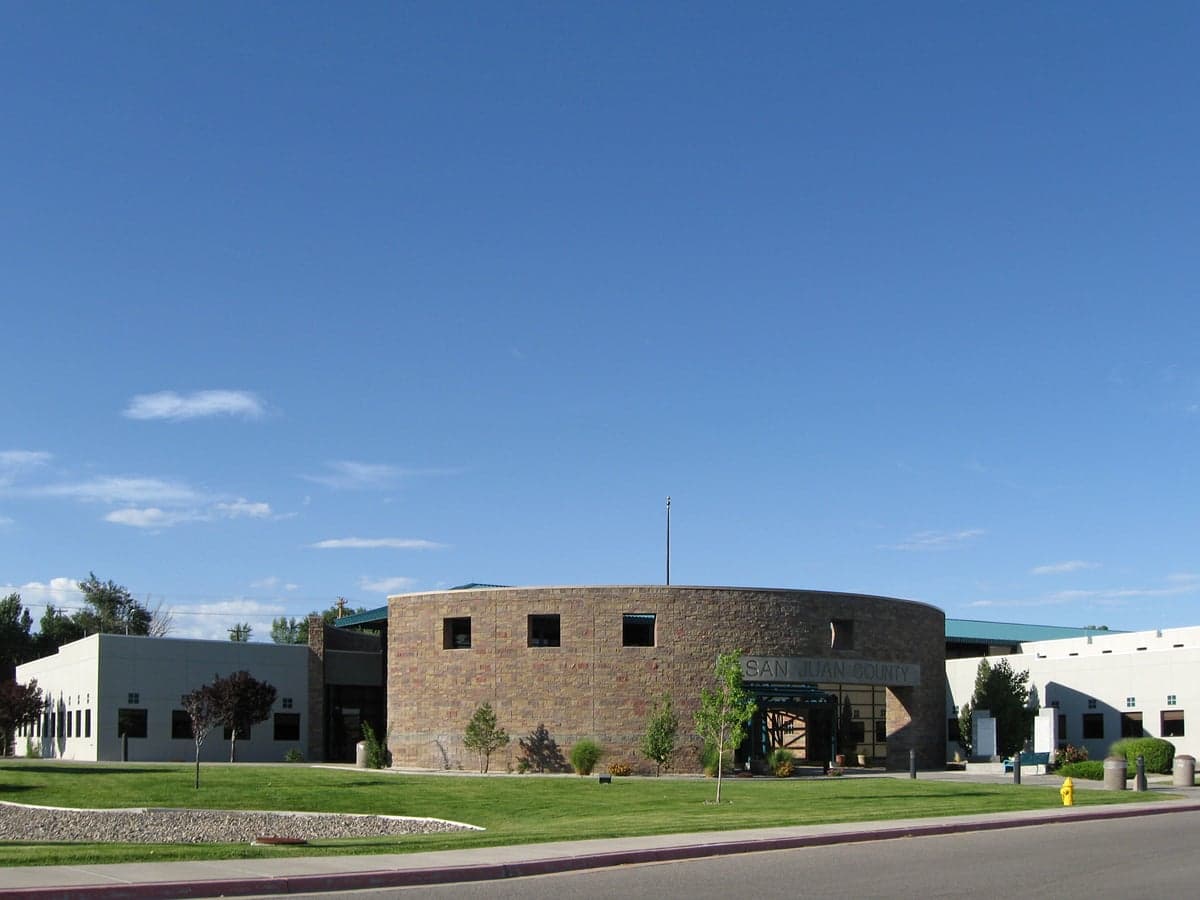
Photo: Wikipedia
Demographics of San Juan County
Affluence Level in San Juan County
A below-average socioeconomic profile. Incomes, home values, and educational attainment trail the U.S., with higher poverty and unemployment.
People of San Juan County
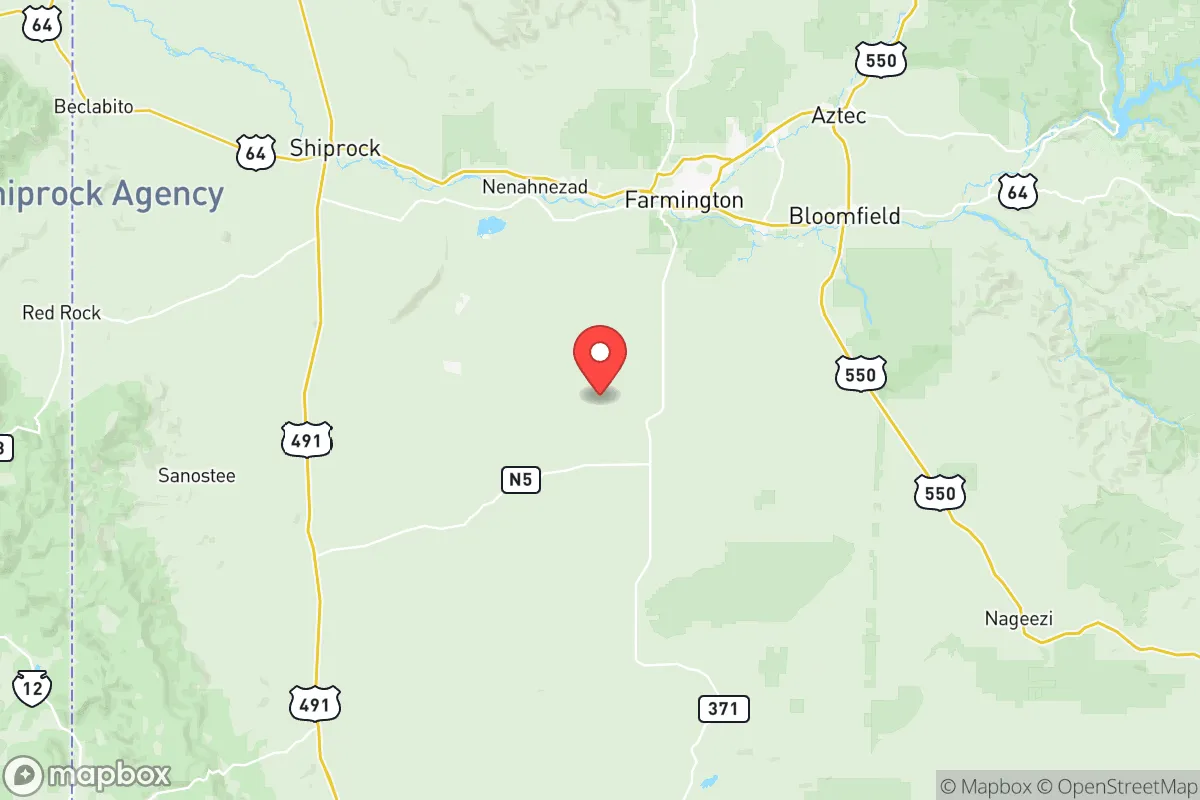
The people of San Juan County, New Mexico, are predominantly Native American, with a significant Hispanic minority and a smaller white population, creating a distinctive tri-cultural identity rooted in the region's deep history. With a population of 121,178, the county is characterized by a low foreign-born rate of 1.7% and a low college attainment rate of 16.6%, reflecting its rural, resource-based economy and strong indigenous community ties. The largest population centers are the city of Farmington, the county seat and economic hub, and the Navajo Nation communities of Shiprock, Kirtland, and Bloomfield, which together shape the area's unique character. This is a place where ancient Puebloan roots, Navajo and Ute sovereignty, and 20th-century energy booms have layered a complex, resilient population that remains deeply connected to the land.
Settlement & growth (pre-1960)
Long before European contact, the San Juan Basin was home to the Ancestral Puebloans (Anasazi), who built extensive cliff dwellings and pueblos at sites like Chaco Culture National Historical Park and Aztec Ruins National Monument. By the time Spanish explorers arrived in the 16th century, the region was inhabited by the Navajo (Diné) and Ute peoples, who had established a semi-nomadic lifestyle based on sheep herding, weaving, and trade. Spanish colonization was sparse in this remote corner of New Mexico, with only a few small ranchos and missions established along the San Juan River, primarily near what is now Bloomfield and Aztec. The area remained a frontier outpost of the Spanish Empire and later Mexico, with a thin layer of Hispanic settlers living alongside the much larger Navajo and Ute populations.
The United States took control of the region after the Mexican-American War in 1848, but significant American settlement did not begin until the late 19th century. The 1864 Bosque Redondo tragedy, in which the U.S. Army forcibly relocated thousands of Navajo to an internment camp in eastern New Mexico, devastated the local population. After the Navajo were allowed to return to their homeland in 1868, the reservation system was formalized, with the Navajo Nation establishing its modern boundaries that encompass much of western San Juan County, including the communities of Shiprock, Two Grey Hills, and Newcomb. The Ute Mountain Ute Tribe also holds a small reservation in the county's northwest corner.
The first major wave of Anglo-American settlement came with the arrival of the railroad in the 1880s. The Denver and Rio Grande Western Railroad extended a line to Farmington in 1905, opening the area to homesteaders, ranchers, and small-scale farmers. These early settlers were primarily of Northern European descent—English, Scots-Irish, and German—who established small agricultural communities along the Animas and San Juan rivers. The town of Aztec was founded in 1887 as a farming and trading center, while Farmington, originally a small trading post, grew slowly as a supply point for ranchers and Navajo traders. By 1930, the county's population was still under 10,000, with a mix of Navajo, Hispanic, and white residents living in separate but interdependent communities.
The transformative event for San Juan County's population was the discovery of oil and natural gas in the 1920s, followed by the massive Navajo Petroleum Reserve discoveries in the 1950s. The oil boom brought a wave of white workers from Texas, Oklahoma, and the Rocky Mountain states—many of them Dust Bowl migrants and their descendants—who settled in Farmington, Bloomfield, and Kirtland. These workers were predominantly Protestant, conservative, and blue-collar, and they established a distinctly "oil patch" culture that persists today. The population of Farmington exploded from 3,600 in 1940 to over 23,000 by 1960, as the county became a hub for energy extraction. This period also saw the construction of the Navajo Dam and the San Juan Generating Station, which brought additional construction workers and engineers to the area, further diversifying the white population with a mix of Midwestern and Southwestern transplants.
Modern era (post-1965)
The post-1965 era in San Juan County has been defined less by international immigration—the foreign-born share remains just 1.7%—and more by internal demographic shifts and the growing political and economic power of the Navajo Nation. The 1965 Hart-Cellar Act had minimal direct impact here, as the county never attracted significant immigrant populations from Asia, Latin America, or Africa. Instead, the major demographic story has been the steady growth of the Native American population, driven by high birth rates and improved healthcare on the reservation, and the relative decline of the white population as the energy industry has experienced boom-and-bust cycles.
By 2020, the racial composition of San Juan County was 36.7% white, 19.7% Hispanic, and a large Native American majority (the remaining share, not explicitly listed in the data, is overwhelmingly Navajo and Ute). The Hispanic population, while smaller than in much of New Mexico, is concentrated in the older agricultural communities of Aztec and Bloomfield, as well as in Farmington's south side. These Hispanic families are largely descendants of the original Spanish and Mexican settlers, with some later arrivals from Mexico drawn by construction and service jobs during the energy booms. The white population, now a minority, is concentrated in Farmington's newer subdivisions and in the bedroom communities of Kirtland and Flora Vista, where many oil and gas workers live.
The Navajo population has experienced a significant shift toward urbanization within the county. While many Navajo still live in traditional rural homes (hogan communities) on the reservation, a growing number have moved into Farmington, Shiprock, and Bloomfield for access to jobs, education, and healthcare. Shiprock, the largest community on the Navajo Nation in the county, has grown into a regional hub with a population of over 8,000, anchored by the Shiprock Agency of the Bureau of Indian Affairs and the Northern Navajo Medical Center. The Navajo Nation has also become a major employer in its own right, with tribal government, the Navajo Tribal Utility Authority, and the Navajo Nation Oil and Gas Company providing stable jobs that have drawn Navajo families from more remote parts of the reservation.
The Asian and Black populations remain very small—0.5% East/Southeast Asian and 0.6% Black—and are concentrated almost entirely in Farmington, where they work in professional roles at the hospital, the college, and the energy industry. The Indian (subcontinent) population is negligible at 0.2%. These groups have not formed distinct ethnic enclaves, instead dispersing into the general population. The county's low college attainment rate of 16.6% reflects the dominance of blue-collar energy jobs and the limited higher-education infrastructure, though San Juan College in Farmington has become an important institution for workforce training and associate degrees.
The future
San Juan County's population is projected to remain stable or grow slowly, with the Native American share continuing to increase as the white population ages and younger whites leave for urban centers in Colorado and Texas. The county is becoming more diverse in the sense that the Navajo majority is asserting greater political and economic influence, but it is not becoming more diverse in the traditional immigrant sense—the foreign-born share will likely remain below 2% for the foreseeable future. The energy transition away from coal and toward renewables is a wild card: the closure of the San Juan Generating Station in 2022 eliminated hundreds of jobs, but the growth of solar and wind projects on Navajo land could attract a new wave of workers, potentially including more Hispanic and white transplants from outside the region.
The cultural identity of the county is evolving from a tri-cultural but segregated society toward a more integrated, Navajo-led community. Navajo language and culture are increasingly visible in public life, from bilingual signage in Farmington to the growing influence of the Navajo Nation Council on county-wide policy. The Hispanic and white communities, while still present, are adapting to a reality where they are no longer the dominant groups. New residential development is concentrated in Farmington's west side and in the master-planned community of Vista Montaña, which is attracting a mix of Navajo professionals and white retirees. The rural areas of the county, particularly around Blanco and Nageezi, remain overwhelmingly Navajo and traditional.
For someone moving to San Juan County now, the region offers a unique blend of Southwestern small-town life and deep indigenous culture, but it is not a place of rapid demographic change or cosmopolitan diversity. The economy is still tied to energy and government, and the social fabric is shaped by the interplay of three distinct communities that have learned to coexist but remain separate in many ways. The future points toward a county that is more Navajo in character, with a stable but shrinking white minority and a Hispanic population that is slowly integrating into the broader regional identity. Newcomers should expect a conservative, family-oriented, outdoor-focused lifestyle, with a strong sense of place rooted in the red rock canyons and the enduring presence of the Diné people.

* Values derived from national, state, county, city and local statistics and may differ in a specific area. Last updated: 2026-08-04T00:52:29.000Z
Narrative content on this page is AI-generated and may contain mistakes. Verify any details that matter before acting on them.
ReloMaps may earn a commission from affiliate links at no extra cost to you.

