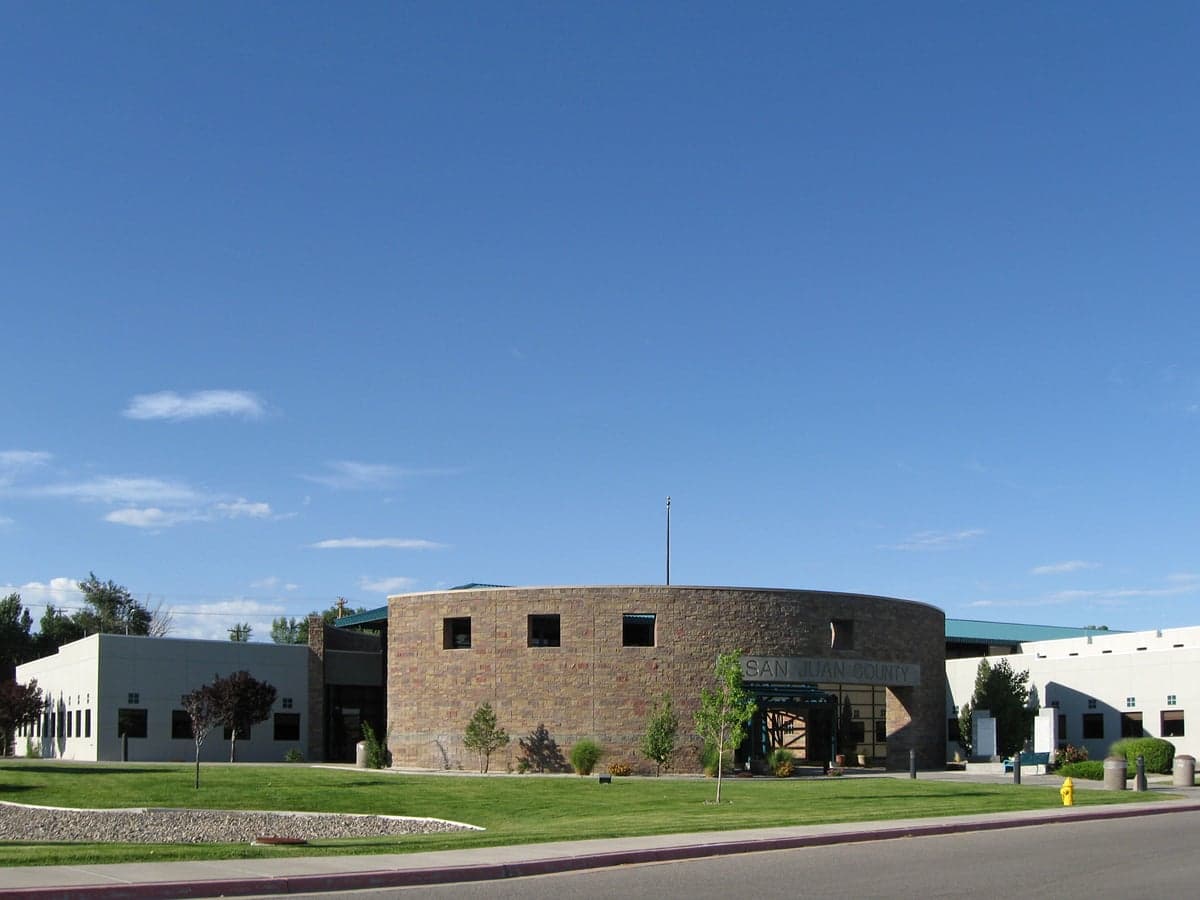
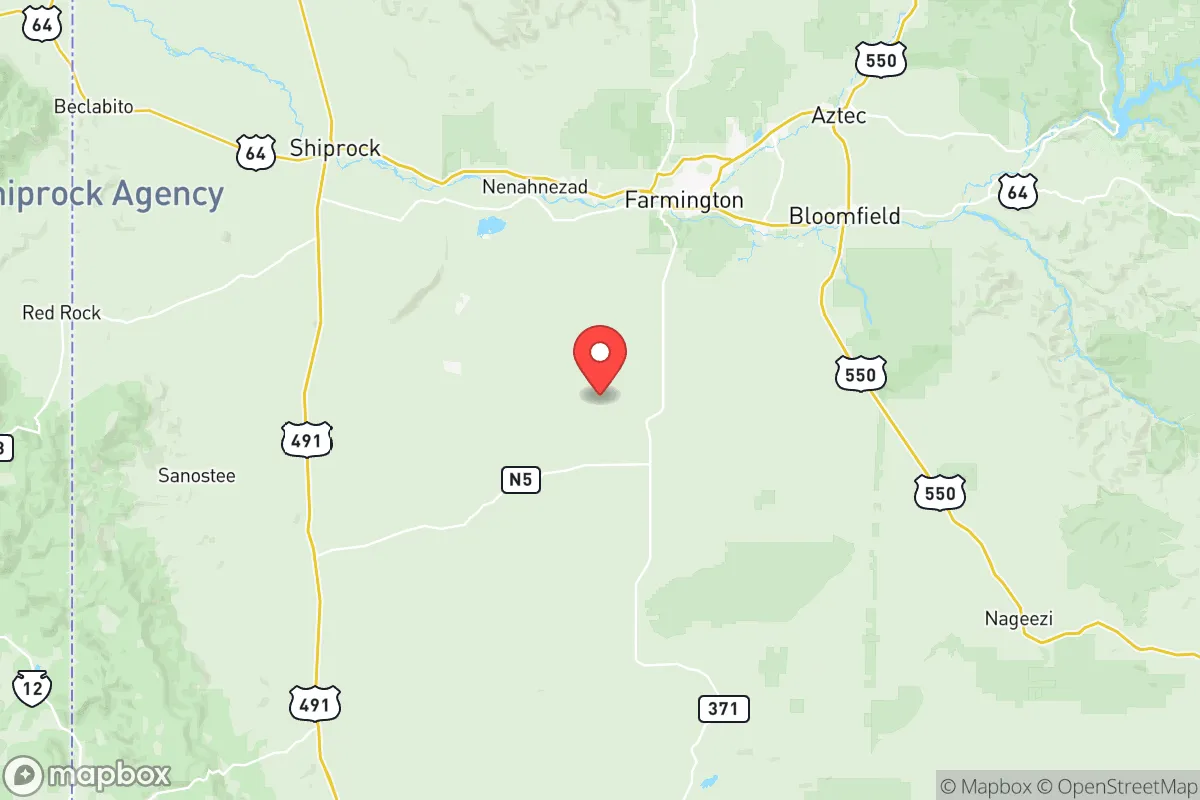
Photo: Wikipedia
Political ClimatePolitical Climate in San Juan County
Showing district-level results — no local-only data available.
Local Political AnalysisPolitical Analysis of San Juan County
San Juan County, New Mexico, sits in a fascinating political middle ground. With a Cook PVI of D+3, it mirrors the state of New Mexico's overall partisan lean exactly, but that number masks a deeply divided local landscape. The county has been trending slightly more Democratic in recent cycles, driven by growing Native American voter turnout in the eastern parts of the county, but it remains a place where a Republican can win a countywide race by running up the score in the Farmington suburbs and the rural oil-and-gas communities around Aztec and Bloomfield.
How it compares
At first glance, San Juan County and New Mexico state share the same D+3 PVI, but the internal dynamics are worlds apart. The state's Democratic edge is powered by the liberal strongholds of Santa Fe, Albuquerque's Bernalillo County, and Las Cruces. San Juan County, by contrast, is a classic "purple" county where the two parties are locked in a near-permanent tug-of-war. The city of Farmington leans reliably Republican, with precincts in the northern and western parts of the city often going +15 to +20 points for the GOP. Aztec and Bloomfield are more mixed, with Aztec's older, more established neighborhoods trending red while its newer subdivisions near the Animas River show more purple. The real Democratic base is in the eastern part of the county, particularly in Shiprock and the Navajo Nation communities like Kirtland and Fruitland. These precincts can swing +30 to +40 points Democratic, and their turnout is the single biggest factor in whether the county goes blue or red in a given election. The swing precincts are often found in the unincorporated areas along Highway 64 between Farmington and Shiprock, where a mix of Navajo families, energy workers, and commuters to the Four Corners area create a volatile electorate.
What this means for residents
For a conservative resident, San Juan County is a place where your vote carries real weight. The county commission and school board races are often decided by a few hundred votes, and a strong Republican turnout in Farmington and Aztec can easily offset Democratic margins from the east. The local GOP is well-organized, with active precinct committees and a strong presence at county fairs and community events. For a liberal resident, the county can feel like a battleground, but the growing Navajo electorate has made Democratic candidates competitive in ways they weren't a decade ago. The 2020 election saw record turnout in Shiprock, and that energy has carried over into local races. The practical reality is that neither party dominates, so policy outcomes tend to be moderate. The county government has avoided the kind of culture-war fights seen in deeper red or deeper blue parts of the state, focusing instead on water rights, energy development, and infrastructure—issues that cross party lines.
Culturally, San Juan County is distinct from the rest of New Mexico. The presence of the Navajo Nation gives the area a unique blend of Native American, Hispanic, and Anglo traditions that you don't find in the state's more homogeneous regions. The local economy is heavily tied to the oil and gas industry, which means energy policy is a kitchen-table issue here in a way it isn't in Santa Fe or Albuquerque. The county's politics are also shaped by a strong sense of local identity—people here are proud of being from the Four Corners, and they tend to view state government in Santa Fe with a mix of skepticism and independence. This isn't a place that follows national trends blindly; it's a place where the politics are as layered and complex as the landscape itself.

State Political ClimatePolitical Climate in New Mexico
State Political AnalysisPolitical Environment in the State
New Mexico is a genuine battleground state in miniature, with a Cook PVI of D+3 that masks a deeply divided electorate. The Democratic advantage is driven almost entirely by Bernalillo County (Albuquerque) and Santa Fe County, while the rest of the state—especially the eastern plains, the southern border, and the northwestern Four Corners region—votes reliably Republican. Over the past 20 years, the state has drifted left on social policy and environmental regulation, but it has also seen a notable conservative backlash in rural areas, making it one of the few states where the partisan gap between urban and rural voters has actually widened since 2020.
Urban vs. rural divide
The political map of New Mexico is essentially a story of three cities versus the rest. Albuquerque (Bernalillo County) alone casts about a third of the state's votes and leans about 15 points Democratic. Santa Fe is the bluest county in the state, routinely voting 2-to-1 Democratic, driven by a mix of government workers, artists, and retirees. Las Cruces (Doña Ana County) is a swing area that has trended blue in recent cycles, but it still has a strong conservative Hispanic base. Outside these three metros, the political landscape flips hard. Lea County (Hobbs) and Eddy County (Carlsbad) are oil-patch strongholds that vote 75-80% Republican. San Juan County (Farmington) is reliably red, and the eastern plains counties like Roosevelt (Portales) and Curry (Clovis) are deeply conservative. The rural Hispanic counties in the north—Rio Arriba, Mora, Taos—are ancestrally Democratic but have been trending away from the party on cultural issues, though they still vote blue in most races. The net effect is that a Republican can win statewide by running up the score in the southeast and northwest, but the Albuquerque-Santa Fe corridor is usually enough to tip the balance.
Policy environment
New Mexico's tax structure is a mixed bag for conservatives. There is no state inheritance tax and no estate tax, and the state's income tax is a progressive system with a top rate of 5.9% on income over $210,000—moderate by national standards. Property taxes are among the lowest in the country, with an effective rate around 0.55%, which is a major draw for retirees and families. However, the state's gross receipts tax (GRT) is a hidden burden, often exceeding 8% in many cities, and it applies to most services, not just goods. The regulatory posture is generally business-friendly in the oil and gas sector—New Mexico is the second-largest oil producer in the U.S.—but much stricter on environmental permitting, especially for new construction and water rights. Education policy is a flashpoint: the state has a constitutional right to an adequate education, but per-pupil spending is high while outcomes are low, leading to a growing school-choice movement. The 2023 Opportunity Scholarship Act expanded state-funded scholarships for private and parochial schools, but it remains means-tested and limited. Healthcare is dominated by the state's Medicaid expansion, which covers about 40% of the population, and the Health Insurance Exchange is active. Election laws are relatively permissive: same-day registration is available, no-excuse absentee voting is standard, and the state has automatic voter registration via the DMV. There is no voter ID law requiring a photo—a non-photo ID or a signed affidavit is accepted—which is a frequent point of contention among conservatives.
Recent policy direction
Over the past five years, New Mexico has moved decisively left on several fronts. The Energy Transition Act (2019) set a 100% carbon-free electricity standard by 2045, and the state has aggressively pursued renewable energy projects, particularly solar and wind in the eastern plains. On gun policy, the 2021 Firearm Transfer Act requires universal background checks for private sales, and the 2023 Extreme Risk Firearm Protection Order Act (red flag law) allows courts to temporarily seize firearms from individuals deemed a danger. There is no permitless carry, though open carry is legal without a license. On education, the 2023 Healthy Hunger-Free Students' Bill of Rights expanded free school meals, and the state has banned corporal punishment in all schools. On medical and bodily autonomy, New Mexico is one of the most permissive states in the nation: abortion is legal up to viability with no mandatory waiting period, and the 2023 Reproductive and Gender-Affirming Health Care Act explicitly protects providers from out-of-state lawsuits. Parental rights are a growing battleground: the state's Public Education Department has issued guidance requiring schools to allow transgender students to use facilities matching their gender identity, and the 2023 Safe Schools for All Students Act prohibits discrimination based on sexual orientation and gender identity. Property rights are generally strong, but the state's Water Rights Adjudication process is notoriously slow and contentious, especially in the Rio Grande Valley. On voting, the 2021 Voter Action Act expanded same-day registration and automatic voter registration, which has increased turnout but also drawn criticism over security. The state has no right-to-work law, and union membership is relatively high in the public sector, particularly among teachers and state workers.
Civil unrest & political movements
New Mexico has a history of low-grade political tension rather than large-scale unrest. The 2020 protests in Albuquerque and Santa Fe over police brutality were significant but smaller than in larger cities, and they led to the creation of a civilian police oversight board in Albuquerque. The Otero County Commission (Alamogordo) made national headlines in 2022 for refusing to certify primary election results over baseless fraud claims, a move that was ultimately overruled by the state Supreme Court. Immigration politics are a constant undercurrent: the state has a sanctuary state law (2019's New Mexico Law Enforcement Protection Act) that prohibits state and local law enforcement from detaining individuals solely on immigration status, and the border city of Sunland Park has seen periodic surges in migrant crossings. The Four Corners region has a small but vocal secessionist movement, the State of Deseret concept, though it has no real political traction. The New Mexico Civil Guard, a far-right militia, has been active in border areas, but its influence is limited. On the left, the Mountain West Progressive Caucus has pushed for single-payer healthcare and rent control, though neither has passed. The state's election integrity debate is less heated than in Arizona or Texas, but rural counties frequently complain about the lack of voter ID and the security of mail-in ballots.
Projection
Over the next 5-10 years, New Mexico is likely to remain a D+3 to D+5 state, but the margin could narrow. The biggest demographic shift is the continued growth of the Albuquerque-Santa Fe corridor, which will reinforce the Democratic lean. However, the oil and gas boom in the Permian Basin (Lea and Eddy counties) is attracting conservative in-migration from Texas, and the eastern plains are growing faster than the rest of the state. The Hispanic population, which is about 50% of the state, is not monolithic—younger Hispanic voters are trending left, but older Hispanic voters in rural areas are drifting right on cultural issues. The state's high poverty rate (about 18%) and low educational attainment are structural drags that could fuel populist movements on either side. If the national Democratic Party continues to emphasize cultural issues, New Mexico's rural Hispanic voters could flip the state purple in a presidential race. A Republican who can hold the southeast and northwest while making inroads in Las Cruces and the Albuquerque suburbs could win statewide. For a new resident, the practical reality is that your experience will depend heavily on where you live: Santa Fe and Albuquerque will feel like blue islands, while Hobbs, Carlsbad, and Clovis will feel like West Texas.
For a conservative relocating to New Mexico, the bottom line is that you can find a community that matches your values—especially in the southeast and eastern plains—but you will be living under a state government that is increasingly progressive on social and environmental policy. Property taxes are low, gun laws are moderate, and the oil and gas industry is a powerful economic force. For a liberal relocating, the state offers strong protections for reproductive rights, LGBTQ+ rights, and voting access, but you will face high poverty, low educational outcomes, and a rural population that is deeply skeptical of the state's direction. The state's political climate is best understood as a live experiment in what happens when a blue urban corridor tries to govern a red rural hinterland—and neither side is happy with the results.
* Values derived from national, state, county, city and local statistics and may differ in a specific area. Last updated: 2026-08-04T00:52:29.000Z
Narrative content on this page is AI-generated and may contain mistakes. Verify any details that matter before acting on them.
ReloMaps may earn a commission from affiliate links at no extra cost to you.

