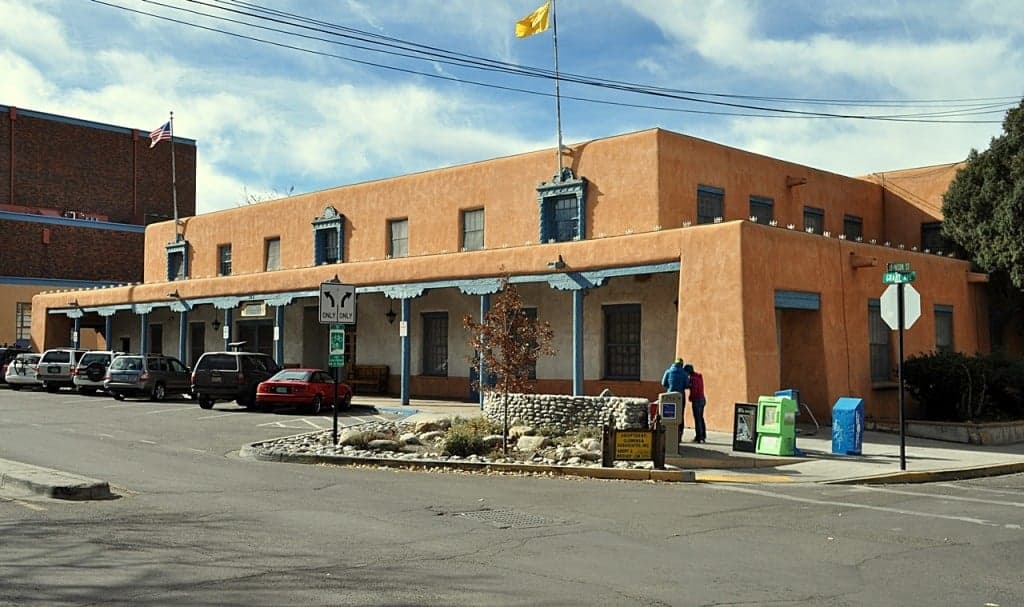
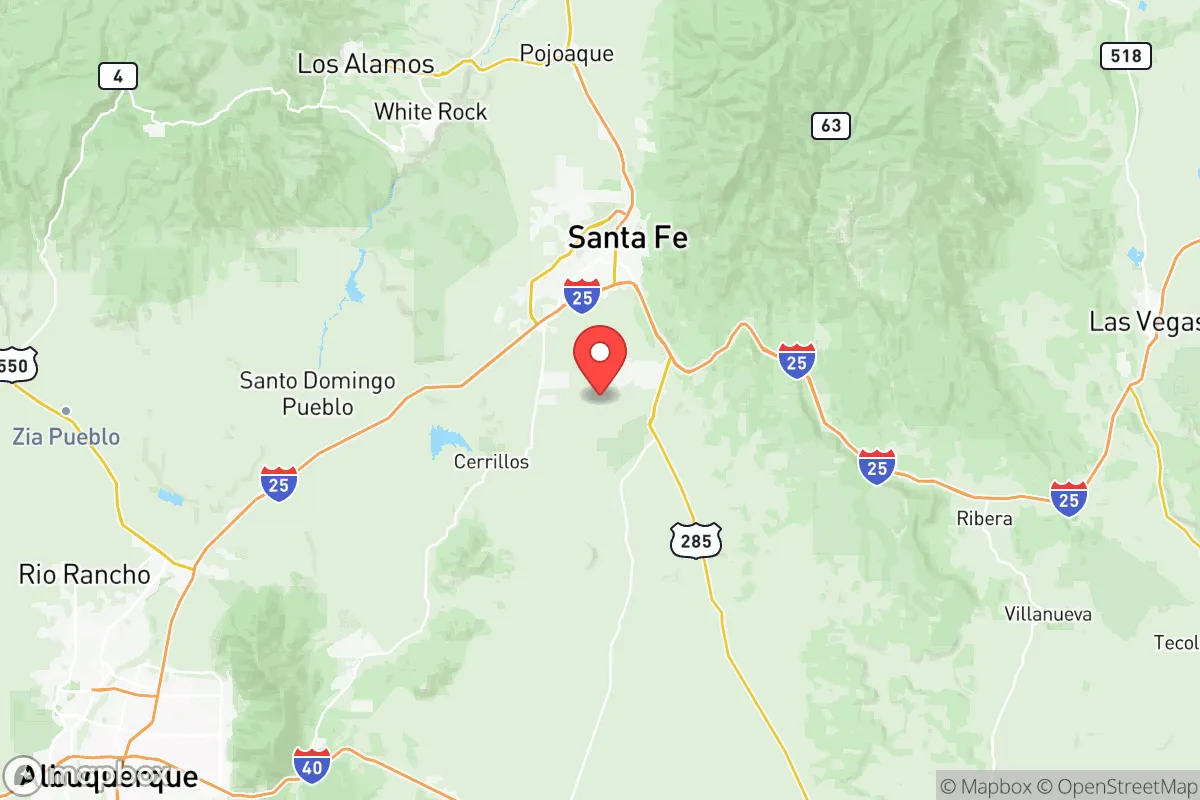
Photo: Wikipedia
Political ClimatePolitical Climate in Santa Fe County
Showing district-level results — no local-only data available.
Local Political AnalysisPolitical Analysis of Santa Fe County
Santa Fe County might share a D+3 Cook PVI with the rest of New Mexico, but anyone who’s lived here for a while will tell you the political reality is a lot more complicated – and increasingly concerning for those who value personal freedoms. The city of Santa Fe is solidly blue and growing more progressive by the year, but head east to Edgewood or south to the rural pockets around Cañada de los Alamos and you’ll find a different story – more independent, more skeptical of the agenda coming out of the state capitol. Over the past decade, the county has shifted noticeably left, with local government embracing policies that feel less about stewardship and more about control, from strict building moratoriums to escalating property taxes that squeeze longtime families.
How it compares
On paper, Santa Fe County and New Mexico both carry a D+3 Cook PVI, but that number masks a critical divide. The state’s overall lean is tempered by conservative strongholds like Lea County and Chaves County, which keep the statewide score from drifting further. Santa Fe County is the engine of progressive policymaking in New Mexico – it’s where the ideas incubate before they get pushed statewide. For example, the county commission has enacted renewable energy mandates and land-use restrictions that go well beyond state law, while the city of Santa Fe operates as a sanctuary jurisdiction, limiting cooperation with federal immigration authorities. In contrast, Edgewood – a town straddling Santa Fe and Torrance counties – still votes more red, reflecting a local resistance to this direction. Los Cerrillos and the outlying ranching areas lean similarly, but they’re increasingly outnumbered and outvoted by the growing urban population inside the city limits. The real difference between the county and the state isn’t the PVI number – it’s the intensity of the ideology driving local policy.
What this means for residents
For residents who don’t align with the progressive playbook, daily life can feel like a constant defensive battle. Property taxes have climbed steadily to fund initiatives many never voted for – affordable housing bond measures, open space acquisitions, and climate action plans that sound noble but translate into higher costs and fewer choices. The county has explored banning gas-powered leaf blowers and even wood-burning stoves, hitting personal freedoms around how you maintain your own land. In the schools, social curricula dominate, leaving parents in Edgewood or Pecos who want traditional values feeling like outsiders in their own community. Getting a building permit for a simple home addition can take months, and new subdivisions face years of review. The message is clear: if you want to do things your own way, this county is making it harder by the year.
Culturally, Santa Fe County prides itself on its artistic heritage and environmental conscience, but that pride comes with a price tag on your rights. The sanctuary policies have strained local law enforcement, forcing deputies into conflicts between

State Political ClimatePolitical Climate in New Mexico
State Political AnalysisPolitical Environment in the State
New Mexico carries a Cook PVI of D+3, making it a genuinely competitive state even if it trends blue. The Democratic coalition here leans on the union-heavy Albuquerque metro and the state government apparatus in Santa Fe, but overall, a massive urban-rural split keeps the state from being solidly progressive. Over the last 10–20 years, New Mexico has been slowly drifting left, driven by population growth in Bernalillo and Santa Fe counties, while the rural oil and gas towns have dug in harder on the right. That tension is what makes the state interesting: it's not a one-party lock, and the conservative haven towns still wield outsized influence on local policy even if the governor's mansion and the legislature have swung left.
Urban vs. rural divide
The political map of New Mexico is basically a story of two states. The Albuquerque metro (Bernalillo County) and Santa Fe (Santa Fe County) are the deep blue engines, consistently delivering 60%+ of the vote to Democrats. Las Cruces over by the border is another liberal hub, with its large state university population and unionized workforce. Rio Rancho is a bit more of a purple suburban swing area, often splitting its tickets. Meanwhile, the eastern plains and the southern oil patch are reliably red. Hobbs, Carlsbad, and Farmington are solidly conservative, heavily tied to oil, gas, and mining. Roswell and Alamogordo lean red as well, driven by the aerospace and military sector at Holloman Air Force Base and the ranching culture of the Pecos Valley. Los Alamos, home to the national lab, tends to vote moderate to liberal but is more technocratic than activist. The native Pueblos and rural Hispanic counties like Mora and Rio Arriba have historically been Democratic but are more culturally conservative and often at odds with Santa Fe's progressive agenda on issues like resource extraction and land use.
Policy environment
The policy environment in New Mexico is a mixed bag that has been shifting left in recent years. The state has a progressive income tax structure with rates ranging from 1.7% to 5.9%, and the gross receipts tax on businesses is one of the most complex and burdensome in the country, though reformers have talked about simplifying it. In 2023, a package of gun control laws passed, including a 14-day waiting period on purchases and a ban on open carry at public meetings, which was a major priority for Governor Lujan Grisham. Education policy has been contentious: the state's public schools consistently rank near the bottom nationally, and Governor Grisham pushed through a universal free school meals program but also a controversial 2024 bill that restricts parental opt-outs for certain health and sexuality curricula in K-12. Healthcare is a heavy government presence, with a large Medicaid expansion and state-run health insurance exchange; many conservatives view this as a burden on rural providers. Election laws are relatively permissive: same-day voter registration and universal mail-in ballots are available, which is something to be aware of for a new resident concerned about election integrity. The state also has a water rights system that prioritizes seniority, a critical issue for anyone buying land in the southern or eastern counties. On the positive side for conservatives, there is no state inheritance or estate tax, and property taxes are very low by national standards, making it a potential destination for cost-conscious families.
Trajectory & freedom
New Mexico is heading in a clearly less free direction on personal liberty issues, especially since about 2021. The 2023 red flag law allows law enforcement or family members to petition a court to temporarily seize firearms from a person deemed a risk, bypassing due process in the short term. That same session saw a ban on private firearm transfers without a background check, which many conservatives view as an overreach and a prelude to registration. On the parental rights front, the 2024 bill I mentioned (HB 1 or similar) diminishes the ability of parents to opt their children out of controversial lessons on sexuality and gender identity, which has been a major sore point for families in conservative areas like Hobbs and Carlsbad who feel the state is stepping in. Medical autonomy is another flashpoint: the state has some of the most permissive laws on the books for abortion, including funding for providers and a shield law for providers serving out-of-state patients, but also a vaccine mandate for school children that was upheld in court. Property rights are reasonably strong, but the state's heavy regulatory environment around oil and gas permitting and water rights can feel like a clip for anyone trying to develop land. The Energy Transition Act of 2021 pushed the state's utilities toward aggressive decarbonization targets, raising energy costs and making the state less attractive for heavy industry, though the oil and gas sector still dominates the economy.
Civil unrest & political movements
Albuquerque has seen recurring protest activity, from 2020 racial justice demonstrations to more recent 2023 protests over the state's handling of homelessness, property crime, and the police shortage. The city's status as a moderate-sized metro with a high crime rate and a vocal activist class keeps things tense. Sanctuary policies are a reality in the state: in 2019, the legislature passed a law that prohibits state and local law enforcement from inquiring about immigration status or cooperating with the feds on civil immigration detentions. This is a major sticking point for conservatives, especially in border towns like Sunland Park and Santa Teresa, where illegal crossings are a daily fact of life. There has been a
* Values derived from national, state, county, city and local statistics and may differ in a specific area. Last updated: 2026-05-28T04:57:34.000Z
Narrative content on this page is AI-generated and may contain mistakes. Verify any details that matter before acting on them.
ReloMaps may earn a commission from affiliate links at no extra cost to you.

